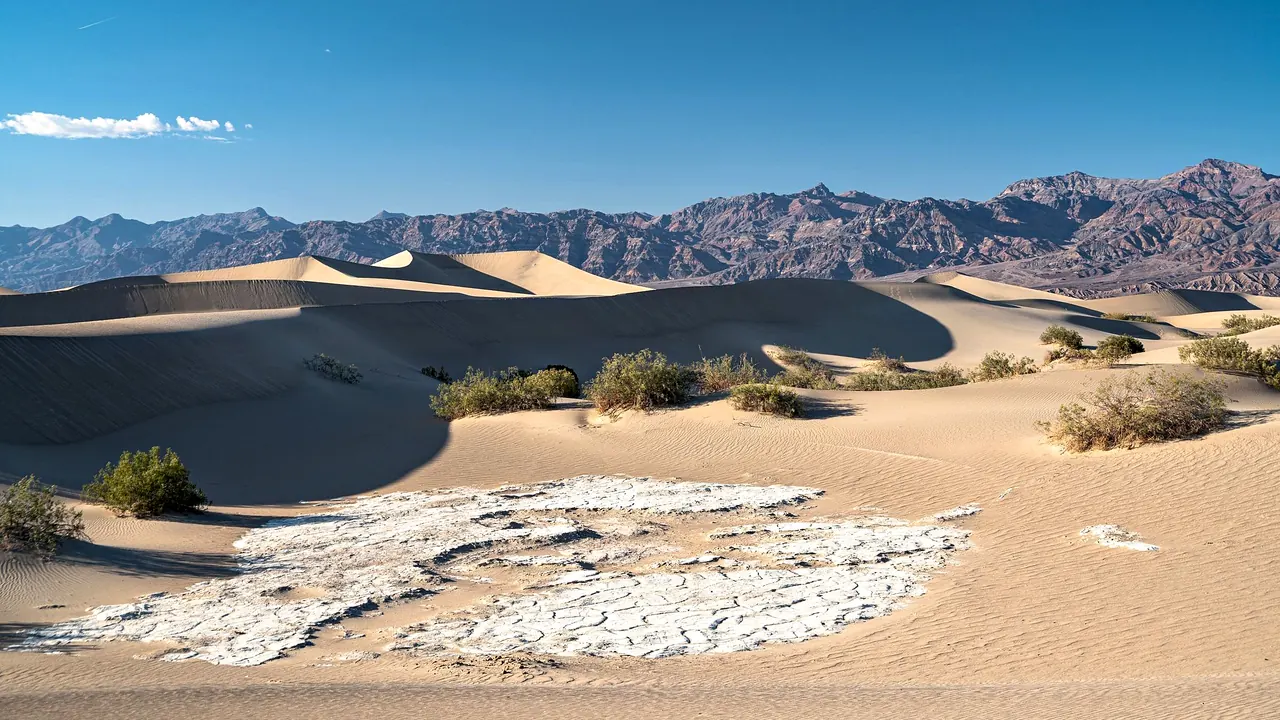
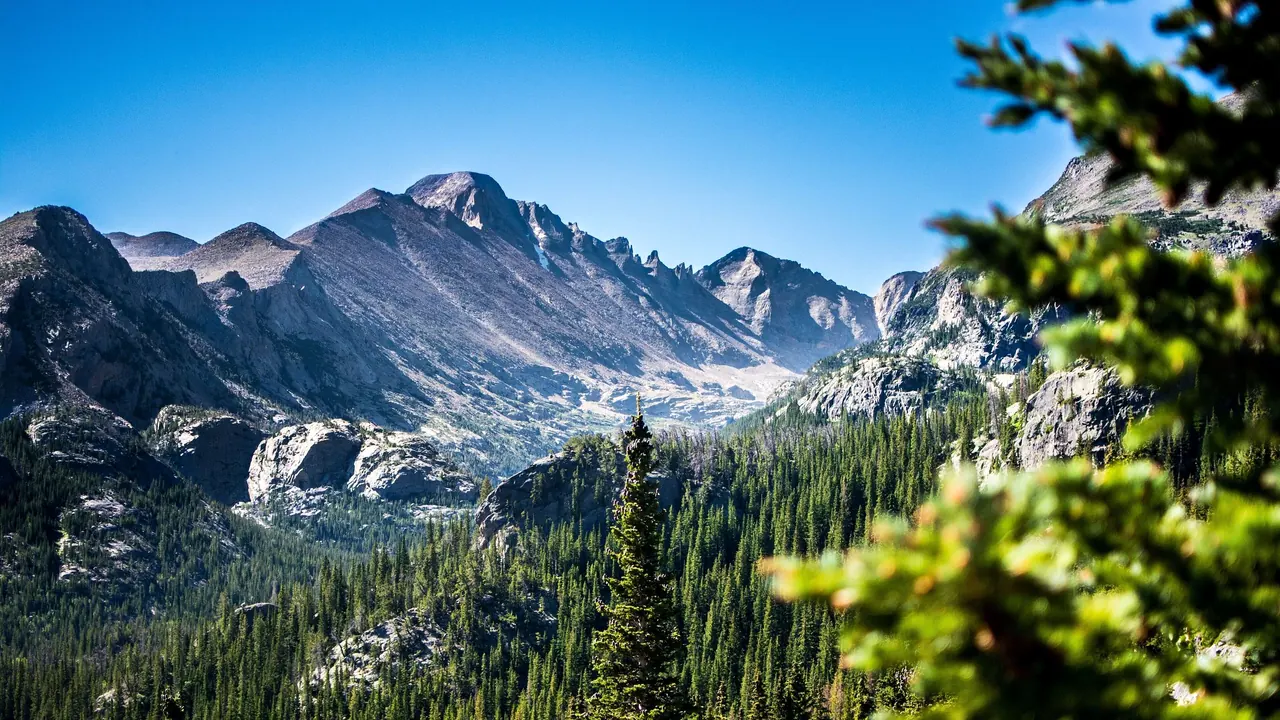
Photos: Death Valley by Anthony Brown, Pexels License; Rocky Mountain National Park by Peter Pryharski epicpeter, CC0.
Death Valley or Rocky Mountain National Park?
Our verdict in twelve categories, each scored against the same fixed benchmark cities, and the climate month by month, so you can choose for your trip.
Choose Death Valley for
- wellness
- culture and sights
Death Valley is for travellers who want the desert at its most extreme and come in the cool half of the year. It suits a winter road trip from Las Vegas built around salt flats, badlands, dunes and canyons, with long drives, empty roads and nights under one of the darkest skies in the country. Rest here means warm spring water and silence. In return there is very little to eat well, buy or do once the light goes.
Choose Rocky Mountain National Park for
- families
- food and drink
- day trips
Rocky Mountain National Park is the better pick for a summer vacation in high mountain country, especially with children. Alpine lakes, tundra and elk grazing by the road give a gentler kind of wilderness, and Estes Park and Grand Lake add restaurants, family amusements, a little theatre and some shopping. The Front Range towns are close enough for a rest day. You give up the desert's winter warmth and deep solitude, and you take on altitude and summer crowds at the busiest trailheads.
Scoreboard
Twelve categories on one fixed scale from 0 to 100. The shaded stretch is the gap between the two.
Your match
Pick a travel style or drag the sliders, and both match scores follow your weighting.
Wins on wellness and culture and sights with your weighting.
Wins on families and food and drink with your weighting.
What matters to you?
Category by category
What the scores mean for a trip.
Beaches & swimming
Neither park is a place to swim, and the reasons are opposite. Death Valley's lakebeds are dry and the only water is the resort pools at Furnace Creek. Rocky Mountain National Park has plenty of lakes, but they are fed by snowmelt and far too cold for a swim. Grand Lake at least lets you paddle, take a paddleboard out or brave a quick plunge, which the desert cannot offer.
Food & drink
Neither is a food destination, but Rocky Mountain National Park eats noticeably better. Estes Park has early-breakfast diners, steak and burger houses, pizza and a handful of breweries and distilleries, and Grand Lake adds cafés along its boardwalk. Boulder's restaurants are about an hour away.
In Death Valley you eat at the lodge dining rooms and saloons or at small-town diners in Beatty and Shoshone. Most people bring a cool box. The one local flavour is the dates from the farm near Tecopa, which turn up in shakes and bread.
Culture & sights
The two are on a par, and in both the history fills an afternoon rather than a trip. Death Valley's past is industrial and harsh: the Harmony Borax Works ruins of the twenty-mule-team era, the beehive charcoal kilns at Wildrose, abandoned mining camps, and the story of the Timbisha Shoshone, who still live in the valley. In the Rockies it is homesteading and early tourism, with the 1920s dude ranch at Holzwarth, the Moraine Park Discovery Center and the Stanley Hotel above Estes Park with its ghost tours.
Nightlife
Evenings are quiet in both, and the sky is the real show. Death Valley's saloons at Stovepipe Wells and Furnace Creek wind down by mid-evening, but on a moonless winter night the Milky Way is bright enough to cast shadows. Estes Park has a little more life, with brewpubs, taprooms and old saloons on Elkhorn Avenue, though nothing runs late and early starts for the elk send most people to bed early.
Nature & outdoors
These are two of the great American landscapes, equal in stature and completely different in kind. Death Valley is rock, salt and light: Badwater Basin below sea level, the golden badlands of Zabriskie Point, Artist's Palette, the Mesquite Flat dunes, Ubehebe Crater and the remote Racetrack. Its walking season is the mild winter, and many of its best corners need a high-clearance vehicle.
Rocky Mountain National Park is alpine, with dozens of peaks above 3,600m, glacial lakes, wildflower meadows and tundra crossed by Trail Ridge Road. It also has the wildlife the desert lacks: elk in Moraine Park, bighorn sheep at Sheep Lakes and moose in the Kawuneeche Valley. Rivers for fly fishing and the climbing on Lumpy Ridge widen the choice further.
Day trips
Rocky Mountain National Park has the better outings because it sits above the Front Range. Boulder with its Flatirons, the old town and breweries of Fort Collins, and the museums of Denver are all within an hour or two of Estes Park, although the Grand Lake side offers little beyond small mountain towns.
Death Valley's outings are few and far apart, but some are memorable. Rhyolite's ghost town ruins stand just over the Nevada line, Tecopa and Shoshone lie to the south, and Manzanar, the sobering wartime camp, is about two hours west near Lone Pine. Most days are still spent inside the park.
Good for families
Rocky Mountain National Park is far easier with children. The lake loops at Bear, Sprague and Lily Lakes suit small legs, and elk by the roadside are a guaranteed thrill. Estes Park supplies the tramway, go-karts and riding stables. Altitude and summer storms need some care.
Death Valley works mainly for older, adventurous children in winter. Sliding down the Stovepipe Wells dunes, crunching across the salt at Badwater and doing the Junior Ranger programme are real highlights. But nothing is built for families, distances are long, and the heat outside the cool months is a genuine danger to small children.
Getting around
Death Valley's driving is about distance and rough ground. The paved roads to Badwater, Zabriskie Point, Dante's View and the dunes are quiet and easy, but fuel stations are few, an hour or more between areas is normal, and the Racetrack and Titus Canyon lie on dirt tracks that need a high-clearance vehicle. There is no public transport and Las Vegas is about two hours away, so set off with a full tank and spare water.
In Rocky Mountain National Park the season sets the limits. Denver's airport is a similar two hours from Estes Park, but Trail Ridge Road, the only link between Estes Park and Grand Lake, closes for snow from roughly mid-autumn to late spring. While it is shut, the detour between the two sides takes several hours, so most visitors pick one side as their base. In summer a free shuttle up Bear Lake Road gets you to the trailheads whose car parks fill early, and Estes Park itself is small enough to walk.
Shopping & style
Rocky Mountain National Park at least gives you something to browse. Elkhorn Avenue in Estes Park has outdoor gear, Western wear, jewellery, galleries and taffy windows, and Grand Lake's boardwalk has a shorter run of the same. In Death Valley, shopping means supplies, maps and borax souvenirs from the general stores and visitor centre, so it pays to stock up in Las Vegas or Pahrump on the way in.
Affordability
Both are expensive to stay in and cheap to enjoy. In Death Valley the cost comes from remoteness: there are only a few lodgings, resort prices at Furnace Creek and Stovepipe Wells, and dear fuel in the valley. The alternative is long daily drives from the motels in Beatty or Pahrump.
In the Rockies the cost comes from demand, with summer and the elk season pushing up rooms in Estes Park and Grand Lake, though late spring and late autumn are easier on the budget. In both parks, camping and packed lunches cut costs sharply.
Live music & performing arts
Rocky Mountain National Park has a modest but genuine summer programme. Grand Lake's long-established repertory theatre stages Broadway-style musicals, and Estes Park adds chamber concerts from a summer music school as well as bluegrass and bandstand evenings. Death Valley's only stage is the Amargosa Opera House at Death Valley Junction, a small adobe theatre painted with an imaginary audience. It holds occasional shows, but most people stop to see the building rather than a performance.
Wellness & relaxation
Death Valley offers more for a slow stay, built on warm water and silence. The spring-fed pools at Furnace Creek stay warm through the winter, and the resort has a spa. Tecopa's simple mineral hot springs are best enjoyed at night under the stars.
The Rockies have no bathing tradition of their own. Instead there are lodge spas in Estes Park, riverside cabins on the Fall River and the Big Thompson, and the hot spring pools at Hot Sulphur Springs, about forty minutes from Grand Lake. Midsummer crowds also make it less restful than the desert in winter.
When should you go?
Pick your month. The climate figures are measured averages, not a forecast.
Death Valley in July
Rocky Mountain National Park in July
Daytime high, °C
Rainfall in the month, mm
Where the figures come from
Death Valley has no weather station within reach, so its figures come from a gridded climate model rather than a measured record, and read a broad area rather than one spot.
Rocky Mountain National Park's temperatures are measured 77 km from the centre, at Kremmling.
Rocky Mountain National Park has no rain gauge within 25 km of the centre, so its rainfall comes from a gridded climate dataset read at the destination rather than from a gauge further away.
Temperature and rainfall are climate normals, averaged over the years shown. Death Valley: 1991-2020 normals, TerraClimate 4 km grid at the town, no weather station within 90 km. Rocky Mountain National Park: 2006-2025 (rainfall 1991-2020) normals, Kremmling (77 km from centre).
The two parks peak at opposite ends of the year. Death Valley is at its best from November to March, when afternoons on the valley floor run from about 18°C in December into the mid-twenties, which is ideal for hiking canyons and dunes. Rain hardly figures in any month. From May the heat builds fast, and by July highs reach around 46°C, which makes walking dangerous after mid-morning and rules out a summer visit for most people.
Rocky Mountain National Park follows the mountain calendar. Around the gateway towns, June to September is the season, with highs in the mid to high twenties and July the warmest at about 29°C. Summer is also the wettest time, with around 50mm in July, mostly from afternoon thunderstorms, so high hikes start early. September stays mild for the elk rut. Winter is cold, with January highs below freezing at about -4°C, and that is when Trail Ridge Road is closed under snow.
Which traveller are you?
On a family trip with children, Rocky Mountain National Park is the clear choice. It has short flat lake walks, elk close to the road, and Estes Park's tramway, mini-golf and horse riding. Death Valley's distances, scarce services and heat are hard on young children.
For a relaxing and wellness trip, Death Valley does it better. Furnace Creek has warm spring-fed pools and a spa, Tecopa has rustic hot springs that are best enjoyed under the stars, and the desert is deeply silent in winter. The Rockies offer mainly lodge spas and slow mornings on a cabin porch.
On an outdoors trip, both are superb and the season decides between them. Death Valley belongs to winter hikers who want dunes, badlands and salt flats in mild sun. Rocky Mountain National Park suits summer walkers, climbers and anglers who want peaks, tundra and wildlife.
Before you go
| Measure | Death Valley | Rocky Mountain National Park |
|---|---|---|
| Currency | US Dollar (USD) | US Dollar (USD) |
| Sockets | AB120 V, 60 Hz | AB120 V, 60 Hz |
| Driving side | Right | Right |
| Time zone | UTC-8, UTC-7 in summer | UTC-7, UTC-6 in summer |
| Emergency number | 911 | 911 |
| Main airport | Harry Reid International Airport (LAS)160 non-stop destinations | Denver International Airport (DEN)231 non-stop destinations |
| Public holidays this year | 13 days | 12 days |
Where else could you go?
Every comparison below shares a destination with this one, so you can follow Death Valley or Rocky Mountain National Park somewhere new.
- Sequoiavs Death Valley
- Kings Canyonvs Death Valley
- Joshua Treevs Death Valley
- Yosemitevs Death Valley
- Zionvs Death Valley
- Archesvs Rocky Mountain National Park