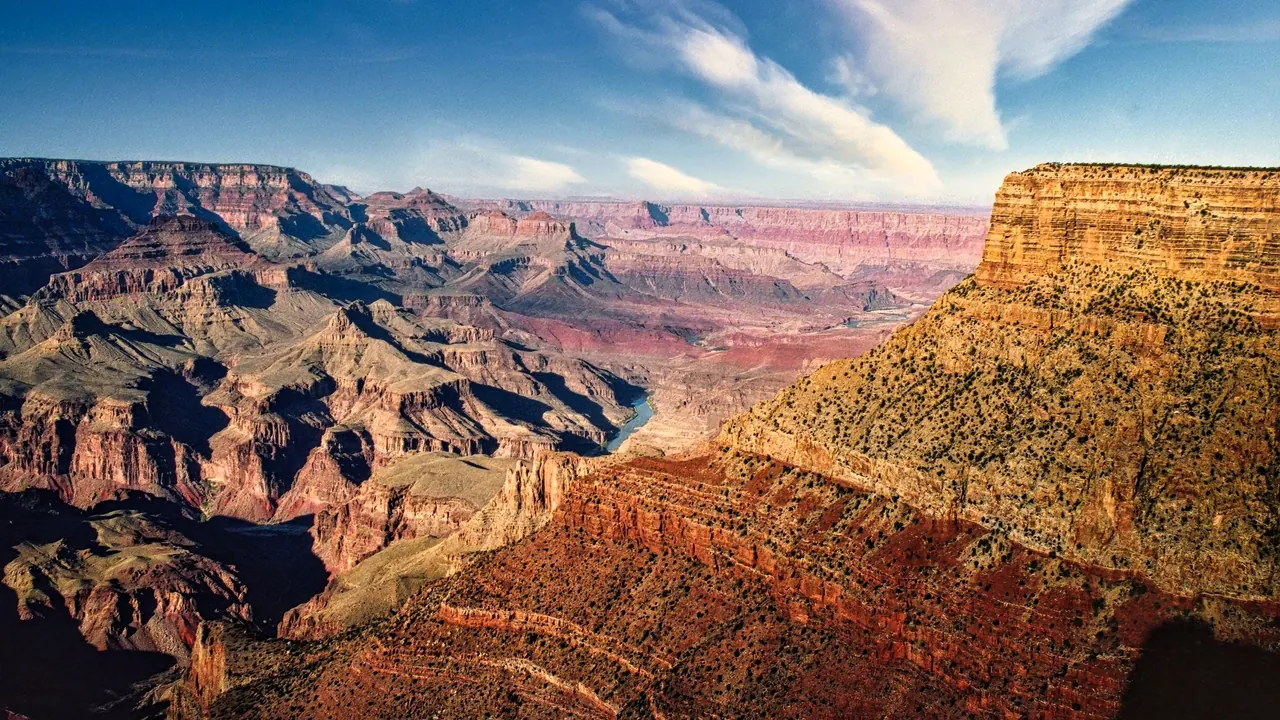
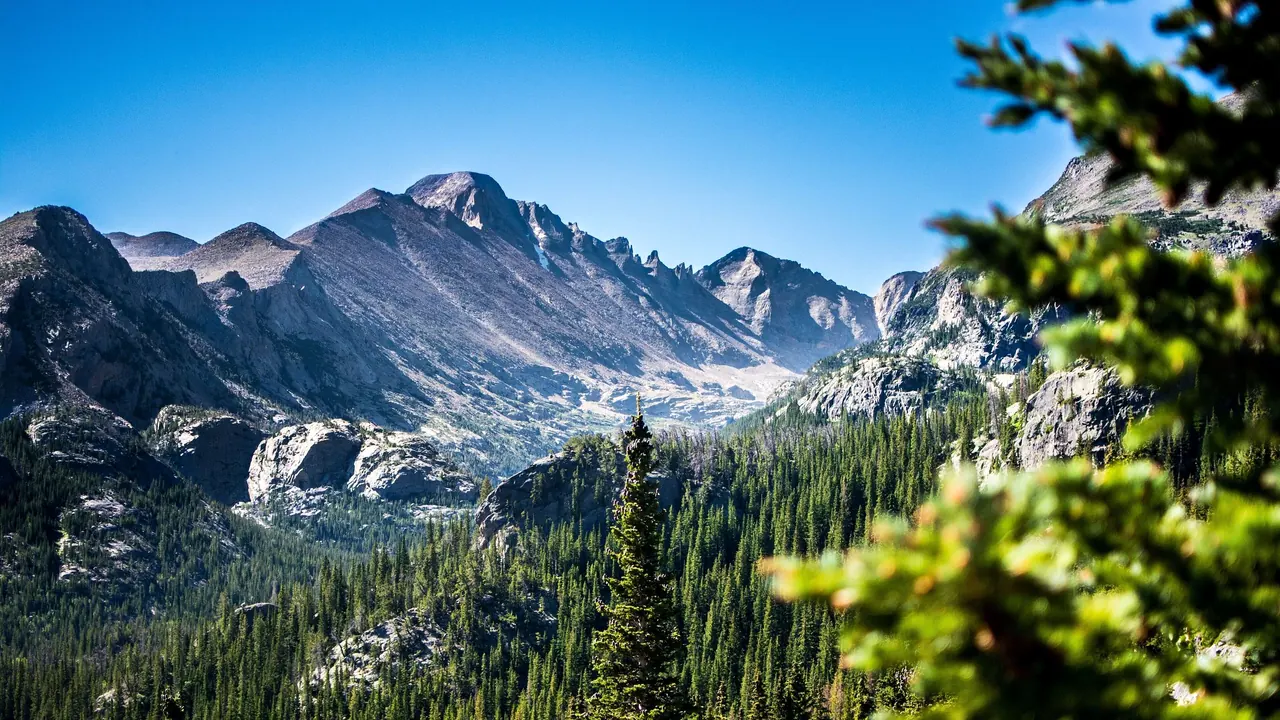
Photos: Grand Canyon by Tom Fisk, Pexels License; Rocky Mountain National Park by Peter Pryharski epicpeter, CC0.
Grand Canyon or Rocky Mountain National Park?
Our verdict in twelve categories, each scored against the same fixed benchmark cities, and the climate month by month, so you can choose for your trip.
Choose Grand Canyon for
- culture and sights
- shopping
- day trips
Grand Canyon suits travellers who want one overwhelming sight with some history and craft around it. The gorge is the point, whether you watch it from the rim at dawn or walk down towards the Colorado. Mary Colter's buildings, the Museum of Northern Arizona and the Native American work sold at Hopi House and Cameron give the days more texture than the Colorado park can. It also works well as a road trip, with Sedona, the cliff dwellings and Antelope Canyon all within reach.
Choose Rocky Mountain National Park for
- wellness
- families
- live music and the arts
Pick Rocky Mountain National Park for a mountain vacation of walking, wildlife and slower days. Families with young children will find the flat lake loops, the elk beside the road and Estes Park's tramway and stables easier going than an unfenced rim and steep descent trails. The riverside cabins and the hot spring pools on the western side also make it the more restful of the two. What it offers is high meadows, tundra and peaks rather than a single great view.
Scoreboard
Twelve categories on one fixed scale from 0 to 100. The shaded stretch is the gap between the two.
Your match
Pick a travel style or drag the sliders, and both match scores follow your weighting.
Wins on culture and sights and shopping with your weighting.
Wins on wellness and families with your weighting.
What matters to you?
Category by category
What the scores mean for a trip.
Beaches & swimming
Neither is a swimming destination, but Grand Canyon at least has one real option. Lake Powell at Page warms to the mid-20s°C in summer and has sandy coves, though it is hours from the South Rim. The turquoise pools below Havasu Falls are a famous reward at the end of a long hike that needs a permit.
In the Rockies the snowmelt lakes stay too cold even in July, and Grand Lake is better for paddleboards than for swimming. On both trips the hotel pool does most of the work.
Food & drink
Both eat at gateway-town level, so the difference is what the nearest town brings. Around the canyon, Flagstaff's old downtown is the better food base, with breweries, diners and Southwestern cooking such as green chile and Navajo frybread. Inside the park, the El Tovar dining room gives you one atmospheric meal.
Estes Park is more about early breakfast diners, steak houses and the taffy and fudge of Elkhorn Avenue. Inside Rocky Mountain National Park there is little beyond a snack bar, so picnics are the rule, and a properly good dinner means driving down to the Front Range cities.
Culture & sights
Grand Canyon has clearly more to see beyond the view. The railway-era village has El Tovar and the Kolb Studio, and there are Colter's Watchtower with its Hopi murals and the Ancestral Puebloan Tusayan ruin. In Flagstaff, the Museum of Northern Arizona and the observatory where Pluto was found fill a couple of absorbing mornings.
Rocky Mountain National Park's man-made sights are mostly about homesteading: the log cabins of the Holzwarth dude ranch, the Moraine Park Discovery Center and the Stanley Hotel with its ghost tours. They are pleasant, but they fill an afternoon.
Nightlife
Neither has much going on after dark, and in both the starry sky is the real evening out. The difference is where the drinking happens. Flagstaff's downtown has dive bars and late student venues but is too far from the rim if you want a dawn start. Estes Park's brewpubs and old saloons and Grand Lake's boardwalk bars sit right at the park gates but close early.
Nature & outdoors
Both are landscapes of the first rank, so the choice is about what kind you want. The Grand Canyon is a trip downwards: rim walks at first light, steep trails towards the Colorado, rafting through the rapids and the rim-to-rim crossing, with condors overhead. The inner canyon's heat rules out serious hiking in summer.
Rocky Mountain National Park is a trip upwards, through wildflower meadows to tundra and peaks above 3,600m, and far more wildlife is in plain sight. You can see elk in Moraine Park, bighorn sheep at Sheep Lakes and moose in the Kawuneeche Valley. It also offers climbing on Lumpy Ridge, fly fishing and snowshoeing in winter.
Day trips
Grand Canyon has the stronger list of outings. Sedona's red rock, the hillside town of Jerome, the pueblos of Wupatki and Walnut Canyon, Montezuma Castle and Antelope Canyon near Page are all worth the trip in their own right, though the drives are long.
From Rocky Mountain National Park, the outings run down the canyon roads to Boulder, Fort Collins and Denver. They give you museums, a pedestrian street and breweries for a rest day, but you swap the scenery for ordinary city life. From the Grand Lake side there are only small mountain towns.
Good for families
Rocky Mountain National Park is the easier place to bring children. The walks around Bear, Sprague and Lily Lakes are short and flat, elk graze in sight of the car, and Estes Park adds a tramway, mini-golf, go-karts and horse riding. The altitude and the elk during the rut still need care.
The canyon gives children a first view they will never forget, Junior Ranger badges and the vintage train from Williams. But the unfenced rim, the steep trails and the summer heat at the bottom make it better for school-age children who walk well than for toddlers.
Getting around
You need a car for both, but the canyon is simpler once you are there. Free shuttles loop the village and run along Hermit Road, and the Rim Trail links viewpoints on foot, so you can park once and leave the car. The train from Williams is another way in. The catch is the North Rim, which is hours away by road.
Rocky Mountain National Park has a summer shuttle up Bear Lake Road. But its two sides are joined only by the winding Trail Ridge Road, which closes for the snowy months, so most people choose either Estes Park or Grand Lake as a base and stay on that side.
Shopping & style
Grand Canyon has one thing genuinely worth buying: Native American craft. Navajo rugs and silver, Hopi kachina carvings and pottery are sold at Hopi House and the old trading posts around Cameron, by staff who know the makers.
Elkhorn Avenue in Estes Park has souvenirs, Western wear, outdoor gear and Native American-style jewellery. It is handy for a forgotten fleece, but there is little reason to browse for long.
Affordability
Both are expensive places to sleep and cheap places to enjoy. At the canyon, the rim lodges and the Tusayan hotels set the price, so a motel in Williams or Flagstaff or a park campground saves the most. The real spending goes on mule rides, helicopter flights and rafting.
In the Rockies, prices are driven by the short summer and the elk season in Estes Park and Grand Lake, and resort-town meals come with a tip on top. Here the saving is in timing, since late spring and late autumn are noticeably cheaper.
Live music & performing arts
Live performance is thin in both and mostly limited to summer. The canyon has a late-summer chamber music festival on the South Rim and occasional Native American dancing, and for more you can go to Flagstaff's symphony and historic theatre. Rocky Mountain National Park's surprise is Grand Lake's repertory theatre staging Broadway-style musicals, plus chamber concerts and bluegrass evenings around Estes Park.
Wellness & relaxation
Rocky Mountain National Park is the better place to unwind. It has lodge spas in Estes Park, porch mornings at cabins on the Fall River and the Big Thompson, and the long-established pools at Hot Sulphur Springs, under an hour from Grand Lake. Together they give it a softer side that the canyon lacks.
At Grand Canyon, rest means stillness: a quiet viewpoint at dawn, the slower forests of the North Rim and very dark skies. For treatments you have to drive a couple of hours to Sedona.
When should you go?
Pick your month. The climate figures are measured averages, not a forecast.
Grand Canyon in July
Rocky Mountain National Park in July
Daytime high, °C
Rainfall in the month, mm
Where the figures come from
Rocky Mountain National Park's temperatures are measured 77 km from the centre, at Kremmling.
Rocky Mountain National Park has no rain gauge within 25 km of the centre, so its rainfall comes from a gridded climate dataset read at the destination rather than from a gauge further away.
Temperature and rainfall are climate normals, averaged over the years shown. Grand Canyon: 1991-2020 normals, Grand Canyon Park (1 km from centre). Rocky Mountain National Park: 2006-2025 (rainfall 1991-2020) normals, Kremmling (77 km from centre).
Grand Canyon is dry all year. The best walking months are April and May, then late September and October, when days are warm without being punishing. June to August is hot where the figures are measured, with July highs around 36°C, and that heat is dangerous on the inner trails. It is also the only time warm enough for a swim, and then only at Lake Powell. Late summer and October bring a little more rain, but never much. Winter is cool and quiet, with December and January highs well below double figures.
Rocky Mountain National Park has a shorter season. On the lower ground around the gateway towns, where the figures are measured, January highs sit around -4°C, and snow closes the high road across the park through the winter. June to September is the main season, with July highs near 29°C and good walking weather in the valleys. The tundra and the high trails are much colder than these figures at any time of year, so pack warm layers even in summer. Summer is also the wettest time, with rain peaking at about 50mm in July, mostly as afternoon thunderstorms, so start high hikes early. September suits both: the canyon cools off, and in the Rockies the elk rut begins.
Which traveller are you?
On an outdoors trip, both are first-rate, so decide by season and by the kind of effort you want. The canyon has the edge as a landscape and is best in spring or autumn, when you hike down first and face the climb out at the end. The Rockies are a summer trip of uphill walking, where you need time to get used to the altitude.
On a family trip with children, Rocky Mountain National Park is the gentler choice, especially with younger ones. The summer is warm rather than scorching, there are animals to watch even from the car, and the town keeps children busy between walks. The canyon suits older children you can trust near an edge.
On a culture and arts trip, Grand Canyon is the clear pick, though neither is really a cultural destination. Hopi and Navajo heritage runs through its buildings, its museums and the craft on sale, so you can plan a morning or two around it. The Rockies offer frontier history that fills an afternoon.
Before you go
| Measure | Grand Canyon | Rocky Mountain National Park |
|---|---|---|
| Currency | US Dollar (USD) | US Dollar (USD) |
| Sockets | AB120 V, 60 Hz | AB120 V, 60 Hz |
| Driving side | Right | Right |
| Time zone | UTC-7 | UTC-7, UTC-6 in summer |
| Emergency number | 911 | 911 |
| Main airport | Phoenix Sky Harbor International Airport (PHX)149 non-stop destinations | Denver International Airport (DEN)231 non-stop destinations |
| Public holidays this year | 12 days | 12 days |
Where else could you go?
Every comparison below shares a destination with this one, so you can follow Grand Canyon or Rocky Mountain National Park somewhere new.
- Sedonavs Grand Canyon
- Zionvs Grand Canyon
- Bryce Canyonvs Grand Canyon
- Canyonlandsvs Grand Canyon
- Archesvs Grand Canyon
- Archesvs Rocky Mountain National Park