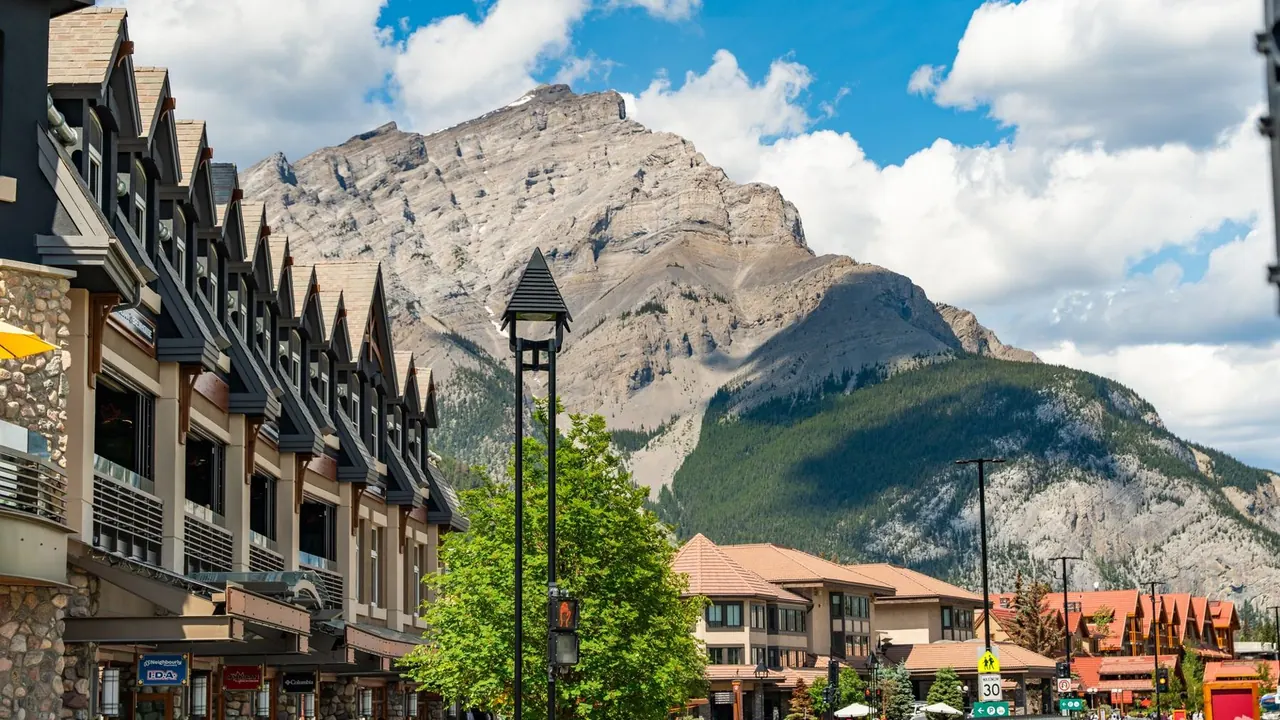
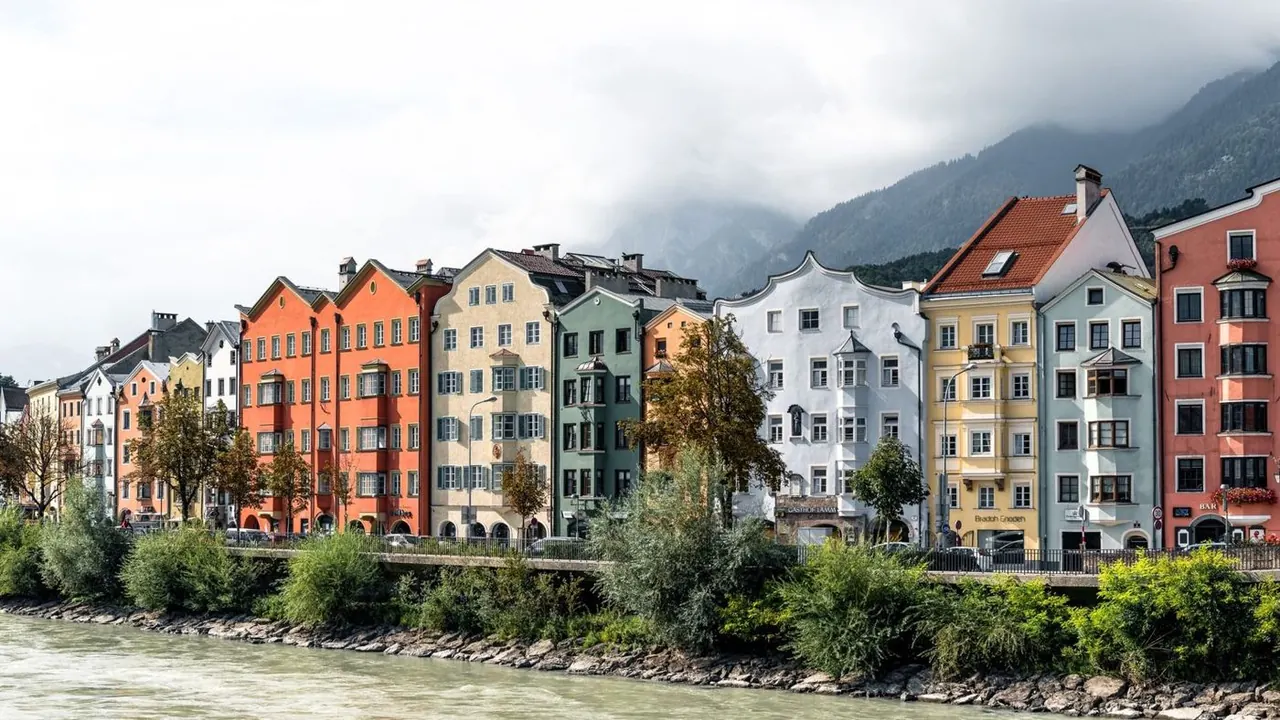
Photos: Banff by bryan pascual, Pexels License; Innsbruck by Wolfgang Weiser, Pexels License.
Banff or Innsbruck?
Our verdict in twelve categories, each scored against the same fixed benchmark cities, and the climate month by month, so you can choose for your trip.
Choose Banff for
- wellness
- nature and the outdoors
Banff is the pick for a trip where the landscape is the whole point. It is a small town inside a national park, with elk on the lawns, bears and bighorn sheep along the roads, glacier-fed turquoise lakes and the Icefields Parkway to the north. A soak in the Upper Hot Springs ends the day. Choose it if you want a wilderness feel and are happy to pay for it, drive to most trailheads and give up much of a city's life.
Choose Innsbruck for
- day trips
- culture and sights
- getting around
Innsbruck gives you mountains just as grand with a real city at their foot. A funicular from the edge of the old town connects with cable cars up to the high ridge, and at the bottom there are Habsburg palaces, an opera house, trams and trains to Munich, Salzburg and the Italian side of the Brenner. It suits travellers who want hiking or skiing in the morning and museums, coffee houses and day trips to other towns besides, and it costs less than Banff.
Scoreboard
Twelve categories on one fixed scale from 0 to 100. The shaded stretch is the gap between the two.
Your match
Pick a travel style or drag the sliders, and both match scores follow your weighting.
Wins on wellness and nature and the outdoors with your weighting.
Wins on day trips and culture and sights with your weighting.
What matters to you?
Category by category
What the scores mean for a trip.
Beaches & swimming
Neither city is a swimming destination, but Innsbruck gives you a little more. The Lanser See and Natterer See on the plateaus above town are shallow enough to be pleasant in July and August, and families make an afternoon of them.
In Banff most of the water is glacier-fed and stays cold even at midsummer. Johnson Lake is the one place where a swim is comfortable, and only on a hot day. Lake Minnewanka and the Vermilion Lakes are for canoeing and photographs.
Food & drink
Both towns serve hearty food for hungry walkers, and Innsbruck's has more regional character. Gröstl, Kaspressknödel, Speck and Kaiserschmarrn belong to a real Tyrolean tradition, and some of the best meals are eaten at mountain huts. In town there are old inns and Viennese-style coffee houses.
Banff runs mostly on Alberta beef, bison, elk, fondue and pub plates along Banff Avenue, with the grand hotels offering the more ambitious menus. Neither town has a market or street-food scene, so plan your meals around the mountains, not the other way round.
Culture & sights
Here the two are far apart. Innsbruck was a Habsburg seat, and its arcaded old town holds the Golden Roof, the Hofburg and the Hofkirche, where 28 bronze figures stand around Emperor Maximilian's tomb. Ambras Castle on the edge of town adds a Renaissance cabinet of curiosities and an armour collection, enough for two or three full days.
Banff's sights tell the shorter story of a railway town and Canada's first national park: the Cave and Basin spring, the castle-like Banff Springs Hotel, the Whyte Museum and the Buffalo Nations Luxton Museum. They are interesting, but a single day covers them.
Nightlife
Innsbruck has the slightly fuller night out, thanks to its university. Bars and small clubs fill the brick arches under the railway viaduct and stay open late at weekends, and the old town adds wine bars.
Banff's evenings are run by seasonal workers and skiers: a handful of pubs and dance bars on Banff Avenue, après-ski at dusk and the same few places every night. It is lively in season and goes very quiet in spring and autumn.
Nature & outdoors
Both are among the great mountain bases, and the difference is in kind. Banff feels like wilderness. Wildlife is part of daily life, the turquoise lakes at Lake Louise and Moraine Lake and the glaciers along the Icefields Parkway are as big as North American scenery gets, and the larches turn gold in autumn.
Innsbruck has the Alps on its doorstep. Cable cars lift you from the old town to a ridge at about 2,300m, the Karwendel park lies behind it, and hut-to-hut routes, via ferratas and paragliding fill the summer. The Stubai Glacier keeps skiing going for most of the year.
Day trips
Innsbruck is a far better base for seeing other places. Medieval Hall in Tirol is ten minutes away, Rattenberg and Kitzbühel are within an hour, and the trains reach Munich and Salzburg in under two. Over the Brenner, Bolzano and Merano bring Italian arcades and Ötzi the Iceman.
From Banff, nearly every outing is into the mountains. For towns, the list stops at Canmore, Field and Golden, plus a long day in Calgary for its museums and Heritage Park.
Good for families
With children, the difference is in how they meet the animals. In Banff the animals are wild: elk on the verges and bighorn sheep beside the road, with the Sulphur Mountain gondola and the catwalks of Johnston Canyon to fill the rest of the day. There is no zoo or science museum nearer than Calgary, and warm layers go in the bag in every season.
Innsbruck brings the animals closer in its Alpenzoo, where ibex, wolves and lynx live on the slope above town, reached by the funicular that carries on up the Nordkette. Summer adds adventure trails and playgrounds by the mountain huts, but the town's sights are aimed at adults, so a wet day with small children needs a plan.
Getting around
Both centres are flat and small enough to walk, but Innsbruck is much easier beyond them. Trams and buses cover the city, regional trains run along the valley from a central station, and the funicular from the old town takes you straight to the high mountains.
Banff's Roam buses and summer park shuttles reach the gondola, Lake Minnewanka, Canmore and Lake Louise. There is no passenger railway, though, and the Icefields Parkway, Yoho and the quieter trailheads really need a car or a tour.
Shopping & style
Innsbruck offers a little more to buy. Maria-Theresien-Strasse has the high-street shops, and the old-town arcades sell loden jackets, dirndls, woodcarvings and crystal. Its specialist ski and outdoor shops are excellent.
Banff Avenue has outfitters, fudge shops and maple souvenirs. Its galleries of Indigenous art and Rocky Mountain painting are the most rewarding stop. In neither town will shopping fill more than an afternoon.
Affordability
Neither is cheap, but Banff is the harder one on the wallet. Building is restricted inside the national park, so rooms are scarce. Resort-priced meals, the park pass, the gondola and lift tickets all add up, and many budget travellers end up sleeping in Canmore or at campgrounds.
Innsbruck carries an Alpine premium too, especially in ski season. Its public transport is fairly priced, city cards bundle lifts and sights together, and student cafés and bakeries keep everyday costs down.
Live music & performing arts
Innsbruck has the steadier programme. The Tiroler Landestheater stages opera, operetta and dance through the season, the symphony orchestra plays regularly, and the summer Festival of Early Music fills historic rooms such as the Spanish Hall at Ambras.
Banff's arts life rests on the Banff Centre on Tunnel Mountain, busiest in summer, and on the autumn Mountain Film and Book Festival, which draws adventurers from around the world. Outside those, live music mostly means bands in pubs.
Wellness & relaxation
Banff has the advantage here because it has real hot springs. The Upper Hot Springs bathhouse on Sulphur Mountain offers an open-air mineral pool above the valley, best of all after skiing with snow falling. The grand hotels have mineral-pool spas of their own.
Innsbruck has no thermal water. Relaxing there means hotel saunas up in Igls, quiet walks and slow evenings at mountain huts, with the big thermal complexes in the Ötztal and Zillertal an hour's drive away.
When should you go?
Pick your month. The climate figures are measured averages, not a forecast.
Banff in July
Innsbruck in July
Daytime high, °C
Rainfall in the month, mm
Temperature and rainfall are climate normals, averaged over the years shown. Banff: 1991-2020 normals, Banff (2 km from centre). Innsbruck: 1991-2020 normals, Innsbruck-Flughafen (3.3 km from centre).
Banff has a true Rocky Mountain winter, with daytime highs around -3°C in January and freezing days from November to February. That is ski and snowshoe weather, not sightseeing weather. Summer is short and mild, peaking at about 23°C in July, which is pleasant for hiking but only warm enough for a dip at Johnson Lake on the hottest August afternoons. Rainfall is light all year, a little heavier in June, and autumn turns cold quickly after September.
Innsbruck is warmer in every month. Winter days stay just above freezing, and July reaches about 26°C, warm enough for the plateau lakes. Summer is also the wettest season, with about 144mm in August, often as afternoon showers between long sunny spells. May, June, September and early October are the most comfortable months for walking the town and the lower trails. Winter brings the least sunshine, and the ski season runs on the surrounding slopes.
Which traveller are you?
On a culture and arts trip, Banff's museums and the Cave and Basin fill one day before the mountains take over. Innsbruck keeps you busy for several, with Maximilian's bronze court in the Hofkirche, the rooms of Ambras Castle and evenings of opera or early music.
For a relaxing and wellness trip, Banff is the gentler choice: an easy stroll along the Bow River, then an evening soak in hot mineral water with the peaks all around. In Innsbruck you trade that for a sauna, and thermal water means a drive.
On a trip on a tight budget, Banff means cooking your own dinners, choosing one paid outing and filling the other days with free trails and lakeshores. Innsbruck stretches further: sleep in town, picnic on Speck and mountain cheese, and still ride the funicular and take a train to Hall.
Before you go
| Measure | Banff | Innsbruck |
|---|---|---|
| Official language | French, English | German, Austrian Sign Language |
| Currency | Canadian Dollar (CAD) | Euro (EUR) |
| Sockets | AB120 V, 60 Hz | CF230 V, 50 Hz |
| Driving side | Right | Right |
| Time zone | UTC-7, UTC-6 in summer | UTC+1, UTC+2 in summer |
| Emergency number | 911 | 112 |
| Elevation | 1,400 m | 574 m |
| Main airport | Calgary International Airport (YYC)109 km from centre103 non-stop destinations | Innsbruck Airport (INN)4 km from centre40 non-stop destinations |
| Public holidays this year | 13 days | 16 days |
By the numbers
| Measure | Banff | Innsbruck |
|---|---|---|
| City population | 8,305 | 132,499 |
| People per km² | 1,730 | 1,263 |
| Museums within 10 km | 4 | 28 |
| UNESCO World Heritage sites within 50 km | 0 | 1 |
Where else could you go?
Every comparison below shares a destination with this one, so you can follow Banff or Innsbruck somewhere new.