Photos: Bariloche by Maclemo, CC BY-SA 3.0, cropped; Queenstown by Robert Linsdell, CC BY 2.0, cropped.
Bariloche or Queenstown?
Our verdict in twelve categories, each scored against the same fixed benchmark cities, and the climate month by month, so you can choose for your trip.
Choose Bariloche for
- prices
- culture and sights
- live music and the arts
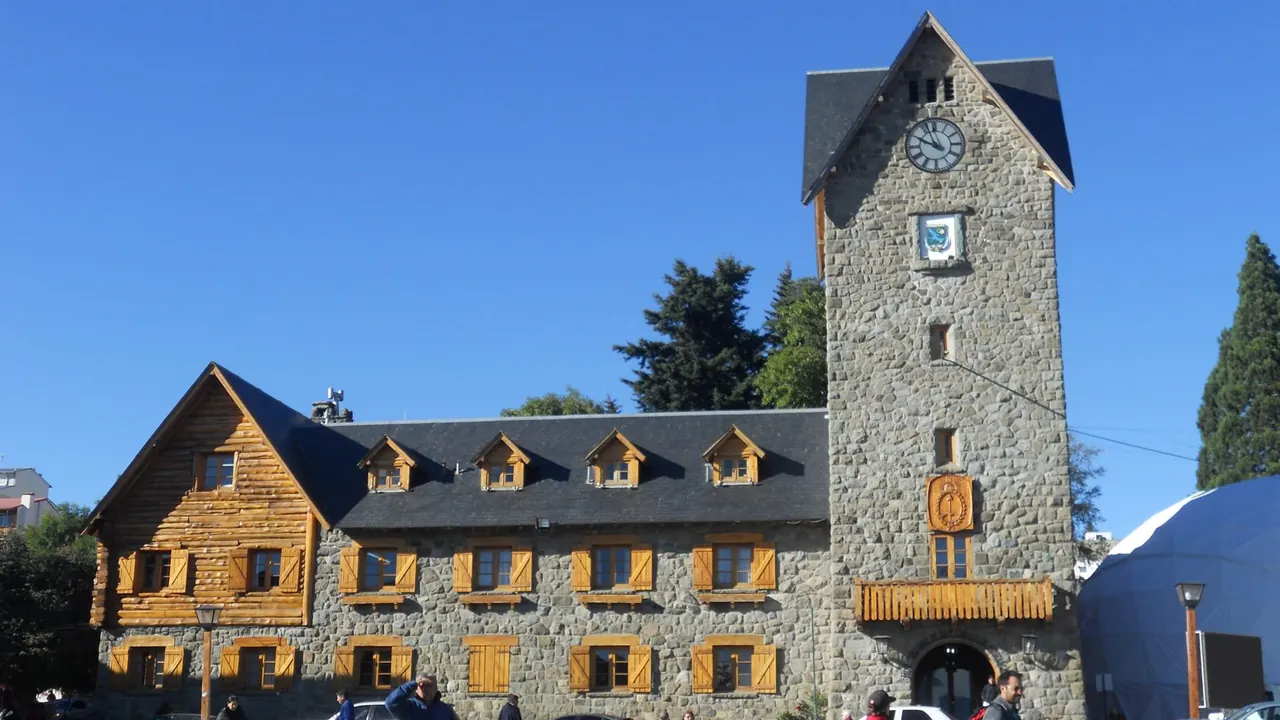
Bariloche suits the traveller who wants big mountain scenery at a gentler cost, with a little more to the town itself. The stone and timber Centro Cívico, the Museo de la Patagonia and the yearly week of chamber concerts at Llao Llao give it some substance beyond the trails. Lamb roasted over the fire, chocolate and lakeside brewery gardens make for a slow, sociable evening rather than a loud one. Summers are reliably dry and sunny, which helps if you are planning long hikes between refuges.
Choose Queenstown for
- day trips
- nightlife
- families
Queenstown is for a livelier, more expensive trip built around doing things. This is where commercial bungy jumping began, and the jet boats, paragliding and gondola-served bike tracks start at the edge of town. Evenings bring a busier bar scene, and the gold-rush streets of Arrowtown, the quieter lake town of Wanaka and the wine country of Gibbston are all within easy reach. Choose it if adrenaline, après-ski and a long lunch among the pinot vines matter more than the bill.
Scoreboard
Twelve categories on one fixed scale from 0 to 100. The shaded stretch is the gap between the two.
Your match
Pick a travel style or drag the sliders, and both match scores follow your weighting.
Too close to call, 2 points apart
Wins on prices and culture and sights with your weighting.
Wins on day trips and nightlife with your weighting.
What matters to you?
Category by category
What the scores mean for a trip.
Beaches & swimming
Neither town is a beach destination, and both have cold glacial lakes. Bariloche comes off slightly better: its pebble and sand shores at Playa Bonita, Villa Tacul and Lago Gutiérrez make good picnic spots, and the water is a few degrees less harsh.
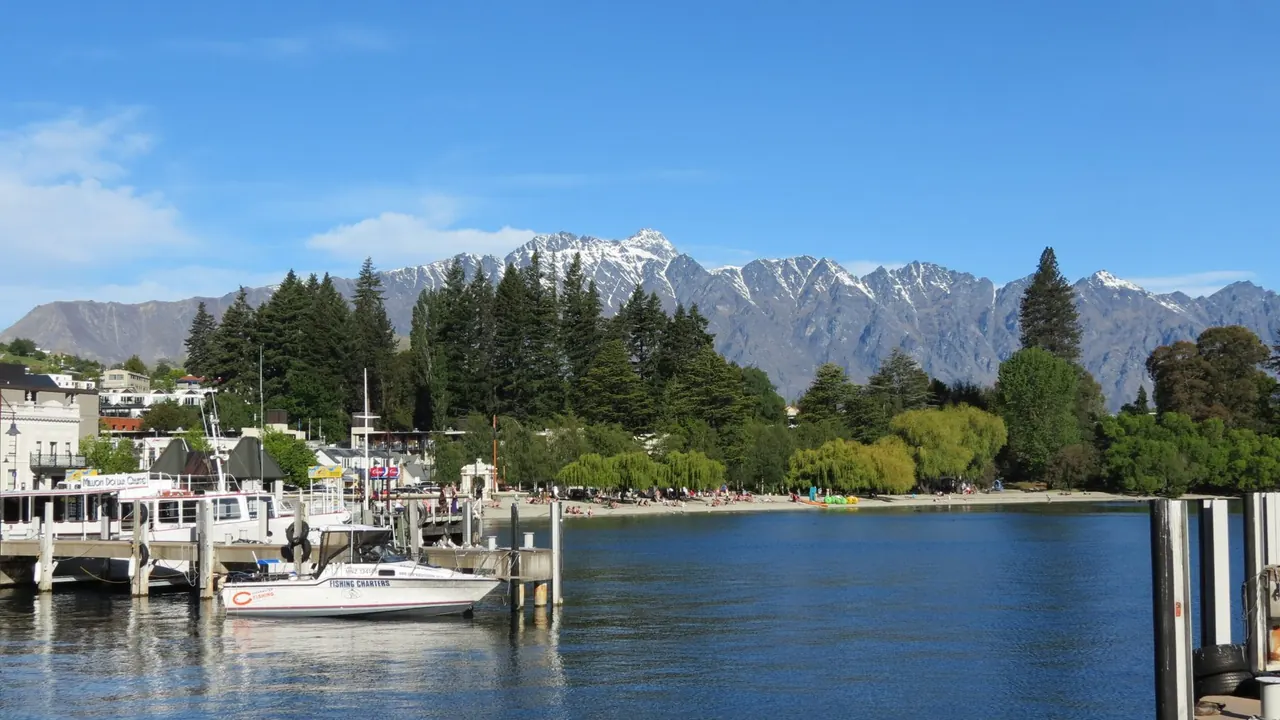
Queenstown's lake is colder still, and its town beach is a small shingle strip on Queenstown Bay where the main sport is jumping off the jetty. In both places, warmer water means driving to a smaller lake, such as Lago Moreno near Bariloche or Lake Hayes near Queenstown.
Food & drink
The two are on a level footing, but they eat and drink differently. Bariloche has a stronger regional identity: lamb roasted on an iron cross, lake trout, smoked meats, chocolate from Central European tradition, and craft beer in brewery gardens along the road to Cerro Catedral.
Queenstown has no cuisine of its own but more variety in a small space, from ramen and pies to polished lodge dining. Its real asset is Central Otago pinot noir, with winery lunches in Gibbston Valley a short drive away. Choose beer and fireside lamb, or wine among the vines.
Culture & sights
Bariloche has more to show, though only modestly. The 1930s Centro Cívico by Bustillo and de Estrada gives the town a distinct architectural character, the Museo de la Patagonia covers Mapuche and settler history, and the Llao Llao hotel and its chapel make a fine stop on the Circuito Chico.
Queenstown has the 1912 steamship TSS Earnslaw, a few gold-rush stone buildings and no museum of real weight. Its history is better told twenty minutes away in Arrowtown. In both towns a morning is enough, but Bariloche's morning has more in it.
Nightlife
Queenstown is the better night out for adults. Seasonal workers, backpackers and skiers keep the bars around Shotover, Camp and Searle streets busy past midnight, with après-ski in winter and lakefront terraces in summer, though it is drinking and DJ bars rather than real clubs.
Bariloche's big dance clubs belong to the school-leavers' graduation trips, and most grown-up visitors will steer clear of them. What remains is a quiet evening of late dinners and brewpubs near Calle Mitre.
Nature & outdoors
Both towns are among the great mountain-lake settings, and the difference is in the kind of experience. Bariloche is classic Andean walking country inside Nahuel Huapi National Park, with refuge-to-refuge trails to Frey and Jakob, coihue and lenga forest, Tronador's glaciers and South America's largest ski area at Cerro Catedral.
Queenstown adds an adrenaline industry to its scenery: bungy, jet boats on the Shotover, paragliding and gondola-served bike trails, alongside the Routeburn Track, four ski fields and Milford Sound. Pick Bariloche for quiet trails and Queenstown for thrills.
Day trips
Queenstown has more places worth a day. Arrowtown's miners' cottages and Chinese settlement are only twenty minutes away, Wanaka is about an hour over the Crown Range, and the vineyards of Gibbston, Cromwell and Bannockburn, along with the goldfields towns of Clyde and Alexandra, make easy outings.
Bariloche's outings are mostly into scenery. Villa La Angostura, Colonia Suiza's curanto and El Bolsón's craft market are the town options, but there are no heritage sites or wine regions within reach.
Good for families
Both are safe outdoor towns for children, but Queenstown has a few more things built with them in mind. The Bob's Peak gondola and luge, the kiwi wildlife park, the steamship cruise and the indoor pool at Frankton help fill a day, even if the famous jumps have age and weight limits.
Bariloche relies more on nature and treats: sledging at Cerro Otto, boat trips to Isla Victoria, chocolate workshops and the St Bernards in the Centro Cívico. With no zoo or aquarium, a wet day there is harder to fill.
Getting around
In both towns, getting about is easy in the centre and harder beyond it. Bariloche's difficulty is its length: the town runs about 25km along Avenida Bustillo, so where you stay matters. City buses reach Llao Llao and Cerro Catedral, but Tronador or Villa La Angostura call for a car or a tour.
Queenstown's centre is tinier and more compact, with buses and a water taxi to Frankton and Arrowtown. Its weak point is the single Frankton road, which backs up at busy times, and wineries and trailheads still mean driving winding mountain roads.
Shopping & style
Chocolate is what most people carry home from Bariloche, and greenstone or merino from Queenstown. Calle Mitre is lined with chocolatiers, with Patagonian wool, leather and smoked trout alongside, and the craft fairs add woodwork and Mapuche-style textiles.
Queenstown's Mall leans towards possum-wool knitwear, greenstone jewellery, landscape galleries and serious ski and bike shops. In both, the range stops short of fashion and design boutiques, so a short browse is enough.
Affordability
Bariloche is noticeably easier on the wallet. It is expensive by Argentine standards, especially in July and January, but cabins in the side valleys, self-catering, city buses and free hiking keep a trip reasonable, and spring and autumn cost less.
Queenstown is costly at every turn: rooms, meals and drinks are at resort level, and the bungy jumps, jet boats, scenic flights and lift passes that draw people here add up fast. Frankton's supermarkets and free trails help, but it needs a careful budget.
Live music & performing arts
Bariloche has the stronger musical tie. The Camerata Bariloche chamber orchestra carries the town's name, and the yearly Semana Musical Llao Llao brings chamber concerts above the lake, though on most evenings there is little to attend.
Queenstown offers pub covers bands, occasional touring comedians and a few days of street performance during the winter festival, with no orchestra or theatre season.
Wellness & relaxation
Neither has hot springs or a bathing tradition, so the two are close, and the difference is in style. Bariloche's rest comes from grand lakeside hotel spas such as Llao Llao and slow days of fires and dinners in the wooded valleys.
Queenstown's speciality is a private cedar hot tub on a hillside above the Shotover, plus lodge spas towards Arrowtown and the quiet of Glenorchy. In both places, stay outside the busy centre if rest is the aim.
When should you go?
Pick your month. The climate figures are measured averages, not a forecast.
Bariloche in July
Queenstown in July
Daytime high, °C
Rainfall in the month, mm
Where the figures come from
Queenstown has no weather station within reach, so its figures come from a gridded climate model rather than a measured record, and read a broad area rather than the city itself.
Temperature and rainfall are climate normals, averaged over the years shown. Bariloche: 1991-2020 normals, Bariloche Aerodrome (11.2 km from centre). Queenstown: 1991-2020 normals, TerraClimate 4 km grid at the town, no weather station within 90 km.
Both are southern-hemisphere mountain towns, so summer runs from December to March and the ski season is the middle of the year. Bariloche has the clearer pattern. January and February reach about 23°C with very little rain and long sunny days, which is ideal for hiking and for sitting by the lake. Rain and snow then build from May, peaking at around 170mm in June, and the shorter days of the winter months mean skiing rather than walking.
Queenstown is a little cooler in summer, at about 20°C, and its rain is spread across the whole year rather than kept for winter. September and October are actually the wettest stretch, at around 200mm in September, so spring is less settled than in Bariloche. Late summer and autumn, from February to April, give the best mix of mild days and walkable trails, and from June to August it is cold enough for snow on the nearby ski fields.
Which traveller are you?
On a trip on a tight budget, Bariloche is the easier choice. Its hotels and restaurants charge resort prices too, but hostels, cabins in the side valleys, city buses and free national park trails keep costs down far better than Queenstown, where the activities themselves are expensive.
For a food and nightlife trip, Queenstown has the edge. Its few central blocks of cocktail and DJ bars stay loud late, and Gibbston's cellar doors add wine lunches. Bariloche's nights are quieter, with brewpubs and long dinners, and its big clubs are full of teenagers.
For thrill-seekers drawn by bungy, canyon swings, skydiving and jet boats, Queenstown is the place to go, since commercial bungy began at its Kawarau Bridge. Bariloche offers kayaking, riding and fly fishing instead, which suits a calmer kind of adventure.
Before you go
| Measure | Bariloche | Queenstown |
|---|---|---|
| Official language | Spanish | English, New Zealand Sign Language, Māori |
| Currency | Argentine Peso (ARS) | New Zealand Dollar (NZD) |
| Sockets | CI220 V, 50 Hz | I230 V, 50 Hz |
| Driving side | Left | Left |
| Time zone | UTC-3 | UTC+12, UTC+13 in summer |
| Emergency number | 117 or 911 | 111 |
| Elevation | 794 m | 324 m |
| Main airport | Teniente Luis Candelaria International Airport (BRC)12 km from centre17 non-stop destinations | Queenstown Airport (ZQN)7 km from centre7 non-stop destinations |
| Public holidays this year | 16 days | 12 days |
By the numbers
| Measure | Bariloche | Queenstown |
|---|---|---|
| City population | 136,381 | 29,000 |
| People per km² | 619 | - |
| Museums within 10 km | 3 | 0 |
| UNESCO World Heritage sites within 50 km | 0 | 0 |
Where else could you go?
Every comparison below shares a destination with this one, so you can follow Bariloche or Queenstown somewhere new.