Photos: Blue Mountains by Abracadebra68, CC BY-SA 4.0, cropped; Kangaroo Island by Navin75, CC BY-SA 2.0, cropped.
Blue Mountains or Kangaroo Island?
Our verdict in twelve categories, each scored against the same fixed benchmark cities, and the climate month by month, so you can choose for your trip.
Choose Blue Mountains for
- day trips
- getting around
- culture and sights
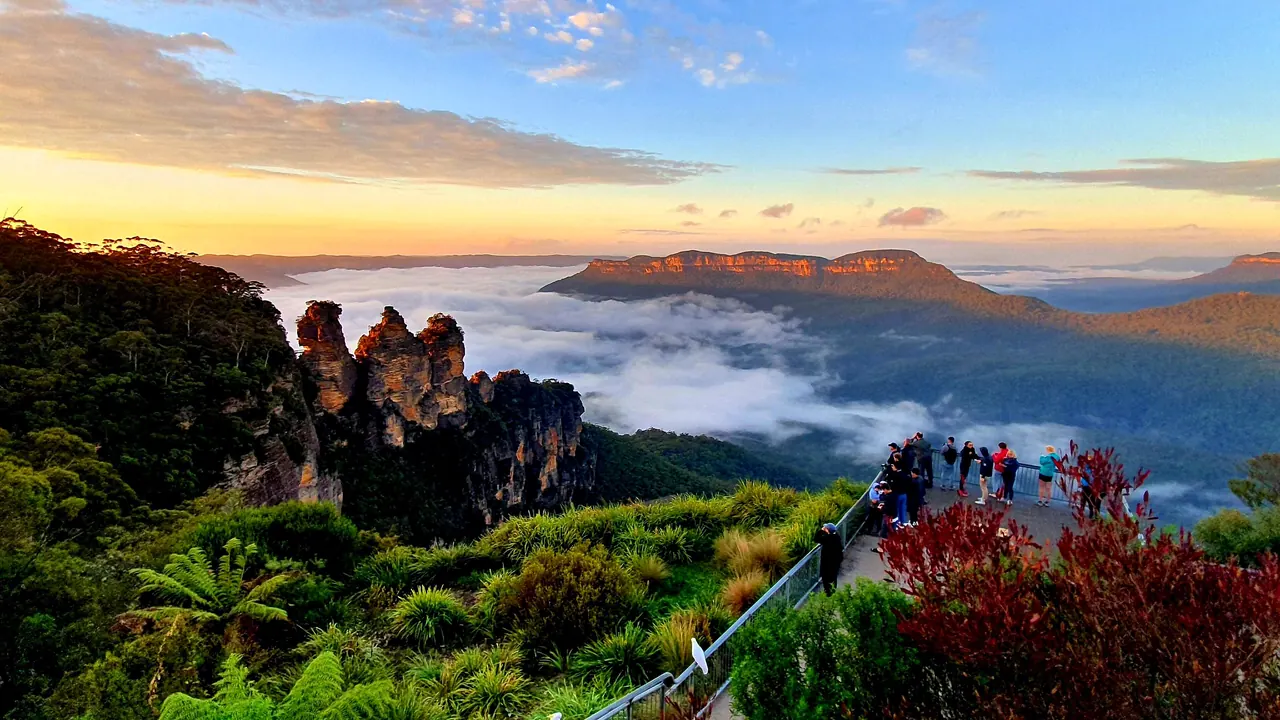
The Blue Mountains suit a walking break within easy reach of Sydney. Clifftop tracks start at the edge of the villages, trains link the ridge towns, and the day ends by a guesthouse fire with dinner in Leura or Blackheath. It is the easier and cheaper trip of the two, with more heritage, more spas and Sydney close enough for a day out.
Choose Kangaroo Island for
- beaches
- families
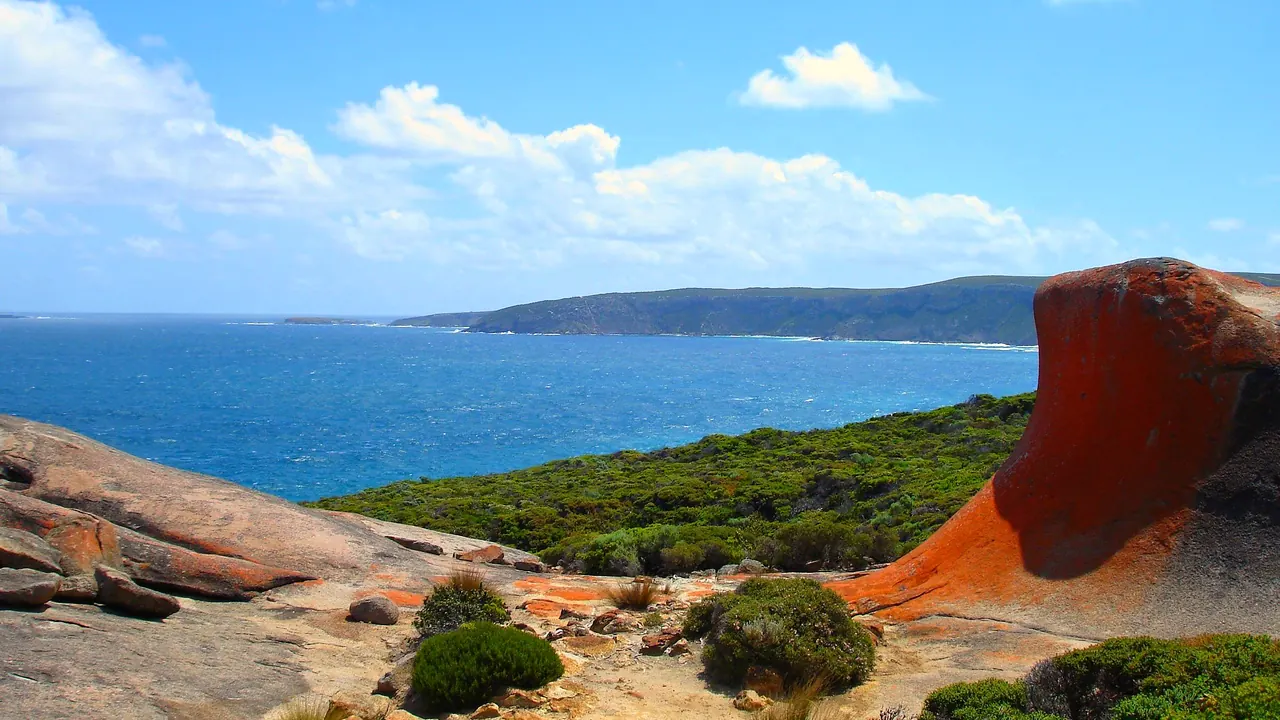
Choose Kangaroo Island if you want wild animals and empty coast. You can walk among sea lions at Seal Bay, watch kangaroos graze at dusk and swim off the north coast beaches. It asks more of you: a ferry or flight, a hire car and long drives. In return you get a remoteness the mountains cannot offer, though there is little to do in the evenings and no towns to explore.
Scoreboard
Twelve categories on one fixed scale from 0 to 100. The shaded stretch is the gap between the two.
Your match
Pick a travel style or drag the sliders, and both match scores follow your weighting.
Wins on day trips and getting around with your weighting.
Wins on beaches and families with your weighting.
What matters to you?
Category by category
What the scores mean for a trip.
Beaches & swimming
The Blue Mountains are high sandstone country with no coast. Swimming here means shaded, cold creek pools such as the Blue Pool near Glenbrook, or the water below a waterfall. For the sea you need a separate two-hour trip down to Sydney.
Kangaroo Island has proper beaches, wide and usually empty. The calm north coast at Emu Bay, Snelling Beach and the rock pool at Stokes Bay is good for swimming, while the south coast surf at Vivonne Bay is better for walking. The water is cool, but at least there is sea to swim in.
Food & drink
Food plays about the same modest part in both, but the kind of eating differs. The Blue Mountains are a place of long breakfasts, bakeries and high tea with a valley view. A few serious restaurants in Leura and Blackheath cook with Central West produce and wine.
On Kangaroo Island you eat best by shopping from the producers: Ligurian honey, American River oysters, sheep's milk cheese and marron, cooked in your own kitchen or packed for a picnic. Restaurants are few and close early, so self-catering matters more here than in the mountains.
Culture & sights
The Blue Mountains have far more to see, all of it left by their years as Sydney's resort. There are Art Deco shopfronts in Katoomba, Federation gardens in Leura, the Norman Lindsay Gallery and the colonial road's inns at Mount Victoria and Hartley. Darug and Gundungurra rock art lines some of the walking tracks.
Kangaroo Island has little beyond the settlement site at Reeves Point and three lighthouses at Cape Willoughby, Cape Borda and Cape du Couedic. These are good stops on a drive, but not a day's sightseeing.
Nightlife
Neither is a place to go out at night. Katoomba at least has a few pubs and a small bar that fill up at weekends. On Kangaroo Island a single pub each in Kingscote and Penneshaw is all there is, and evenings go to stargazing, since kangaroos on the roads make driving after dark unwise.
Nature & outdoors
Both are outstanding, but for different things. The Blue Mountains are about landscape: sheer sandstone cliffs, eucalypt valleys and tracks that drop from Katoomba or Blackheath down rock-cut stairways to waterfalls. Add the slot canyons for canyoning and the Jenolan Caves.
Kangaroo Island is about animals. You walk among sea lions at Seal Bay, see fur seals under Admirals Arch and kangaroos and koalas along the roads, and divers can look for leafy sea dragons. Its scenery is coastal, from Remarkable Rocks to the dunes of Little Sahara, and it takes long drives to reach.
Day trips
The Blue Mountains make a far better base for excursions. Trains run down to Sydney Harbour in about two hours, passing Old Government House at Parramatta. By car you can reach gold-rush Bathurst, the Hawkesbury towns of Windsor and Richmond, and Mudgee's cellar doors.
From Kangaroo Island, outings mostly mean driving between small towns and farm gates. The Fleurieu Peninsula and McLaren Vale lie across a forty-five-minute ferry crossing, which makes a long day, and most visitors see them on the way to or from Adelaide.
Good for families
Both make a decent family trip, but they suit different children. In the Blue Mountains the thrills are mechanical and underground: the steep Scenic Railway, the cableways and the lit chambers of the Jenolan Caves. Short tracks suit small legs, but unfenced drops call for close watching.
Kangaroo Island is better for animal-mad children, with sea lions on the sand, kangaroos at dusk and tobogganing at Little Sahara. The price is long drives across the island and few facilities.
Getting around
The Blue Mountains are much simpler. The towns sit along one railway from Glenbrook to Mount Victoria, several classic walks start near a station, and a sightseeing bus links the lookouts at Katoomba and Leura. Only the Megalong Valley, Mount Wilson and Jenolan really need a car.
On Kangaroo Island a car is essential from the moment you land. The island is about 150km long, with gravel side roads, no public transport for visitors and wildlife that makes driving after dark a risk.
Shopping & style
Neither is a shopping destination, but the Blue Mountains give you more to browse. Leura Mall has boutiques, galleries and sweet shops, and Katoomba and Blackheath have antiques, second-hand books and vintage goods. Kangaroo Island's shopping is mostly honey, gin, cheese and eucalyptus oil bought from the producers, plus a few small galleries.
Affordability
The Blue Mountains are the cheaper trip, though weekends and school vacations push up guesthouse rates. The train from Sydney is cheap, nearly every lookout and track is free, and Katoomba has motels and hostels. Midweek stays cost noticeably less.
Kangaroo Island costs more before you even arrive, with the ferry or flight and then car hire. After that, beds are scarce, groceries and fuel are dearer than on the mainland, and the best wildlife outings carry tour fees.
Live music & performing arts
Both send you to a big city for real concerts or theatre: Sydney from the mountains, Adelaide from the island. The Blue Mountains at least have community theatre in Katoomba and Springwood, folk sets in pubs and a midwinter street festival with Christmas-in-July dinners. On Kangaroo Island you might find an occasional pub band and not much more.
Wellness & relaxation
The Blue Mountains have been Sydney's retreat since the late nineteenth century and are better set up for pampering. Leura, Katoomba and Blackheath have day spas, the clifftop hotels have treatment rooms, and there are yoga retreats in the bush, which makes it easy to plan a slow weekend for two.
On Kangaroo Island, rest comes from emptiness: quiet roads, dark skies and a remote cottage near Flinders Chase. Spa treatments are mostly found only in the expensive clifftop lodges.
When should you go?
Pick your month. The climate figures are measured averages, not a forecast.
Blue Mountains in July
Kangaroo Island in July
Daytime high, °C
Rainfall in the month, mm
Temperature and rainfall are climate normals, averaged over the years shown. Blue Mountains: 1991-2020 normals, Katoomba (1.4 km from centre). Kangaroo Island: 1991-2020 normals, Kingscote (13.4 km from centre).
The two have almost opposite rain calendars. The Blue Mountains are wettest in summer, with February the wettest month at about 195mm, while Kangaroo Island is driest in summer and gets its rain in winter. In the mountains, summer highs of around 24°C make for comfortable walking but bring heavy downpours, so spring and autumn are the most reliable seasons. Winter days of about 10°C are crisp and cold, still good for walking if you dress in layers.
Kangaroo Island is warmer all year round, reaching about 27°C in January and staying mild through winter. The sea is warmest at around 20°C from February to March, so swimming is for high summer and bracing even then. Late spring to early autumn is the dry, warm stretch that suits the island best. From May to August the rain returns.
Which traveller are you?
On a beach and sun trip, Kangaroo Island is the only real choice of the two. Its north coast gives calm, empty swimming through a long, dry summer, though the cool water makes for brisk dips rather than lazy days. The mountains have no coast.
For a culture and arts trip, the Blue Mountains are the better pick, though a modest one. Over a couple of days you can fit resort-era towns, a painter's house and Aboriginal rock art between walks. The island offers little beyond lighthouse stops.
On a trip on a tight budget, the Blue Mountains make your money go much further. The walking costs nothing and you can arrive without a car. On Kangaroo Island the expense comes with the trip itself, and careful planning only softens it.
Before you go
| Measure | Blue Mountains | Kangaroo Island |
|---|---|---|
| Official language | English | English |
| Currency | Australian Dollar (AUD) | Australian Dollar (AUD) |
| Sockets | I230 V, 50 Hz | I230 V, 50 Hz |
| Driving side | Left | Left |
| Time zone | UTC+10, UTC+11 in summer | UTC+9:30, UTC+10:30 in summer |
| Emergency number | 000 | 000 |
| Main airport | Sydney Kingsford Smith International Airport (SYD)99 non-stop destinations | Kingscote Airport (KGC)1 non-stop destination |
| Public holidays this year | 11 days | 12 days |
By the numbers
| Measure | Blue Mountains | Kangaroo Island |
|---|---|---|
| Population | 30,049 | 4,250 |
| People per km² | 21 | - |
| Swim season, months above 21 °C | - | None |
Where else could you go?
Every comparison below shares a destination with this one, so you can follow Blue Mountains or Kangaroo Island somewhere new.
- Great Ocean Roadvs Kangaroo Island
- Great Ocean Roadvs Blue Mountains
- Sunshine Coastvs Blue Mountains
- K'garivs Blue Mountains
- Tasmaniavs Blue Mountains
- Tasmaniavs Kangaroo Island