Australia
Kangaroo Island
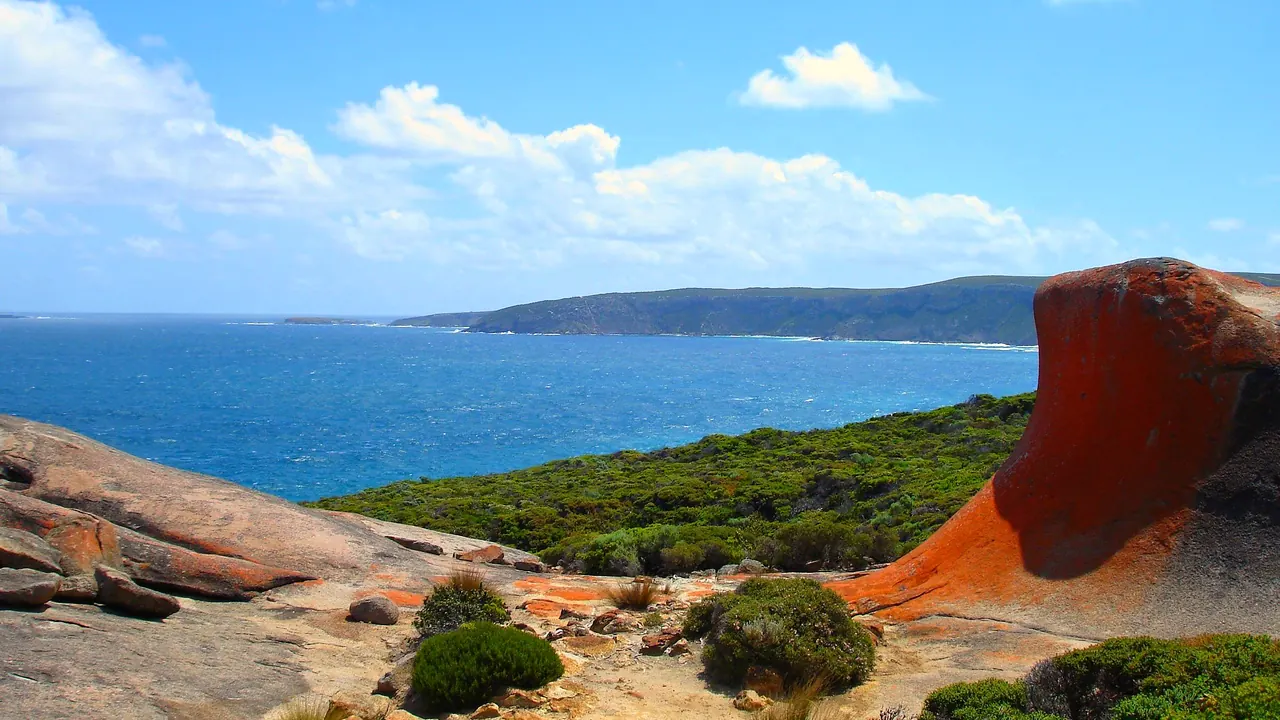
Remarkable Rocks above the coast
- Nature & outdoors87
- Families55
- Beaches50
Photo: Navin75, CC BY-SA 2.0, cropped
Match
29
Every category weighted equally
- Beach & sun35
- Culture & arts21
- Food & nightlife21
- Family trip37
- Outdoors38
- Relax & unwind36
- Shopping & style24
- On a budget28
Kangaroo Island in twelve categories
Our verdict on each, scored 0 to 100 against the same fixed benchmark cities, so a score means the same thing on every page.
Beaches & swimming. Scores 50 out of 100.
Food & drink. Scores 36 out of 100.
Culture & sights. Scores 12 out of 100.
Nightlife. Scores 4 out of 100.
Nature & outdoors. Scores 87 out of 100.
Day trips. Scores 12 out of 100.
Good for families. Scores 55 out of 100.
Getting around. Scores 27 out of 100.
Shopping & style. Scores 10 out of 100.
Affordability. Scores 20 out of 100.
Live music & performing arts. Scores 3 out of 100.
Wellness & relaxation. Scores 35 out of 100.
Kangaroo Island category by category
Beaches & swimming
50The beaches are beautiful and almost always empty: wide white sand, turquoise water and often nobody else in sight. The north coast is the place to swim. Emu Bay, Stokes Bay with its rock pool reached through a tunnel of boulders, and Snelling Beach face the calmer gulf waters. The south coast, including the long sweep of Vivonne Bay, takes the full Southern Ocean swell, and rips make many of its beaches better for walking than swimming.
The sea is cool even at its warmest, about 19-20°C from February to March, and a summer swim is bracing rather than languid. People come here for the wildlife and take a beach day between sightings. Beach life is never the main event.
Food & drink
36The island eats from its own produce rather than from a restaurant scene. It is known for honey from its pure Ligurian bee population, for oysters grown in the sheltered bays around American River, and for sheep's milk cheese, marron, lamb and local gin and wine. The best way to taste it is to drive between farm gates, cellar doors and tasting rooms, and to buy for a picnic or a self-catering kitchen.
Eating out is limited. Kingscote and Penneshaw have a handful of cafés, pub dining rooms and seafood kiosks, and the luxury lodges serve fine produce-led menus to their own guests. Many places close early or out of season, so an evening meal sometimes needs planning.
Culture & sights
12Built heritage is thin and modest. South Australia's first official European settlement began at Reeves Point near Kingscote, where a few markers, an old mulberry tree and a small museum in a settler's cottage tell the story. The island's most striking buildings are its nineteenth-century lighthouses: Cape Willoughby on the eastern tip, Cape Borda above the north-west cliffs and Cape du Couedic in the far south-west. They have keepers' cottages and guided tours.
These make good stops on a drive, but there are no galleries or historic towns to fill a day. The island's interest lies almost entirely outdoors.
Nightlife
4There is effectively no nightlife. Kingscote and Penneshaw each have a pub for a beer and a counter meal, and that is the extent of going out. Evenings belong to dusk wildlife walks and dark-sky stargazing. Most visitors stay put after sunset anyway, because kangaroos and wallabies make driving at night a real hazard.
Nature & outdoors
87This is one of the best places in the world to see wild animals without effort. At Seal Bay a guided walk leads onto a beach shared with a colony of Australian sea lions. At Admirals Arch in Flinders Chase National Park, New Zealand fur seals haul out under a sea-carved rock bridge. Kangaroos graze at dusk, and koalas, echidnas, goannas and abundant birdlife turn up along the roads. Lucky visitors may see a platypus in the western creeks. Divers and snorkellers look for leafy sea dragons under the jetties, and dolphins work the northern bays.
The landscape is wind-shaped rather than mountainous: the granite domes of Remarkable Rocks, the dunes of Little Sahara, limestone caves at Kelly Hill, mallee scrub and high cliffs on the north coast. The Kangaroo Island Wilderness Trail runs for several days through the south-west, and kayaking, fishing and sandboarding fill the rest. The western end is a long drive from the eastern towns, so it pays to stay out west for a night or two.
Day trips
12There are few separate places to visit. The island's settlements, Kingscote, Penneshaw, American River and Parndana, are small country towns, worth a stop for supplies or a coffee rather than a day out. Driving between them, with cellar doors and farm gates along the way, is the extent of the island's own outings.
The mainland is about forty-five minutes away by ferry from Penneshaw to Cape Jervis. From there the seaside towns of the Fleurieu Peninsula and the McLaren Vale wine region are within reach. With the crossing and the drive, though, that makes a long day, and most visitors save those places for the journey to or from Adelaide.
Good for families
55For children who love animals, this is a remarkable trip. They can walk among sea lions on the sand at Seal Bay, watch kangaroos at dusk outside the door and spot koalas in the gums. They can toboggan down the dunes at Little Sahara, crawl through the Kelly Hill caves and splash in the calm water at Emu Bay. A few small wildlife parks and farm attractions add hands-on encounters, and the island is quiet and safe.
The difficulty is distance. Sights are spread across a large island with long stretches of empty road, and the drive from the eastern towns to Flinders Chase takes well over an hour. Facilities are sparse and towns are small. Families do best with a self-catering house and a few long, unhurried days rather than a packed itinerary.
Getting around
27A car is the only practical way to get around, and there is no public transport for visitors. The island is about 150km long. Sealed main roads link Penneshaw, Kingscote and Flinders Chase, but many side roads to beaches and bays are gravel, and the drive from one end to the other takes about two hours. Wildlife on the roads at dawn and dusk makes driving after dark unwise.
Visitors arrive either on the vehicle ferry from Cape Jervis, about two hours' drive south of Adelaide, or on a short flight from Adelaide to Kingscote, then hire a car there. Guided tours from the mainland are the alternative for anyone who does not want to drive.
Shopping & style
10Shopping is limited to what the island makes. Visitors buy Ligurian honey, gin, wine, sheep's milk cheese and eucalyptus oil from the producers, along with local crafts and art from a few small galleries in Kingscote and Penneshaw. There are no shopping streets to speak of, and the general stores are mainly for groceries and fuel.
Affordability
20This is an expensive place to visit. The vehicle ferry or flight is a significant cost before the trip begins, and car hire on the island is pricey. Accommodation is limited, so cottages and lodges fill early in summer and school vacations. The top end is some of the most expensive lodging in the country. Groceries, fuel and meals cost more than on the mainland, and the best wildlife experiences come with guided-tour fees.
The cheapest way to visit is to book well ahead, share a self-catering house and cook with local produce. Even then, the island rarely feels like a bargain.
Live music & performing arts
3There is essentially no performing arts life. The odd local band in a pub or a community event in a town hall is all a visitor might come across. Anyone who wants concerts or theatre has to plan for time in Adelaide before or after the island.
Wellness & relaxation
35There is no bathing or spa culture here, so the island's restorative quality comes almost entirely from quiet. There are long empty roads, few people, no crowds and dark night skies, and days follow the light and the animals. Staying in a remote cottage on the north coast or out near Flinders Chase is the way to feel it most.
Spa treatments are available mainly at the luxury clifftop lodges, which means booking a costly stay. Outside them, wellness means slowing down, not being looked after.
Where to stay in Kangaroo Island
Most visitors split their stay between two bases, one in the east or on the north coast and one out west, because the island is about 150km long and driving after dark is unwise. Kingscote, the largest town, has the most cafés, stores and fuel and sits close to the airport, so it suits a first visit, families who want supplies nearby and anyone arriving by air. Penneshaw, where the ferry lands, is smaller and suits those bringing a car across, with Cape Willoughby a short drive away. American River, between the two, is a quiet base on sheltered water known for its oysters, good for a slow, self-catering stay.
The north coast around Emu Bay, Stokes Bay and Snelling Beach is cottage country. It suits families and beach days, since this is where the calm swimming is, and couples who want quiet and dark skies.
For Flinders Chase, Remarkable Rocks, Admirals Arch and the Wilderness Trail, spend a night or two at the western end rather than driving there and back from the eastern towns. Places to stay out west are few, from remote cottages to expensive lodges, so book early. Walkers, wildlife watchers and anyone after real solitude will find it the most rewarding part of the island.
When should you go?
Pick a month to see what it is like. The climate figures are measured averages, not a forecast.
Kangaroo Island in July
Daytime high, °C
Rainfall in the month, mm
The whole year
Shaded against this destination’s own year: the deepest cell is its best month for that figure and the palest its weakest.
Temperature and rainfall are climate normals, averaged over the years shown. Kangaroo Island: 1991-2020 normals, Kingscote (13.4 km from centre).
Before you go
| Measure | Kangaroo Island |
|---|---|
| Official language | English |
| Currency | Australian Dollar (AUD) |
| Sockets | I230 V, 50 Hz |
| Driving side | Left |
| Time zone | UTC+9:30, UTC+10:30 in summer |
| Emergency number | 000 |
| Main airport | Kingscote Airport (KGC)1 non-stop destination |
| Public holidays this year | 12 days |
By the numbers
| Measure | Kangaroo Island |
|---|---|
| Population | 4,250 |
| Swim season, months above 21 °C | None |
Compare Kangaroo Island with
Every comparison with a written verdict behind it.