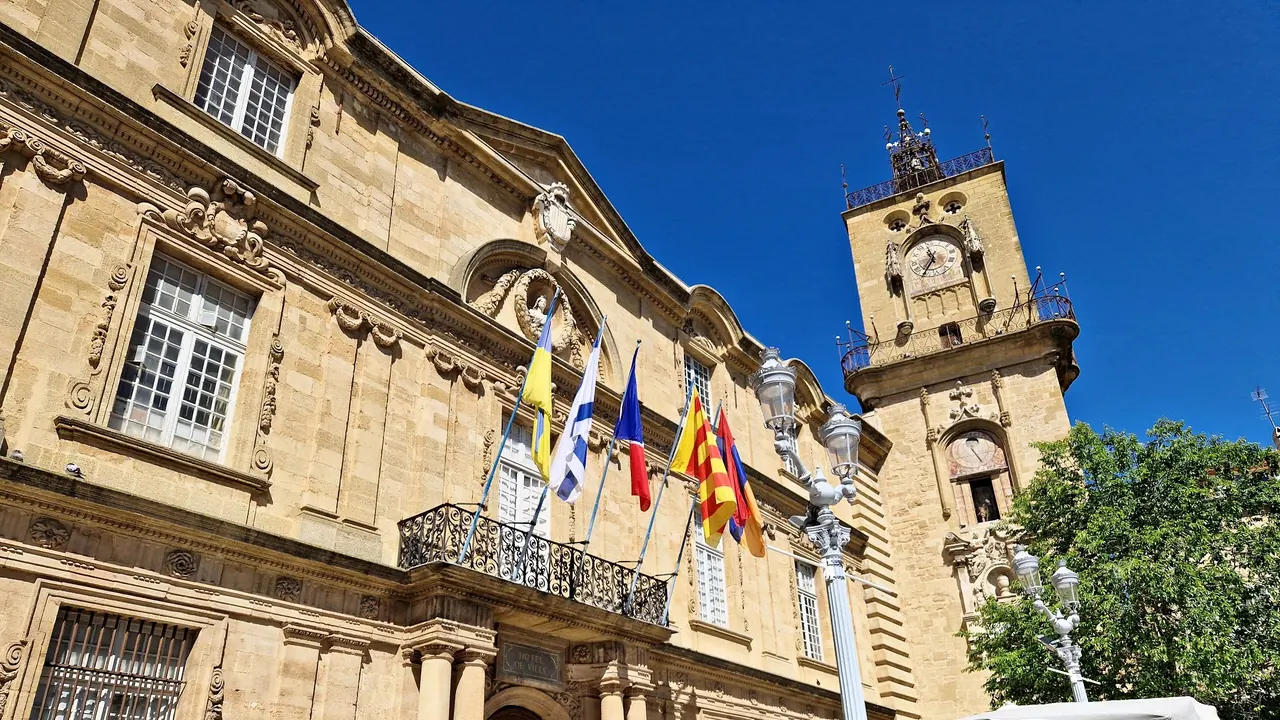
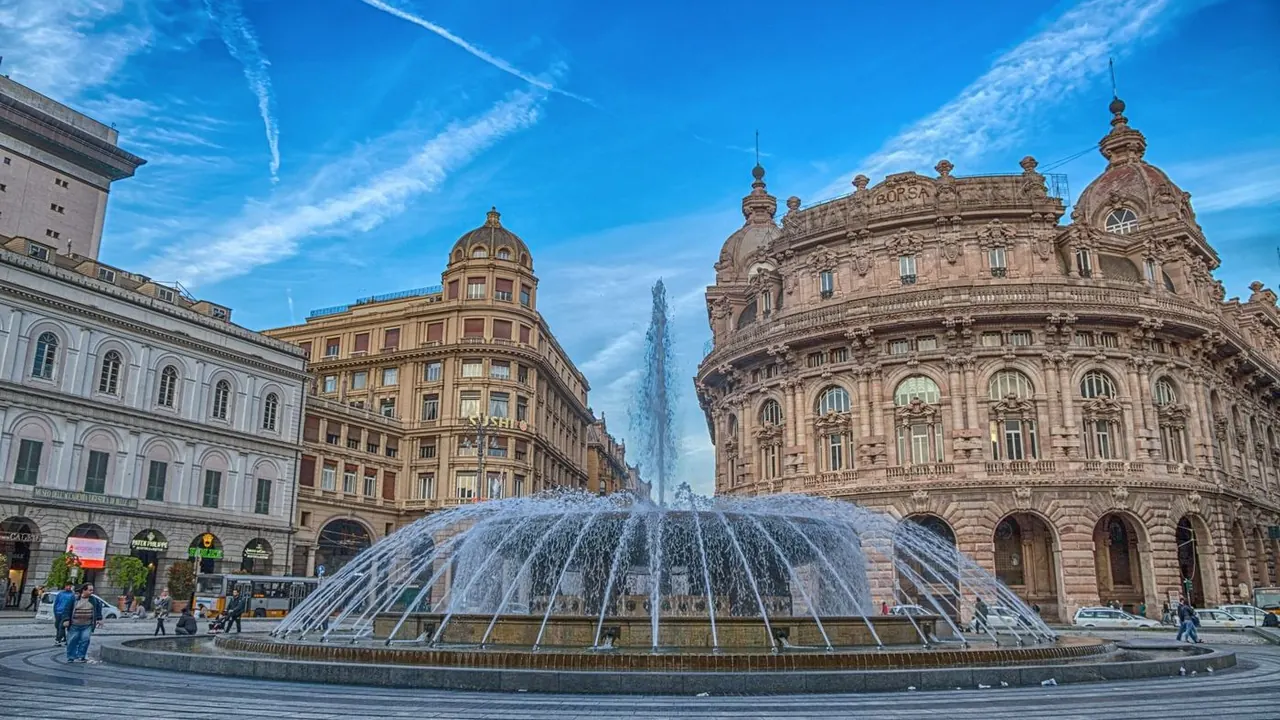
Photos: Aix-en-Provence by Hanay, CC BY-SA 4.0, cropped; Genoa by Faber1893, CC BY-SA 4.0, cropped.
Aix-en-Provence or Genoa?
Our verdict in twelve categories, each scored against the same fixed benchmark cities, and the climate month by month, so you can choose for your trip.
Choose Aix-en-Provence for
- wellness
- shopping
- live music and the arts
Aix-en-Provence suits travellers who want a handsome, unhurried town as a base for exploring Provence: market mornings, long lunches, Cezanne's landscapes, and a car for the Luberon villages and Roman Arles. It is the sunnier and calmer of the two, with a thermal spa and the July opera festival. It costs more, though, and the sea is a drive away.
Choose Genoa for
- beaches
- prices
- families
Choose Genoa for a bigger, fuller city with its own seafront. It has a huge medieval old town, palace museums, the aquarium for children and pesto where it was invented, and the train takes you to Riviera swimming and Cinque Terre walks. It is the better-value and more family-friendly choice, as long as you don't mind steep lanes and a centre that is lively rather than restful.
Scoreboard
Twelve categories on one fixed scale from 0 to 100. The shaded stretch is the gap between the two.
Your match
Pick a travel style or drag the sliders, and both match scores follow your weighting.
Wins on wellness and shopping with your weighting.
Wins on beaches and prices with your weighting.
What matters to you?
Category by category
What the scores mean for a trip.
Beaches & swimming
Genoa lets you swim without leaving the city. There is Boccadasse's little cove, the bathing establishments along Corso Italia and the swimming platforms below Nervi's promenade, and Camogli, Sestri Levante and Varazze are a short train ride along the coast. Aix is inland, so a swim means about an hour's drive to the Cote Bleue, Marseille or the calanques near Cassis.
Most of the shore near both cities is pebble or rock, and it gets crowded in high summer. Varazze's longer sandy beaches west of Genoa are the main exception. In practice, a swim in Genoa fits into an afternoon, while from Aix it takes a whole day, so many visitors use their pool instead.
Food & drink
Both cities cook regional food rather than international, but Genoa's is the more distinctive and the easier to eat well from at any hour. Focaccia at breakfast, trofie with pesto, farinata and fried fish from the old friggitorie in the caruggi, and seafood in the harbour trattorias add up to a street-food culture that Aix doesn't have.
Aix is about the sit-down Provencal lunch: produce from the market on Place Richelme, daube and vegetable tians, local rosé, and calissons to finish. The settings are lovely, but the best-known terraces on the Cours Mirabeau charge for the view more than for the cooking.
Culture & sights
Genoa has much more to see. Its caruggi make up one of Europe's largest medieval quarters, and the Rolli palaces on Via Garibaldi show Van Dyck and Rubens in painted halls. With San Lorenzo, the Palazzo Ducale and the marble sculpture of Staglieno cemetery as well, there is enough for several days.
Aix is smaller and more harmonious: the Cours Mirabeau, the mansions of the Mazarin quarter, fountains on almost every square, and the Cezanne trail of studio, family house and quarries. It is a beautiful town to wander for two or three days, while Genoa repays a longer stay.
Nightlife
In Aix, students on the terraces around Place des Cardeurs set the tone of the evening, and there are a few cocktail bars and small clubs. The town goes quiet in term breaks, and anyone who wants a proper club night goes to Marseille.
Genoa's evenings start with aperitivo in the medieval squares around Piazza delle Erbe, and in summer they move to the waterfront bars and beach clubs along Corso Italia and the Foce. Weeknights are quiet there too, so in either city expect a late glass of wine rather than a big night out.
Nature & outdoors
Both are excellent for the outdoors, but the landscapes are quite different. Aix has dry limestone country: Sainte-Victoire on the edge of town, the Calanques, cycling in the Luberon and Alpilles, and the Gorges du Verdon further out. Summer fire closures and the need for a car shape how you visit.
Genoa's outdoors is greener and closer to the water. You can walk the fort trail above Righi or the cliff paths of Portofino and the Cinque Terre, all reached by funicular or train, and go whale watching in the Pelagos Sanctuary.
Day trips
From Aix, the TGV gets you to Avignon's Palais des Papes in about twenty minutes, Marseille is half an hour away, and Arles with its Roman arena is about an hour by road. Add Nimes and the Pont du Gard, and Aix gives you Roman Provence and the hill villages of the Luberon, though Gordes and Roussillon really need a car.
Genoa's best trips are along one coastal railway. Camogli, Santa Margherita and Portofino are under an hour away, and the Cinque Terre take about an hour and a half. Milan and Turin are close enough for a day in a big city. These are fishing harbours and cliffside villages rather than Roman monuments, and in summer it is best to set off early.
Good for families
Genoa has far more for children. The Porto Antico alone has the aquarium, a science centre, the glass biosphere and the Galata museum's submarine, and the funiculars and public lifts are fun in themselves. The drawback is the steep, stepped lanes, which are hard going with a pushchair.
Aix is safe and largely pedestrian, with fountains and ice cream to keep younger children happy, but its sights are mansions and museums. Families there usually rely on a pool and drive out to the zoo at La Barben or to the coast.
Getting around
In both cities you explore the centre on foot, but the ground is different. Aix's old town and the Cours Mirabeau make up a compact, mostly pedestrian area, while Genoa climbs steeply from the port, with funiculars, public lifts and a short metro line to help. Further out, Genoa has the advantage of a coastal railway to the Riviera. From Aix the villages need a hire car, and the TGV station sits out on the plateau.
Shopping & style
Aix is the more enjoyable town to shop in. The lanes around Rue d'Italie and Rue Espariat have French fashion and shoe boutiques, and on market days the main squares fill with fabrics, bric-a-brac and flowers. The things to take home are calissons, santons, olive-wood ware and Marseille soap.
Genoa has the familiar Italian labels along Via XX Settembre and Via Roma, but its character lies in the long-established food shops of the old town and the filigree and coral workshops. Neither city has real luxury shopping.
Affordability
Genoa is clearly the cheaper place to stay. Focaccia and farinata cost little, central hotels are fair by Italian standards, and the funiculars and trains do the job of a hire car. Costs go up mainly in the Riviera resorts and when you rent loungers.
Aix is one of the pricier towns in southern France. It has few central hotels, terrace dining comes at a premium, and most visitors also pay for a car. Market picnics and lunch menus in the back streets help keep costs down.
Live music & performing arts
Aix has the edge, mostly because of July, when the Festival d'Aix stages opera in the courtyard of the Archbishop's Palace. For the rest of the year, Ballet Preljocaj and the Grand Theatre de Provence keep dance and music going. Genoa's Teatro Carlo Felice has a steady season of opera and concerts and the city honours Paganini, but its plays are in Italian and its singer-songwriter tradition survives mainly in small clubs.
Wellness & relaxation
Aix was founded on warm springs. The Thermes Sextius spa stands on the site of the Roman baths, some fountains on the Cours Mirabeau still run warm, and outside July the market mornings keep the pace restful. Genoa has no spa tradition of its own, so thermal waters mean a trip to Acqui Terme, and you find calm in Nervi's gardens and promenade rather than in the busy port centre.
When should you go?
Pick your month. The climate figures are measured averages, not a forecast.
Aix-en-Provence in July
Genoa in July
Daytime high, °C
Rainfall in the month, mm
Where the figures come from
Genoa has no rain gauge within 25 km of the centre, so its rainfall comes from a gridded climate dataset read at the city rather than from a gauge further away.
Genoa's sunshine is measured 80 km from the centre, at Capo Mele.
Temperature and rainfall are climate normals, averaged over the years shown. Aix-en-Provence: 1991-2020 normals, Marseille / Marignane (19.2 km from centre). Genoa: 1991-2020 normals, Genova / Sestri (6.7 km from centre).
Aix is the hotter, drier and sunnier of the two. Spring and early autumn are the times for walking the old town and climbing Sainte-Victoire. July and August peak around 31°C, too hot for sightseeing in the afternoon, though July has almost no rain. The sea within reach is pleasant for swimming from July to September but stays a few degrees cooler than Genoa's. From September the rain picks up and stays steady through the autumn.
Genoa is milder in summer, rarely much above 28°C, and its sea warms to 25°C in August, so swimming runs from June into September. May is a good month for walking, but the water is still too cool for most swimmers. Autumn is Genoa's weak season. October brings about 212mm of rain, far more than Aix gets in any month, and November is nearly as wet. June and early September are the best months for walking and swimming together. Winters are cool in both cities, and greyer in Genoa.
Which traveller are you?
On a family trip with children, Genoa is the easier choice. The aquarium, science centre and walk-through submarine at the Porto Antico fill whole days, children enjoy riding the funiculars, and swimming coves are close. In Aix it is mostly fountains, ice cream and drives out.
For a relaxing and wellness trip, Aix is the better fit. You can spend a morning on thermal treatments and let the rest of the day drift at the town's unhurried pace, with little to rush for outside July. In Genoa you have to look for calm in Nervi or at Acqui Terme.
On a trip on a tight budget, Genoa makes your money go further. Lunch can come from the old-town street-food counters, a central room won't stretch the budget, and the train takes you to the Riviera. Aix has few cheap rooms, and seeing the countryside usually means hiring a car.
Before you go
| Measure | Aix-en-Provence | Genoa |
|---|---|---|
| Official language | French | Italian |
| Currency | Euro (EUR) | Euro (EUR) |
| Sockets | CE230 V, 50 Hz | CFL230 V, 50 Hz |
| Driving side | Right | Right |
| Time zone | UTC+1, UTC+2 in summer | UTC+1, UTC+2 in summer |
| Emergency number | 112 | 112 |
| Elevation | 73 m | 20 m |
| Main airport | Marseille Provence Airport (MRS)21 km from centre126 non-stop destinations | Genoa Cristoforo Colombo Airport (GOA)7 km from centre25 non-stop destinations |
| Public holidays this year | 11 days | 13 days |
By the numbers
| Measure | Aix-en-Provence | Genoa |
|---|---|---|
| City population | 149,695 | 558,745 |
| People per km² | 804 | 2,325 |
| Museums within 10 km | 8 | 51 |
| UNESCO World Heritage sites within 50 km | 1 | 1 |
| Swim season, months above 21 °C | 2 months | 4 months |
Where else could you go?
Every comparison below shares a destination with this one, so you can follow Aix-en-Provence or Genoa somewhere new.
- Portofinovs Genoa
- Marseillevs Aix-en-Provence
- Avignonvs Aix-en-Provence
- La Speziavs Genoa
- Saint-Tropezvs Aix-en-Provence
- Milanvs Genoa