
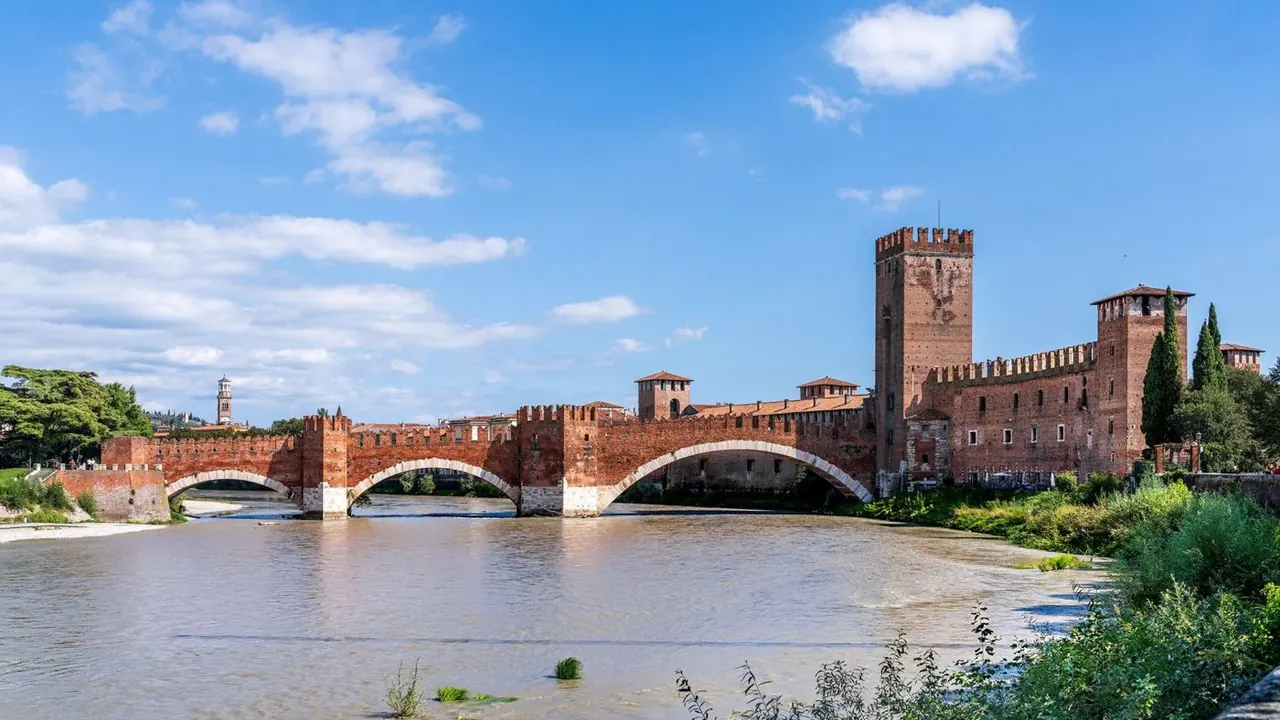
Photos: Aix-en-Provence by Hanay, CC BY-SA 4.0, cropped; Verona by NorbertNagel, CC BY-SA 4.0, cropped.
Aix-en-Provence or Verona?
Our verdict in twelve categories, each scored against the same fixed benchmark cities, and the climate month by month, so you can choose for your trip.
Choose Aix-en-Provence for
- nature and the outdoors
- wellness
- shopping
Aix-en-Provence suits travellers who want the countryside as much as the town: walkers heading for Sainte-Victoire and the Calanques, drivers touring the Luberon villages, and anyone happy with a slow routine of morning markets and long lunches. It is the sunnier, drier choice in high summer. It is also the dearer stay, and it gives children less to do.
Choose Verona for
- families
- culture and sights
- prices
Verona is the better pick for a richer city and an easier trip by rail. Its Roman Arena, Romanesque churches and Scaliger squares go deeper than Aix's handsome streets, opera on the ancient tiers is a reason to travel in itself, and Venice, Padua and Lake Garda are all close by train. Families also do better here, with Gardaland and the lake half an hour away.
Scoreboard
Twelve categories on one fixed scale from 0 to 100. The shaded stretch is the gap between the two.
Your match
Pick a travel style or drag the sliders, and both match scores follow your weighting.
Wins on nature and the outdoors and wellness with your weighting.
Wins on families and culture and sights with your weighting.
What matters to you?
Category by category
What the scores mean for a trip.
Beaches & swimming
Neither city has a beach of its own, so in both swimming means a day out. From Aix you go to the Mediterranean: the pebbly coves of the Cote Bleue, or Cassis and the calanques. That means salt water and a cliff backdrop, but the inlets are small, they fill up in August, and the mistral can turn the sea cold for days.
From Verona you go to Lake Garda, about half an hour away. It is fresh, calm water with no surf, and you swim from lidos with sunbeds, grassy lawns or Sirmione's flat limestone shelves. Families with small children may prefer the lake. Anyone who wants proper sea swimming will prefer the trip from Aix.
Food & drink
Both cities eat well in a regional rather than a cosmopolitan way, and neither offers much beyond its own cooking. Aix is a market-and-lunch town: morning stalls of olives, goat's cheese and herbs on Place Richelme, then a long terrace meal with Coteaux d'Aix rosé, and calissons from an old confiserie to finish.
Verona's cooking is richer and more suited to cold weather: Amarone risotto, bigoli with duck and bollito with pearà, served in plain wood-panelled osterie. Its real advantage is wine, with Valpolicella and Soave made a short drive away. Go to Aix for markets and produce, and to Verona for the cellar.
Culture & sights
Verona has much more to see. Its centre is layered from Roman times through the Middle Ages: the Arena and the Roman theatre, the Scaliger tombs on Piazza dei Signori, San Zeno with its bronze doors, and Castelvecchio's museum in Carlo Scarpa's setting.
Aix is a lovelier place to stroll than to study. The pleasure lies in the plane trees of the Cours Mirabeau, the honey-coloured mansions of the Mazarin quarter and the fountains, with Cezanne's studio and the Musee Granet as the main visits. Followers of Cezanne will find nothing to match it in Verona, but for monuments and history Verona offers far more.
Nightlife
Both are places for an evening drink rather than a late night, and Aix sends anyone wanting a club night to Marseille. The difference is in the drink and the crowd. In Aix, evenings mean student terraces around the Forum des Cardeurs, which go quiet in the term breaks. In Verona they mean the aperitivo, a spritz or a glass of Valpolicella in Piazza delle Erbe, with Veronetta's wine bars staying open later. In summer Verona has one extra moment, when the opera audience pours out of the Arena close to midnight.
Nature & outdoors
Aix has the more dramatic landscape close at hand. Sainte-Victoire rises at the edge of town, the Calanques offer some of the Mediterranean's finest cliff walking and sea kayaking within an hour, and the Gorges du Verdon and the lavender and vineyards of the Luberon are within reach. Summer fire closures and the need for a car shape any plan.
Near Verona the outdoors is gentler: vineyard walks in the Valpolicella and cycling along the Adige valley. The bigger scenery is at Garda, where Monte Baldo suits hikers and paragliders, and the reliable wind at the lake's northern end draws sailors and windsurfers.
Day trips
Both are superb bases, but Verona edges ahead because the train does the work. Venice, Padua with Giotto's chapel, Palladian Vicenza and Mantua are all easy return trips by rail, and the Garda towns and the Valpolicella cellars are closer still.
Aix has its own fine spread: Marseille, the papal palace at Avignon, Roman Arles and Nimes. Its greatest prizes, though, are the hill villages of the Luberon and the Alpilles, such as Gordes, Roussillon and Les Baux, and you really need a car to reach them.
Good for families
Verona is clearly the better place with children, mostly because of what lies around it: Gardaland, the water parks on Garda's southern shore, the drive-through safari at Parco Natura Viva and shallow lake swimming, all about half an hour away. In town, the Arena tends to capture young imaginations.
Aix is safe and largely pedestrian, and its fountains and ice cream help, but its sights are mansions and museums. Families there mostly rely on a villa pool and days out by car to the zoo at La Barben or to the coast.
Getting around
Both centres are small and largely free of traffic, so you can walk everywhere in either town and need no transport for sightseeing. The real difference is the railway. Verona's Porta Nuova station is a short walk or bus ride from Piazza Bra, with frequent trains to Venice, Milan and the lake.
Aix's TGV station sits out on the plateau and needs a shuttle bus, and the Provencal villages are poorly served by public transport. That is why so many visitors to Aix hire a car, while in Verona a car is only needed for the Lessinia and the remoter vineyards.
Shopping & style
Neither is a shopping destination. Serious shoppers from Verona go to Milan, and Aix has no luxury shopping or department store. What differs is what you bring home.
Aix is better for markets and crafts, with textile, flower and bric-a-brac stalls, painted santons, olive wood and Provencal fabrics in the lanes around Rue d'Italie. Verona leans towards Italian fashion labels on marble-paved Via Mazzini, and its best souvenirs are bottles of Amarone and, at Christmas, a pandoro.
Affordability
Aix is the dearer stay, and the gap lies mostly in where you sleep. Its old town has few hotels, and most of what lies nearby is boutique hotels and country houses rather than budget rooms, with July the hardest month to find anything reasonable. A hire car for the villages adds to the cost, though market picnics and back-street lunch menus help.
Verona leaves more room to economise. Rooms near the station or across the river in Veronetta cost noticeably less than those inside the centre. Student osterie and wine counters that serve a snack with each glass keep meals fair, and the local wine is good value. In both towns, the terraces on the Cours Mirabeau and Piazza Bra charge for the view.
Live music & performing arts
Each city has one great summer festival, and Verona's reaches more people and runs longer. Opera plays in the Arena on most evenings from June to early September, grand Verdi and Puccini performed for thousands on Roman stone, and the Roman theatre adds Shakespeare, dance and jazz under the stars.
Aix's July opera festival is the more artistically ambitious, with new productions in the courtyard of the Archbishop's Palace, but its season is short and the tickets go early. Its year-round strength is contemporary dance from Ballet Preljocaj at the Pavillon Noir.
Wellness & relaxation
The two are close here, and the difference is where the warm water is. In Aix it runs through the town itself, from the mossy Fontaine d'Eau Chaude to the Thermes Sextius spa on the site of the Roman baths, so a spa afternoon needs no travel.
Verona has no baths in town. Its thermal pools are out at Sirmione on Lake Garda, at the spring-fed park near Lazise and at Caldiero. In both cities the real rest comes from the slow pace, with Verona's evening walk along the river and the terraces of the Giardino Giusti taking the place of Aix's long afternoons under the plane trees.
When should you go?
Pick your month. The climate figures are measured averages, not a forecast.
Aix-en-Provence in July
Verona in July
Daytime high, °C
Rainfall in the month, mm
Temperature and rainfall are climate normals, averaged over the years shown. Aix-en-Provence: 1991-2020 normals, Marseille / Marignane (19.2 km from centre). Verona: 1991-2020 normals, Verona / Villafranca (11.6 km from centre).
Aix has the drier, sunnier summer. From May to September it is warm enough for the coast, and July reaches 31°C with almost no rain, around 11mm. The sea is at its best from July to September, peaking near 22°C in August. Midday in July and August is too hot for long walks around town, so spring and early autumn suit sightseeing and hiking better. The autumn rains arrive in September and last through November, and winters stay mild enough for a gentle town break.
Verona is about as hot in summer but less settled, with rain spread through the warm months and peaking in September at around 85mm. Its winters are noticeably colder, at about 7°C in January, and much greyer than Aix's. That makes May, June and September the most comfortable months for walking the centre, and midsummer the time for the lake and the Arena.
Which traveller are you?
For an outdoors trip, base yourself in Aix and come in April, May or October, when the trails are open and the heat is bearable. Stay on the edge of town where parking is easy, and alternate mountain or coast days with a slow day in the old town.
On a family trip with children, Verona is the easier choice. Stay near Porta Nuova or on the Garda side of the city, keep mornings for the Arena and the flat centre, and give afternoons to the parks and the lake, which is warmest from July.
On a culture and arts trip, Verona rewards a longer stay. Allow two or three days for the old city, book the Arena opera for an evening between June and early September, and add a day or two by train to Venice, Padua or Vicenza.
Before you go
| Measure | Aix-en-Provence | Verona |
|---|---|---|
| Official language | French | Italian |
| Currency | Euro (EUR) | Euro (EUR) |
| Sockets | CE230 V, 50 Hz | CFL230 V, 50 Hz |
| Driving side | Right | Right |
| Time zone | UTC+1, UTC+2 in summer | UTC+1, UTC+2 in summer |
| Emergency number | 112 | 112 |
| Elevation | 73 m | 59 m |
| Main airport | Marseille Provence Airport (MRS)21 km from centre126 non-stop destinations | Verona Villafranca Valerio Catullo Airport (VRN)10 km from centre96 non-stop destinations |
| Public holidays this year | 11 days | 13 days |
By the numbers
| Measure | Aix-en-Provence | Verona |
|---|---|---|
| City population | 149,695 | 255,588 |
| People per km² | 804 | 1,285 |
| Museums within 10 km | 8 | 18 |
| UNESCO World Heritage sites within 50 km | 1 | 5 |
| Swim season, months above 21 °C | 2 months | - |
Where else could you go?
Every comparison below shares a destination with this one, so you can follow Aix-en-Provence or Verona somewhere new.
- Marseillevs Aix-en-Provence
- Paduavs Verona
- Avignonvs Aix-en-Provence
- Saint-Tropezvs Aix-en-Provence
- Venicevs Verona
- Bergamovs Verona