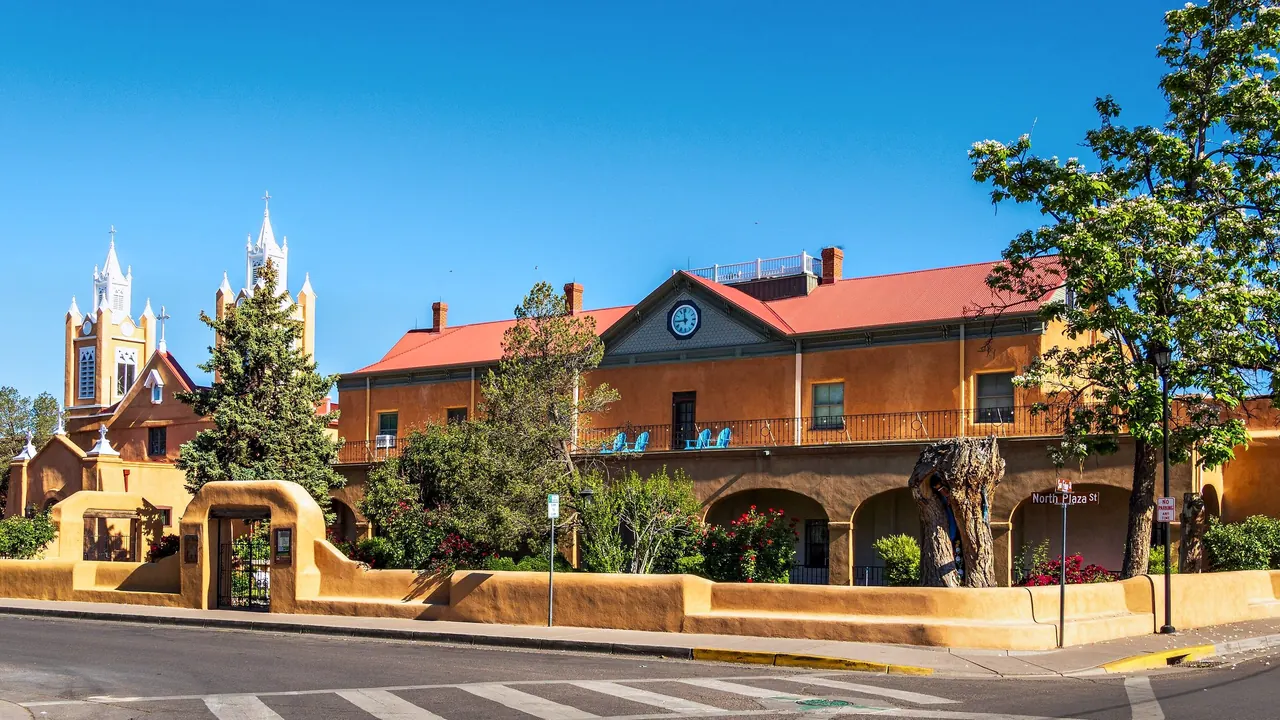
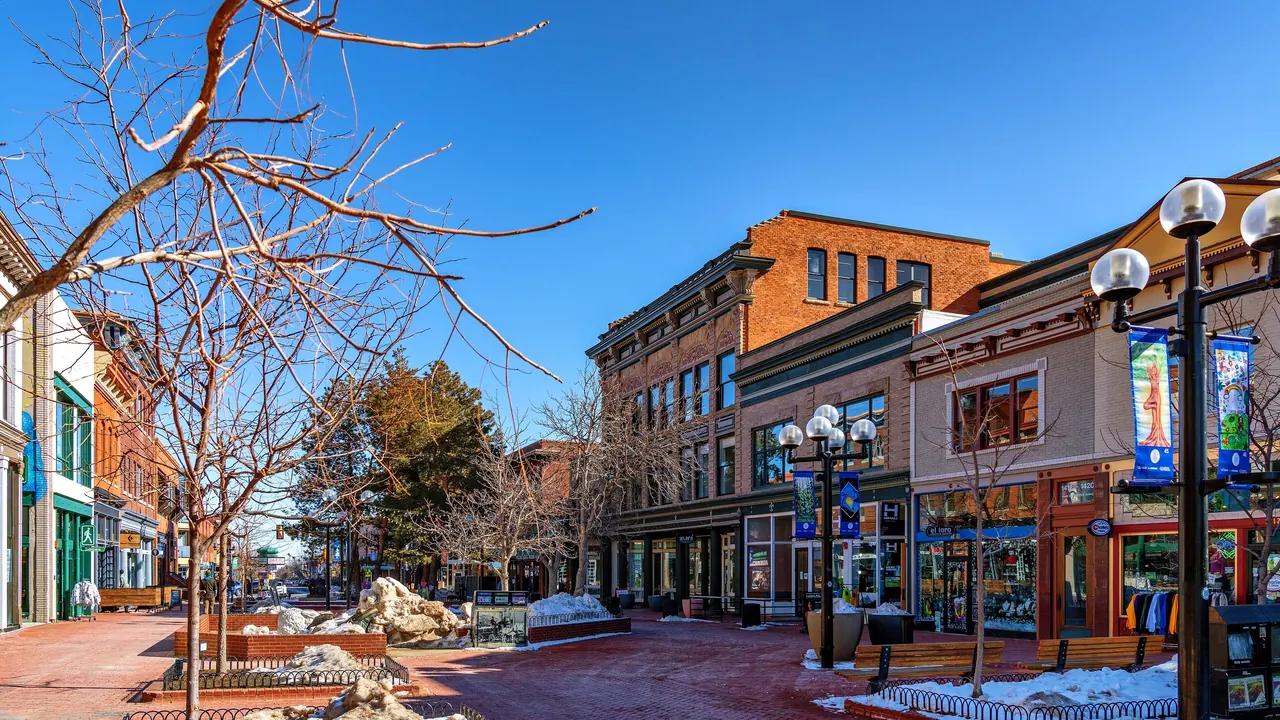
Photos: Albuquerque by dconvertini, CC BY-SA 2.0, cropped; Boulder by Tony Webster, CC BY 2.0, cropped.
Albuquerque or Boulder?
Our verdict in twelve categories, each scored against the same fixed benchmark cities, and the climate month by month, so you can choose for your trip.
Choose Albuquerque for
- prices
- food and drink
- culture and sights
Albuquerque is the choice for a trip built around place and history. New Mexican chile cooking, adobe Old Town, the Pueblo cultural centre and petroglyphs give it a regional identity that Boulder doesn't have. Add Santa Fe and Acoma within easy reach and lower costs for rooms and meals, and it suits a curious traveller who doesn't mind driving everywhere.
Choose Boulder for
- getting around
- nature and the outdoors
- wellness
Boulder rewards people who come to move. The Flatirons, the ring of open space and Eldorado Canyon begin at the edge of town, and the centre can be covered on foot or by bike. Its yoga studios and unhurried mornings suit a restorative stay. The town costs more and has far fewer sights, so it works best for hikers, climbers and cyclists who want a pleasant base rather than a programme of museums.
Scoreboard
Twelve categories on one fixed scale from 0 to 100. The shaded stretch is the gap between the two.
Your match
Pick a travel style or drag the sliders, and both match scores follow your weighting.
Too close to call, 1 point apart
Wins on prices and food and drink with your weighting.
Wins on getting around and nature and the outdoors with your weighting.
What matters to you?
Category by category
What the scores mean for a trip.
Beaches & swimming
Neither city is a beach destination. Both lie far inland, so swimming means a pool or a summer afternoon at a reservoir.
What differs is the kind of cooling off. Around Albuquerque it means a drive to a lake such as Cochiti, since the Rio Grande isn't safe for swimming. Boulder makes it easier, with a small sandy swim area at its reservoir on the edge of town and inner tubes on Boulder Creek, right in the centre.
Food & drink
Albuquerque eats better, because it has a cuisine of its own. Red and green chile, carne adovada, posole and sopaipillas come from long-running family places in the South and North Valleys and along Route 66. In late summer the whole city smells of roasting chile.
Boulder offers a healthier, more seasonal table: farm-to-table menus, plenty of vegetarian cooking, good bakeries and the Saturday farmers' market by the creek. Both cities pour plenty of craft beer, but Boulder has nothing as distinctive to taste, and diners after depth end up in Denver.
Culture & sights
Albuquerque has the richer cultural layer. Its adobe Old Town and 18th-century church, the Pueblo-run cultural centre and the National Hispanic Cultural Center tell the story of three peoples. The nuclear museum, the neon of Route 66 and Petroglyph National Monument fill a second day.
Boulder's appeal is atmosphere rather than sights. The wooden cottages of the Chautauqua, the sandstone and red-tile university campus and I.M. Pei's atmospheric research laboratory are good to see, but a single day covers them and the small museums.
Nightlife
Evenings out are modest in both, and the difference is one of tone. Albuquerque splits between a downtown strip of bars and a few dance clubs that can get rowdy late at weekends, and the calmer cocktail bars and taprooms of Nob Hill.
Boulder's nights centre on Pearl Street pubs and taprooms and the loud student bars of University Hill during term. They start and finish early, since so many people head for a trailhead at dawn. Its advantage is Denver, about 40 minutes away, for a proper night out.
Nature & outdoors
Both sit against mountains, but Boulder's outdoors is in another league. The Flatirons rise straight behind town, with a protected ring of open space and over 200km of trails. It also has Eldorado Canyon's world-class climbing, cycling at altitude and Rocky Mountain National Park's tundra and elk about an hour away.
Albuquerque has the Sandia tramway to a 3,000m crest, the long climb of the La Luz Trail and the cottonwood bosque with its wintering cranes. It is a good landscape, but more of it needs a car, and the summer heat at low elevations narrows the season.
Day trips
Albuquerque has the stronger range of outings. Santa Fe alone, with its plaza, Canyon Road galleries and museums, fills a full day, and the commuter train can take you there. Acoma's Sky City, the cliff dwellings at Bandelier, Chimayo and the Turquoise Trail villages add places of real historical weight.
From Boulder, Denver's art museum and Union Station are an easy bus ride away. After that the choices are pleasant rather than memorable: Golden, Fort Collins, Estes Park and the silver towns of Georgetown and Idaho Springs.
Good for families
Both are relaxed places for children, but they keep them busy in different ways. Albuquerque has the larger attractions: the BioPark's zoo, aquarium and gardens, Explora and the dinosaur halls, the tramway ride and the October Balloon Fiesta at dawn.
Boulder's family days are outdoors and on a small scale: the creek path, Chautauqua meadow, gentle trails, tubing and the street performers on Pearl Street. Its big zoo and science museum are in Denver. In both, the high-altitude sun calls for hats and water.
Getting around
Boulder is far easier without a car. Downtown, the university and Chautauqua are a short walk or bike ride apart along excellent off-street paths, there is bike share, and an express bus runs to Denver. Only the outlying trailheads and the national park really require a hire car.
Albuquerque is spread low across a wide valley and built for driving. The Central Avenue bus links Old Town, downtown and Nob Hill, and a commuter train runs to Santa Fe, but the mountains, the petroglyphs and almost every day trip mean renting a car at the nearby airport.
Shopping & style
Neither is a shopping destination, and each is worth visiting for one specialism. In Albuquerque it is Native and Southwestern craft: turquoise and silver, Pueblo pottery and Navajo weaving, bought around Old Town or at the Pueblo centre from artists or reputable dealers.
In Boulder it is outdoor gear, with climbing, running and cycling shops unusually good for the town's size. The brick-paved Pearl Street Mall is also more pleasant to browse than Nob Hill's short strip of boutiques.
Affordability
Albuquerque is noticeably kinder to the wallet. Hotels are plentiful and fairly priced most of the year, and New Mexican plates are generous. A rental car is the largest cost, and rates jump during Balloon Fiesta week.
Boulder is one of the wealthier towns in the country. Its few hotels charge heavily, especially in summer and on university weekends, and meals come at affluent prices. Its saving grace is that the trails are free, and many visitors cut costs by staying in Denver.
Live music & performing arts
The two are broadly level, with very different stages. Albuquerque's distinctive offerings are flamenco, with an institute and an annual festival, and traditional Pueblo dances on weekends. Touring Broadway shows play at Popejoy Hall, and the Pueblo Deco KiMo Theatre is a striking room. The open-air opera above Santa Fe is within a summer evening's drive.
Boulder is stronger on live music: bluegrass, roots and rock most nights in small rooms. In summer there are orchestral concerts in the 1898 Chautauqua Auditorium and outdoor Shakespeare on campus, with Red Rocks Amphitheatre about 45 minutes away.
Wellness & relaxation
Boulder is the better place to slow down. Yoga and meditation studios, a contemplative Buddhist-inspired university, easy massage and unhurried sunny mornings run through daily life, although its soaking is limited to the Eldorado Springs pool and the hot springs at Idaho Springs.
Albuquerque has little wellness culture in town beyond resort spas on Pueblo lands. Its real strength is a drive away, in the mineral pools of Jemez Springs and the bathhouses around Santa Fe.
When should you go?
Pick your month. The climate figures are measured averages, not a forecast.
Albuquerque in July
Boulder in July
Daytime high, °C
Rainfall in the month, mm
Where the figures come from
Boulder has no rain gauge within 25 km of the centre, so its rainfall comes from a gridded climate dataset read at the city rather than from a gauge further away.
Boulder's sunshine is measured 45 km from the centre, at Denver / Stapleton International, Co..
Temperature and rainfall are climate normals, averaged over the years shown. Albuquerque: 1991-2020 normals, Albuquerque International Airport (7.3 km from centre). Boulder: 2010-2025 (sunshine 1981-2010, rainfall 1991-2020) normals, Boulder / Valmont (6.1 km from centre).
Both cities are high and dry, but their years follow different patterns. Albuquerque is the warmer and sunnier of the two. Spring warms early, with April and May ideal for walking Old Town and the foothills. June and July reach 33°C, which makes the low-lying streets hard work at midday. July also brings the brief summer storms, with about 42mm of rain, and the dry, mild autumn through October is probably the best season of all. Winter days are cool but bright.
Boulder stays cooler for longer. Its spring is the wettest part of the year, with May the rainiest month at about 61mm, and the high trails are only properly open from June. July is a little milder than in Albuquerque, at 31°C. September and early October bring the golden aspens and settled weather. Winter highs of around 7°C are colder, though the sunny days often allow a walk in town.
Which traveller are you?
For an outdoors trip, Boulder is the clear pick. Hundreds of kilometres of trails start at Chautauqua Park, there is climbing in Eldorado Canyon and cycling on canyon roads, and Rocky Mountain National Park is about an hour away. Albuquerque's Sandias are fine but come second.
On a culture and arts trip, Albuquerque has far more to offer. Old Town's adobe plaza, the Indian Pueblo Cultural Center with its weekend dances, the Hispanic cultural campus and the petroglyphs fill several days, and Santa Fe's museums are an hour north. Boulder's sights are done in a day.
On a trip with a tight budget, Albuquerque stretches the money further. Hotels are plentiful and fairly priced outside Balloon Fiesta week, and chile plates are generous. Boulder's limited hotel stock and affluent prices make it hard going, although its trails cost almost nothing.
Before you go
| Measure | Albuquerque | Boulder |
|---|---|---|
| Currency | US Dollar (USD) | US Dollar (USD) |
| Sockets | AB120 V, 60 Hz | AB120 V, 60 Hz |
| Driving side | Right | Right |
| Time zone | UTC-7, UTC-6 in summer | UTC-7, UTC-6 in summer |
| Emergency number | 911 | 911 |
| Elevation | 1,619 m | 1,655 m |
| Main airport | Albuquerque International Sunport (ABQ)6 km from centre27 non-stop destinations | Denver International Airport (DEN)56 km from centre231 non-stop destinations |
| Public holidays this year | 13 days | 12 days |
By the numbers
| Measure | Albuquerque | Boulder |
|---|---|---|
| City population | 564,559 | 108,250 |
| People per km² | 1,150 | 1,628 |
| Museums within 10 km | 10 | 4 |
| UNESCO World Heritage sites within 50 km | 0 | 0 |
Where else could you go?
Every comparison below shares a destination with this one, so you can follow Albuquerque or Boulder somewhere new.
- Denvervs Boulder
- Winter Park, Coloradovs Boulder
- Estes Parkvs Boulder
- Keystonevs Boulder
- Breckenridgevs Boulder
- Santa Fevs Albuquerque