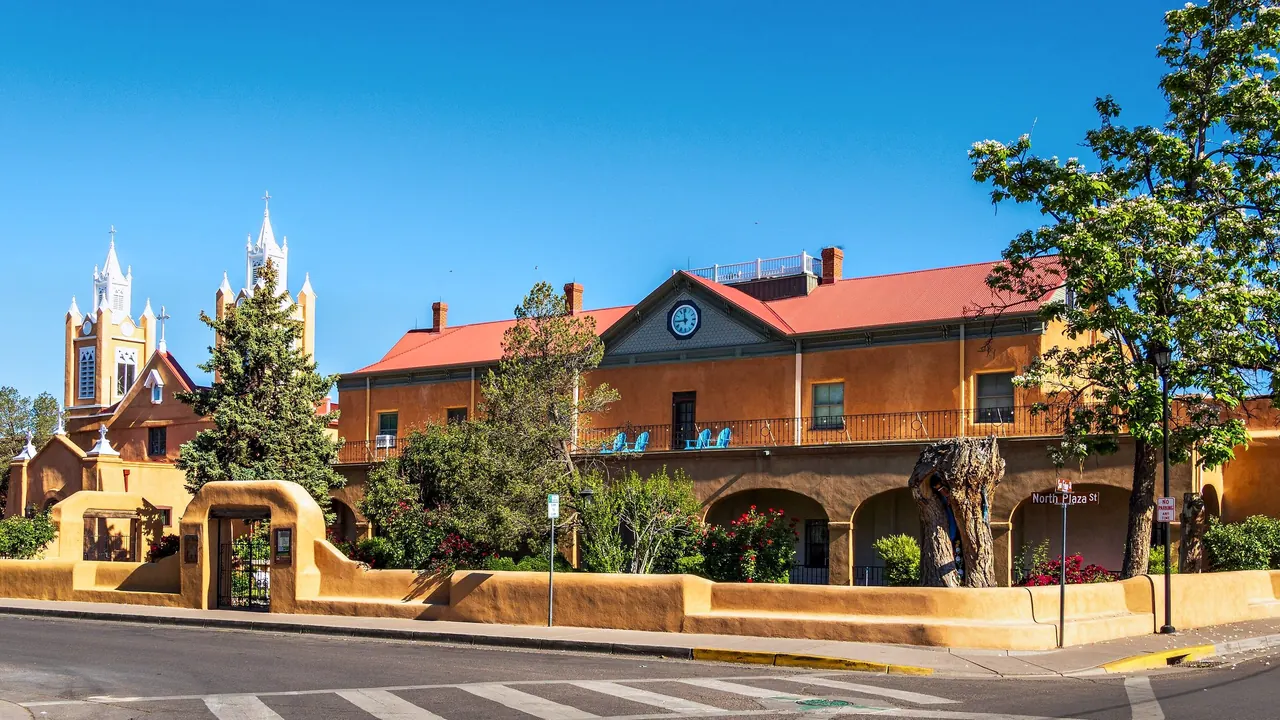
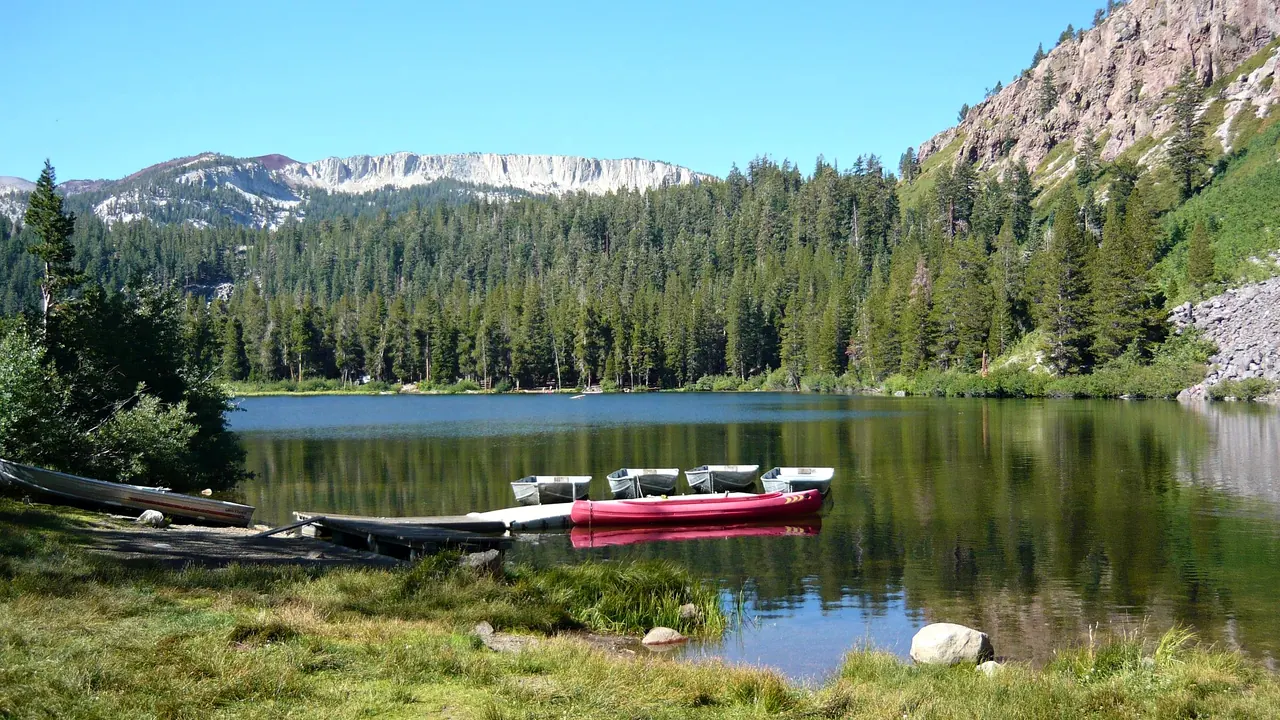
Photos: Albuquerque by dconvertini, CC BY-SA 2.0, cropped; Mammoth Lakes by Dr. Al. K. Lisch, CC BY-SA 3.0, cropped.
Albuquerque or Mammoth Lakes?
Our verdict in twelve categories, each scored against the same fixed benchmark cities, and the climate month by month, so you can choose for your trip.
Choose Albuquerque for
- culture and sights
- food and drink
- shopping
Albuquerque suits a traveller who wants a place with a character of its own as well as scenery. It has New Mexican chile cooking, the adobe plaza of Old Town, the Pueblo and Hispanic cultural centres and Route 66 neon, and Santa Fe is an hour up the road. It works best as a road trip with a rental car, mixing a few days in the city with the Sandia crest and the pueblos and cliff dwellings beyond. Staying here also costs noticeably less than at a ski resort.
Choose Mammoth Lakes for
- nature and the outdoors
- getting around
- wellness
Mammoth Lakes is the choice when the mountains are the whole point. In winter it has one of North America's largest ski areas, with shuttles to the lifts. In summer the Lakes Basin opens, along with wilderness trails, Devils Postpile and the road over Tioga Pass into Yosemite's high country, and evenings can end in a hot spring or a hot tub. Expect little to see in town, simple food and resort prices.
Scoreboard
Twelve categories on one fixed scale from 0 to 100. The shaded stretch is the gap between the two.
Your match
Pick a travel style or drag the sliders, and both match scores follow your weighting.
Wins on culture and sights and food and drink with your weighting.
Wins on nature and the outdoors and getting around with your weighting.
What matters to you?
Category by category
What the scores mean for a trip.
Beaches & swimming
Both towns are far inland, so neither is a swimming destination. Mammoth Lakes at least has water of its own in July and August, with Horseshoe Lake and the slightly warmer Crowley Lake both cold but fine for a quick dip. Albuquerque's Rio Grande is not for swimming, so cooling off there means a hotel pool or a drive to Cochiti Lake.
Food & drink
Albuquerque has a regional cuisine worth travelling for. Order red or green chile with carne adovada, blue corn enchiladas or sopaipillas at long-running family places in the South and North Valleys. In late summer the whole city smells of roasting chile.
Mammoth Lakes eats like a ski town, with big breakfasts, burgers, pizza and steakhouses that fuel a day outdoors but give no reason to come. Some kitchens also scale back between seasons. Both brew their own beer, but only Albuquerque has food you would plan a day around.
Culture & sights
Albuquerque has three centuries to show. There is the adobe plaza of Old Town around San Felipe de Neri, the Indian Pueblo Cultural Center, the National Hispanic Cultural Center in Barelas, the nuclear science museum and thousands of petroglyphs carved into volcanic rock on the western edge. Together they make a couple of rewarding days.
Mammoth Lakes is a modern resort of lodges and condominiums with a small history museum in a log cabin. Its real heritage lies an hour or more away, at Bodie and Manzanar.
Nightlife
Albuquerque offers a modest night out, with downtown bars and a few dance clubs along Central Avenue at weekends, and calmer cocktail bars and taprooms in Nob Hill. Mammoth Lakes is all about après-ski. The Village fills in the late afternoon in winter, but most of the year the town is quiet before midnight and there are no clubs at all. Neither is a reason to stay up late, but Albuquerque at least gives a choice of scene.
Nature & outdoors
Albuquerque's outdoors are genuinely good. A tramway runs to the Sandia crest above 3,000m and the steep La Luz Trail climbs the same mountain on foot. Along the Rio Grande, the cottonwood bosque has shaded paths and cranes in winter, and there are volcanic cones west of the river.
Mammoth Lakes is on another level, a town that exists for its surroundings. One of North America's largest ski areas rises right above it and the granite-ringed lakes of the Lakes Basin are minutes away. Devils Postpile, Mono Lake's tufa towers and, in summer, Tuolumne Meadows in Yosemite are all within reach.
Day trips
From Albuquerque the standout is Santa Fe, an hour away by car or reachable by commuter train, with its plaza, Canyon Road galleries and museums. With a car you can also reach Acoma's Sky City, the cliff dwellings at Bandelier and the old mining villages of the Turquoise Trail.
Mammoth Lakes has fewer and more distant outings along the highway below the Sierra: the ghost town of Bodie, the internment camp at Manzanar, Bishop and Mono Lake. Its best days out head into the mountains rather than to other towns, and the passes over the Sierra close in winter.
Good for families
Both work well for families, in different ways. Albuquerque has plenty for a bad-weather day, including the BioPark's zoo and aquarium, the Explora science centre and the natural history museum's dinosaur halls. Each October brings the dawn spectacle of the Balloon Fiesta.
Mammoth Lakes is an outdoor playground instead, with a large ski school, a tubing hill, rowing boats and trout fishing in the Lakes Basin, and condominiums with kitchens. When the weather closes in there is nothing indoors for children, and the higher altitude can tire young ones for the first day or two.
Getting around
Albuquerque is laid out for the car. Apart from the Central Avenue bus line linking Old Town, downtown and Nob Hill, almost everything needs one. Mammoth Lakes is easier on a ski vacation, since winter shuttles and the Village gondola reach the lifts without driving, and in summer a trolley and a shuttle serve the Lakes Basin and Reds Meadow. Both still need a car for anything further out, and Mammoth's winter roads can call for snow chains.
Shopping & style
Albuquerque has something specific to buy. You can find Native American silver and turquoise jewellery, Pueblo pottery and Navajo weaving around Old Town and the Indian Pueblo Cultural Center, as well as Nob Hill's vintage shops and chile ristras to take home. Mammoth Lakes sells gear rather than gifts, with strong ski, climbing and fly-fishing shops and a few galleries of landscape photography.
Affordability
Neither is a bargain, but Albuquerque costs clearly less. Hotel rates are fair for most of the year and sights such as Old Town, the petroglyphs and the foothills trails cost little or nothing. The main extra is the rental car, and Balloon Fiesta week is the expensive exception.
Mammoth Lakes is priced like a major ski resort, so lift tickets, rentals and lodging are steep in winter. Summer and the shoulder seasons are gentler, and cooking in a condominium helps, though groceries still carry resort prices.
Live music & performing arts
Albuquerque has far more on stage. Touring Broadway shows and the philharmonic play Popejoy Hall, the Pueblo Deco KiMo Theatre hosts film, theatre and concerts, and the city has a strong flamenco tradition and weekend Pueblo dances. Santa Fe's open-air opera is an evening drive away in summer.
Mammoth Lakes has a community theatre on the college campus and, in summer, jazz, chamber music and outdoor concerts in meadows with mountain views. It is pleasant, but small.
Wellness & relaxation
Mammoth Lakes is the easier place to unwind. Simple hot springs sit out in the sagebrush near town with the Sierra across the valley, and the lodges have spas and hot tubs for tired legs.
Albuquerque has resort spas on Pueblo lands, but its best soaking is more than an hour away at Jemez Springs and around Santa Fe. Relaxing properly there means a drive.
When should you go?
Pick your month. The climate figures are measured averages, not a forecast.
Albuquerque in July
Mammoth Lakes in July
Daytime high, °C
Rainfall in the month, mm
Where the figures come from
Mammoth Lakes's station stands 227 m below the city centre, so the centre is likely a little cooler than the figures say.
Mammoth Lakes has no rain gauge within 25 km of the centre, so its rainfall comes from a gridded climate dataset read at the city rather than from a gauge further away.
Temperature and rainfall are climate normals, averaged over the years shown. Albuquerque: 1991-2020 normals, Albuquerque International Airport (7.3 km from centre). Mammoth Lakes: 2008-2020 (rainfall 1991-2020) normals, Mammoth / Whitmore Hot Springs (12 km from centre).
Albuquerque is at its best in April and May, when days are warm, very sunny and almost without rain. October is the other good month, still warm and sunny for walking Old Town or the foothills trails, although some late-season showers still fall. June and July reach about 33°C, and the sun is fierce at that altitude, so midday is for shade. The summer rains begin in July, the wettest month at about 42mm, and showers continue through August, September and October. The drier months run from November to June, with winter days cool at around 9°C but usually bright.
Mammoth Lakes follows the opposite pattern. From November to March it is cold and wet, with about 80mm in the wettest month, much of it falling as snow on the ski slopes. From late June to September it is almost dry, with highs near 28°C in July and August. That is the time for hiking, paddling and a cold dip in the lakes. So Mammoth is the cooler escape when Albuquerque is too hot, while Albuquerque is the milder and drier place in winter.
Which traveller are you?
On a culture and arts trip, Albuquerque is the clear pick. Old Town, the Indian Pueblo Cultural Center, the National Hispanic Cultural Center, flamenco and weekend Pueblo dances fill several days, with Santa Fe's museums close by. Mammoth Lakes has a log-cabin museum and little more.
For an outdoors trip, Mammoth Lakes wins outright. It has skiing from late autumn, often into early summer, then a lift-served bike park, lake paddling and trails into the Ansel Adams and John Muir wildernesses, all from the edge of town. Albuquerque's Sandia trails are good, but there is less of it.
On a trip on a tight budget, Albuquerque is the easier of the two, though neither is cheap. Rooms are fairly priced outside Balloon Fiesta week and many sights are free. Mammoth's lift tickets and peak-season lodging push costs far higher.
Before you go
| Measure | Albuquerque | Mammoth Lakes |
|---|---|---|
| Currency | US Dollar (USD) | US Dollar (USD) |
| Sockets | AB120 V, 60 Hz | AB120 V, 60 Hz |
| Driving side | Right | Right |
| Time zone | UTC-7, UTC-6 in summer | UTC-8, UTC-7 in summer |
| Emergency number | 911 | 911 |
| Elevation | 1,619 m | 2,402 m |
| Main airport | Albuquerque International Sunport (ABQ)6 km from centre27 non-stop destinations | Reno Tahoe International Airport (RNO)217 km from centre25 non-stop destinations |
| Public holidays this year | 13 days | 13 days |
By the numbers
| Measure | Albuquerque | Mammoth Lakes |
|---|---|---|
| City population | 564,559 | 7,191 |
| People per km² | 1,150 | 110 |
| Museums within 10 km | 10 | 0 |
| UNESCO World Heritage sites within 50 km | 0 | 0 |
Where else could you go?
Every comparison below shares a destination with this one, so you can follow Albuquerque or Mammoth Lakes somewhere new.
- Santa Fevs Albuquerque
- South Lake Tahoevs Mammoth Lakes
- Taosvs Albuquerque
- San Josevs Mammoth Lakes
- Durango, Coloradovs Albuquerque
- Montereyvs Mammoth Lakes