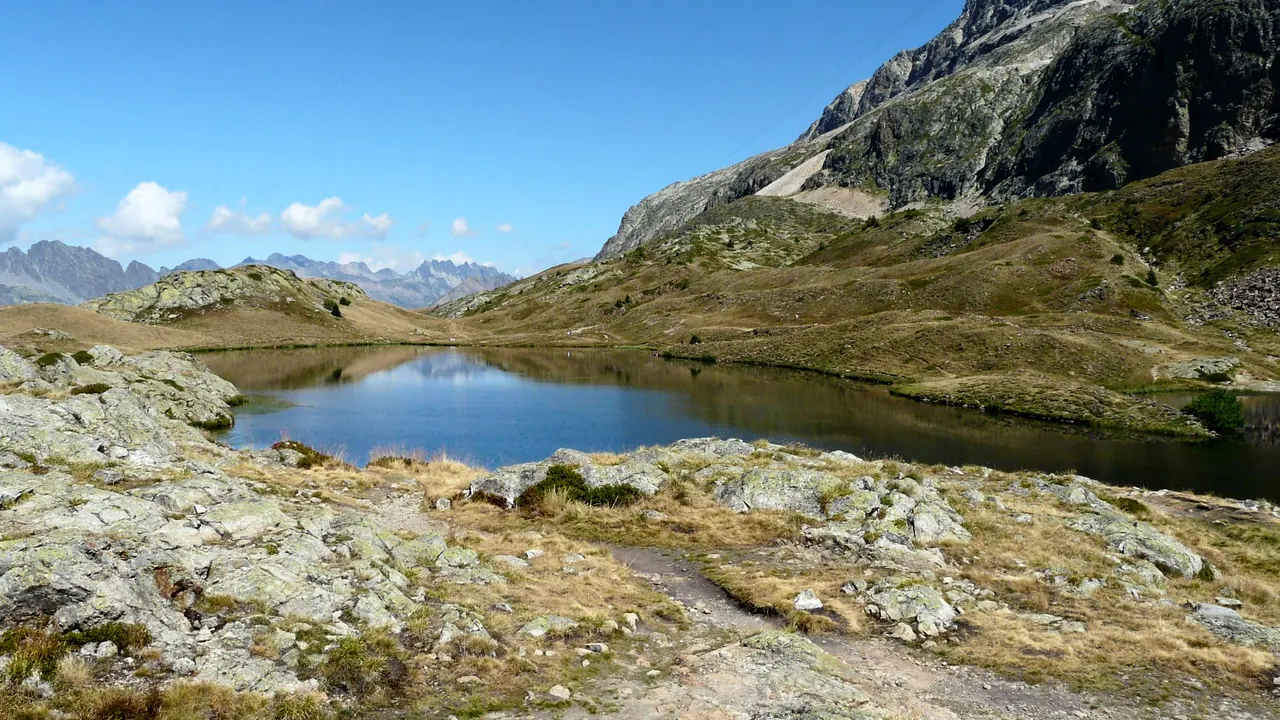
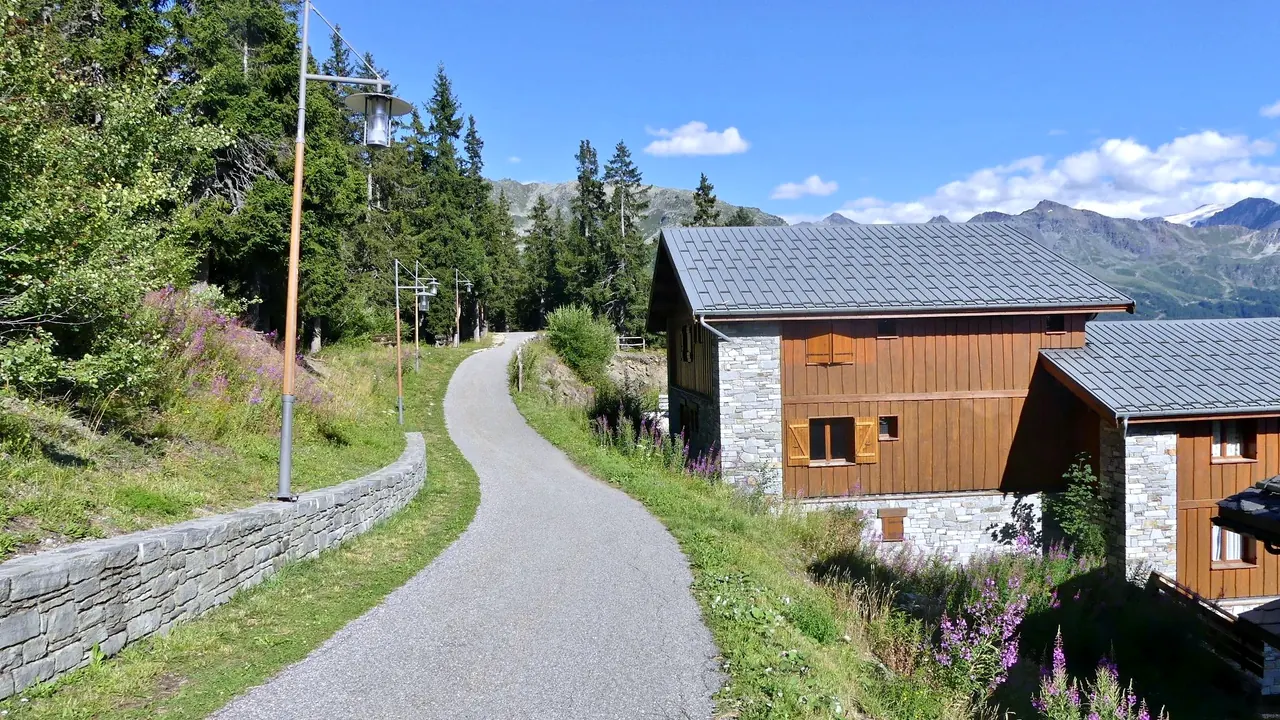
Photos: Alpe d'Huez by Beany, CC BY-SA 3.0, cropped; La Rosière by Florian Pépellin, CC BY-SA 4.0, cropped.
Alpe d'Huez or La Rosière?
Our verdict in twelve categories, each scored against the same fixed benchmark cities, and the climate month by month, so you can choose for your trip.
Choose Alpe d'Huez for
- nightlife
- families
- live music and the arts
Alpe d'Huez suits the group or family that wants a bigger, busier resort. Après-ski starts at the bottom of the runs and carries on into the village pubs, the ice rink and sports centre pool give children something to do off the snow, and the village has a wider choice of places to eat. In summer it has one of the most famous road climbs in cycling, and Grenoble is close enough for a day out.
Choose La Rosière for
- prices
La Rosière is for skiers who want quiet evenings and a slightly lighter bill. Its pistes run over the border to La Thuile, so you can ski into Italy and stop for pasta and espresso at lunch. The village is small, set among larches, and most people are back in their chalets after dinner. In summer the pass opens towards the Aosta valley and its Roman remains.
Scoreboard
Twelve categories on one fixed scale from 0 to 100. The shaded stretch is the gap between the two.
Your match
Pick a travel style or drag the sliders, and both match scores follow your weighting.
Wins on nightlife and families with your weighting.
Wins on prices with your weighting.
What matters to you?
Category by category
What the scores mean for a trip.
Beaches & swimming
Neither resort is any good for a swim. Alpe d'Huez has a slight edge: its sports centre pool is open to everyone, and in summer you can take a cold dip in the small lakes on the Lac Besson plateau. In La Rosière, swimming means a hotel or chalet pool or an icy Alpine lake further down the valley.
Food & drink
Both resorts serve the same cheese-heavy mountain cooking, with tartiflette, raclette, fondue and Beaufort. Alpe d'Huez has more variety in the village, with pizzerias, brasseries, a few more ambitious French kitchens, and long sunny lunches on terraces by the slopes.
La Rosière's choice is smaller and the menus repeat sooner. Its advantage is the border: ski over to the Italian side and lunch can be proper pasta and polenta. For anything else in the evening, you go down to Bourg-Saint-Maurice.
Culture & sights
Neither resort is a place for sightseeing, but what little there is differs. Alpe d'Huez has a tent-shaped modern church known for its organ and the ruins of Brandes, a medieval silver-mining village. Near La Rosière, the old things are outside the resort: baroque churches in the Tarentaise villages and an Iron Age stone circle on the Little St Bernard Pass.
Nightlife
Alpe d'Huez has the much livelier evenings. When the lifts close, the bars at the bottom of the runs fill with young British, Dutch and French skiers, the crowd moves on to the village pubs, and a few small clubs stay open after midnight in the school-break weeks.
La Rosière is built for families, and it shows. A few bars fill up for après-ski, one or two stay open later in peak weeks, and then the village goes quiet. Anyone who wants to dance should stay in Alpe d'Huez.
Nature & outdoors
Both resorts sit on sunny south-facing shelves at about 1,850m, with fine skiing in winter and good walking in summer, so the difference is one of character. Alpe d'Huez is about height and long descents: its lifts climb to the Pic Blanc at 3,330m, the long Sarenne black run is famous among skiers, and in summer the Écrins trails, lift-served bike routes and the hairpin road up from Bourg d'Oisans, one of cycling's great climbs, bring in riders and walkers.
La Rosière's special feature is the frontier. Its pistes cross the Little St Bernard Pass to La Thuile in Italy, there is heli-skiing from the Italian side, and the Vanoise glaciers face the resort across the valley. In summer the high pastures have marmots, ibex and paragliding, and the Mont Blanc massif is just over the border.
Day trips
The two are about equal for day trips, but the difference is in timing. From Alpe d'Huez, Grenoble with its Bastille cable car and old town is in reach all year, and you can stop at the Château de Vizille on the way. Briançon's Vauban walls are a longer drive over the Lautaret.
La Rosière's best outing is a summer one: over the pass to Aosta's Roman theatre and arch, the valley's castles and Courmayeur. In winter the pass road closes, towns are around two hours away, and most outings are to other ski resorts.
Good for families
Both resorts are built around ski weeks for children, with ski schools and nursery slopes near the beds. Alpe d'Huez does more for a family once the skiing is over, with an ice rink, the sports centre pool, sledging and summer activity programmes. Its drawback is a steep, spread-out village that is hard going with a pushchair.
La Rosière is smaller and quieter, so older children can wander on their own, and dog-sled rides break up the week. Off the slopes there is little else, so a run of bad weather leaves you with the pool and not much more.
Getting around
Inside either resort you can leave the car, because shuttles and lifts join the separate quarters along the slope. Alpe d'Huez makes this a little easier with a small gondola between levels and plenty of ski-to-the-door lodging. Getting there means a transfer from Grenoble or a drive up the hairpins, with no railway at all.
La Rosière has a train station in Bourg-Saint-Maurice, half an hour down the hill, with buses up to the resort. Once there, any trip beyond the slopes, whether to valley towns or to Italy in summer, is much easier with a car.
Shopping & style
Neither resort is worth a trip for the shopping. Alpe d'Huez has a little more: technical outdoor brands, a few boutiques and delicatessens with regional cheese, and Grenoble is close when you want real shops. La Rosière has ski hire, small supermarkets and a couple of cheese and souvenir counters.
Affordability
Both are costly in winter, but La Rosière is a little kinder to the budget. It is cheaper than the smart Tarentaise resorts around it, and in summer the hotels and lifts are priced for walkers.
At Alpe d'Huez the lift pass, lessons and lunches on the slopes add up faster, especially in the school-break weeks. Self-catering helps in both, and both get much cheaper outside the ski season.
Live music & performing arts
Neither resort has a theatre or concert hall, but Alpe d'Huez has a little more. Concerts are held on the organ at Notre-Dame des Neiges during the seasons, and there are outdoor gigs in winter and summer. At La Rosière, live music means the odd band in a bar.
Wellness & relaxation
Both rely on hotel and residence spas, with saunas and hot tubs for aching legs. The difference is in the setting. Alpe d'Huez is noisy in peak ski weeks and calm in early summer, and its nearest thermal spa is Uriage-les-Bains, an hour away near Grenoble.
La Rosière is quiet all season and evenings end early. In summer you can cross the pass to the historic thermal baths at Pré-Saint-Didier in Italy.
When should you go?
Pick your month. The climate figures are measured averages, not a forecast.
Alpe d'Huez in July
La Rosière in July
Daytime high, °C
Rainfall in the month, mm
Where the figures come from
Alpe d'Huez has no weather station within reach, so its figures come from a gridded climate model rather than a measured record, and read a broad area rather than one spot.
La Rosière has no weather station within reach, so its figures come from a gridded climate model rather than a measured record, and read a broad area rather than one spot.
Temperature and rainfall are climate normals, averaged over the years shown. Alpe d'Huez: 2001-2020 normals, NASA POWER reanalysis grid, no weather station within 90 km. La Rosière: 2001-2020 normals, NASA POWER reanalysis grid, no weather station within 90 km.
The two resorts share almost the same calendar. From December to February daytime highs stay below freezing, a degree or so colder at La Rosière, and the snow season runs on into March when the sun gets stronger on both south-facing slopes. April and May are the in-between months, when the snow is breaking up and May is the wettest month in both places, at around 103mm in La Rosière.
Summer runs from June to September, and July and August bring highs of about 18°C in both. That is pleasant for hiking and cycling, never too hot, but far too cool for anything like a beach. Alpe d'Huez is a little drier in early summer, with about 71mm in June against 89mm at La Rosière, so it has the edge for a June walking week. By November both are cold and damp again, waiting for the snow.
Which traveller are you?
For a food and nightlife trip, Alpe d'Huez is the clear pick. Après-ski bars by the lower runs, village pubs and a few late clubs keep going past midnight, and there are more places to eat than La Rosière's handful of chalet kitchens.
On a trip on a tight budget, La Rosière stretches the money a little further. It costs noticeably less than the glamorous resorts nearby, self-catering chalets keep down the cost of meals, and a summer stay costs far less than a ski week.
On a family trip with children, Alpe d'Huez has more to offer. Kids' clubs run alongside the ski schools, the ice rink gives evenings a focus, and in summer organised outdoor programmes and lift-served biking keep older children busy beyond the walking trails.
Before you go
| Measure | Alpe d'Huez | La Rosière |
|---|---|---|
| Official language | French | French |
| Currency | Euro (EUR) | Euro (EUR) |
| Sockets | CE230 V, 50 Hz | CE230 V, 50 Hz |
| Driving side | Right | Right |
| Time zone | UTC+1, UTC+2 in summer | UTC+1, UTC+2 in summer |
| Emergency number | 112 | 112 |
| Elevation | 1,860 m | 1,844 m |
| Main airport | Grenoble Alpes Isère Airport (GNB)65 km from centre16 non-stop destinations | Geneva International Airport (GVA)89 km from centre150 non-stop destinations |
| Public holidays this year | 11 days | 11 days |
By the numbers
| Measure | Alpe d'Huez | La Rosière |
|---|---|---|
| Museums within 10 km | 1 | 0 |
| UNESCO World Heritage sites within 50 km | 0 | 0 |
Where else could you go?
Every comparison below shares a destination with this one, so you can follow Alpe d'Huez or La Rosière somewhere new.
- Les Arcsvs La Rosière
- Les Deux Alpesvs Alpe d'Huez
- Tignesvs La Rosière
- La Plagnevs La Rosière
- Val d'Isèrevs La Rosière
- Courchevelvs La Rosière