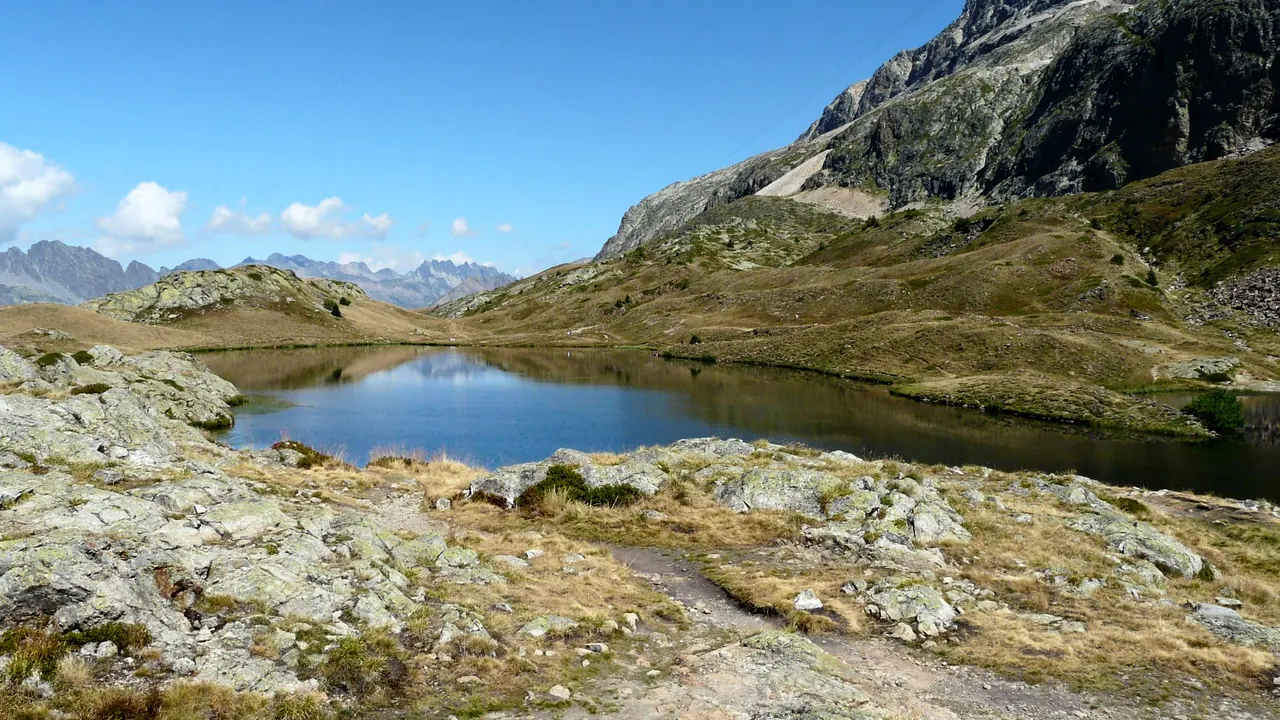
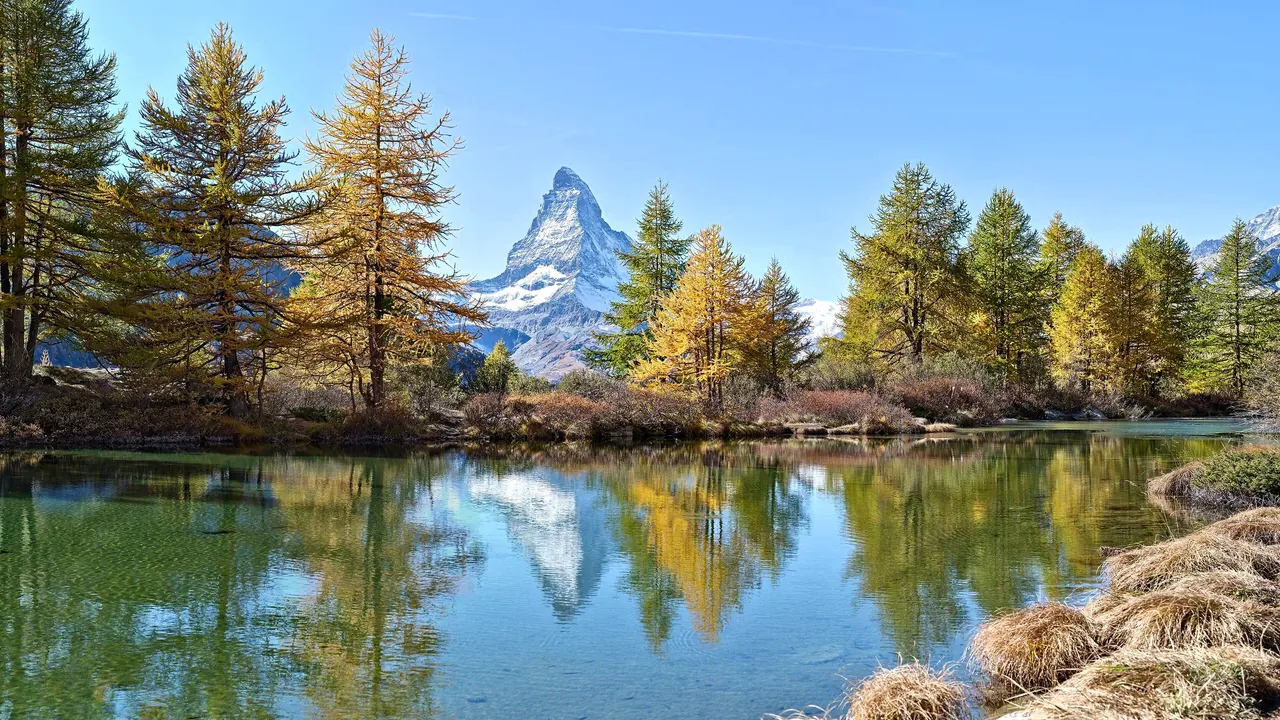
Photos: Alpe d'Huez by Beany, CC BY-SA 3.0, cropped; Zermatt by Roy Egloff, CC BY-SA 4.0, cropped.
Alpe d'Huez or Zermatt?
Our verdict in twelve categories, each scored against the same fixed benchmark cities, and the climate month by month, so you can choose for your trip.
Choose Alpe d'Huez for
- prices
- families
- day trips
Alpe d'Huez suits families on a ski week and anyone who wants big, sunny Alpine skiing without the highest bills. The kids' clubs and gentle beginner slopes sit close to the village, self-catering apartments keep costs down, and in summer road cyclists come for the famous hairpins. Grenoble is near enough for a day off the mountain.
Choose Zermatt for
- getting around
- shopping
- food and drink
Choose Zermatt if the mountain itself is the point and the budget can stretch. The Matterhorn stands over a car-free village, the lifts reach higher glacier terrain, and the skiing crosses into Italy. You also eat better, sleep in better spas and arrive by train. In return, almost everything costs more, and there is less to keep small children busy.
Scoreboard
Twelve categories on one fixed scale from 0 to 100. The shaded stretch is the gap between the two.
Your match
Pick a travel style or drag the sliders, and both match scores follow your weighting.
Wins on prices and families with your weighting.
Wins on getting around and shopping with your weighting.
What matters to you?
Category by category
What the scores mean for a trip.
Beaches & swimming
Neither is a place to swim. The difference is that Alpe d'Huez at least lets you get into the water: the small lakes on the Lac Besson plateau make for a bracing summer dip, the lakes down in the Romanche valley are a little milder, and the sports centre has a public pool.
In Zermatt the tarns above the village are for photographing the Matterhorn's reflection, not for swimming, so a hotel pool is the only real option.
Food & drink
Zermatt eats noticeably better. Its real strength is the wooden chalets in Findeln, Furi and Zum See, where long lunches come with a Matterhorn view, and Valais wines such as Petite Arvine and Cornalin go with the raclette and air-dried beef. The village also has several serious fine-dining kitchens.
Alpe d'Huez serves solid Savoyard fare, with tartiflette, diots and Reblochon, and its sunny slope-side terraces are a pleasure. Down in the village, though, it is mostly pizzerias and brasseries, and the choice feels repetitive by midweek. In both resorts many places close between seasons.
Culture & sights
Both are thin on sights, but Zermatt's heritage has a clearer story. The Matterhorn Museum and the mountaineers' cemetery tell of the 1865 first ascent and its losses, the old larch barns in the Hinterdorf recall the farming village, and the Gornergrat cog railway is a historic ride in itself.
Alpe d'Huez was built for skiing in the twentieth century. Its offering comes down to the tent-shaped Notre-Dame des Neiges, a small local museum and, in summer, the ruins of the medieval silver-mining village of Brandes. That is an afternoon at most.
Nightlife
Evenings are much alike in both: après-ski on the runs back into the village, then a few bars and small clubs open past midnight. Alpe d'Huez has the younger, rowdier crowd of British, Dutch and French skiers, and it is busiest in the school-break weeks.
Zermatt's main street is cheerful but expensive, and in summer its climbers and hikers go to bed early. Out of the ski season, both settle down to dinner and a drink.
Nature & outdoors
Both are outstanding, but Zermatt is the more dramatic. The Matterhorn rises right above the streets, a ring of four-thousand-metre peaks and the Gorner Glacier surround it, and its lifts climb above 3,800m. The skiing runs over into Italy and the glacier keeps some pistes open in summer. Mountaineers come for guided ascents and to finish the Haute Route.
Alpe d'Huez has its own strengths. Its slopes face south and catch unusual amounts of sun, the Pic Blanc looks out over much of the French Alps, and the long Sarenne black run is a classic. In summer the 21 hairpins up from Bourg d'Oisans draw road cyclists, and the Écrins massif lies close by for hiking.
Day trips
Alpe d'Huez gives you more for a day off the snow. Grenoble, with the Bastille cable car, its fine-arts museum and the old town, is a little over an hour down the hairpins. The Revolution museum at the Château de Vizille is on the way, and over the Col du Lautaret you reach La Grave and Briançon's Vauban fortress.
From Zermatt every trip begins with the long train ride down the valley. Brig repays a visit for the Stockalper Palace and its old centre, but Sion, with its castle hills set among the Valais vineyards, makes the best outing. Visp is the gateway to the high vineyards of Visperterminen and the change for the bus to Saas-Fee. Bern only just fits into a long day, so most visitors stay in the mountains.
Good for families
Alpe d'Huez is built around the family ski week. It has kids' clubs, wide gentle slopes beside the village, sunshine that softens the cold, and an ice rink, pool and sledging for afternoons off the snow. The steep, spread-out layout is hard work with a pushchair, though.
Zermatt's car-free streets are its best point for parents. Hotel, ski school and lift are close together and there is no traffic to watch. Beyond the Sunnegga nursery slopes and summer marmot-spotting, there is little made for children, and the thin air at the high viewpoints can be too much for the very young.
Getting around
Zermatt is far simpler on the ground. You arrive by train via Täsch, then walk a compact riverside village. The cog railway, the Sunnegga funicular and the gondolas all start within a short stroll, and the Swiss rail network connects smoothly for onward travel.
Alpe d'Huez has no railway, so you come by coach, transfer or car up the hairpins, sometimes with chains. Once there, free shuttles and a small gondola link quarters spread up a steep slope, and walking between them in ski boots is tiring.
Shopping & style
Neither suits a shopping trip, but Zermatt gives you more to look at. Its single main street mixes Swiss watch and jewellery boutiques with excellent mountaineering outfitters and souvenir shops.
Alpe d'Huez sells mainly ski rental and technical clothing, with a few delicatessens worth visiting for Beaufort and charcuterie. For anything more, go down to Grenoble.
Affordability
Alpe d'Huez is expensive in peak weeks, but you can manage the cost. Self-catering apartments, more modest accommodation than France's grandest resorts, and much gentler prices in summer all help.
Zermatt is among the costliest places in the Alps. Plain hotel rooms, terrace drinks and the lifts every visitor needs all cost a lot, and even sleeping in Täsch and picnicking only takes the edge off.
Live music & performing arts
Neither has a theatre or concert hall, but Zermatt has two festivals that give its calendar some weight. Zermatt Unplugged brings acoustic sets to mountain stages in spring, and a chamber music festival fills the church in late summer.
Alpe d'Huez has organ concerts at Notre-Dame des Neiges and occasional outdoor gigs. For a real programme you have to drive to Grenoble.
Wellness & relaxation
Zermatt is the better place to unwind. It has a dense choice of fine hotel spas, many with mountain views and some open to day visitors, and the lack of traffic gives even busy weeks a calmer feel.
Alpe d'Huez relies on spas in hotels and apartment residences plus the sports centre pool. The nearest real thermal bathing is at Uriage-les-Bains, about an hour away. Early summer is its quietest and most restful time.
When should you go?
Pick your month. The climate figures are measured averages, not a forecast.
Alpe d'Huez in July
Zermatt in July
Daytime high, °C
Rainfall in the month, mm
Where the figures come from
Alpe d'Huez has no weather station within reach, so its figures come from a gridded climate model rather than a measured record, and read a broad area rather than one spot.
Zermatt has no weather station within reach, so its figures come from a gridded climate model rather than a measured record, and read a broad area rather than one spot.
Temperature and rainfall are climate normals, averaged over the years shown. Alpe d'Huez: 2001-2020 normals, NASA POWER reanalysis grid, no weather station within 90 km. Zermatt: 1991-2020 normals, TerraClimate 4 km grid at the town, no weather station within 90 km.
Both are winter resorts first. From December to March daytime highs stay around freezing in both, so this is the snow season. Alpe d'Huez is a touch milder, and its south-facing slopes make the cold easier to bear. Neither ever gets warm enough for a beach day. In summer Alpe d'Huez reaches about 18°C in July and August, which is pleasant for hiking and cycling. Zermatt peaks nearer 14°C, so evenings are cooler and the high viewpoints feel properly cold.
Zermatt is the wetter of the two all year. Late spring is damp in both, and November is the wettest month in Zermatt at about 130mm, a poor time to visit either before the snow builds. For walking, July to September is the best window. In Zermatt the glacier keeps some summer skiing open as well.
Which traveller are you?
On a family trip with young children, Alpe d'Huez is the better bet. The whole resort is designed around a family ski week, the sunnier, slightly milder slopes are kinder to small beginners, and costs are easier to manage. Zermatt works better once children are older and keen to ski or hike all day.
On a tight budget, Alpe d'Huez is the only realistic option of the two. It is far from cheap, but modest apartments and summer weeks keep costs in check. Zermatt is among the dearest places in the Alps, even if you stay down in Täsch.
For a relaxing and wellness trip, choose Zermatt if the budget allows. Here the spa can be the centre of the stay, worth choosing a hotel for, and a long day walking above the village ends well in a steam room. At Alpe d'Huez, spas are an extra after skiing rather than a reason to go.
Before you go
| Measure | Alpe d'Huez | Zermatt |
|---|---|---|
| Official language | French | French, German, Italian, Romansh |
| Currency | Euro (EUR) | Swiss Franc (CHF) |
| Sockets | CE230 V, 50 Hz | CJ230 V, 50 Hz |
| Driving side | Right | Right |
| Time zone | UTC+1, UTC+2 in summer | UTC+1, UTC+2 in summer |
| Emergency number | 112 | 112 |
| Elevation | 1,860 m | 1,624 m |
| Main airport | Grenoble Alpes Isère Airport (GNB)65 km from centre16 non-stop destinations | Geneva International Airport (GVA)128 km from centre150 non-stop destinations |
| Public holidays this year | 11 days | 9 days |
By the numbers
| Measure | Alpe d'Huez | Zermatt |
|---|---|---|
| Population | - | 6,023 |
| People per km² | - | 25 |
| Museums within 10 km | 1 | 2 |
| UNESCO World Heritage sites within 50 km | 0 | 2 |
Where else could you go?
Every comparison below shares a destination with this one, so you can follow Alpe d'Huez or Zermatt somewhere new.
- Les Deux Alpesvs Alpe d'Huez
- Saas-Feevs Zermatt
- Crans-Montanavs Zermatt
- Verbiervs Zermatt
- Leukerbadvs Zermatt
- Serre Chevaliervs Alpe d'Huez