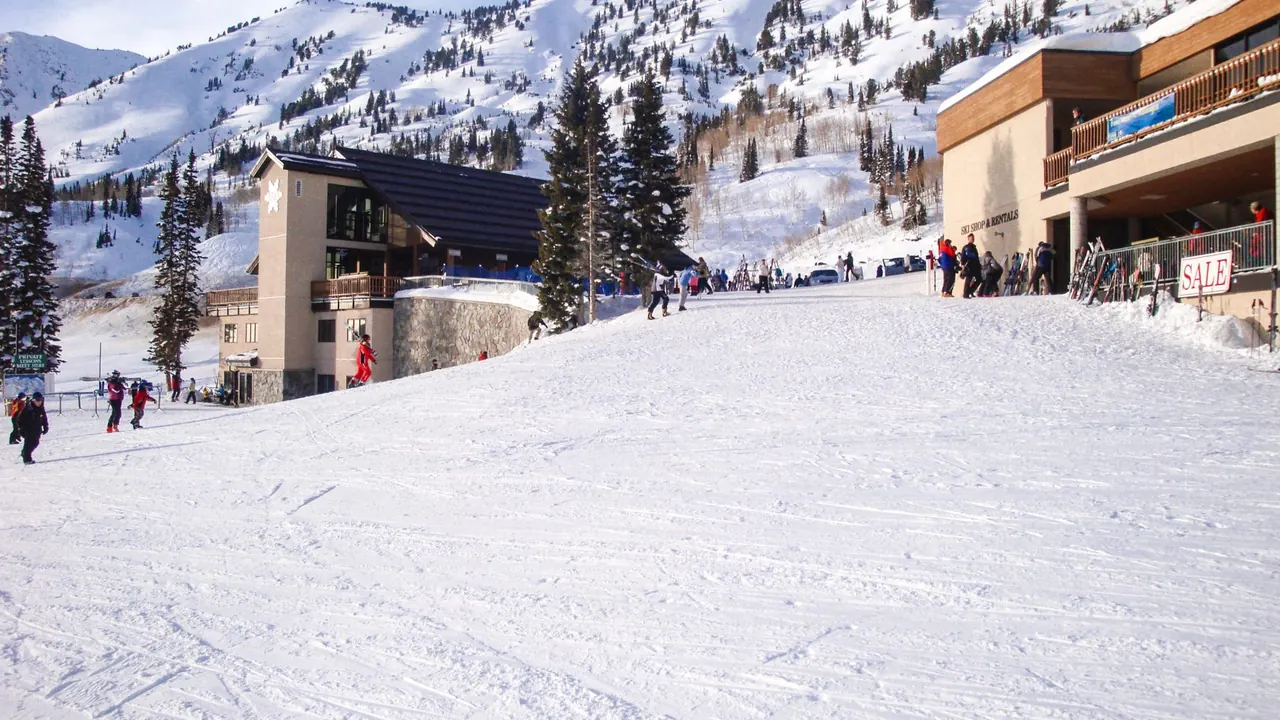
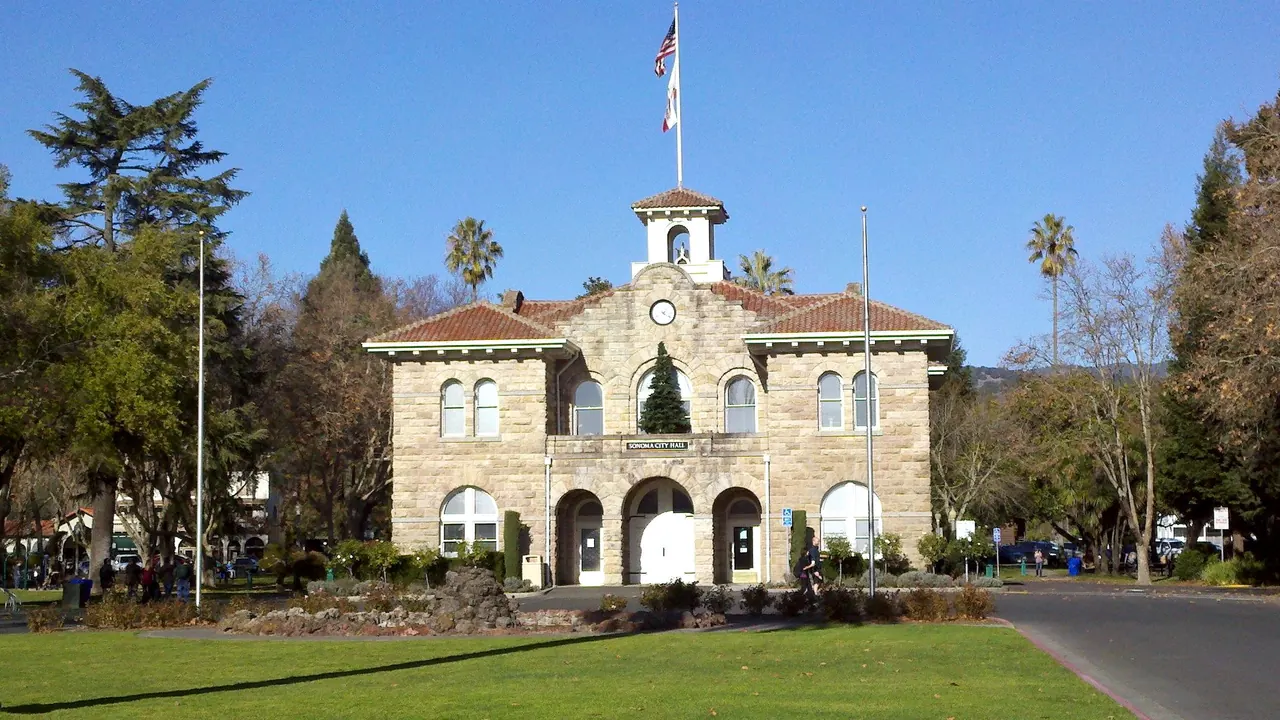
Photos: Alta, Utah by Sumanch, CC BY 3.0, cropped; Sonoma by Cullen328, CC BY-SA 3.0, cropped.
Alta, Utah or Sonoma?
Our verdict in twelve categories, each scored against the same fixed benchmark cities, and the climate month by month, so you can choose for your trip.
Choose Alta, Utah for
- nature and the outdoors
- getting around
- prices
Alta is for skiers, and few places serve them better. Deep, dry Wasatch powder falls at the head of a narrow canyon, the lodges stand at the foot of the lifts, and evenings are so quiet that the first chair next morning is the only plan. In summer the same slopes become wildflower meadows and hiking trails. Choose it if the mountain is the whole point and you are happy to leave food, sights and evenings out to Salt Lake City.
Choose Sonoma for
- food and drink
- day trips
- shopping
Sonoma suits a slower trip built around the table. There are tasting rooms around the plaza, long lunches with wine from the valley, a mission and an adobe barracks for an afternoon of history, and a hot-spring spa on the edge of town. It also gives you much more to do beyond itself, with Napa, Healdsburg and San Francisco all an easy drive away.
Scoreboard
Twelve categories on one fixed scale from 0 to 100. The shaded stretch is the gap between the two.
Your match
Pick a travel style or drag the sliders, and both match scores follow your weighting.
Wins on nature and the outdoors and getting around with your weighting.
Wins on food and drink and day trips with your weighting.
What matters to you?
Category by category
What the scores mean for a trip.
Beaches & swimming
Neither place is for the sea. Alta has nothing beyond a lodge pool or hot tub, and the Great Salt Lake below is too shallow and briny for anyone to swim in.
Sonoma does a little better. The Russian River's gravel beaches warm up enough in summer for a lazy afternoon in the water, and the cliffs and coves around Bodega Bay make a fine drive, even though the cold Pacific there is not for swimming.
Food & drink
In Alta you eat because you have skied, not because the food draws you. Dinner is usually a half-board set menu at long communal tables in your lodge, lunch is in a slopeside cafeteria, and Utah's liquor rules shape how a drink arrives.
In Sonoma, eating and drinking are the point of the trip. Wineries line the valley, with old-vine Zinfandel, Cabernet and Carneros Pinot Noir, and the cooking leans on local cheese, olive oil and coastal oysters. The choice is modest for a small town, but a long lunch here is worth planning a day around.
Culture & sights
Alta has almost nothing to visit. Its silver-mining past survives only as old workings scattered across the ski slopes.
Sonoma has a real, if compact, historic core. Its broad plaza is where the Bear Flag Revolt declared a short-lived California Republic in 1846, and Mission San Francisco Solano and the adobe barracks face it. Add Vallejo's Gothic house at Lachryma Montis and the ruins of Jack London's Wolf House in Glen Ellen, and you have a satisfying half day that Alta cannot match.
Nightlife
Alta's evening is an après-ski drink in a lodge bar and an early night, since the lifts set the rhythm of the whole village. If you want more noise after skiing, the neighbouring resort down the road has the livelier après scene.
Sonoma stays up a little longer. Dinner leads on to a glass in a wine bar, a brewpub or one of the old saloons around the plaza, and on summer nights the square itself is a pleasant place to linger. Neither town has clubs. A proper night out means driving to Salt Lake City from Alta, or to Santa Rosa or back to San Francisco from Sonoma.
Nature & outdoors
Alta is the more spectacular landscape. At around 2,600m in the Wasatch, it gets famously deep, dry powder, steep terrain and serious backcountry touring with real avalanche risk. In summer Albion Basin's wildflowers, the climb to Sugarloaf and sightings of moose and mountain goats make it a high-mountain trip in either season.
Sonoma's countryside is gentler and more varied. Vineyards roll between oak-covered ranges, trails start almost at the plaza, Sugarloaf Ridge has redwood groves, and quiet roads suit a bicycle. Point Reyes and the wild coast are within an hour, but nothing here matches the scale of Alta's mountains.
Day trips
Sonoma is much better placed for days out. San Francisco is about an hour away, and Napa's towns, Healdsburg's plaza, Petaluma's Victorian riverfront and Sausalito on the bay are all within easy reach, although most outings beyond the city are another wine town.
From Alta the choice is Salt Lake City's Temple Square and museums, Park City's old mining Main Street, or Ogden further north. After that the options run out, the national parks are far to the south, and a storm closing the canyon road can cancel any of these plans.
Good for families
Both are limited with children, each for its own reason. Alta works if the whole family skis, with a ski school, gentle beginner slopes and rooms beside the lifts. Non-skiers have little to do, though, and the altitude and storm days spent indoors can wear on small children.
Sonoma is calm and safe, and it has a playground on the plaza, a miniature railway park and an African wildlife park near Santa Rosa. Once those are done, the days revolve around tasting rooms and long adult lunches.
Getting around
Once you are up in Alta, there is little to arrange. Lodges are ski-in, ski-out and a winter shuttle links the base areas. The weak point is the single canyon road from Salt Lake City, which jams on powder mornings and closes after storms.
Sonoma's plaza is easy on foot, and you can walk to several tasting rooms. Everything else is spread across the valley and buses are of little use, so most days need a hire car, a driver or a tour, and someone has to stay sober for the drive.
Shopping & style
Alta sells you ski rentals, tuning and outdoor gear, and little else. Sonoma's plaza and arcades are far better for a browse, with independent boutiques, kitchen shops, galleries, local olive oil and cheese, and wine bought straight from the cellar door. In summer there is also a farmers' market, though neither town is somewhere you would go just to shop.
Affordability
Both are costly, but the bill takes a different shape. In Alta it arrives mostly at once: the lodge room is the big expense, and because it usually comes with dinner and the village has almost nothing else to buy, a ski week costs much the same from one day to the next. Cutting it means sleeping down in the Salt Lake valley and paying instead in time, with a daily ride up the canyon that can be slow or blocked by snow.
Sonoma's cost builds up through the day. A tasting fee here, a long lunch there, another winery after that and the driver or hire car to get between them all add up. That makes it easier to control, since a cheaper bed in a neighbouring town, a picnic among the vines and fewer, well-chosen tastings save money without taking much away from the trip.
Live music & performing arts
Alta has no stage of any kind, so a concert or a play means driving down to Salt Lake City. Sonoma offers a modest summer season, with musicals staged outdoors among the ruins and oaks of Jack London's park, concerts at wineries and the 1930s theatre on the plaza. For serious classical music, the Green Music Center about half an hour away draws touring orchestras.
Wellness & relaxation
Alta has little to offer on the spa side. The lodge spas are small, and the larger one is at the neighbouring resort. What it does have is stillness. On storm days, when the canyon road closes and the snow muffles everything, the village becomes a place where there is nothing to do but read, soak and sleep.
Sonoma has far more on offer, though it is less of a bathing destination than its springs suggest. The historic resort spa at Boyes Hot Springs sells day passes to non-guests, but there is no public bathhouse, and nearly every soak or treatment, including those in the valley's inn spas and massage studios, comes at resort prices. It suits a couple who want one spa day in a calm break better than someone travelling mainly for the water.
When should you go?
Pick your month. The climate figures are measured averages, not a forecast.
Alta, Utah in July
Sonoma in July
Daytime high, °C
Rainfall in the month, mm
Where the figures come from
Alta, Utah has no weather station within reach, so its figures come from a gridded climate model rather than a measured record, and read a broad area rather than the city itself.
Sonoma has no rain gauge within 25 km of the centre, so its rainfall comes from a gridded climate dataset read at the city rather than from a gauge further away.
Sonoma's sunshine is measured 87 km from the centre, at Sacramento Executive Airport.
Temperature and rainfall are climate normals, averaged over the years shown. Alta, Utah: 1991-2020 normals, TerraClimate 4 km grid at the town, no weather station within 90 km. Sonoma: 1991-2020 (sunshine 1981-2010) normals, Napa / Middleton (17.8 km from centre).
Alta runs on two seasons. From December to March daytime highs stay around freezing, about 0°C in January, and the steady monthly precipitation falls as snow, which is exactly what skiers come for. Spring is a slow thaw. The walking season runs from late June to September, when days reach about 22°C in July, Albion Basin is in flower and the trails are clear. By November it is cold and snowy again.
Sonoma's year is the reverse: mild and wet in winter, dry and warm in summer. Rain is heavy from November to March, peaking at about 169mm in December, while June to September are almost rainless and very sunny, with highs around 26°C that suit long lunches outdoors but can feel hot on the valley floor. April, May and October are the best months for walking and cycling among the vines. The Pacific nearby never climbs much above 14°C, so the coast is for looking at rather than swimming.
Which traveller are you?
On an outdoors trip, Alta is the clear choice. Its winter powder and backcountry bowls are among the finest in North America, and summer brings Albion Basin's meadows, Cecret Lake and moose on the trails, all far wilder than Sonoma's gentler vineyard hills.
For a food and nightlife trip, Sonoma wins easily on the food side. It has wineries on every road, Carneros Pinot Noir and seasonal Californian cooking around the plaza. Evenings end early in both places, but Sonoma's wine bars beat a lodge set dinner.
On a relaxing and wellness trip, Sonoma offers more. Boyes Hot Springs has real mineral water, Calistoga's mud baths are within reach, and quiet plaza mornings set the pace. Alta's hot tubs in the snow are lovely, but they are a skier's reward rather than a spa vacation.
Before you go
| Measure | Alta, Utah | Sonoma |
|---|---|---|
| Currency | US Dollar (USD) | US Dollar (USD) |
| Sockets | AB120 V, 60 Hz | AB120 V, 60 Hz |
| Driving side | Right | Right |
| Time zone | UTC-7, UTC-6 in summer | UTC-8, UTC-7 in summer |
| Emergency number | 911 | 911 |
| Elevation | 2,610 m | 26 m |
| Main airport | Salt Lake City International Airport (SLC)37 km from centre108 non-stop destinations | Charles M. Schulz Sonoma County Airport (STS)39 km from centre14 non-stop destinations |
| Public holidays this year | 12 days | 13 days |
By the numbers
| Measure | Alta, Utah | Sonoma |
|---|---|---|
| City population | 228 | 10,739 |
| People per km² | 19 | 1,513 |
| Museums within 10 km | 0 | 7 |
| UNESCO World Heritage sites within 50 km | 0 | 0 |
| Swim season, months above 21 °C | - | None |
Where else could you go?
Every comparison below shares a destination with this one, so you can follow Alta, Utah or Sonoma somewhere new.
- Snowbirdvs Alta, Utah
- Deer Valleyvs Alta, Utah
- Napavs Sonoma
- Park Cityvs Alta, Utah
- Salt Lake Cityvs Alta, Utah
- San Franciscovs Sonoma