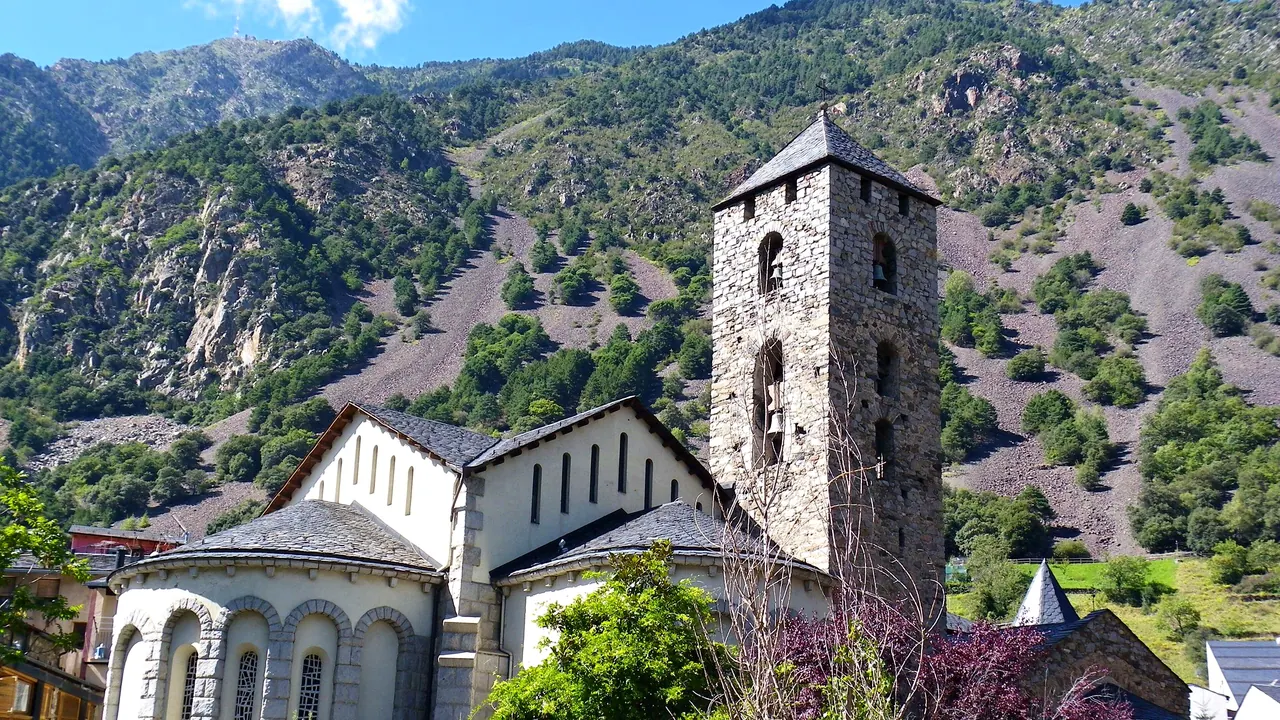
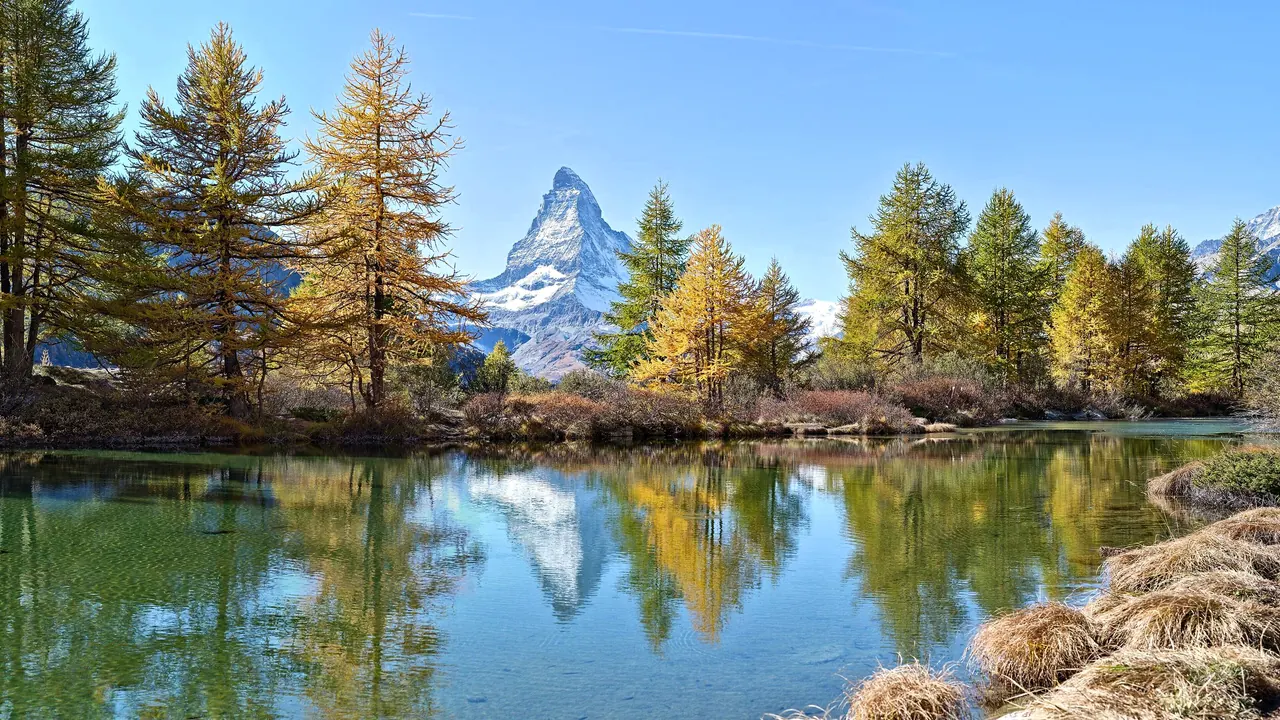
Photos: Andorra la Vella by KRLS, CC BY-SA 3.0, cropped; Zermatt by Roy Egloff, CC BY-SA 4.0, cropped.
Andorra la Vella or Zermatt?
Our verdict in twelve categories, each scored against the same fixed benchmark cities, and the climate month by month, so you can choose for your trip.
Choose Andorra la Vella for
- prices
- shopping
- culture and sights
Andorra la Vella suits travellers who want the Pyrenees without the Alpine bill. Rooms, set lunches and low-tax shopping keep costs in the middle range for Western Europe, and the town has a little more to see, with the Casa de la Vall and Romanesque churches in the valleys. Catalan and French market towns are close enough for a day out. It works for a ski or hiking week that also leaves room for stocking up on gear, spirits or perfume, and for a long soak at Caldea.
Choose Zermatt for
- getting around
- nature and the outdoors
- nightlife
Zermatt is for people who put the mountains first and accept the price. The Matterhorn, the glaciers and the lifts climbing above 3,800m give it scenery and terrain that Andorra cannot match. The car-free village is easy and calm to get around, and its winter après-ski has more life. If you care more about the view from the terrace than the bill, it is the stronger choice.
Scoreboard
Twelve categories on one fixed scale from 0 to 100. The shaded stretch is the gap between the two.
Your match
Pick a travel style or drag the sliders, and both match scores follow your weighting.
Wins on prices and shopping with your weighting.
Wins on getting around and nature and the outdoors with your weighting.
What matters to you?
Category by category
What the scores mean for a trip.
Beaches & swimming
Neither place has anywhere to swim in the open. Andorra la Vella's glacial lakes and Zermatt's Matterhorn-reflecting tarns are both too cold for more than a toe. The difference lies in the warm water: Andorra has the thermal lagoons of Caldea next door, while in Zermatt a swim means a hotel pool.
Food & drink
The food is equally good in both places, but it comes from two different mountain traditions. Andorra la Vella cooks Catalan: escudella, trinxat and lamb grilled over wood fires in old stone bordas in the side valleys, while the restaurants along the town's avenues are uneven.
Zermatt serves Valais cheese and air-dried beef, with Petite Arvine or Cornalin in the glass. Its best meals are long lunches at mountain chalets above Findeln or Furi, and a few ambitious fine-dining kitchens back them up. Cheap eating is easier to find in Andorra.
Culture & sights
Andorra la Vella has a little more history to go and see. The Barri Antic and the fortified Casa de la Vall, seat of the old parliament, fill a walk. Romanesque churches such as Santa Coloma, with its round bell tower, are scattered through the nearby valleys.
Zermatt's heritage is narrower and all about mountaineering: the underground Matterhorn Museum on the 1865 first ascent, the climbers' cemetery and the larch-wood granaries of the Hinterdorf. That is a morning's worth, and the old Gornergrat railway is as much a ride as a sight.
Nightlife
Zermatt has the livelier evenings, because the skiing ends in the village itself. The runs come down to its edge, so the après-ski starts right where people unclip their skis. On busy winter weekends a handful of bars and small clubs along the main street keep going well after midnight. The mood is cheerful and expensive rather than sophisticated.
Andorra la Vella is a valley capital some distance from the pistes, so its après-ski crowd stays up in the resort villages near the French border. The town keeps its pubs and wine bars, which fill up a little on winter weekends. The seasons also work differently. In summer Zermatt's climbers and hikers are in bed soon after dinner, and between seasons much of the village closes. Andorra's town bars carry on at the same quiet pace all year.
Nature & outdoors
Andorra la Vella makes a fine mountain base. The town lies deep in a valley ringed by peaks close to 3,000m. The ski areas are a short ride away, and the UNESCO-listed Madriu-Perafita-Claror valley begins at the edge of town. From late spring the trails climb to glacial lakes and mountain refuges, and road cyclists come for the long Pyrenean passes.
Zermatt goes further and higher. The Matterhorn stands directly over the village, surrounded by dozens of four-thousand-metre peaks and the Gorner Glacier, and the lifts reach above 3,800m. You can ski across the border into Italy, and the glacier keeps some pistes open through the summer.
Day trips
Andorra la Vella has the better choice of outings. La Seu d'Urgell's cathedral and market are about half an hour away, the Cerdanya and Llívia about an hour, and Foix's castle in France a longer drive.
From Zermatt, every trip starts with the train down the valley, and the towns take longer to reach. Sion, with its two castle hills among the vineyards, is the one really worth the journey, and Brig is closer. Most visitors would rather spend a spare day up a mountain.
Good for families
Both suit families who ski or hike, and neither has a zoo or theme park. Andorra la Vella offers more to do: toboggan runs, rope courses, a wildlife park and Caldea's family pools for a wet day. Its centre, though, is a busy shopping road full of traffic.
Zermatt is the reverse. Its car-free streets make walking with small children easy, but rainy days are hard to fill, and the highest viewpoints can be too cold and thin-aired for small children.
Getting around
Zermatt is far easier once you arrive. You come by train, walk everywhere, and reach the cog railway, the Sunnegga funicular and the gondolas from the village centre, with smooth onward links into the Swiss rail network.
Andorra la Vella has no train at all. Getting there means a long drive from airports in Spain or France, and the main valley road clogs at weekends. Buses link the parishes, but trailheads are often easier with a car.
Shopping & style
Andorra la Vella is a shopping destination in its own right. The low-tax avenues run unbroken into Escaldes-Engordany, lined with department stores and shops selling ski gear, electronics, perfume and spirits at prices that draw people over the border.
Zermatt's single main street sells luxury Swiss watches, very good mountaineering kit and cowbell souvenirs. Neither town has much character or local craft, but Andorra has far more to buy.
Affordability
This is where the two differ most. Andorra la Vella costs about what the rest of Western Europe does: rooms are often good value outside the peak ski weeks, set lunches are fair and drinks are cheap thanks to low taxes. Only ski passes and the spa match resort prices.
Zermatt is among the most expensive places in the Alps, from plain hotel rooms to terrace drinks and the lifts everyone uses. Self-catering or sleeping down the valley in Täsch eases the cost, but it never becomes cheap.
Live music & performing arts
Neither place has much live performance, and both depend on festivals. Andorra la Vella's are mostly in summer: jazz in Escaldes-Engordany and classical music in Ordino, plus a small national orchestra. Zermatt has acoustic sets at Zermatt Unplugged in spring and chamber music in the village church in late summer, and no concert hall to fall back on.
Wellness & relaxation
Both are good for unwinding after a day outdoors, in different ways. Andorra la Vella has real hot springs, feeding the lagoons, saunas and adults-only area of Caldea, but its traffic-filled avenues do not feel restful.
Zermatt has no thermal water. Instead it has many excellent hotel spas with mountain views, some open to non-residents, and the car-free, quiet village is calmer to be in.
When should you go?
Pick your month. The climate figures are measured averages, not a forecast.
Andorra la Vella in July
Zermatt in July
Daytime high, °C
Rainfall in the month, mm
Where the figures come from
Andorra la Vella has no weather station within reach, so its figures come from a gridded climate model rather than a measured record, and read a broad area rather than the city itself.
Zermatt has no weather station within reach, so its figures come from a gridded climate model rather than a measured record, and read a broad area rather than the city itself.
Temperature and rainfall are climate normals, averaged over the years shown. Andorra la Vella: 1991-2020 normals, TerraClimate 4 km grid at the town, no weather station within 90 km. Zermatt: 1991-2020 normals, TerraClimate 4 km grid at the town, no weather station within 90 km.
The two places sit at very different heights, and you feel it all year. Andorra la Vella is a valley town where summer is properly warm, with highs around 23°C in July and August, so June to September is comfortable for walking the streets and hiking. Spring and autumn are cooler and wetter: May and November are the rainiest months. Winter days stay just above freezing in town, and the snow is up on the slopes.
Zermatt is far colder. Its highs stay below freezing from December to February, which is the heart of the ski season. Even in July and August the village only reaches about 14°C, so summer here is for hiking in layers rather than for warm evenings outside. November is its wettest month, at around 130mm, and late autumn and late spring are the quiet in-between times in both places. Neither has anywhere to swim outdoors.
Which traveller are you?
On a trip on a tight budget, Andorra la Vella is the realistic choice. Rooms outside the peak ski weeks are fair, set lunches are reasonable and low taxes make drinks cheap. In Zermatt even a plain hotel room and a terrace lunch strain most budgets.
For a shopping trip, choose Andorra la Vella. Its long tax-free strip running into Escaldes-Engordany is full of electronics, perfume, watches and ski gear at lower prices. Zermatt has one main street of luxury watch boutiques, outfitters and Matterhorn souvenirs, and little to browse beyond them.
On an outdoors trip, Zermatt is the place to go. The Matterhorn, glacier skiing that runs into summer, lifts to over 3,800m and trails such as the Five Lakes walk put you among four-thousanders. Andorra's Pyrenees are fine walking country, but lower and gentler.
Before you go
| Measure | Andorra la Vella | Zermatt |
|---|---|---|
| Official language | Catalan | French, German, Italian, Romansh |
| Currency | Euro (EUR) | Swiss Franc (CHF) |
| Sockets | CF220 V, 50 Hz | CJ230 V, 50 Hz |
| Driving side | Right | Right |
| Time zone | UTC+1, UTC+2 in summer | UTC+1, UTC+2 in summer |
| Emergency number | 112 or 118 | 112 |
| Elevation | 1,022 m | 1,624 m |
| Main airport | Josep Tarradellas Barcelona-El Prat Airport (BCN)142 km from centre235 non-stop destinations | Geneva International Airport (GVA)128 km from centre150 non-stop destinations |
| Public holidays this year | 14 days | 9 days |
By the numbers
| Measure | Andorra la Vella | Zermatt |
|---|---|---|
| City population | 24,042 | 6,023 |
| People per km² | 801 | 25 |
| Museums within 10 km | 13 | 2 |
| UNESCO World Heritage sites within 50 km | 4 | 2 |
Where else could you go?
Every comparison below shares a destination with this one, so you can follow Andorra la Vella or Zermatt somewhere new.
- Chamonixvs Zermatt
- Interlakenvs Zermatt
- Luganovs Zermatt
- Lausannevs Zermatt
- Carcassonnevs Andorra la Vella
- Turinvs Zermatt