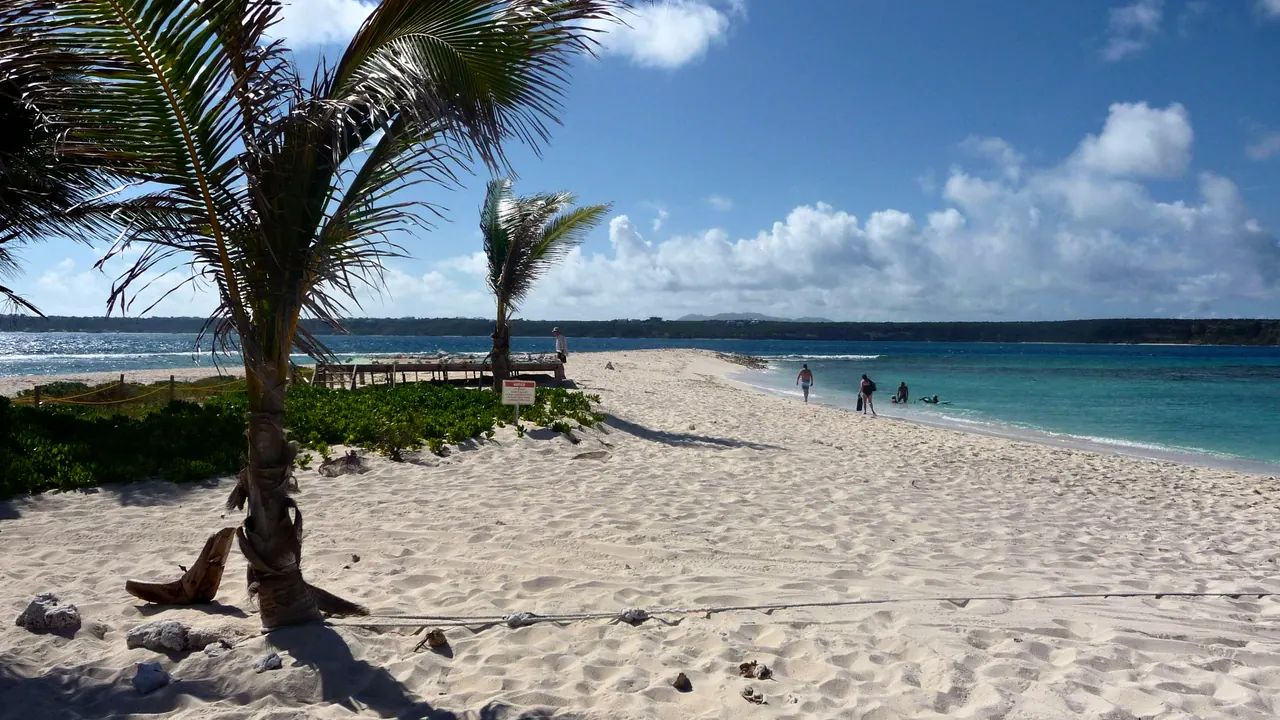
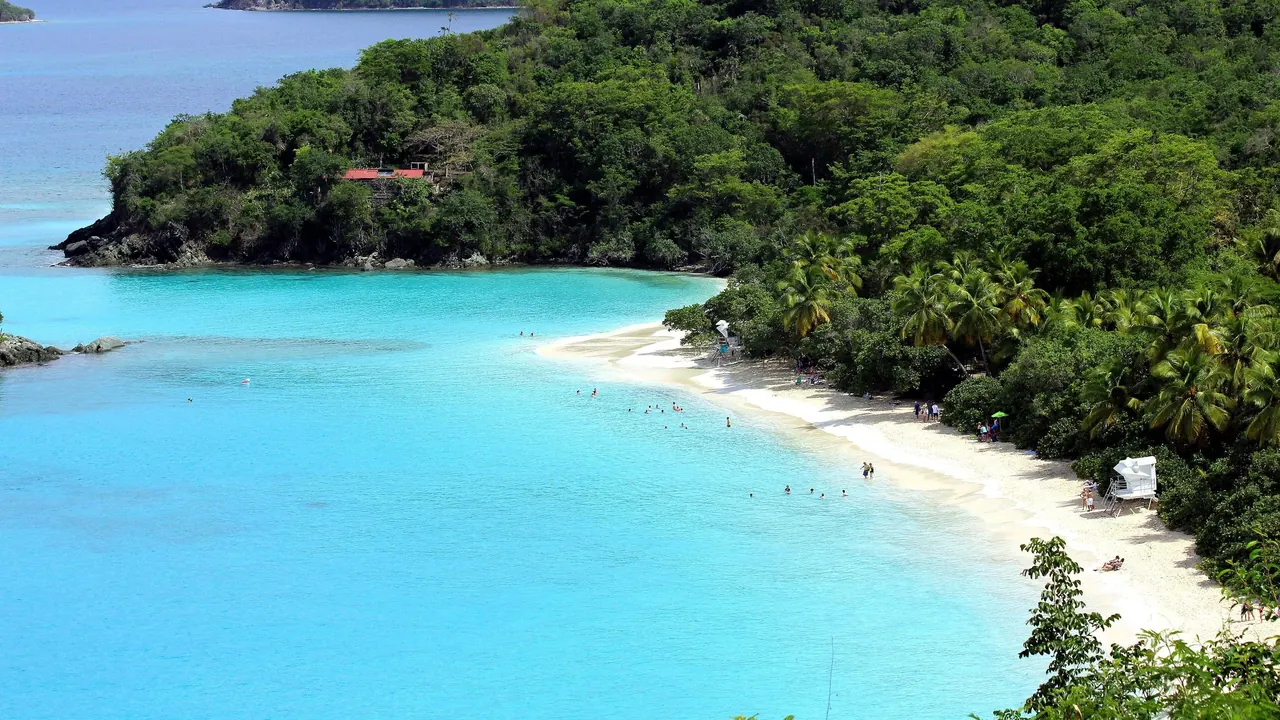
Photos: Anguilla by alljengi, CC BY-SA 2.0, cropped; St John by Artix Kreiger 2, CC BY 2.0, cropped.
Anguilla or St John?
Our verdict in twelve categories, each scored against the same fixed benchmark cities, and the climate month by month, so you can choose for your trip.
Choose Anguilla for
- food and drink
- getting around
- nightlife
Anguilla is the island for a beach vacation built around long lunches and longer dinners. Its beaches are flat, powdery and spread right around the coast, there is no cruise pier to fill them, and the west end and Sandy Ground give it a real restaurant scene, with lolo barbecue and weekend beach bars to loosen things up. Choose it if your ideal day is sand, sea and a good table at night, and you don't mind that the land itself is low scrub with little to explore.
Choose St John for
- nature and the outdoors
- culture and sights
- shopping
St John suits travellers who want to be active between swims. Most of the island is national park, so the beaches are backed by steep forest rather than resorts, and you can snorkel with turtles in the morning and walk to plantation ruins and petroglyphs in the afternoon. In return you get simpler food, quieter evenings and a fiddlier arrival through St Thomas. If you'd rather hike a trail than book a dinner, it's the better choice.
Scoreboard
Twelve categories on one fixed scale from 0 to 100. The shaded stretch is the gap between the two.
Your match
Pick a travel style or drag the sliders, and both match scores follow your weighting.
Too close to call, level with your weighting
Wins on food and drink and getting around with your weighting.
Wins on nature and the outdoors and culture and sights with your weighting.
What matters to you?
Category by category
What the scores mean for a trip.
Beaches & swimming
Both islands are top Caribbean beach destinations, with white sand and warm, clear water all year. The difference is in the setting. Anguilla's beaches are long and flat and run around the whole coast of a low coral island. Some are lined with resorts and villas, as at Meads Bay and Rendezvous Bay, and boats run out to sandbars like Sandy Island.
St John's bays sit below steep green hills inside the national park, with almost no buildings. They are more scenic and better for snorkelling from the shore, with the underwater trail at Trunk Bay and turtles at Maho. But most of them are basic, with little more than sand and shade trees, and the best-known ones fill up by late morning in winter.
Food & drink
Anguilla is the stronger island for eating out. Dinner organises the evening there: a string of polished beachfront restaurants at the west end and Sandy Ground, plus crayfish, grilled snapper and the weekend lolos, roadside barbecue shacks.
St John has a decent choice for its size, but it's concentrated in Cruz Bay, with open-air grill restaurants, food trucks and a few West Indian kitchens serving pâtés and saltfish, and it has little fine dining. Many villa guests end up cooking for themselves. Neither island has proper markets, and on both nearly everything is imported.
Culture & sights
Neither island is a culture destination, but St John has more to see, and more of it is in its landscape. The Annaberg sugar mill looks out over the north shore. The Reef Bay Trail passes estate ruins on the way to Taíno petroglyphs, and Coral Bay has the fort remains linked to the slave revolt of 1733.
Anguilla's history fits into a morning: Wallblake House in The Valley, the Heritage Collection Museum, the carvings in Fountain Cavern and the old salt ponds. On St John, the sightseeing comes with a good walk.
Nightlife
Both islands are quiet after dark, but Anguilla has a little more life. Sandy Ground's beach bars stay open late with dancing on the sand at weekends, and Sunday afternoon sessions around the island run into the evening.
On St John, going out means a few open-air bars on the Cruz Bay waterfront, where visitors and boat crews mix until late evening. Anyone who wants more takes the ferry to St Thomas.
Nature & outdoors
This is where the two islands differ most. St John is mostly national park: steep dry forest dropping to reefs and empty headlands, with a network of trails, from the Reef Bay valley to the bare cliffs of Ram Head. In the water there are turtles, rays and coral around Waterlemon Cay and Maho Bay.
Anguilla is flat scrub and cactus, with no hills or forest. Its outdoor appeal is on the water: diving around Prickly Pear Cays and Dog Island, kitesurfing and sailing in the trade winds, plus cliff walks and birdwatching at the salt ponds.
Day trips
From both islands, a day trip means taking a boat, and the options are about as good on each. From Anguilla the outing is Saint Martin, a short ferry ride away, with French Marigot and the restaurants of Grand Case on one side and duty-free Philipsburg on the other. St Barths is an occasional chartered treat.
St John offers more islands to choose from. Charlotte Amalie on St Thomas has Danish colonial streets and a fort. Across the channel lie the British Virgin Islands, from the beach bars of Jost Van Dyke to the boulders of The Baths, though visiting them means a passport and customs.
Good for families
For families, the two are much alike: safe, slow and built around calm, shallow water, with nothing made for children beyond the beach. On Anguilla, gently shelving bays such as Rendezvous Bay and Shoal Bay West make the island easy with toddlers, and several larger resorts cater well to families.
St John appeals more to children who already like the water, with turtles at Maho Bay and the marked snorkel trail at Trunk Bay. But its steep roads, hillside villas and the taxi and ferry needed to get there are harder work with small children.
Getting around
Anguilla is the easier island to get around. It's flat and about 26km long, traffic is light, and with a hire car any beach is a short drive away. The main effort is arriving: you fly into Sint Maarten and take a ferry across.
St John is harder work. You fly into St Thomas, take a taxi to Red Hook and then a ferry. On the island, the steep, switchbacked roads make a jeep close to essential. Its advantages are the open-air safari taxis to the north shore beaches and Cruz Bay, which you can walk around.
Shopping & style
Neither island is for shoppers, though St John has slightly more to browse. Its Cruz Bay courtyards hold galleries, jewellers and craft such as hand-painted pottery, which is enough for an hour. Anguilla has a few galleries and resort boutiques, with sea salt and rum as souvenirs. For serious shopping, both send you to a duty-free neighbour, Saint Martin or Charlotte Amalie.
Affordability
Both islands are expensive, because almost everything is shipped in, so meals, drinks and groceries cost a lot on either. Anguilla's accommodation is mostly high-end resorts and villas, with lolo barbecue as the main cheaper meal.
St John has more ways to save. The national park's beaches and trails are mostly free, and the campground at Cinnamon Bay gives a simpler place to stay. On the other hand, the jeep, taxis and ferries add up.
Live music & performing arts
Anguilla's live music has more going on. Reggae, soca and string bands play at weekends around Sandy Ground and at Sunday afternoon beach-bar sessions. Two long-standing festivals anchor the year: the reggae festival in March and the August Summer Festival, with calypso and boat racing.
St John's music is mostly singer-guitarists and the odd steel pan band in the bars of Cruz Bay and Coral Bay. Its one big occasion is the St John Festival in early summer, with parades and quelbe music. Neither island has a theatre or concert hall.
Wellness & relaxation
Anguilla's version of rest is the more polished one. Its luxury resorts have extensive spas, some with treatment rooms open to the sea breeze, and days slip by between the beach, lunch and an early night.
St John's calm is simpler and wilder: a hillside villa above the water, tree frogs at night, a massage therapist who comes to the villa and a few small yoga studios. It suits people who want to switch off surrounded by nature rather than be looked after. Neither island has a bathing tradition of its own.
When should you go?
Pick your month. The climate figures are measured averages, not a forecast.
Anguilla in July
St John in July
Daytime high, °C
Rainfall in the month, mm
Temperature and rainfall are climate normals, averaged over the years shown. Anguilla: 1991-2020 normals, Juliana Airport, Saint Maarten (14.5 km from centre). St John: 1991-2020 normals, C. Amalie / St. Thomas Airport (20 km from centre).
The two islands have almost the same climate. Days run from about 29°C in winter to 32°C in late summer, and the sea never drops much below 26°C, so you can swim in every month. January to April is the driest and most comfortable stretch on both. It is warm enough for the beach but still mild enough for walking Anguilla's cliff paths or St John's trails. Anguilla is also at its sunniest then, with about 270 hours of sun in March. In winter its north shore can get some swell, so the south and west beaches are the calm ones, while St John's north shore bays stay sheltered.
December is where the two differ slightly. St John is still fairly dry, but Anguilla's autumn rains carry on, and December there is wetter than May or July. From May the heat builds on both islands, and from August the rain increases until it peaks in November at about 160mm on each. Late summer is sticky for St John's trails, and on both islands it falls in hurricane season.
Which traveller are you?
On a beach and sun trip, Anguilla edges ahead. It has more than thirty beaches, from Shoal Bay East to the sheltered crescent of Maundays Bay, and with no cruise pier or high-rises they stay uncrowded even in winter, when St John's best-known bays fill by late morning.
For an outdoors trip, choose St John. About two-thirds of the island is national park, with trails down the Reef Bay valley and out to Ram Head, turtles at Maho Bay and kayaking between the bays. Anguilla is flat and dry, and its outdoor life is almost all on the water.
On a food and nightlife trip, Anguilla is clearly better. Dinner is the main event there, with polished beachfront restaurants, crayfish and weekend lolos, and Sandy Ground's beach bars keep going late. St John's eating centres on Cruz Bay, and most evenings end soon after dinner.
Before you go
| Measure | Anguilla | St John |
|---|---|---|
| Official language | English | English |
| Currency | East Caribbean Dollar (XCD) | US Dollar (USD) |
| Sockets | A110 V, 60 Hz | - |
| Driving side | Left | Left |
| Time zone | UTC-4 | UTC-4 |
| Emergency number | 911 | 911 |
| Main airport | Clayton J. Lloyd International Airport (AXA)15 non-stop destinations | Cyril E. King Airport (STT)26 non-stop destinations |
| Public holidays this year | 14 days | 18 days |
By the numbers
| Measure | Anguilla | St John |
|---|---|---|
| Population | 16,293 | 3,881 |
| People per km² | 167 | 76 |
| Swim season, months above 21 °C | 12 months | 12 months |
Where else could you go?
Every comparison below shares a destination with this one, so you can follow Anguilla or St John somewhere new.
- Saint-Martinvs Anguilla
- St Thomasvs St John
- Sint Maartenvs Anguilla
- British Virgin Islandsvs St John
- St Bartsvs Anguilla
- Culebravs St John