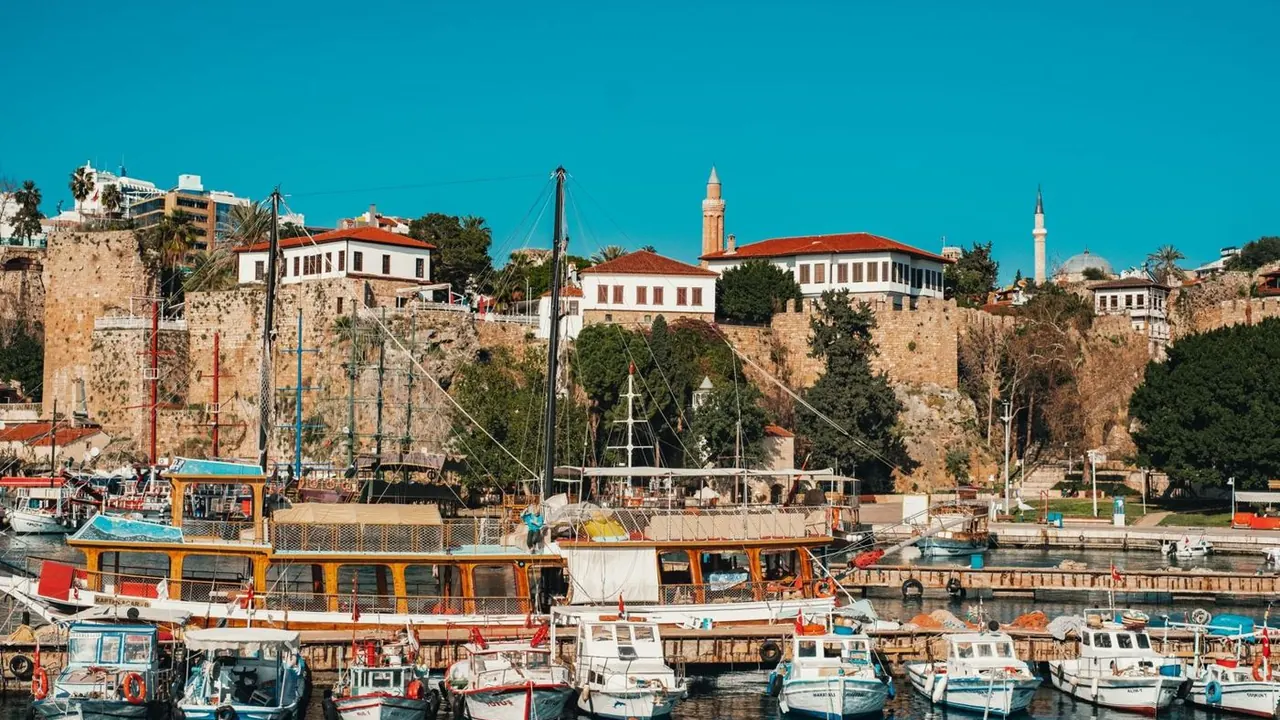
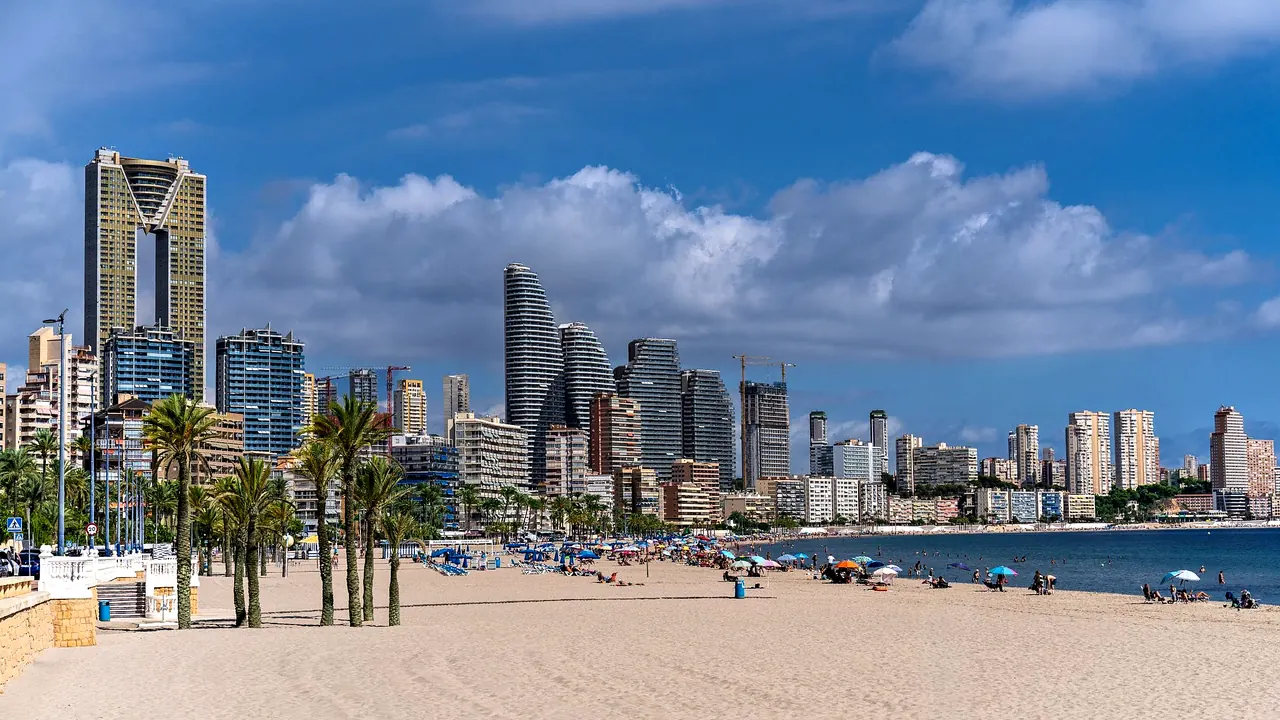
Photos: Antalya by Furkan Tumer, Pexels License; Benidorm by Emilio Sánchez Hernández, Pexels License.
Antalya or Benidorm?
Our verdict in twelve categories, each scored against the same fixed benchmark cities, and the climate month by month, so you can choose for your trip.
Choose Antalya for
- culture and sights
- wellness
- food and drink
Antalya is the stronger pick for travellers who want more than a sunlounger. A walled Ottoman old town and a fine archaeological museum are right in the city, Aspendos, Perge and Termessos are within reach, and the Taurus mountains drop straight into the sea for walking, rafting and diving. It also eats better and has a real hammam tradition, though the resorts are spread out and the ruins are best reached by car or on a tour.
Choose Benidorm for
- nightlife
- getting around
- families
Choose Benidorm for an easy, compact beach stay where almost everything sits along two sandy bays and a flat promenade. It suits families who want theme parks and gentle water, and groups who want a loud, late night out. Its dry, mild winters also make it a sound choice for off-season sun. There is little history or high culture in town, so come for the beach and the bars rather than for sightseeing.
Scoreboard
Twelve categories on one fixed scale from 0 to 100. The shaded stretch is the gap between the two.
Your match
Pick a travel style or drag the sliders, and both match scores follow your weighting.
Wins on culture and sights and wellness with your weighting.
Wins on nightlife and getting around with your weighting.
What matters to you?
Category by category
What the scores mean for a trip.
Beaches & swimming
Both are serious beach destinations, and the difference is mostly underfoot. Antalya's Konyaaltı is coarse pebble with water that deepens quickly, so families and sand lovers head east to Lara or out to Belek. The pine-backed coves around Kemer and Phaselis add variety, and boats leave the old harbour for trips along the cliffs.
Benidorm has fine, groomed sand on both Levante and Poniente, with shallow water right in front of town, and the rocky coves under Serra Gelada and at Albir for a change. Antalya's sea is a few degrees warmer in summer and stays warmer through the winter. Both get packed in high summer.
Food & drink
Antalya eats better, as long as you get away from Kaleiçi and the resort buffets. There is grilled şiş köfte with tahini piyaz, slow-cooked tandır lamb, Gulf fish and long breakfasts, and markets stacked with citrus and pomegranates from the surrounding plain.
Benidorm's seafront serves full breakfasts and pizzas to package visitors, and the good food is narrower: the tapas lane in the old town and rice dishes such as arroz a banda and arroz negro, cooked the way the Alicante coast does them. In Antalya the everyday köfte houses are where the good food is, while in Benidorm you have to go looking for it.
Culture & sights
Here the gap is wide. Antalya has a walled Ottoman old town that you enter through a Roman triple arch, the fluted Seljuk minaret above it, and an archaeological museum whose marble statues from Perge are among the better collections in Turkey.
Benidorm's heritage is a few whitewashed lanes on the headland, the blue-domed church and the Balcón del Mediterráneo lookout, plus the tower skyline itself. Anyone after history in Benidorm ends up travelling to Alicante, Valencia or the inland villages to find it.
Nightlife
Benidorm is the place for a big night out. In summer the pubs, karaoke and drag cabaret bars around the Rincón de Loix run well past midnight, the old town offers a more Spanish evening of tapas and terraces, and the clubs on the edge of town keep going until dawn.
Antalya's nights are pleasant rather than memorable: courtyard bars in Kaleiçi, beach clubs at Konyaaltı and Lara, and hotel discos in the resorts. They are far enough apart that you need taxis between them. Both towns quieten sharply out of season.
Nature & outdoors
Antalya's setting is grander. The Taurus and Beydağları ranges drop straight into the sea, a cable car climbs Tahtalı Dağı to about 2,365m, and the Lycian Way sets off along the coast. You can raft in Köprülü Canyon or ski at Saklıkent in winter, and even within the city the Düden falls pour off a cliff into the sea.
Benidorm has good walking too, on the Serra Gelada cliff path, Puig Campana and the Bernia ridge, with snorkelling and kayaking just off the town beaches. Its landscapes are smaller in scale and offer less variety.
Day trips
Antalya's day trips are mostly about the ancient world: the colonnaded street at Perge, the theatre at Aspendos, Termessos high on its peak, and longer runs to Myra and the sunken city at Kekova. Most are easier with a car or a tour.
Benidorm's outings are gentler and closer. White Altea and the painted houses of Villajoyosa are minutes away, Guadalest's castle sits on its rock inland, and the tram reaches Alicante. These are pretty towns rather than ancient cities, and apart from Valencia the range is narrower.
Good for families
Both work well with children, and Benidorm has a slight edge because everything is close together. The sand shelves gently on both beaches, the promenades suit pushchairs, and theme, water and marine parks plus a zoo sit on the edge of town. Staying near Poniente keeps you clear of the adult nightlife behind Levante.
Antalya's strength is its resorts at Lara, Belek and Kemer, with pools, slides and kids' clubs, and a big aquarium in the city for the midday heat. Its summers are harsher, though, and Kaleiçi's steep lanes are hard going with a pushchair.
Getting around
Benidorm is easier to get around because nearly everything lies along two flat promenades with the old town between them. Seafront buses go out to the parks and the coastal tram runs to Alicante and Altea. The only awkward parts are the hillside hotels behind Levante and the inland mountains.
Antalya's tram links the airport, the old town and Konyaaltı. The resorts, though, stretch for tens of kilometres, so guests rely on hotel transfers and taxis, and the ancient sites almost demand a hire car or a tour.
Shopping & style
Neither is a shopping destination, but Antalya has more worth browsing. Kaleiçi's lanes sell carpets, ceramics, leather and Turkish delight, the weekly neighbourhood markets are good for spices and dried fruit, and the large malls have the chains and shelter from the heat.
Benidorm's shops stick to beachwear, souvenirs, sunglasses and cheap electronics, and the open-air markets sell clothes and fakes. For proper shopping, people take the tram to Alicante.
Affordability
Both are good value if you avoid the tourist premium, but the savings come in different ways. Benidorm is cheap by design: the huge supply of rooms keeps rates low, set lunches and drinks are inexpensive, and winter is especially cheap for long stays.
In Antalya you save by eating in local köfte houses and at the markets and by using the trams. Kaleiçi restaurants, beach clubs and boat trips cost noticeably more. All-inclusive packages are a sensible choice for families in both.
Live music & performing arts
Antalya offers more serious performances. A state opera and ballet company and a state theatre perform through the winter, and the summer opera and ballet festival on the Roman stage at Aspendos is worth timing a trip around.
Benidorm's entertainment is cabaret, tribute acts, comedians and a large dinner-show venue. It is cheerful every night, but there is no opera, orchestra or theatre. Neither city has a concert-hall scene.
Wellness & relaxation
Antalya is the better place to unwind properly. The old hammams in Kaleiçi give the full scrub and foam massage on warm marble, and the resorts in Lara, Belek and Kemer have extensive spas of their own.
Benidorm has no bathing tradition, so wellness means hotel spas with saunas and indoor pools. Its real strength is the slow, mild winter, when promenade walks and long lunches make for a restful stay, and Poniente is the calmer side of town all year.
When should you go?
Pick your month. The climate figures are measured averages, not a forecast.
Antalya in July
Benidorm in July
Daytime high, °C
Rainfall in the month, mm
Where the figures come from
Benidorm's temperatures are measured 38 km from the centre, at Alicante.
Benidorm has no rain gauge within 25 km of the centre, so its rainfall comes from a gridded climate dataset read at the city rather than from a gauge further away.
Temperature and rainfall are climate normals, averaged over the years shown. Antalya: 1991-2020 normals, Antalya (23.4 km from centre). Benidorm: 1991-2020 normals, Alicante (38.1 km from centre).
Antalya has the hotter and more extreme year. July and August reach about 35°C, too hot for walking the old town or hiking inland, but the sea warms to 29°C and the summer months are almost completely dry. Late May, June, September and October give warm sea with more bearable days. Winter is the wet season: from November to February heavy rain sets in, with about 273mm in December, so it is a poor time for a beach trip, although the days stay mild.
Benidorm is gentler all year. Summer highs sit around 30°C, so walking the promenades is more comfortable, but the sea stays a few degrees cooler than Antalya's and is swimmable from June into October. Its winters are where it differs most: mild, sunny and dry, with only about 20mm of rain a month, which makes them good for long walks, though too cool for swimming.
Which traveller are you?
For a culture and arts trip, Antalya is clearly the better base. It pairs a walled old town and a fine archaeological museum with Roman cities nearby and opera on an ancient stage. Benidorm's heritage is a single headland quarter, and its stages host cabaret.
On an outdoors trip, Antalya offers more: long-distance walking on the Lycian Way, canyon rafting, diving, paragliding and even skiing in winter. Benidorm's hiking and kayaking are good but smaller in range. Plan either city for spring or autumn.
On a family trip with young children, Benidorm comes out slightly ahead. It is compact and flat, the theme and water parks are a short bus ride away, and the milder summer heat makes the days easier than in Antalya, whose resorts are good but spread out.
Before you go
| Measure | Antalya | Benidorm |
|---|---|---|
| Official language | Turkish | Spanish |
| Currency | Turkish Lira (TRY) | Euro (EUR) |
| Sockets | CF230 V, 50 Hz | CF230 V, 50 Hz |
| Driving side | Right | Right |
| Time zone | UTC+3 | UTC+1, UTC+2 in summer |
| Emergency number | 112 | 112 |
| Elevation | 30 m | 15 m |
| Main airport | Antalya International Airport (AYT)9 km from centre172 non-stop destinations | Alicante-Elche Miguel Hernández Airport (ALC)48 km from centre126 non-stop destinations |
| Public holidays this year | 14 days | 13 days |
By the numbers
| Measure | Antalya | Benidorm |
|---|---|---|
| City population | 2,426,356 | 77,327 |
| People per km² | 1,712 | 2,008 |
| Museums within 10 km | 5 | 5 |
| UNESCO World Heritage sites within 50 km | 0 | 1 |
| Swim season, months above 21 °C | 7 months | 5 months |
Where else could you go?
Every comparison below shares a destination with this one, so you can follow Antalya or Benidorm somewhere new.
- Alicantevs Benidorm
- Valenciavs Benidorm
- Kasvs Antalya
- Alanyavs Antalya
- Fethiyevs Antalya
- Marmarisvs Antalya