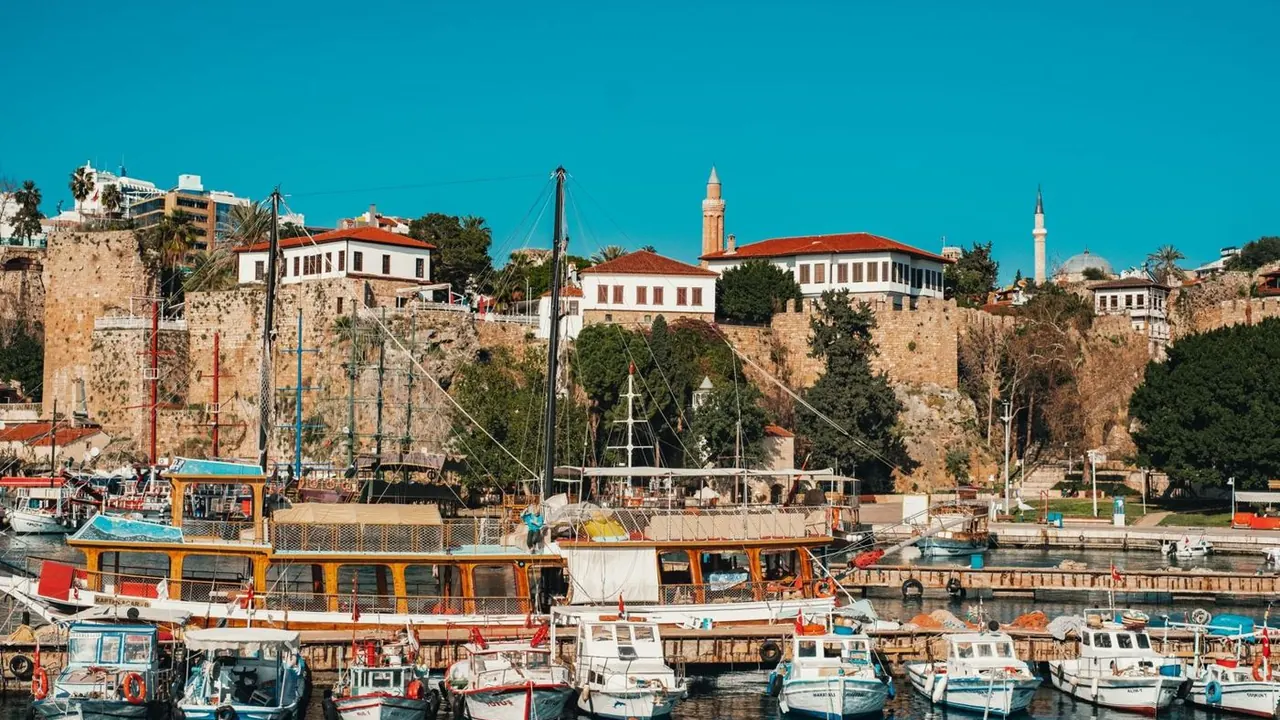
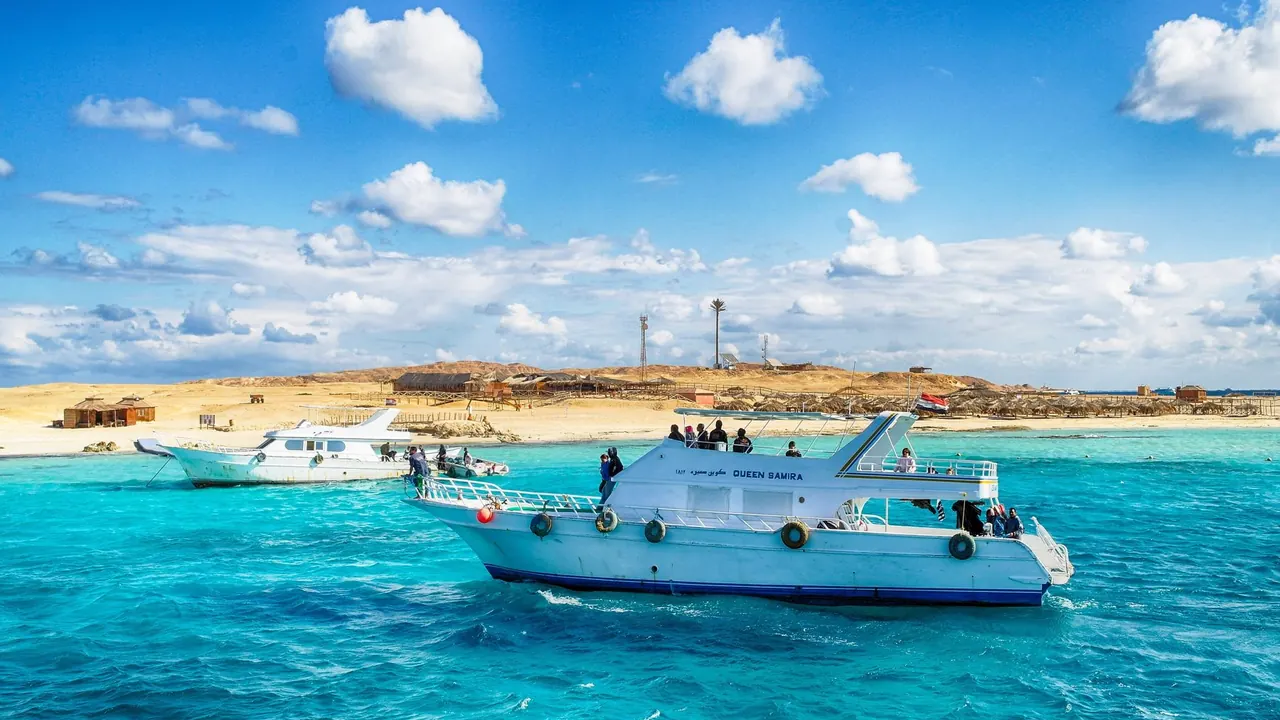
Photos: Antalya by Furkan Tumer, Pexels License; Hurghada by Andrey Korchagin, CC BY-SA 2.0, cropped.
Antalya or Hurghada?
Our verdict in twelve categories, each scored against the same fixed benchmark cities, and the climate month by month, so you can choose for your trip.
Choose Antalya for
- day trips
- culture and sights
- live music and the arts
Antalya is the fuller trip. It has a walled old town, one of Turkey's better archaeological museums, Roman theatres and mountain cities within a drive, and the Taurus mountains rising straight behind the beaches. It suits travellers who want to swim in the morning and see Aspendos or Termessos in the afternoon, eat in local köfte and fish houses, and get about by tram rather than relying only on hotel transfers.
Choose Hurghada for
- prices
- beaches
Choose Hurghada when the sea is the whole point and the budget matters. Its reefs start almost at the hotel jetty, the water stays warm enough to swim through the winter, and an all-inclusive booking keeps costs low. Beyond the resort there is little to see unless you make the long road trip to Luxor. It rewards travellers who are happy to snorkel, dive, kitesurf and rest rather than explore.
Scoreboard
Twelve categories on one fixed scale from 0 to 100. The shaded stretch is the gap between the two.
Your match
Pick a travel style or drag the sliders, and both match scores follow your weighting.
Wins on day trips and culture and sights with your weighting.
Wins on prices and beaches with your weighting.
What matters to you?
Category by category
What the scores mean for a trip.
Beaches & swimming
Both are serious beach destinations, but their beaches work differently. Antalya's are public and varied. There is the long pebble shore of Konyaaltı under the mountains, sand at Lara, rocks to swim from below Kaleiçi and pine-fringed coves towards Phaselis, but the swimming season runs only from late spring to autumn.
In Hurghada, most of the sand belongs to the hotels, so your beach is whatever your resort has, and you often reach the water by a jetty over shallow reef. In return, the sea is warm enough to swim in almost all year, and the best sand is out on the Giftun islands.
Food & drink
Antalya gives you more reason to leave the hotel. Its local dishes include piyaz served beside grilled şiş köfte, slow-cooked tandır lamb and fish from the Gulf. Breakfasts are long, and the weekly markets are full of citrus and pomegranates from the surrounding plain.
In Hurghada, most meals are at the all-inclusive buffet. The worthwhile exceptions are koshary, ful and taameya in El Dahar and the harbour grills where you choose your fish from the ice. Alcohol is mostly limited to hotels and tourist venues, which makes eating out even less appealing.
Culture & sights
Antalya has a real historic centre. Inside the walls of Kaleiçi are restored Ottoman houses, Hadrian's Gate and the fluted Yivli Minare, and the city museum's marbles from Perge make it one of Turkey's better archaeological collections.
Hurghada grew from a fishing village into a resort and has little old fabric. Its museum of pharaonic pieces, the El Mina mosque and the Coptic cathedral fill a morning, and El Dahar's market streets show everyday Egyptian life. For ancient Egypt itself, you have to make a long day trip inland.
Nightlife
Neither city is a nightlife destination, but Antalya's evenings have better settings. There are courtyard bars and terraces in Kaleiçi's old lanes and around the Roman harbour, with beach clubs along Konyaaltı and Lara, though in winter the scene shrinks to a few bars used by locals.
Hurghada's nights out centre on Sheraton Road and the marina. Shisha lounges, beach clubs and themed foam parties stay busy late, but they are made for visitors and have little local character. The Egyptian town behind the hotel strip is quiet after dark.
Nature & outdoors
Antalya offers the outdoors on land as well as at sea. The Taurus mountains drop straight to the coast, the Lycian Way runs through pine forest past Olympos, and the Düden waterfalls pour into the sea. There is also rafting in Köprülü Canyon and skiing at Saklıkent in winter.
Hurghada's best nature is underwater. Turtles and dolphins live on reefs close offshore, and a steady wind draws kitesurfers to El Gouna and Soma Bay. On land there are bare desert mountains for jeep, quad-bike and stargazing trips, but almost no green and little hiking.
Day trips
Here the two cities are furthest apart. From Antalya, Perge is a short drive and Aspendos has one of the best-preserved Roman theatres anywhere. Termessos, Side, Phaselis and Olympos are also within reach, and Myra and the sunken city at Kekova make a longer day.
Hurghada's easy outings are El Gouna's lagoons and the Roman granite quarries in the desert. Its great excursion, to Luxor's temples and the Valley of the Kings, takes about four hours each way by road, so it works better as an overnight trip than a day out.
Good for families
Both cities rely on resorts with pools, slides and kids' clubs, and both have a large aquarium. Antalya offers more: a theme and water park at Belek, shallow sandy water at Lara and an old town to explore. The drawbacks are the heat in July and August and the steep lanes of Kaleiçi, which are hard going with a pushchair.
Hurghada has its own attractions in glass-bottom boats, semi-submarines and dolphin trips. Outside the hotel, though, there is traffic, broken pavements and pushy sellers, and summer middays are too hot for young children.
Getting around
Antalya has a tram linking the airport, bus station, old town and Konyaaltı, buses on the same card and a walkable centre. Hurghada stretches along a single coast road with few pavements, so you depend on shared minibuses, taxis with the fare agreed in advance, and hotel shuttles. In both places, the sights further out are easiest to reach by car or on a tour.
Shopping & style
Neither city is a shopping destination, and Kaleiçi's souvenir lanes are much like Hurghada's bazaars, with repetitive stock and haggling over every price. Where Antalya pulls ahead is in its everyday shopping. Its weekly neighbourhood markets serve residents rather than visitors and are good for spices and dried fruit to take home, and its large malls give you somewhere cool to browse on a hot afternoon.
In Hurghada, almost everything for sale is aimed at tourists, in El Dahar and along Sheraton Road, and the sellers push harder. Its few malls matter mainly to self-caterers who need a supermarket.
Affordability
Hurghada is clearly the cheaper of the two. All-inclusive packages cover most of the trip, and diving courses and boat trips cost far less than on most reef coasts. The main costs to watch are excursions sold through hotels and imported drinks.
Antalya can also be good value, especially for families on all-inclusive deals and for travellers who eat in local köfte houses. Kaleiçi's restaurants, the beach clubs and summer rooms by the sea push costs up, but spring and autumn bring lower room rates.
Live music & performing arts
Antalya has a state opera and ballet company and a state theatre that perform through the winter. In summer, its opera and ballet festival fills the Roman theatre at Aspendos for evenings under the stars. Hurghada has no stage of its own. Entertainment means hotel animation shows, belly dancing and tanoura dancers spinning at folklore dinners, which are fun for one evening but not a reason to go.
Wellness & relaxation
Antalya has a real bathing tradition. Kaleiçi's old hammams offer the full scrub and foam massage, and the resorts in Lara, Belek and Kemer have extensive spas. Hurghada's spas are hotel facilities that vary widely in quality, though treatments are cheap and some offer Red Sea salt rituals.
In both places, the calmest days are inside the resort. Antalya's centre is crowded in summer and quieter in spring and autumn, while Hurghada's town is noisy and the sellers are pushy all year.
When should you go?
Pick your month. The climate figures are measured averages, not a forecast.
Antalya in July
Hurghada in July
Daytime high, °C
Rainfall in the month, mm
Temperature and rainfall are climate normals, averaged over the years shown. Antalya: 1991-2020 normals, Antalya (23.4 km from centre). Hurghada: 1991-2020 normals, Hurguada (15.2 km from centre).
Antalya has a true summer season. From June to September the days are hot and almost rainless, and the sea warms to about 28°C, so beach days are reliable. July and August reach 35°C, though, which makes walking round Kaleiçi or the ruins hard going. May and October are the best months for combining swimming with sightseeing. Winter is mild but wet, and December is the rainiest month at 273mm, so it suits museums and walks between showers rather than the beach.
Hurghada is dry all year, and its best season is the opposite of Antalya's. Its summer is fiercer, with highs of 37°C from June to August, so it is best to stay out of the midday sun. From November to March the days are warm rather than hot and the sea is still swimmable. That makes it the clear choice for winter sun, when Antalya is cool and rainy.
Which traveller are you?
On a culture and arts trip, Antalya is the clear choice. You get Kaleiçi, the Perge statues in the Antalya Museum and day trips to Aspendos, Termessos and Side, plus summer opera in a Roman theatre. Hurghada, which began as a fishing village, has nothing to compare.
On a trip on a tight budget, Hurghada makes your money go further. An all-inclusive package covers rooms, meals and many drinks, and diving courses, boat trips, minibuses and local food are all cheap. Antalya is good value in its local köfte houses but costs more by the sea and in Kaleiçi.
For divers and snorkellers, Hurghada is the better base. Coral reefs begin just offshore, the Giftun islands are a short boat ride away, and well-known Red Sea wrecks and walls are within reach. Turtles and dolphins are common, and you may see dugongs. Antalya has good diving, but no coral reefs.
Before you go
| Measure | Antalya | Hurghada |
|---|---|---|
| Official language | Turkish | Arabic |
| Currency | Turkish Lira (TRY) | Egyptian Pound (EGP) |
| Sockets | CF230 V, 50 Hz | CF220 V, 50 Hz |
| Driving side | Right | Right |
| Time zone | UTC+3 | UTC+2, UTC+3 in summer |
| Emergency number | 112 | Police 122, ambulance 123, fire 180 |
| Elevation | 30 m | 11 m |
| Main airport | Antalya International Airport (AYT)9 km from centre172 non-stop destinations | Hurghada International Airport (HRG)9 km from centre111 non-stop destinations |
| Public holidays this year | 14 days | 15 days |
By the numbers
| Measure | Antalya | Hurghada |
|---|---|---|
| City population | 2,426,356 | 214,247 |
| People per km² | 1,712 | - |
| Museums within 10 km | 5 | 1 |
| UNESCO World Heritage sites within 50 km | 0 | 0 |
| Swim season, months above 21 °C | 7 months | 12 months |
Where else could you go?
Every comparison below shares a destination with this one, so you can follow Antalya or Hurghada somewhere new.