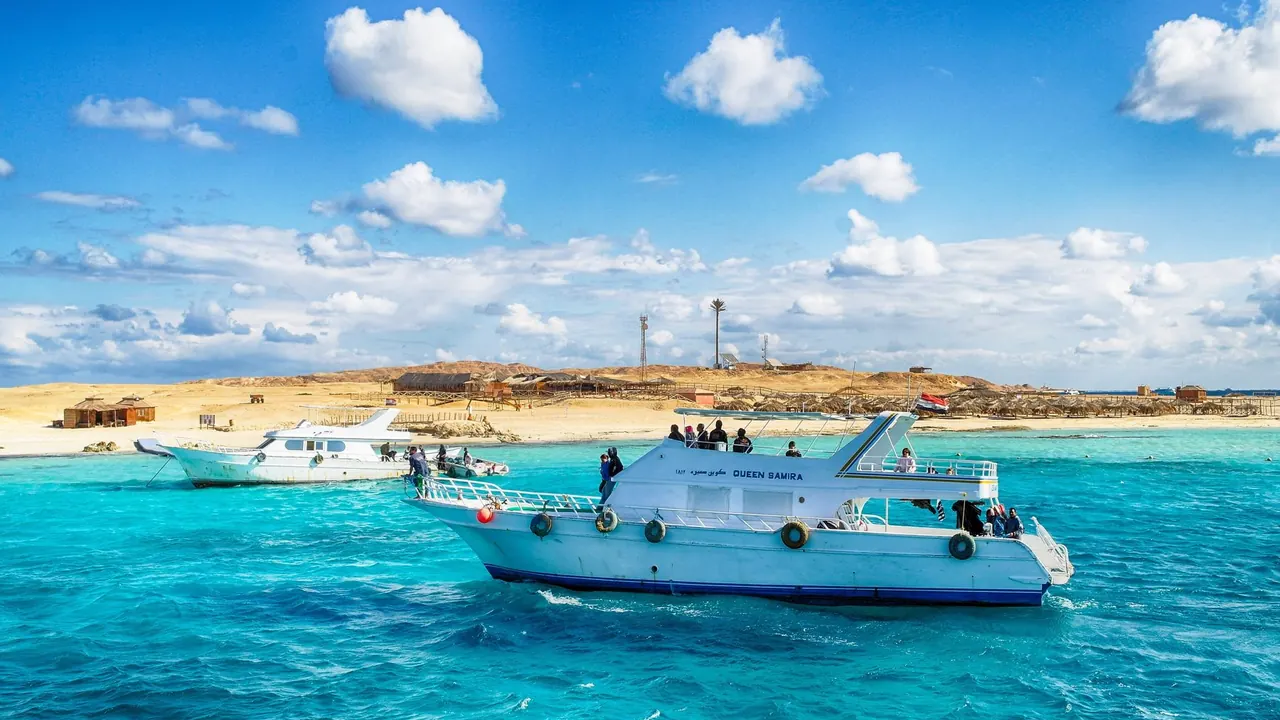
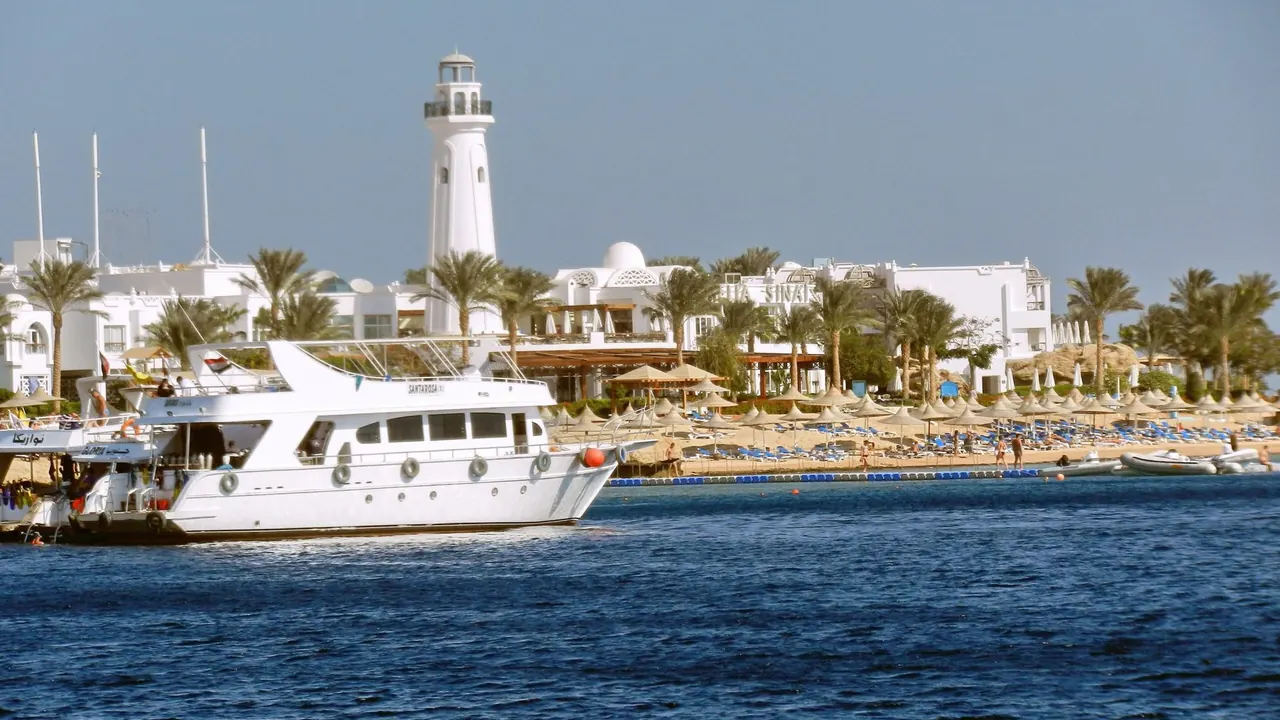
Photos: Hurghada by Andrey Korchagin, CC BY-SA 2.0, cropped; Sharm el-Sheikh by Tanya Dedyukhina, CC BY 3.0, cropped.
Hurghada or Sharm el-Sheikh?
Our verdict in twelve categories, each scored against the same fixed benchmark cities, and the climate month by month, so you can choose for your trip.
Choose Hurghada for
- prices
- food and drink
- culture and sights
Hurghada is the better pick when the budget matters most or the trip has to cover more than the sea. All-inclusive weeks, diving courses and boat trips cost less here, the steady north wind makes El Gouna and Soma Bay serious kitesurfing spots, and Luxor's temples are within reach for anyone set on seeing pharaonic Egypt. Families also get a little more outside the hotel, with an aquarium and semi-submarine trips.
Choose Sharm el-Sheikh for
- nature and the outdoors
- wellness
- beaches
Choose Sharm el-Sheikh if the reef is the whole point. The coral starts right off the hotel jetties, Ras Mohammed and the Thistlegorm wreck are close by, and South Sinai's granite mountains, Bedouin camps and St Catherine's Monastery make the trips on land more memorable too. It also suits a quiet week of spa visits and long sunny days with little to do, and it costs a little more for it.
Scoreboard
Twelve categories on one fixed scale from 0 to 100. The shaded stretch is the gap between the two.
Your match
Pick a travel style or drag the sliders, and both match scores follow your weighting.
Too close to call, 1 point apart
Wins on prices and food and drink with your weighting.
Wins on nature and the outdoors and wellness with your weighting.
What matters to you?
Category by category
What the scores mean for a trip.
Beaches & swimming
Both resorts give you warm, clear Red Sea water from hotel-owned beaches, so what differs is the swimming itself. In Hurghada, the reef flats in front of many hotels mean you swim from a jetty, and beaches in the town centre can be small artificial bays. The best sand is a boat ride away on the Giftun islands or down the coast at Makadi and Sahl Hasheesh, and the north wind often makes the water choppy in the afternoon.
In Sharm el-Sheikh, the jetties at Sharks Bay, Ras Um Sid and Nabq take you over the reef flat to a drop-off where the coral starts almost at once. That makes snorkelling straight off your sunbed the best part of a day on the beach. Naama Bay is the one ordinary sandy bay, and reef shoes are worth packing.
Food & drink
In both places the hotel buffet decides most meals, and the good food beyond it is simple Egyptian cooking. Hurghada has the fishing harbour, where you pick your fish from the ice and have it grilled or fried, and the old streets of El Dahar for koshary and grilled meats.
Sharm el-Sheikh's version of this is the Old Market, with grilled fish and taameya and mint tea and shisha late into the night. It adds the Bedouin dinner under the stars as an outing of its own.
Culture & sights
Neither resort has much history of its own. Hurghada has the one real museum between them, the Hurghada Museum, with pharaonic pieces from the national collections. A walk through El Dahar's market streets shows you the ordinary Egyptian town behind the hotels.
Sharm el-Sheikh has two landmarks and no museum of note: the Al Sahaba Mosque, lit up at night in the Old Market, and the painted interior of the Heavenly Cathedral. Each is worth a short visit.
Nightlife
Both offer a night out at the resort, made for visitors, and many guests never go further than the lobby bar. Hurghada's centres are Sheraton Road in Sakkala and the marina, where big beach clubs and themed or foam parties keep going into the small hours.
Sharm el-Sheikh puts its bars and few large clubs along the Naama Bay promenade, with DJ nights at beach bars. The Old Market stays up late with cafés and shisha rather than drinking. Outside the peak periods it goes noticeably quiet.
Nature & outdoors
Both are first-class reef destinations, but Sharm el-Sheikh has the better reefs. Ras Mohammed National Park, about 30km away, has sheer walls and huge schools of fish, and the Thistlegorm wreck lies nearby. The Tiran Strait reefs are a short boat ride out, and on land you get South Sinai's red granite peaks, the Nabq mangroves and the long excursion to Mount Sinai.
Hurghada's reefs around the Giftun islands still have turtles, dolphins and the odd dugong, as well as well-known wrecks and walls. Its own strength is the wind: El Gouna and Soma Bay are among the best kitesurfing spots on the coast. The bare mountains behind the town are mainly for quad bikes and stargazing.
Day trips
Both towns have only a few excursions, and the one big trip from each is a long day. From Hurghada it is Luxor, with Karnak and the Valley of the Kings about four hours away by road. That is reason enough to stay a night. Closer to town there is the marina at El Gouna and a guided trip to the Roman granite quarries.
Sharm el-Sheikh's major trip is St Catherine's Monastery, about three hours away, often combined with a night climb of Mount Sinai to see the sunrise. Dahab, about an hour away, makes an easy day out.
Good for families
Each works well for a week at a resort with children, and the hotel you choose matters more than the town. Hurghada has a little more beyond the hotel gates: an aquarium, semi-submarine and dolphin-watching boats, and several large hotels with full water parks.
Sharm el-Sheikh's calm, shallow lagoons are lovely for a first snorkelling lesson, but outside the hotels there is little made for children. In both, midsummer is too hot for small children around midday.
Getting around
You get around both in much the same way: taxis with the fare agreed first, shared minibuses on the main road, hotel shuttles and excursions that pick you up. Hurghada's hotel strip runs for tens of kilometres, and only the marina and parts of Sakkala are walkable. Busy main-road crossings make that harder.
Sharm el-Sheikh stretches about 30km from the Old Market to Nabq. Naama Bay is the one stretch that is pleasant on foot.
Shopping & style
Shopping in both means souvenirs bought with hard haggling: spices, papyrus, alabaster, perfume oils and galabeyas. Hurghada's bargaining happens in El Dahar's market streets, and its malls on the main road have supermarkets for anyone self-catering. Sharm el-Sheikh's Old Market and Naama Bay promenade add Bedouin-style jewellery to the usual mix.
Affordability
Hurghada is the cheaper of the two, and the saving starts with the booking. Its all-inclusive packages cover the room, meals and many drinks for less, and diving courses and boat trips out to the Giftun reefs cost well below what most reef coasts charge. Outside the hotel, a fish supper at the harbour or a meal in El Dahar costs very little. The money goes on marina restaurants, imported drinks and excursions bought at the hotel desk, which cost far more than the same trip booked in town.
Sharm el-Sheikh is still inexpensive by European resort standards, and its all-inclusive hotels often cost less than a basic Mediterranean room. Once you step outside, though, prices are set for visitors. Naama Bay restaurants charge close to European rates, every taxi is a negotiation, and a week of diving at Ras Mohammed and the Thistlegorm soon adds up. Cheap meals are mostly found in the Old Market, and you get the best value if you rarely leave the resort.
Live music & performing arts
Neither has any theatre, concert hall or local music scene, so evening entertainment comes from hotel animation teams, belly dancing and spinning tanoura dancers in both. Hurghada usually puts these on at folklore evenings and desert-camp dinners. Sharm el-Sheikh also has large evening spectacles staged for package groups.
Wellness & relaxation
Sharm el-Sheikh is a little better for a restful stay. Almost every large resort has a spa with an Oriental bath and scrub-and-foam treatments, and the whole stay runs at an unhurried pace of pool, sea and winter sun.
Hurghada's resort spas offer much the same hammam, steam room and massage, sometimes with Red Sea salt rituals. Quality varies more from hotel to hotel, though, and once you leave the hotel the town is noisy and the sellers are pushy.
When should you go?
Pick your month. The climate figures are measured averages, not a forecast.
Hurghada in July
Sharm el-Sheikh in July
Daytime high, °C
Rainfall in the month, mm
Where the figures come from
Sharm el-Sheikh has no weather station within reach, so its figures come from a gridded climate model rather than a measured record, and read a broad area rather than the city itself.
Temperature and rainfall are climate normals, averaged over the years shown. Hurghada: 1991-2020 normals, Hurguada (15.2 km from centre). Sharm el-Sheikh: 2001-2020 normals, NASA POWER reanalysis grid, no weather station within 90 km.
The two coasts share almost the same climate, and rain hardly matters in either place at any time of year. The best months are March to April and October to November. The air is warm without being harsh then, and the sea is comfortable for long swims. From June to September the afternoons reach about 37°C in both towns, a little more in Sharm, so walking about and trips on land have to wait for early morning or evening. In those months the sea is at its warmest, close to 29°C.
From December to February it is mild rather than hot, with highs of about 21°C to 24°C. That is pleasant for walking, but sunbathing can feel cool when the wind blows. In both resorts the sea stays around 22°C to 23°C in the coolest weeks, a fraction warmer off Sharm. Sharm's water also holds its warmth slightly longer into autumn.
Which traveller are you?
For an outdoors trip, Sharm el-Sheikh has the edge. Ras Mohammed's reef walls, the Tiran Strait and the Nabq mangroves are all close by, and on land there are the South Sinai mountains and the climb of Mount Sinai. Hurghada's strong card is kitesurfing.
On a trip with a tight budget, Hurghada stretches the money further. All-inclusive deals, diving courses and boat trips are cheaper than on most reef coasts, and local food, minibuses and taxis cost little. In Sharm, prices outside the hotels are set with tourists in mind.
For a relaxing and wellness trip, Sharm el-Sheikh is the calmer choice. Nearly every large resort has a hammam-style spa, and the slow rhythm of pool, sea and winter sunshine is what the place is made for. In Hurghada the spas vary more, and the town outside is noisier.
Before you go
| Measure | Hurghada | Sharm el-Sheikh |
|---|---|---|
| Official language | Arabic | Arabic |
| Currency | Egyptian Pound (EGP) | Egyptian Pound (EGP) |
| Sockets | CF220 V, 50 Hz | CF220 V, 50 Hz |
| Driving side | Right | Right |
| Time zone | UTC+2, UTC+3 in summer | UTC+2, UTC+3 in summer |
| Emergency number | Police 122, ambulance 123, fire 180 | Police 122, ambulance 123, fire 180 |
| Elevation | 11 m | 1 m |
| Main airport | Hurghada International Airport (HRG)9 km from centre111 non-stop destinations | Sharm El Sheikh International Airport (SSH)16 km from centre112 non-stop destinations |
| Public holidays this year | 15 days | 15 days |
By the numbers
| Measure | Hurghada | Sharm el-Sheikh |
|---|---|---|
| City population | 214,247 | 73,000 |
| Museums within 10 km | 1 | 1 |
| UNESCO World Heritage sites within 50 km | 0 | 0 |
| Swim season, months above 21 °C | 12 months | 12 months |
Where else could you go?
Every comparison below shares a destination with this one, so you can follow Hurghada or Sharm el-Sheikh somewhere new.