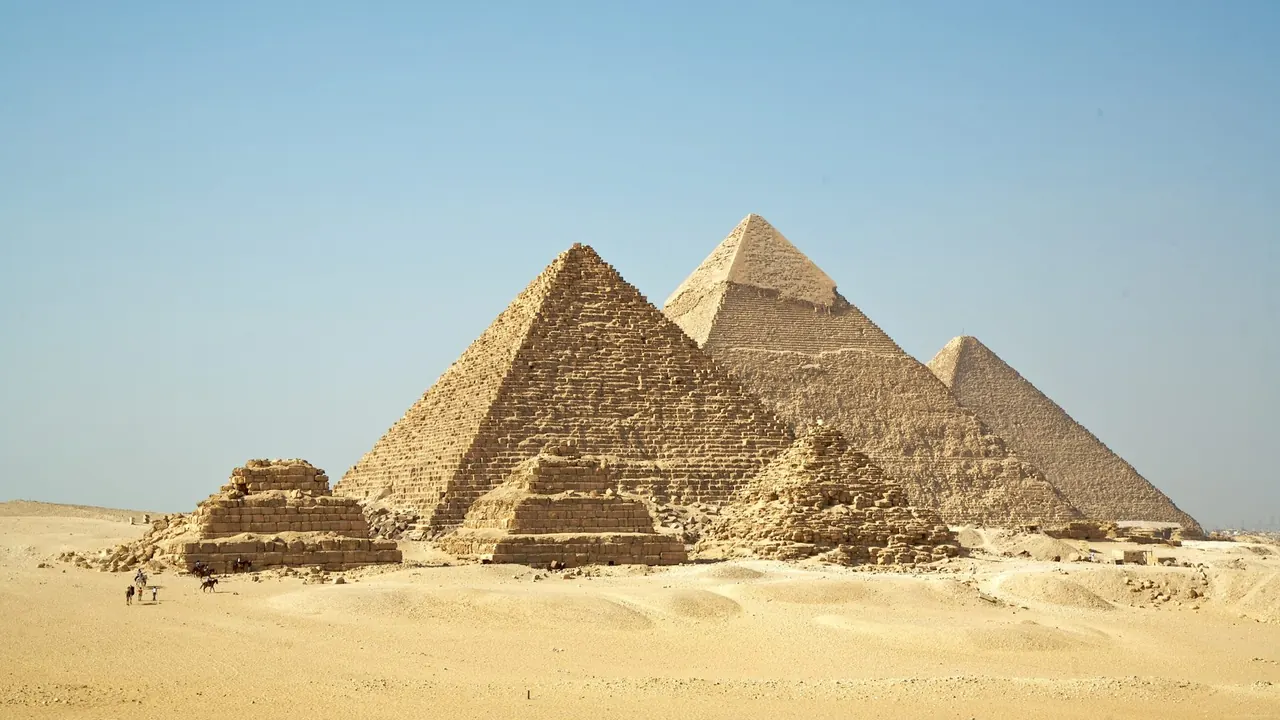
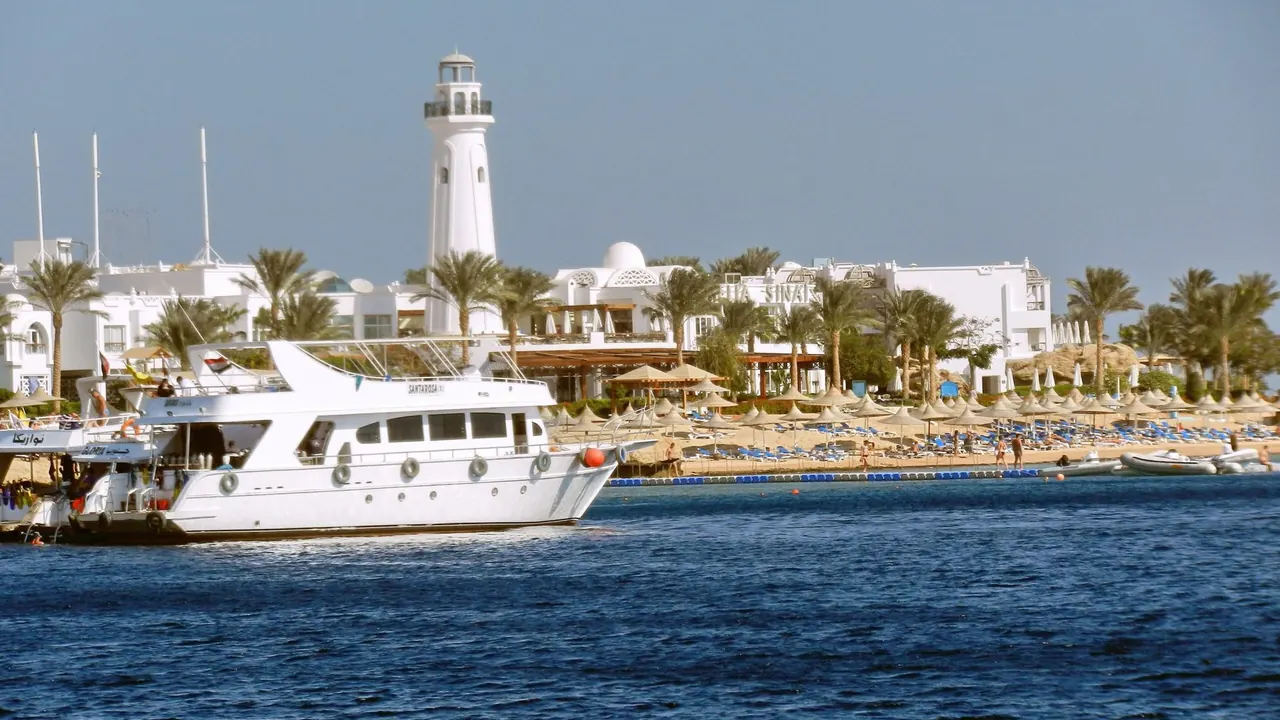
Photos: Cairo by Ricardo Liberato, CC BY-SA 2.0, cropped; Sharm el-Sheikh by Tanya Dedyukhina, CC BY 3.0, cropped.
Cairo or Sharm el-Sheikh?
Our verdict in twelve categories, each scored against the same fixed benchmark cities, and the climate month by month, so you can choose for your trip.
Choose Cairo for
- culture and sights
- live music and the arts
- day trips
Cairo is for a trip built around history. The pyramids at Giza, the great antiquities museums and the medieval lanes of Islamic Cairo are among the most important sights anywhere, and the street food, coffeehouses and Opera House fill the evenings. It is cheap and the sights repay every hour you give them, but it is tiring and noisy, and it is hard going for anyone who wants to rest or is travelling with small children.
Choose Sharm el-Sheikh for
- beaches
- nature and the outdoors
- wellness
Sharm el-Sheikh is a different kind of trip altogether. People go for the Red Sea: coral a few steps from the hotel jetty, the reef walls of Ras Mohammed, warm winter sun and a resort that does the organising for you. Families and anyone who wants to switch off will be happier here, as long as they accept that the history and the best food are somewhere else.
Scoreboard
Twelve categories on one fixed scale from 0 to 100. The shaded stretch is the gap between the two.
Your match
Pick a travel style or drag the sliders, and both match scores follow your weighting.
Wins on culture and sights and live music and the arts with your weighting.
Wins on beaches and nature and the outdoors with your weighting.
What matters to you?
Category by category
What the scores mean for a trip.
Beaches & swimming
Cairo has no beach at all. The Nile is not for swimming, and the nearest sea is at Ain Sokhna, about 130km away, where resort compounds line the shore. A day in the city means a hotel pool, so beach time has to be planned as a separate leg of the trip.
In Sharm el-Sheikh the sea is the reason to be there. Naama Bay has the most conventional sandy bay, and at Sharks Bay, Ras Um Sid and along the Nabq coast, jetties take you over the reef flat to the drop-off, where the snorkelling is superb. Most beaches belong to hotels and are fairly small, so bring reef shoes.
Food & drink
Cairo is clearly the better place to eat, and it is one of the pleasures of being there. Koshari shops, taameya and ful from street carts, flaky feteer, pigeon stuffed with freekeh and the ahwa coffeehouses give the day its shape, even though fine dining is thin.
In Sharm el-Sheikh most meals happen at the hotel buffet, and the Naama Bay restaurants are built for tourists. The best food is in the Old Market, where simple places grill fish and serve the same Egyptian staples, and a Bedouin dinner in the desert makes a good evening out.
Culture & sights
Cairo holds Egyptian heritage on a scale very few cities can match. There are the pyramids and the Sphinx at Giza, Tutankhamun's treasures in the museums and the royal mummies at Fustat. Islamic Cairo has the Citadel, Sultan Hassan and Al-Azhar, and Coptic Cairo keeps the Hanging Church.
Sharm el-Sheikh is a modern resort with almost nothing historic. The Al Sahaba Mosque and the painted interior of the Heavenly Cathedral fill an hour or two. For anything older you have to make a long trip out.
Nightlife
The two are roughly level after dark, with Cairo slightly ahead because its nights belong to the whole city and go on all year. That means families on the Nile corniche, ahwas full of shisha and backgammon past midnight, and a small, pricier drinking scene of bars, rooftops and party boats in Zamalek.
Sharm el-Sheikh is more straightforward if you want to dance. The bars and big clubs of Naama Bay and the DJ nights at beach bars run late in peak season, but the scene is aimed at tourists and goes quiet outside the busy months. Many evenings never leave the hotel.
Nature & outdoors
Sharm el-Sheikh is far ahead, and most of what it offers is underwater. Ras Mohammed National Park, about 30km away, the reefs of the Tiran Strait and the wreck of the Thistlegorm put it among the world's great diving places. On land there are the red granite mountains of South Sinai and the mangroves at Nabq.
Cairo's green space comes down to Al-Azhar Park, a felucca on the Nile and the canyons of Wadi Degla. The real landscapes start two hours away in the Fayoum, at Wadi El Rayan and in the whale-fossil valley of Wadi Al-Hitan.
Day trips
Cairo has much more within reach. In under an hour by car you reach Saqqara's Step Pyramid, the often empty Bent and Red Pyramids at Dahshur and the ruins of Memphis among the palms. The monasteries of Wadi Natrun, the Fayoum oasis and a long day in Alexandria add more, mostly with a hired driver.
From Sharm el-Sheikh there are really two outings. You can spend a relaxed day in Dahab, or go to St Catherine's Monastery at the foot of Mount Sinai, often with a night climb for the sunrise. Tours to Cairo or Luxor mean long hours in transit.
Good for families
Sharm el-Sheikh is much easier with children. Big resorts have kids' clubs, family pools and water slides, the shallow lagoons suit a first snorkel, and glass-bottom boats suit those who would rather stay dry. Choose the hotel carefully, because the town adds little, and avoid the midsummer heat.
Cairo gives children unforgettable moments, from a camel ride by the pyramids to Tutankhamun's gold, and Egyptians are warm towards families. Away from those highlights, though, the traffic, the touts and the missing pavements make every day hard work, and it is best kept to the cooler months with a private driver.
Getting around
Neither is easy, but Cairo at least gives you options. The metro links Tahrir Square, Coptic Cairo and Heliopolis, and ride-hailing apps take the haggling out of everything else, though the traffic can turn a short distance into a long ride. Walking works in short stretches along Al-Muizz Street or in Zamalek.
Sharm el-Sheikh spreads about 30km along the coast, and only Naama Bay is pleasant on foot. Getting about means shared minibuses, hotel shuttles or taxis with the fare agreed in advance, which is why so many visitors simply stay in their resort.
Shopping & style
Cairo has real shopping. Khan el-Khalili has traded since the fourteenth century, appliqué makers stitch by hand on the Street of the Tentmakers, and the coppersmiths still work in their alley. Zamalek's boutiques add contemporary Egyptian design and cotton linens.
Sharm el-Sheikh mostly sells souvenirs: spices, papyrus, alabaster and galabiyas in the Old Market and along the Naama Bay promenade, with haggling to match. It is fine for a few gifts, but there is no craft or design scene to look for.
Affordability
Both are inexpensive, but Cairo goes further on the same budget. Street food, the metro and ride-hailing cost very little, and mid-range hotels downtown or in Zamalek are a bargain. Your money mostly goes on entry to the big sites, guided tours and alcohol.
Sharm el-Sheikh gives its best value inside an all-inclusive hotel. Outside it, prices are set for tourists: taxis have to be negotiated, the restaurants in Naama Bay come close to European rates, and diving trips and excursions soon add up.
Live music & performing arts
In Cairo, an evening at the Opera House on Gezira Island or at the whirling tanoura in the medieval Wikala of al-Ghouri is worth keeping a night free for. The Opera House stages symphony, ballet and Arabic music, and the tanoura is danced to live musicians. Most theatre is in Arabic, so music and dance are the better choice for visitors.
Sharm el-Sheikh has the same whirling dance, but at hotel dinner shows, alongside belly dancers and large spectacles staged for package groups. There is no concert hall and no local music scene behind them.
Wellness & relaxation
Sharm el-Sheikh is the place to slow down. Nearly every large resort has a spa with steam rooms, hammam-style scrubs and massage, and the routine of pool, sea and winter sun does most of the work.
Cairo's noise, dust and traffic rarely give you a break, and its old hammams are no longer places visitors can use. Rest means a hotel spa by the Nile or a felucca at dusk, which is why many travellers follow the city with a few quiet days on the Red Sea.
When should you go?
Pick your month. The climate figures are measured averages, not a forecast.
Cairo in July
Sharm el-Sheikh in July
Daytime high, °C
Rainfall in the month, mm
Where the figures come from
Sharm el-Sheikh has no weather station within reach, so its figures come from a gridded climate model rather than a measured record, and read a broad area rather than the city itself.
Temperature and rainfall are climate normals, averaged over the years shown. Cairo: 1991-2020 normals, Helwan (21.9 km from centre). Sharm el-Sheikh: 2001-2020 normals, NASA POWER reanalysis grid, no weather station within 90 km.
The two places follow the same desert pattern, with almost no rain all year, but they suit different seasons. Cairo is best for walking the streets from October to April. January highs of around 19°C are comfortable for long days at the pyramids and in Islamic Cairo. From May the heat builds to 36°C by midsummer, and under some of the longest sunshine hours of the year, sightseeing outdoors becomes hard work.
Sharm el-Sheikh is a couple of degrees warmer all through the year, so its winter is the draw for a beach trip. The sea stays at about 23°C even in the coolest months, although afternoons can be windy for sunbathing. By August the water reaches 29°C, but the air touches 38°C, so summer is for the pool and the reef rather than trips inland. Spring and autumn are the sweet spot for having both together.
Which traveller are you?
On a culture and arts trip, Cairo wins outright. The pyramids, three major antiquities museums, the mosques of Islamic Cairo and tanoura dancing in a medieval hall could fill weeks. Sharm el-Sheikh has a mosque and a painted church, and little else.
For a beach and sun trip, Cairo cannot help: there is no beach, and swimming means a hotel pool. Sharm el-Sheikh is built for it, with clear, calm water, snorkelling straight off the jetty and boat trips to Ras Mohammed.
On a family trip with children, Cairo suits older ones who already love ancient Egypt, on a short visit in the cool months. With younger children, choose Sharm el-Sheikh, where a good resort keeps everyone busy without leaving the grounds.
Before you go
| Measure | Cairo | Sharm el-Sheikh |
|---|---|---|
| Official language | Arabic | Arabic |
| Currency | Egyptian Pound (EGP) | Egyptian Pound (EGP) |
| Sockets | CF220 V, 50 Hz | CF220 V, 50 Hz |
| Driving side | Right | Right |
| Time zone | UTC+2, UTC+3 in summer | UTC+2, UTC+3 in summer |
| Emergency number | Police 122, ambulance 123, fire 180 | Police 122, ambulance 123, fire 180 |
| Elevation | 23 m | 1 m |
| Main airport | Cairo International Airport (CAI)17 km from centre127 non-stop destinations | Sharm El Sheikh International Airport (SSH)16 km from centre112 non-stop destinations |
| Public holidays this year | 15 days | 15 days |
By the numbers
| Measure | Cairo | Sharm el-Sheikh |
|---|---|---|
| City population | 9,801,536 | 73,000 |
| People per km² | 18,564 | - |
| Museums within 10 km | 48 | 1 |
| UNESCO World Heritage sites within 50 km | 2 | 0 |
| Swim season, months above 21 °C | - | 12 months |
Where else could you go?
Every comparison below shares a destination with this one, so you can follow Cairo or Sharm el-Sheikh somewhere new.