Photos: Cairo by Ricardo Liberato, CC BY-SA 2.0, cropped; Hurghada by Andrey Korchagin, CC BY-SA 2.0, cropped.
Cairo or Hurghada?
Our verdict in twelve categories, each scored against the same fixed benchmark cities, and the climate month by month, so you can choose for your trip.
Choose Cairo for
- culture and sights
- live music and the arts
- day trips
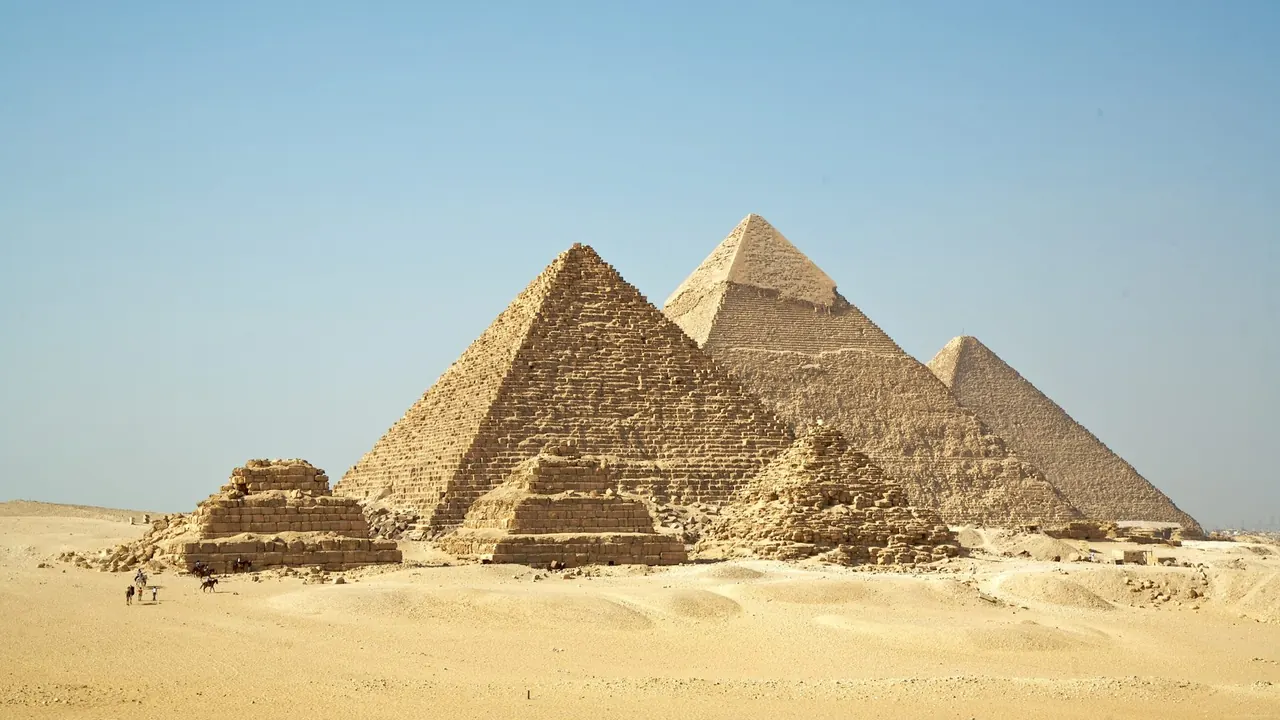
Cairo is the choice for a trip built around ancient Egypt and a great, demanding city. You get the pyramids at Giza, the museums with Tutankhamun's treasures and the royal mummies, and the medieval lanes of Islamic Cairo, along with street food, the old bazaar and a real opera house. It costs very little. In return it asks for patience with traffic, heat and touts, and it offers almost nothing in the way of rest or time on a beach.
Choose Hurghada for
- beaches
- nature and the outdoors
- families
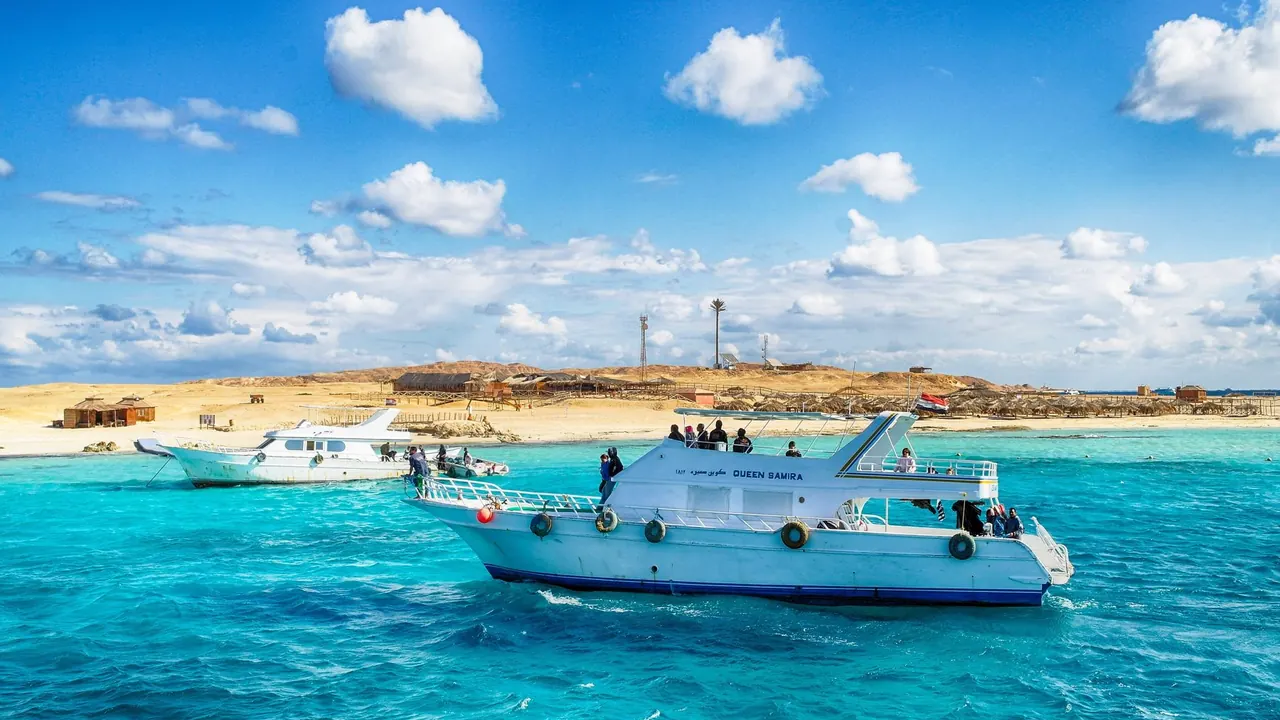
Travellers who want to switch off beside warm, clear water should pick Hurghada. Its reefs, boat trips to the Giftun islands and resorts built around children make for an easy sun-and-sea vacation, and the hotel spas add some calm. What it lacks is history and depth. The town is young, the food is mostly buffet, and the great temples at Luxor are a long day's drive away.
Scoreboard
Twelve categories on one fixed scale from 0 to 100. The shaded stretch is the gap between the two.
Your match
Pick a travel style or drag the sliders, and both match scores follow your weighting.
Wins on culture and sights and live music and the arts with your weighting.
Wins on beaches and nature and the outdoors with your weighting.
What matters to you?
Category by category
What the scores mean for a trip.
Beaches & swimming
Here the two could hardly be further apart. Cairo has the Nile, which nobody swims in, and the nearest sea is at Ain Sokhna, a resort-lined coast that works as a weekend escape rather than a day out. In the city, swimming means a hotel or club pool.
Hurghada is built around the Red Sea, with about 40km of coast and clear, warm water for swimming in almost any month. The catch is that the hotels own the sand, and reef flats often mean you get in from a jetty. The finest beaches are out on the Giftun islands or in the bays towards Makadi and Sahl Hasheesh.
Food & drink
Cairo eats better, and mostly on the street. Breakfast is ful and taameya, lunch comes from shops that serve nothing but koshari, and there is feteer, stuffed pigeon and molokhia, with the ahwa coffeehouse setting the pace day and night. Fine dining is thin, but the everyday food is the reason to eat out.
In Hurghada the all-inclusive buffet sets the tone. You can find the same Egyptian staples in El Dahar, and the restaurants by the fishing harbour grill your pick from the ice. The marina menus, though, are aimed at tourists, and few people come here for the food.
Culture & sights
Cairo is one of the world's great heritage cities. It has the pyramids and Sphinx at Giza, the Grand Egyptian Museum and the Egyptian Museum on Tahrir Square, the royal mummies at Fustat, and the medieval city of Islamic Cairo running from Al-Muizz Street up to the Citadel. Seeing it properly takes days.
Hurghada grew out of a fishing village and has little historic fabric. The Hurghada Museum, the El Mina mosque and a walk through the market streets of El Dahar fill a morning or two. For temples and tombs you have to travel inland.
Nightlife
Cairo's nights have more depth, although they run on tea and shisha rather than drink. Ahwas in downtown and Islamic Cairo stay packed past midnight, families stroll the corniche and Qasr el-Nil bridge, and Zamalek has a small scene of bars, rooftops and party boats on the river.
Hurghada's evenings are made for visitors: hotel discos, the bars and beach clubs of Sheraton Road and the marina, and foam parties in high season. It is easier to find a drink and a dance there, but the strip has little local character, and the town behind it is quiet after dark.
Nature & outdoors
Hurghada's outdoors is mostly underwater, and it is much the richer of the two. Reefs start just offshore, turtles, dolphins and sometimes dugongs are seen around Giftun, and divers come for the famous wrecks and walls. The steady north wind draws kitesurfers to El Gouna and Soma Bay, and the bare Red Sea mountains behind the town are explored by jeep and quad bike.
In Cairo, getting outdoors comes down to Al-Azhar Park, a felucca sail on the Nile or the canyons of Wadi Degla. Real landscape is about two hours away in the Fayoum, with the lakes of Wadi El Rayan and the whale fossils of Wadi Al-Hitan.
Day trips
Cairo has far better outings, and many are under an hour away. There is Djoser's Step Pyramid at Saqqara, the often empty Bent and Red Pyramids at Dahshur, and the ruins of Memphis among the palms. Further out are the monasteries of Wadi Natrun, Alexandria and the Fayoum, though most of these need a driver or a tour.
Near Hurghada the choices are modest: an afternoon at El Gouna's marina, the port of Safaga or the Roman quarries in the desert. Karnak and the Valley of the Kings at Luxor are the great prize, but with about four hours on the road each way, they mean a pre-dawn tour or an overnight stay.
Good for families
Hurghada is the easier place with children, as long as the family spends most of its time in the resort. Hotels have water slides, splash pools, kids' clubs and shallow beaches, and glass-bottom boats, dolphin trips and the aquarium make good outings. The main limit is the midday heat in summer.
Cairo gives children moments they will remember for years: the pyramids, a camel ride and Tutankhamun's gold. Egyptians are warm towards children, but little else in the city is made for them, and the traffic, missing pavements and touts make each day hard work.
Getting around
Neither is easy, but Cairo has a metro. It links Tahrir Square, Coptic Cairo and Heliopolis cheaply and avoids the traffic, and ride-hailing covers the rest. Road journeys can take far longer than the distance suggests, and walking works only in short stretches such as Al-Muizz Street or the leafy streets of Zamalek.
Hurghada spreads its hotels along a single coast road with few pavements. You depend on shared minibuses, taxis with the fare agreed beforehand, and hotel shuttles, and many visitors hardly travel beyond the transfers that come with their excursions.
Shopping & style
Cairo is a real city for shopping. Khan el-Khalili has been trading since the fourteenth century, appliqué is still stitched by hand on the Street of the Tentmakers, the coppersmiths work in their own alley, and Zamalek's boutiques carry contemporary Egyptian design and cotton linens.
In El Dahar and along Sheraton Road, Hurghada sells similar souvenirs, such as spices, papyrus, alabaster and galabeyas, but there are no crafts being made behind them. Its malls are for everyday brands and groceries.
Affordability
Both are inexpensive, and Cairo is the cheaper day to day. Street food, the metro and ride-hailing cost very little, and mid-range hotels downtown or in Zamalek are a bargain, although foreigners pay much more at the big sites.
In Hurghada, all-inclusive packages keep costs low, and diving and boat trips are cheap for a reef coast. Imported alcohol, marina restaurants and excursions sold through hotels push the bill up, so it pays to book trips locally.
Live music & performing arts
Cairo has a real stage. The Opera House on Gezira Island is home to the Cairo Symphony Orchestra, a ballet company and Arabic music ensembles, the tanoura whirling dance is performed in the medieval Wikala of al-Ghouri, and small venues host zar music and jazz.
In Hurghada, the performances are put on for tourists: hotel animation, belly dancing, and tanoura at folklore nights and desert-camp dinners. They are fun for one evening, but if you want to see the tanoura done properly, see it in Cairo.
Wellness & relaxation
Hurghada is the place to rest. Lazy days by the pool are the norm, and the spas in the larger resorts offer cheap massage and Turkish-style hammams. Quality varies from hotel to hotel, and the town outside is noisy, but calm inside the resort is easy to find.
Cairo offers little respite. The noise, dust and traffic rarely stop, the old hammams are mostly out of use, and relaxing means a big hotel spa or a felucca at dusk. Many visitors to Cairo do their resting afterwards on the Red Sea, which is where Hurghada is.
When should you go?
Pick your month. The climate figures are measured averages, not a forecast.
Cairo in July
Hurghada in July
Daytime high, °C
Rainfall in the month, mm
Temperature and rainfall are climate normals, averaged over the years shown. Cairo: 1991-2020 normals, Helwan (21.9 km from centre). Hurghada: 1991-2020 normals, Hurguada (15.2 km from centre).
Cairo is at its best from October to April. Days are warm rather than hot, so walking between mosques, bazaars and monuments is comfortable, and December and January are mild. From May to September the city bakes at up to 36°C, which makes long days on foot or out on the Giza plateau hard work. Rain hardly figures at any time of year, and the sun shines for long hours even in winter.
Hurghada is a few degrees warmer all year. Winter days are pleasant for lying on the beach, but the sea drops to about 22°C in February and March and feels fresh. By August the water reaches 29°C while the air climbs to 37°C, so the middle of the day is for shade. If you are combining the two, November suits both. Cairo is comfortable for walking by then, and Hurghada's sea is still warm from the summer.
Which traveller are you?
For a culture and arts trip, Cairo wins outright. The pyramids, three major museums, the mosques and madrasas of Islamic Cairo, the Opera House and tanoura dancing in the Wikala of al-Ghouri fill many days. Hurghada has one museum and a long road to Luxor.
On a beach and sun trip, Hurghada is the obvious pick. It has warm, clear Red Sea water almost all year, sand on the Giftun islands and coral a short swim or boat ride away. In Cairo, swimming means a hotel pool.
On a family trip with children, Hurghada is far easier. Resorts with water slides, kids' clubs and shallow beaches keep children busy, and glass-bottom boats and dolphin trips make good outings. Cairo's pyramids and mummies thrill children, but traffic, heat and broken pavements soon wear families down.
Before you go
| Measure | Cairo | Hurghada |
|---|---|---|
| Official language | Arabic | Arabic |
| Currency | Egyptian Pound (EGP) | Egyptian Pound (EGP) |
| Sockets | CF220 V, 50 Hz | CF220 V, 50 Hz |
| Driving side | Right | Right |
| Time zone | UTC+2, UTC+3 in summer | UTC+2, UTC+3 in summer |
| Emergency number | Police 122, ambulance 123, fire 180 | Police 122, ambulance 123, fire 180 |
| Elevation | 23 m | 11 m |
| Main airport | Cairo International Airport (CAI)17 km from centre127 non-stop destinations | Hurghada International Airport (HRG)9 km from centre111 non-stop destinations |
| Public holidays this year | 15 days | 15 days |
By the numbers
| Measure | Cairo | Hurghada |
|---|---|---|
| City population | 9,801,536 | 214,247 |
| People per km² | 18,564 | - |
| Museums within 10 km | 48 | 1 |
| UNESCO World Heritage sites within 50 km | 2 | 0 |
| Swim season, months above 21 °C | - | 12 months |
Where else could you go?
Every comparison below shares a destination with this one, so you can follow Cairo or Hurghada somewhere new.