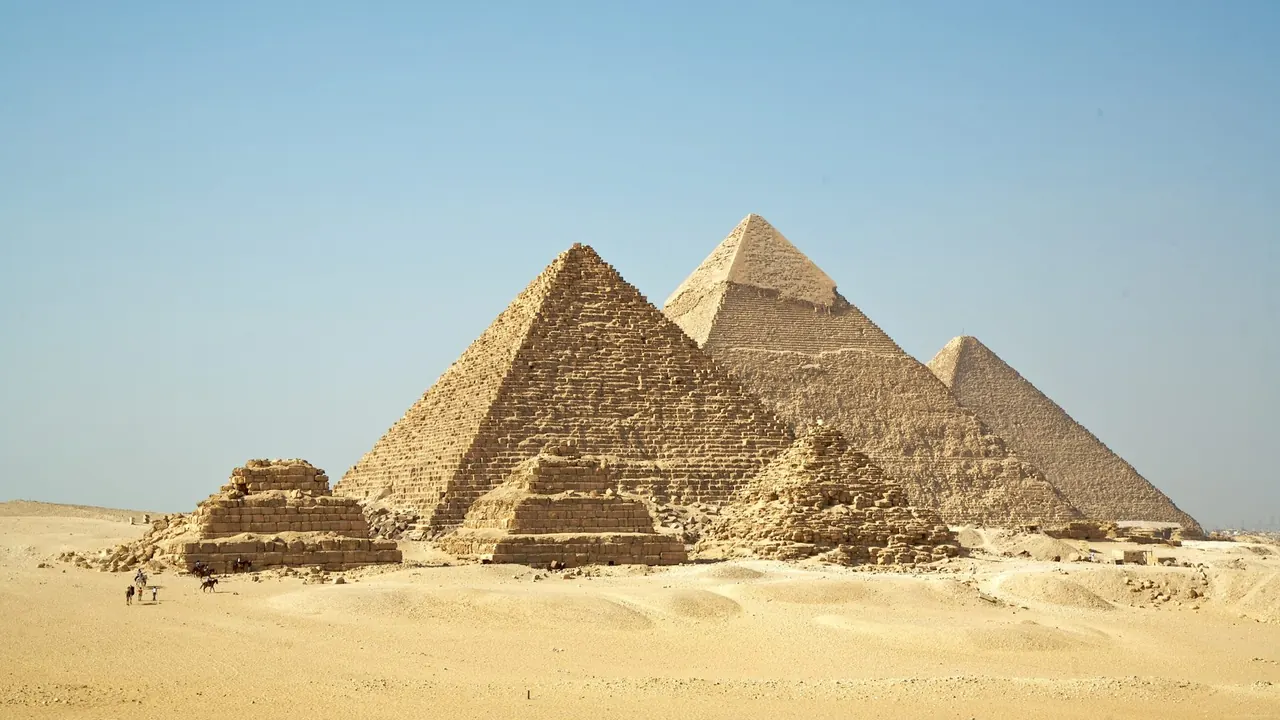
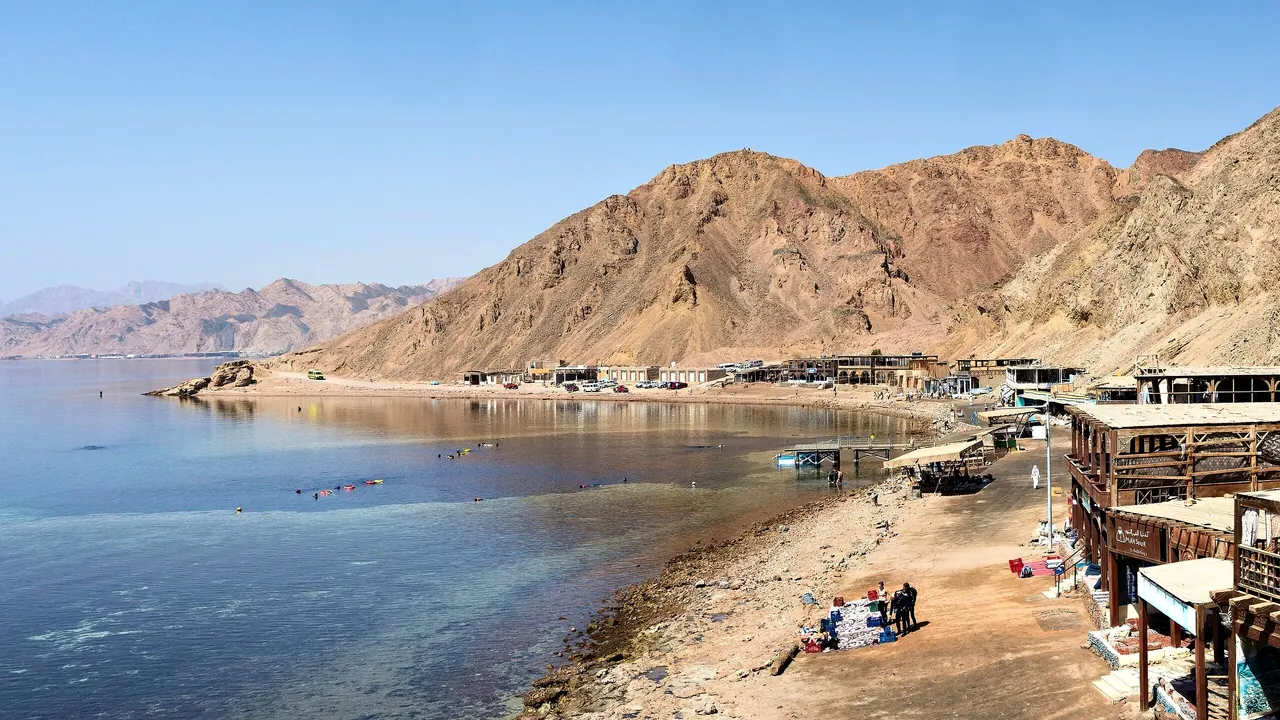
Photos: Cairo by Ricardo Liberato, CC BY-SA 2.0, cropped; Dahab by Petar Milošević, CC BY-SA 4.0, cropped.
Cairo or Dahab?
Our verdict in twelve categories, each scored against the same fixed benchmark cities, and the climate month by month, so you can choose for your trip.
Choose Cairo for
- culture and sights
- shopping
- live music and the arts
Choose Cairo if the point of the trip is to see things. The pyramids at Giza, the great antiquities museums and the medieval streets of Islamic Cairo are a lifetime's worth of sights. The city also has a much bigger food, shopping and music life than Dahab, all at very low cost. In return it asks for patience with traffic, noise and heat, and it offers little rest.
Choose Dahab for
- beaches
- nature and the outdoors
- wellness
Dahab suits travellers who want the sea and a slower pace. Reefs start a few steps from the promenade and the Sinai mountains rise behind the town. Days are spent snorkelling, diving, doing yoga and sitting on cushions by the water. There is almost nothing to visit in the usual sense, so it works best for a trip built around water, desert and quiet rather than sightseeing.
Scoreboard
Twelve categories on one fixed scale from 0 to 100. The shaded stretch is the gap between the two.
Your match
Pick a travel style or drag the sliders, and both match scores follow your weighting.
Wins on culture and sights and shopping with your weighting.
Wins on beaches and nature and the outdoors with your weighting.
What matters to you?
Category by category
What the scores mean for a trip.
Beaches & swimming
Dahab is far ahead here. The sea starts at the promenade, and swimming means stepping off a jetty or rocks straight onto coral at places like Eel Garden or the Lighthouse. For calmer bathing on sand, there is the shallow Lagoon to the south.
Cairo has the Nile, but nobody swims in it, so the water on offer is a hotel or club pool. The nearest coast is Ain Sokhna on the Red Sea, a couple of hours away and lined with resort compounds. Visitors who want the sea usually add a few days on the Red Sea coast to their trip.
Food & drink
Cairo eats far better. Its street food is a whole cuisine: ful and taameya for breakfast, shops that sell only koshari, feteer, stuffed pigeon and molokhia. Sweets shops and coffeehouses stay open day and night, and Zamalek adds a thin layer of international dining.
Dahab's meals centre on grilled fish chosen from the ice at the bayside restaurants, which is pleasant but plain. The best eating is the simple Egyptian cooking in Assala, the same ful, falafel and koshary that Cairo does with more variety. Beyond that, menus turn to pizza and backpacker food.
Culture & sights
The gap could hardly be wider. Cairo has the pyramids and the Sphinx at Giza, the Grand Egyptian Museum and the Egyptian Museum, and the royal mummies at Fustat. It also has the medieval mosques, madrasas and Citadel of Islamic Cairo, enough for many days.
Dahab has no museums or monuments at all. Its interest lies in the Bedouin character of Assala and the camel herders around town. Its one great heritage site, St Catherine's Monastery below Mount Sinai, is a full day's trip inland.
Nightlife
Cairo's nights are longer and fuller, though they are built on tea rather than drink. The ahwas of downtown and Islamic Cairo stay busy past midnight and families stroll the corniche. The bars, rooftop terraces and party boats are mostly in Zamalek and the big hotels.
Dahab's evenings are a beer or a shisha by the water and a few promenade bars full of divers. There are no clubs, and because much of the town gets up early to dive, it is usually quiet well before midnight.
Nature & outdoors
Dahab is built around the outdoors. Reef walls drop away a few metres offshore at the Canyon and the Blue Hole, and freediving and kitesurfing are part of town life. The granite mountains, the Coloured Canyon and the night climb up Mount Sinai are just behind the town.
Cairo's green space comes down to Al-Azhar Park and a felucca on the Nile, plus the dry canyons of Wadi Degla on the city's edge. Its real landscapes, the lakes of Wadi El Rayan and the whale fossils of Wadi Al-Hitan, mean a long day out into the desert.
Day trips
Cairo has far more within reach. Saqqara's Step Pyramid, the Bent and Red Pyramids at Dahshur and the ruins of Memphis are under an hour south. The monasteries of Wadi Natrun, Alexandria and the Fayoum oasis add more, mostly with a hired driver.
From Dahab there is really one outing, St Catherine's Monastery, often combined with the Mount Sinai climb. Sharm el-Sheikh and Nuweiba add little, so most excursions head into the desert or out to sea instead.
Good for families
Dahab is the gentler of the two with children, as long as they like the water. The shallow, sandy Lagoon suits younger swimmers, older children can snorkel from the shore, and the slow pace makes the days easier. Reef shoes are a must, though, and serious medical care is in Sharm el-Sheikh.
Cairo gives children bigger memories: the pyramids, a camel ride and Tutankhamun's gold. But the traffic, broken pavements, touts and heat make it tiring with them, and both places are hard on small children in summer.
Getting around
Neither is easy, but Cairo gives you more ways to move about. The metro is cheap and reaches Tahrir Square, Coptic Cairo and Heliopolis, and ride-hailing covers the rest. The catch is some of the heaviest traffic anywhere, and pavements that make walking hard except in short stretches such as Al-Muizz Street or Zamalek.
Dahab is the reverse. Its 2km promenade is flat, largely free of cars and holds most of what you need. Beyond it there is no public transport at all, so the Blue Hole, the Lagoon and anything inland mean a taxi, a pickup or an arranged trip.
Shopping & style
Cairo is far stronger. Khan el-Khalili has been trading since the fourteenth century, and nearby the Street of the Tentmakers and the coppersmiths' alley keep real crafts alive. Zamalek adds contemporary Egyptian design, and the suburbs have large malls.
Dahab has promenade stalls selling scarves, Bedouin embroidery and spices, and its one specialist buy is dive and freediving gear. For anything more, people go to Sharm el-Sheikh.
Affordability
Both are very cheap, and Cairo is slightly cheaper. Street food, the metro and ride-hailing cost very little, and mid-range hotels downtown or in Zamalek are a bargain. Foreigners pay much more at the big sites, though, and small tips are expected all the time.
Dahab is nearly as easy on the budget, with cheap guesthouses, camps and meals in Assala. Diving courses are inexpensive by international standards, which is why many people stay for weeks. The waterfront restaurants and alcohol are where costs add up.
Live music & performing arts
Cairo has a real stage and Dahab does not. The Opera House on Gezira Island hosts the symphony orchestra, ballet and Arabic music. The whirling tanoura dance in the Wikala of al-Ghouri is the highlight for many visitors, and music and dance are easier to follow than theatre, which is mostly in Arabic.
In Dahab, live music means the occasional band or DJ in a promenade bar, or Bedouin songs around the fire at a desert camp.
Wellness & relaxation
Dahab is the place to rest. The slow pace, the cushioned seafront cafés, sunsets over the Sinai mountains and cheap yoga, breathwork and massage make it easy to switch off, even though spa treatments are limited to the larger hotels.
Cairo has almost none of that. The noise, traffic and dust rarely let up, the old hammams have mostly gone, and calm means a hotel spa or an evening on a felucca. Seeing Cairo first and then resting in Dahab is a natural way to combine the two.
When should you go?
Pick your month. The climate figures are measured averages, not a forecast.
Cairo in July
Dahab in July
Daytime high, °C
Rainfall in the month, mm
Where the figures come from
Dahab has no weather station within reach, so its figures come from a gridded climate model rather than a measured record, and read a broad area rather than the city itself.
Temperature and rainfall are climate normals, averaged over the years shown. Cairo: 1991-2020 normals, Helwan (21.9 km from centre). Dahab: 1991-2020 normals, TerraClimate 4 km grid at the town, no weather station within 90 km.
Both places are almost rainless, so the year turns on heat rather than weather. Cairo is best for sightseeing from October to April. Days are warm but manageable then, around 19°C in January, and the long sunny days suit walking around Giza and Islamic Cairo. From May to September highs climb to about 36°C, and by late morning the streets and desert sites are hard work.
Dahab follows a similar curve. It is a little warmer in winter and reaches 37°C in midsummer, which makes hiking in the mountains difficult from June to September. The sea changes the picture: it stays between 22°C and 28°C all year, so swimming and snorkelling work in every month. Spring and autumn are the best time, with warm water and air mild enough for trips inland.
Which traveller are you?
On a culture and arts trip, Cairo is the only real choice of the two. The pyramids, the antiquities museums, the mosques of Islamic Cairo, the opera and the Sufi tanoura dance fill many days. Dahab has no museums, monuments or stage to speak of.
For an outdoors trip, Dahab wins clearly. You can dive or snorkel on reefs straight from shore, kitesurf at the Lagoon and ride camels or jeeps into the Sinai granite. Cairo has Al-Azhar Park, a felucca on the Nile and desert outings that need a long drive.
On a shopping trip, go to Cairo. Khan el-Khalili, the tentmakers and coppersmiths nearby, Zamalek's design boutiques and the big suburban malls give far more to browse than Dahab's promenade stalls, where dive gear is the one real find.
Before you go
| Measure | Cairo | Dahab |
|---|---|---|
| Official language | Arabic | Arabic |
| Currency | Egyptian Pound (EGP) | Egyptian Pound (EGP) |
| Sockets | CF220 V, 50 Hz | CF220 V, 50 Hz |
| Driving side | Right | Right |
| Time zone | UTC+2, UTC+3 in summer | UTC+2, UTC+3 in summer |
| Emergency number | Police 122, ambulance 123, fire 180 | Police 122, ambulance 123, fire 180 |
| Elevation | 23 m | 21 m |
| Main airport | Cairo International Airport (CAI)17 km from centre127 non-stop destinations | Sharm El Sheikh International Airport (SSH)58 km from centre116 non-stop destinations |
| Public holidays this year | 15 days | 15 days |
By the numbers
| Measure | Cairo | Dahab |
|---|---|---|
| City population | 9,801,536 | 4,479 |
| People per km² | 18,564 | - |
| Museums within 10 km | 48 | 0 |
| UNESCO World Heritage sites within 50 km | 2 | 0 |
| Swim season, months above 21 °C | - | 12 months |
Where else could you go?
Every comparison below shares a destination with this one, so you can follow Cairo or Dahab somewhere new.