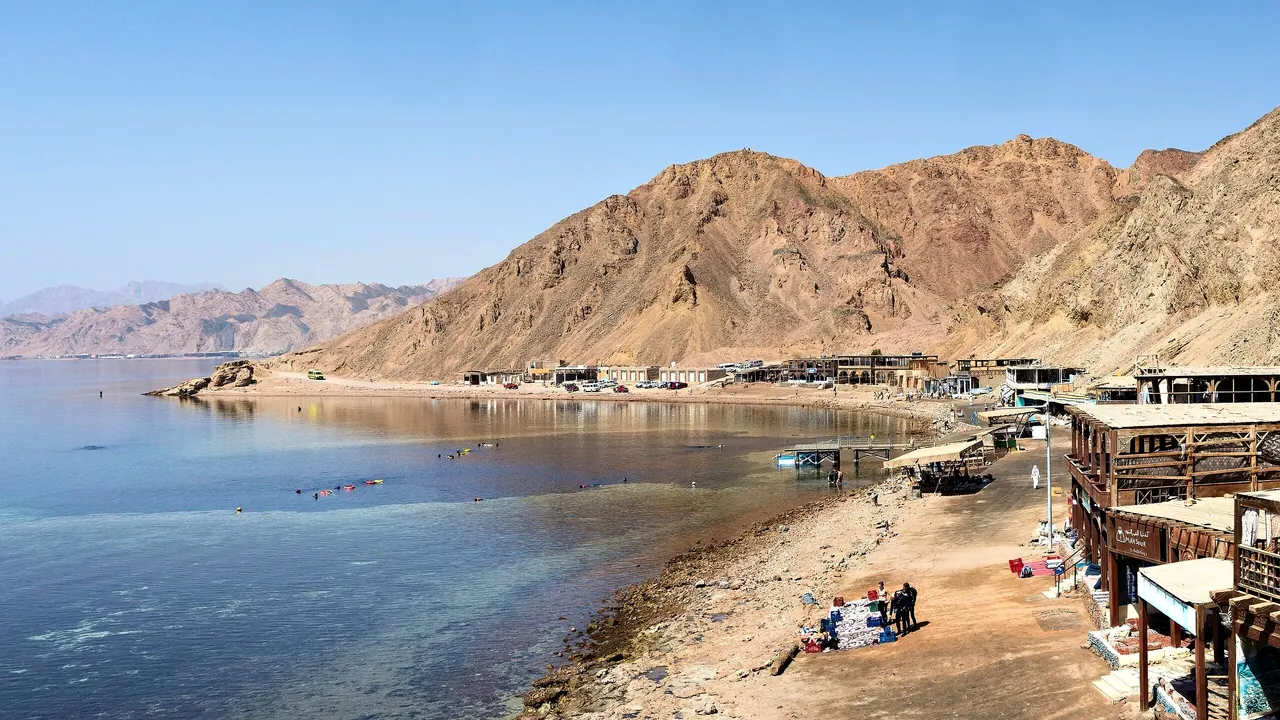
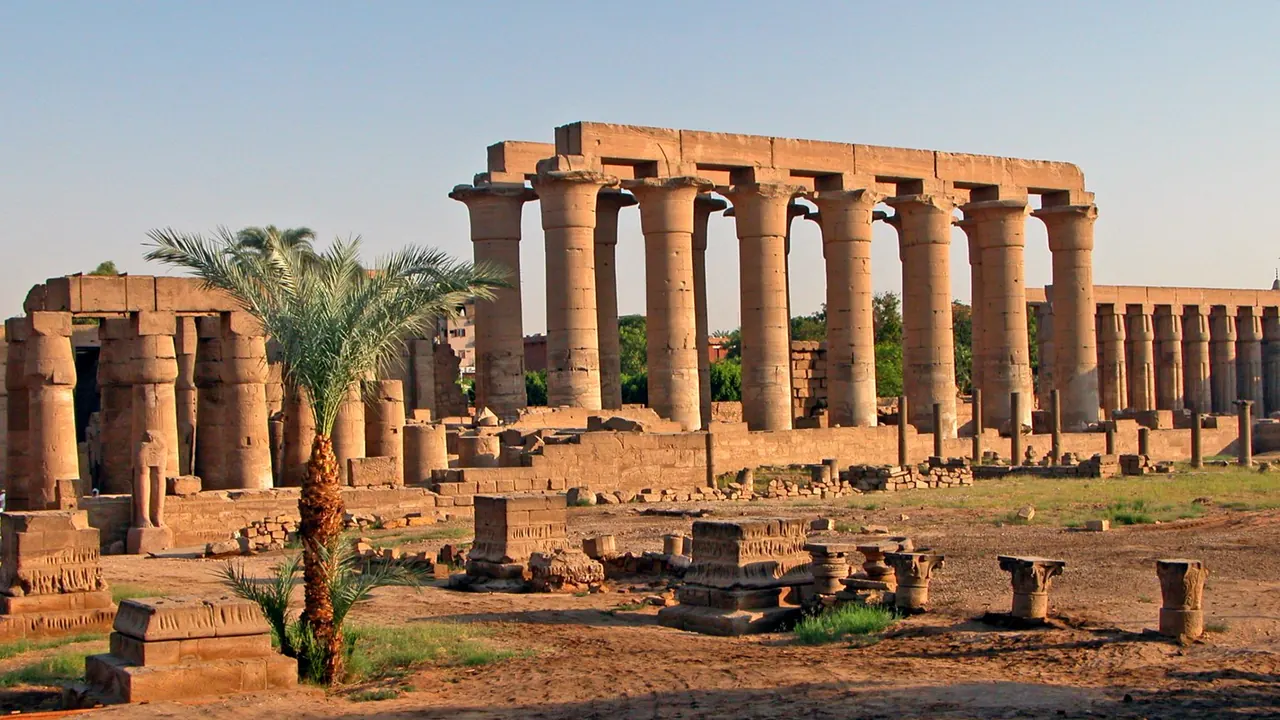
Photos: Dahab by Petar Milošević, CC BY-SA 4.0, cropped; Luxor by Dennis G. Jarvis, CC BY-SA 2.0, cropped.
Dahab or Luxor?
Our verdict in twelve categories, each scored against the same fixed benchmark cities, and the climate month by month, so you can choose for your trip.
Choose Dahab for
- beaches
- nature and the outdoors
- wellness
Dahab is for travellers who want to spend their days in and under the water. Reefs start a few steps from the promenade, the Blue Hole and the Canyon draw divers and freedivers from around the world, and the Sinai mountains rise just behind town for camel treks and the night climb up Mount Sinai. It is slow, cheap and easy to settle into for a long stay, but there is almost nothing to visit in the usual sense.
Choose Luxor for
- culture and sights
- day trips
- shopping
Luxor suits anyone who travels to see the ancient world. Karnak, Luxor Temple, the Valley of the Kings and Hatshepsut's temple fill several full days, and Dendera, Esna and Edfu stretch a trip further along the Nile. There is no sea and the evenings are early, so this is a vacation built around early starts at the monuments and long afternoons by a hotel pool.
Scoreboard
Twelve categories on one fixed scale from 0 to 100. The shaded stretch is the gap between the two.
Your match
Pick a travel style or drag the sliders, and both match scores follow your weighting.
Too close to call, 2 points apart
Wins on beaches and nature and the outdoors with your weighting.
Wins on culture and sights and day trips with your weighting.
What matters to you?
Category by category
What the scores mean for a trip.
Beaches & swimming
Here the gap is as wide as it gets. Dahab lives by the sea: you step off rocks or a jetty onto coral reef along the bay, at Eel Garden and at the Blue Hole, and the Lagoon offers sand and sheltered shallow water. It is a snorkelling coast more than a lounging one, so bring reef shoes.
Luxor has no beach and the Nile is not for swimming, so bathing means a hotel pool. Anyone wanting the sea from Luxor has to plan a separate stay on the Red Sea coast.
Food & drink
Neither is a food destination, and the best meals in both are the same plain Egyptian staples of ful, falafel or taameya, koshary and fresh bread. In Dahab the draw is the setting: fish picked from the ice and grilled at low cushioned tables by the water, with backpacker menus filling the rest and Assala holding the cheap local counters.
Luxor feels more Egyptian at the table, with grilled pigeon, molokhia and sugar cane juice, while visitor dining leans on hotel buffets and rooftops with temple views. Its West Bank guesthouses, cooking at home for their guests, often serve the most satisfying meal of the trip.
Culture & sights
Luxor is one of the world's great heritage sites, built over ancient Thebes. The Great Hypostyle Hall at Karnak, Luxor Temple lit at night, the Valley of the Kings, Deir el-Bahari and Medinet Habu need several days, with the Luxor Museum adding fine objects.
Dahab has nothing comparable. Its Bedouin roots show in Assala and the tea stops, but that is atmosphere rather than sightseeing, and its one great monument, St Catherine's Monastery, is a full day inland.
Nightlife
Both towns go to bed early, but Dahab has a little more going on: bars along the promenade with music and a mixed crowd of divers and travellers, shisha on cushions by the water, and the occasional party that runs late. Even so, early dives keep it quiet most nights.
Luxor's evening drink is a hotel bar or a rooftop terrace, and the real local life is tea and shisha in street cafés and families strolling the corniche. Dawn starts at the tombs keep the night short.
Nature & outdoors
Dahab is far stronger here. The Gulf of Aqaba drops into deep water just offshore, making shore diving at the Canyon and the Blue Hole and freediving the heart of the town, and the Lagoon's steady wind brings windsurfers and kitesurfers. Behind it, camel and jeep trips reach the Coloured Canyon and Ras Abu Galum, and Mount Sinai offers a sunrise climb.
Luxor's nature is gentler and comes as a backdrop to the monuments: a felucca at sunset, birds on the river islands, cycling past West Bank fields and a path over the Theban hills to Deir el-Bahari, with balloons over the valley at dawn.
Day trips
Luxor has the better excursions, even if they are all temples. Dendera's Temple of Hathor, the vivid reliefs at Esna and the near-complete temple at Edfu are each a short drive along the Nile, and Abydos makes a long but rewarding day.
From Dahab there is really one outing worth the journey, St Catherine's Monastery, usually paired with the night climb. Sharm el-Sheikh and Nuweiba add little, so most trips head into the desert or out to sea rather than to another place.
Good for families
Dahab is the easier choice with children who love the water. The Lagoon's sand and shallows suit younger swimmers, older ones can snorkel from shore, and a camel ride makes a good day. Reef shoes, the summer heat and the distance to serious medical care in Sharm el-Sheikh are the drawbacks.
Luxor works mainly for older children already fascinated by pharaohs, who will remember crawling into painted tombs, the Mummification Museum and a balloon flight. For small children the long, shadeless walks and persistent touts make it hard going, so a hotel with a pool and a winter visit matter.
Getting around
Dahab is easy only along the water. The promenade curves about 2km round the bay from the Lighthouse to Mashraba and is largely car-free, so many visitors spend days on foot between dive centres, guesthouses and restaurants. Beyond it there is no public transport, and the Lagoon, Assala's back streets, the Blue Hole and the mountains all mean a taxi, a pickup or an arranged trip.
Luxor is the easier of the two to get around, though it is not simple either. On the East Bank you can walk between Luxor Temple, the museum and the corniche, take a short calèche or taxi ride to Karnak, and cross the Nile on the cheap public ferry. The West Bank sites are spread along the desert edge, so most visitors hire a driver for the day, and cycling between them works in the cool months.
Shopping & style
Neither is a place to shop, but Luxor offers a bit more to browse. Its tourist souk sells spices, galabiyas, papyrus and scarves, and the West Bank alabaster workshops are worth seeing for the hand carving, though much of the stock is mass-produced and the selling is pushy.
Dahab's promenade stalls cover Bedouin embroidery, jewellery and beachwear. Its one real strength is dive and freediving gear.
Affordability
Both are very cheap, and the difference lies in where the money goes. In Dahab the larger costs are dive and freediving courses, inexpensive by international standards, which is why many people stay for weeks.
In Luxor, rooms and meals cost little but entry fees at every temple and tomb add up quickly over several days, with guides, drivers and balloon flights on top. Agree prices before setting off.
Live music & performing arts
Neither has a stage worth planning around. Luxor's one regular evening event is the sound-and-light show walking through floodlit Karnak, with belly dance and tanoura whirling staged in hotels and on cruise boats. Dahab offers the odd band or DJ in a promenade bar and Bedouin music around a desert-camp fire.
Wellness & relaxation
Dahab is the more restful of the two. Its pace is the point: cushioned seafront cafés, sunset over the Sinai mountains, and a long-stay community built around yoga, breathwork and the calm of freediving, with cheap classes and massage easy to find.
Luxor's rest comes in between the sightseeing, a long afternoon by the pool and sunset on the river. Some riverside hotels have a hammam and massage rooms, and the West Bank's mud-brick guesthouses among the fields are calm, but the traffic and touts of the East Bank are not.
When should you go?
Pick your month. The climate figures are measured averages, not a forecast.
Dahab in July
Luxor in July
Daytime high, °C
Rainfall in the month, mm
Where the figures come from
Dahab has no weather station within reach, so its figures come from a gridded climate model rather than a measured record, and read a broad area rather than the city itself.
Temperature and rainfall are climate normals, averaged over the years shown. Dahab: 1991-2020 normals, TerraClimate 4 km grid at the town, no weather station within 90 km. Luxor: 1998-2020 (rainfall 1971-2000) normals, Luxor (6.5 km from centre).
Both are almost rainless all year, so the heat decides everything. Luxor is the more extreme of the two: winter days are pleasantly warm, but from May to September highs reach about 41°C and sightseeing shrinks to the first hours after dawn. November to February is the time to walk the temples and tombs in comfort, with March and October usable if you start early.
Dahab runs a few degrees cooler and has the sea to fall back on. The water stays swimmable all year, from about 22°C in late winter to 28°C in August, but summer highs of about 37°C make hiking and walking away from the shade hard work. Spring and autumn are its best seasons, when the mountains are walkable and the sea is warm; winter is fine for diving but cool for lying out after a swim. A trip combining the two works best in late autumn.
Which traveller are you?
On a beach and sun trip, Dahab is the only real choice. Warm, clear water sits right off the promenade for snorkelling, and the Lagoon has sand and calm shallows, while Luxor offers a hotel pool and a four-hour drive to the coast.
For a culture and arts trip, Luxor wins outright. The temples of Karnak and Luxor, the painted royal tombs on the West Bank and day trips to Dendera and Edfu add up to days of sights, where Dahab has no museums or monuments at all.
On an outdoors trip, Dahab gives far more. Reef diving and freediving start from the shore, the Lagoon's wind suits kitesurfers, and the granite wadis and Mount Sinai sit close by, against Luxor's felucca sails, balloon flights and gentle cycling.
Before you go
| Measure | Dahab | Luxor |
|---|---|---|
| Official language | Arabic | Arabic |
| Currency | Egyptian Pound (EGP) | Egyptian Pound (EGP) |
| Sockets | CF220 V, 50 Hz | CF220 V, 50 Hz |
| Driving side | Right | Right |
| Time zone | UTC+2, UTC+3 in summer | UTC+2, UTC+3 in summer |
| Emergency number | Police 122, ambulance 123, fire 180 | Police 122, ambulance 123, fire 180 |
| Elevation | 21 m | 89 m |
| Main airport | Sharm El Sheikh International Airport (SSH)58 km from centre116 non-stop destinations | Luxor International Airport (LXR)7 km from centre31 non-stop destinations |
| Public holidays this year | 15 days | 15 days |
By the numbers
| Measure | Dahab | Luxor |
|---|---|---|
| City population | 4,479 | 202,232 |
| People per km² | - | 486 |
| Museums within 10 km | 0 | 4 |
| UNESCO World Heritage sites within 50 km | 0 | 1 |
| Swim season, months above 21 °C | 12 months | - |
Where else could you go?
Every comparison below shares a destination with this one, so you can follow Dahab or Luxor somewhere new.