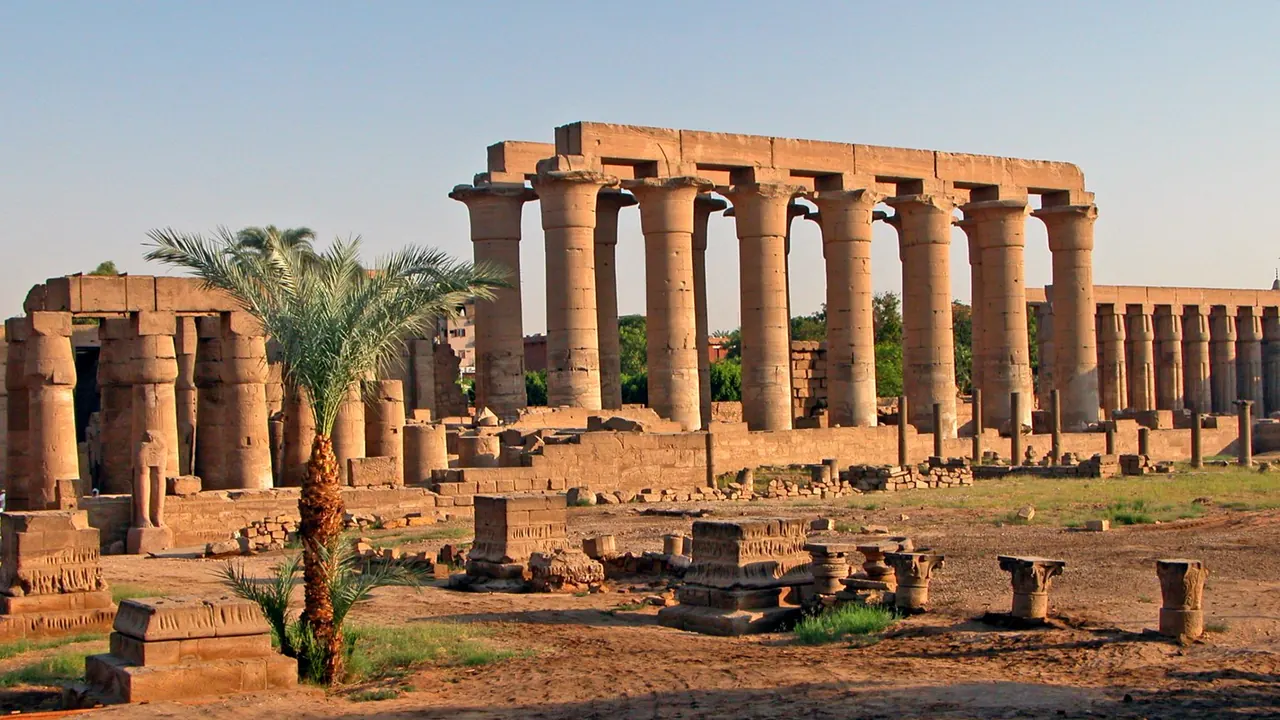
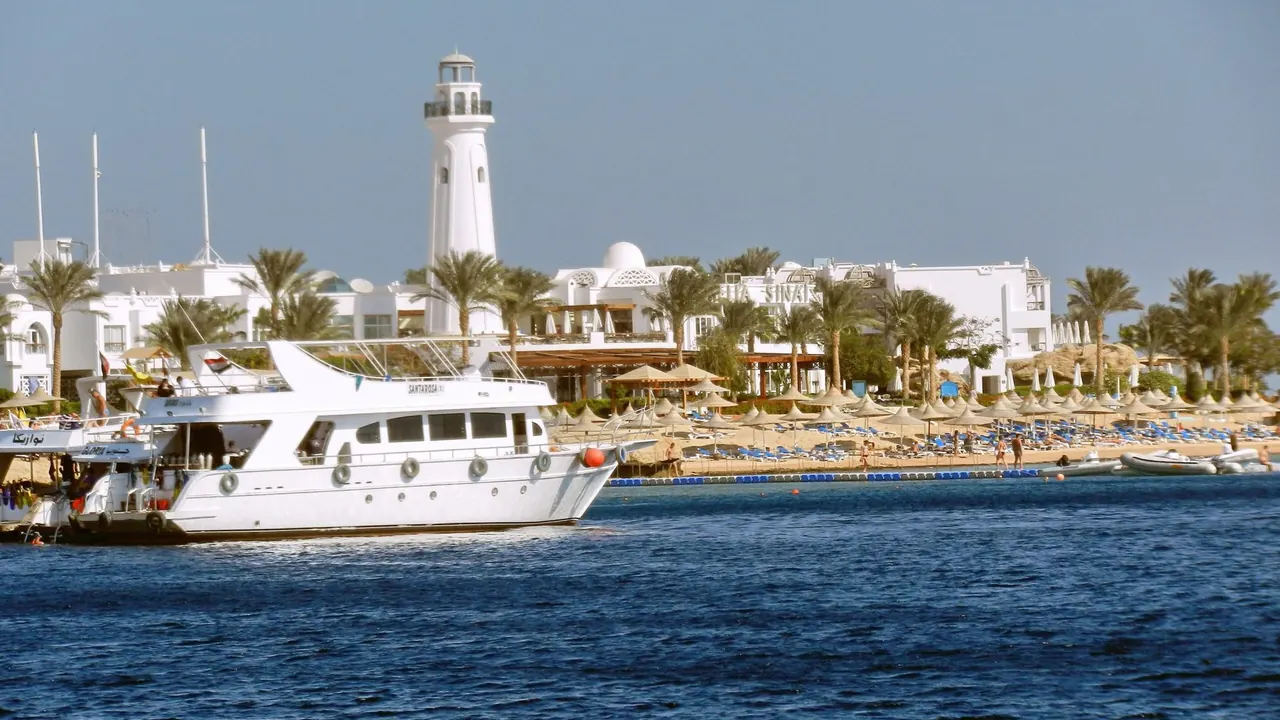
Photos: Luxor by Dennis G. Jarvis, CC BY-SA 2.0, cropped; Sharm el-Sheikh by Tanya Dedyukhina, CC BY 3.0, cropped.
Luxor or Sharm el-Sheikh?
Our verdict in twelve categories, each scored against the same fixed benchmark cities, and the climate month by month, so you can choose for your trip.
Choose Luxor for
- culture and sights
- day trips
- prices
Luxor is for travellers who want the ancient world in front of them: the columns of Karnak, the painted tombs of the Valley of the Kings and Hatshepsut's terraced temple, with Dendera, Esna and Edfu close enough for extra days. It suits a trip built around dawn starts and long afternoon rests. Day to day it is the cheaper of the two, although temple and tomb fees add up over several days. Evenings are quiet, and there is nowhere to swim except the hotel pool.
Choose Sharm el-Sheikh for
- beaches
- nature and the outdoors
- nightlife
Choose Sharm el-Sheikh if the sea is the point. The reef starts off the hotel jetties, Ras Mohammed and the Tiran Strait are among the best diving waters anywhere, and the big resorts make an easy week for families and for anyone who wants to swim, snorkel and do very little else. Naama Bay is good for a few nights out, but Egypt's history is a long excursion away.
Scoreboard
Twelve categories on one fixed scale from 0 to 100. The shaded stretch is the gap between the two.
Your match
Pick a travel style or drag the sliders, and both match scores follow your weighting.
Wins on culture and sights and day trips with your weighting.
Wins on beaches and nature and the outdoors with your weighting.
What matters to you?
Category by category
What the scores mean for a trip.
Beaches & swimming
Luxor has no swimming beyond the hotel pool. The Nile is not for bathing, and the Red Sea coast near Hurghada is a separate trip of about four hours, not an afternoon out.
In Sharm, the sea is the reason to come. Naama Bay has the most ordinary sandy bay, while at Sharks Bay, Ras Um Sid and along the Nabq coast, wooden jetties take you over the reef flat to the drop-off, so you can snorkel straight from your sun lounger. Expect hotel-owned and partly man-made beaches, and pack reef shoes.
Food & drink
The two are on a par, and both eat best on Egyptian staples like ful, taameya and koshari rather than anything made for visitors. In Luxor, the most memorable meals tend to be home cooking at West Bank guesthouses, while the rooftop restaurants are worth it for the temple views more than the plates.
Sharm's eating is shaped by all-inclusive buffets and the international strip in Naama Bay. The better meals are grilled fish in the Old Market and Bedouin-style dinners out in the desert. Drinking is easier in Sharm's tourist bars than in Luxor, where alcohol stays mostly in the hotels.
Culture & sights
The gap here is about as wide as it gets. In Luxor the monuments are the whole point of the trip. Temples line one bank of the Nile and the necropolis lies on the other, listed together by UNESCO since 1979, and a careful visitor can spend several days of early mornings there and still leave sites unseen. The small museums in town fill in the background. The modern town has no later history worth seeking out, so everything of interest is ancient.
Sightseeing in Sharm fits into one evening stroll round the Old Market. The Al Sahaba Mosque is floodlit after dark, and the Coptic Heavenly Cathedral has painted interiors worth a look. There are no museums of note, so a culture-minded visitor based there spends whole days in transit to reach the kind of heritage Luxor has close at hand.
Nightlife
Sharm has the only real night out of the two. Naama Bay's promenade has bars, shisha lounges and a few large clubs that stay open late, and beach bars put on DJ nights. It is a tourist scene, though, at its liveliest in the European summer and around Christmas and Easter, and quieter outside those peak vacation weeks.
Luxor goes to bed early, partly because tomb visits and balloon flights start at dawn. Evenings mean a hotel bar or rooftop, or tea and shisha in a street café while families walk along the corniche.
Nature & outdoors
Sharm's outdoors is mostly underwater, and it is world class. Ras Mohammed's reef walls are about 30km away, the wreck of the Thistlegorm lies nearby, and the Tiran Strait reefs are a short boat ride out. On land there are jeep and quad trips into the red granite mountains of South Sinai, and the Nabq protected area has mangroves.
Luxor's nature is gentler and comes in one scene: a green strip along the Nile against bare desert cliffs. A felucca at sunset, birds on the river islands, a bike ride through the West Bank fields and the path over the Theban hills are lovely, but they fill gaps between temple visits rather than a whole trip.
Day trips
Luxor has more to reach in a day. Dendera's Temple of Hathor, the vivid reliefs at Esna and Edfu, the most complete of the Ptolemaic temples, are all within two hours, and Abydos makes a longer day. The catch is that every outing is another temple.
From Sharm there are really two trips. One is laid-back Dahab on the Gulf of Aqaba. The other is St Catherine's Monastery at the foot of Mount Sinai, often combined with a night climb to see sunrise from the summit. Coach trips to Cairo or Luxor mean very long days on the road.
Good for families
Sharm makes a straightforward resort week with children. Kids' clubs, water slides and family pools are standard in the big hotels, and calm, shallow lagoons and glass-bottom boats get younger children looking at fish safely.
Luxor suits a different family: older children already hooked on pharaohs, who will love crawling into painted tombs, the Mummification Museum and a dawn balloon flight. For little ones, the shadeless sites and persistent touts are hard going, and even in the cool season a pool and an afternoon rest are essential.
Getting around
Luxor is the easier of the two, at least on the East Bank. You can walk between Luxor Temple, the museum and the corniche, Karnak is a short calèche or taxi ride away, and the public ferry crosses the Nile easily. The spread-out West Bank sites need a driver for the day, or a bike in the cool months.
Sharm stretches about 30km along the coast from the Old Market to the Nabq hotels, and only Naama Bay is pleasant on foot. Getting about means hotel shuttles, negotiated taxis or excursions with hotel pick-up, so most people stay at their resort.
Shopping & style
Neither city is a shopping destination, and in both you will be haggling over spices, papyrus, alabaster and cotton galabiyas against persistent sales talk. What differs is the extras. In Luxor you can watch alabaster being carved by hand in the West Bank workshops, while Sharm adds perfume oils, Bedouin-style jewellery and a few modern malls for beachwear and familiar brands.
Affordability
Luxor is the cheaper place to spend your days. Guesthouses, local food and the river ferry cost very little, and even the grand riverside hotels are reasonable. The big costs are foreigners' entry fees at the temples and tombs, plus drivers and guides.
Sharm is good value mainly if you stay put, since its all-inclusive hotels undercut many Mediterranean resorts. Once you leave the hotel, restaurants in Naama Bay, imported drinks, taxis, dives and boat trips are all priced for tourists.
Live music & performing arts
Neither offers a stage worth travelling for, and both put on belly dance and tanoura whirling shows for hotel guests. Luxor has one thing Sharm lacks: the sound-and-light show at Karnak, where you walk through the floodlit temple. Sharm's equivalent is large evening shows put on for package tourists.
Wellness & relaxation
Sharm is the better place to switch off. Nearly every big resort has a spa with a hammam-style bath, steam rooms and massage, and the days revolve around the pool, the sea and winter sunshine, with nothing to rush for.
Luxor has spas in some larger riverside hotels, but a sightseeing trip there means early starts, and the East Bank's traffic and touts are tiring. The calmest option is a mud-brick guesthouse among the West Bank fields, with a long afternoon rest and sunset on the river.
When should you go?
Pick your month. The climate figures are measured averages, not a forecast.
Luxor in July
Sharm el-Sheikh in July
Daytime high, °C
Rainfall in the month, mm
Where the figures come from
Luxor has no rain gauge within 25 km of the centre, so its rainfall comes from a gridded climate dataset read at the city rather than from a gauge further away.
Sharm el-Sheikh has no weather station within reach, so its figures come from a gridded climate model rather than a measured record, and read a broad area rather than the city itself.
Temperature and rainfall are climate normals, averaged over the years shown. Luxor: 1998-2020 (rainfall 1991-2020) normals, Luxor (6.5 km from centre). Sharm el-Sheikh: 2001-2020 normals, NASA POWER reanalysis grid, no weather station within 90 km.
Neither city gets meaningful rain, so the choice comes down to heat. Luxor is at its best from November to February, when afternoons of around 22°C to the high twenties make long walks round Karnak and the West Bank comfortable. March and October are fine if you start early. From May to September the valley reaches about 41°C, and sightseeing shrinks to the first hours after dawn.
Sharm is a little milder throughout the year, and its sea never drops below 23°C, warming to 29°C in August. The water is fine for snorkelling all winter, but the air can feel cool on the sand in winter. Spring and autumn are the best beach months, warm without the midsummer highs of about 38°C. The two cities share the same cool season, so a winter trip can include both.
Which traveller are you?
On a beach and sun trip, Sharm el-Sheikh is the clear choice. Warm, clear water and coral reach right up to the resort jetties. Luxor has no beach at all, and the nearest sea is about four hours away by road.
For a culture and arts trip, Luxor is in another league. Karnak, Luxor Temple, the royal tombs and the West Bank temples could fill a week. Sharm has a mosque and a painted Coptic church, and its history lies hours away.
On a family trip with children, Sharm is easier. It has kids' clubs, family pools and shallow lagoons for a first go at snorkelling. Luxor works for older children who love mummies, but long walks over hot ground in the desert wear out small ones.
Before you go
| Measure | Luxor | Sharm el-Sheikh |
|---|---|---|
| Official language | Arabic | Arabic |
| Currency | Egyptian Pound (EGP) | Egyptian Pound (EGP) |
| Sockets | CF220 V, 50 Hz | CF220 V, 50 Hz |
| Driving side | Right | Right |
| Time zone | UTC+2, UTC+3 in summer | UTC+2, UTC+3 in summer |
| Emergency number | Police 122, ambulance 123, fire 180 | Police 122, ambulance 123, fire 180 |
| Elevation | 89 m | 1 m |
| Main airport | Luxor International Airport (LXR)7 km from centre29 non-stop destinations | Sharm El Sheikh International Airport (SSH)16 km from centre112 non-stop destinations |
| Public holidays this year | 15 days | 15 days |
By the numbers
| Measure | Luxor | Sharm el-Sheikh |
|---|---|---|
| City population | 202,232 | 73,000 |
| People per km² | 486 | - |
| Museums within 10 km | 4 | 1 |
| UNESCO World Heritage sites within 50 km | 1 | 0 |
| Swim season, months above 21 °C | - | 12 months |
Where else could you go?
Every comparison below shares a destination with this one, so you can follow Luxor or Sharm el-Sheikh somewhere new.