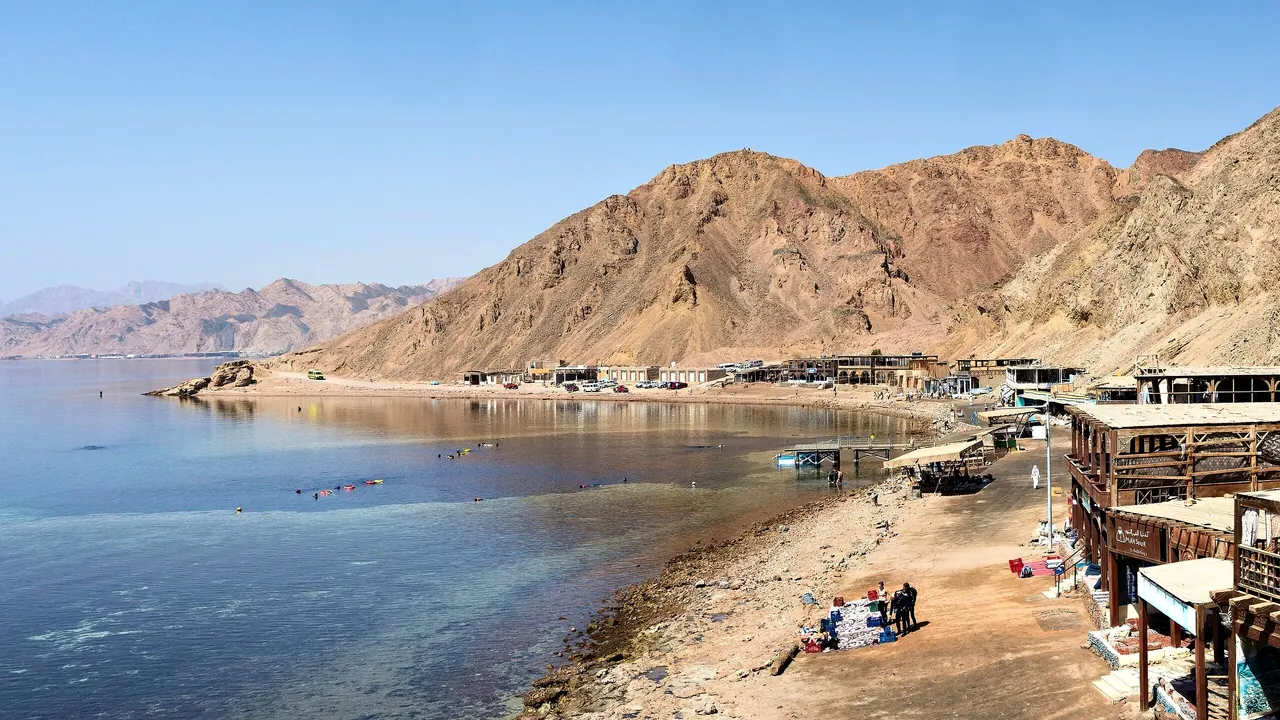
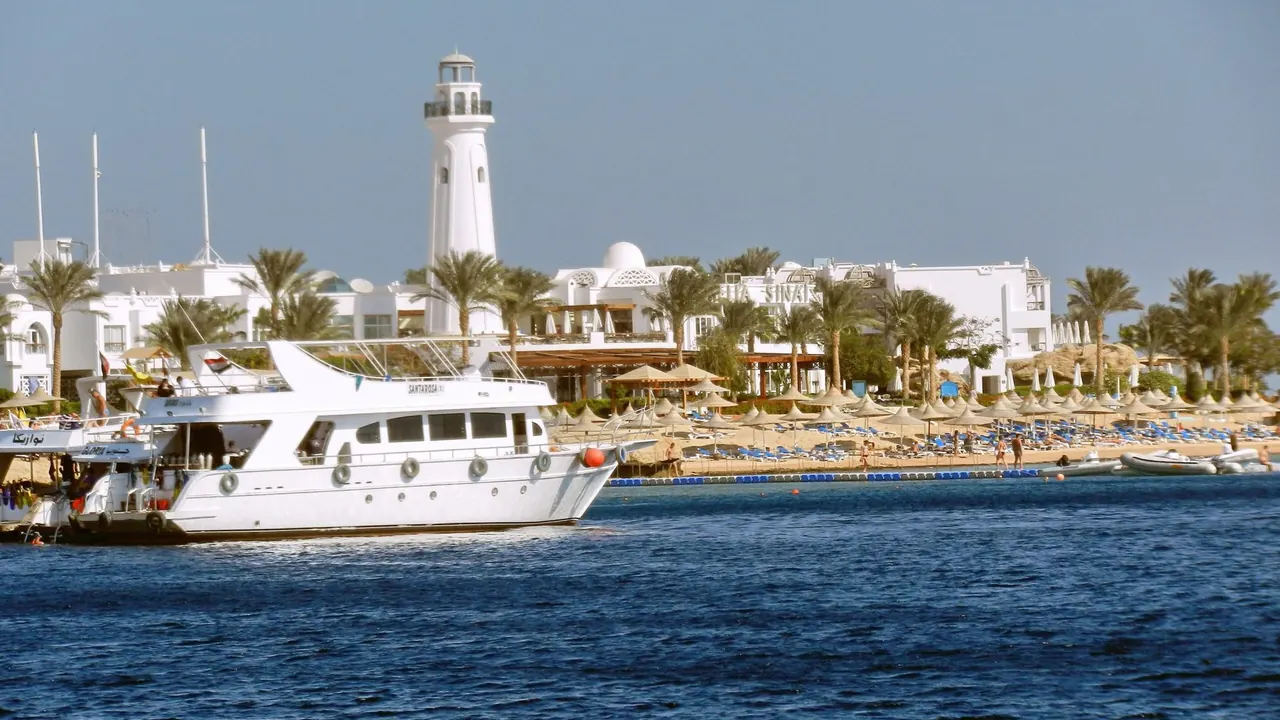
Photos: Dahab by Petar Milošević, CC BY-SA 4.0, cropped; Sharm el-Sheikh by Tanya Dedyukhina, CC BY 3.0, cropped.
Dahab or Sharm el-Sheikh?
Our verdict in twelve categories, each scored against the same fixed benchmark cities, and the climate month by month, so you can choose for your trip.
Choose Dahab for
- prices
- nature and the outdoors
- wellness
Dahab suits travellers who want to spend their days in the water and the desert. You can dive or snorkel straight off the shore, train as a freediver, or head into the Sinai mountains behind town, and it costs very little. The town is a short seafront promenade of cushioned cafés and guesthouses that you can walk end to end. Evenings are quiet, the food is simple and there is little made for small children, so it works best for independent adults and long-stay visitors who care more about the reef than the resort.
Choose Sharm el-Sheikh for
- nightlife
- families
- beaches
Sharm el-Sheikh is the better choice for a classic sun-and-sea week with everything laid on. It has proper sandy bays, hotel pools, kids' clubs and spas, and the clubs of Naama Bay are there when you want a late night. Boat trips go out to the reefs of Ras Mohammed and Tiran. Families, couples on an all-inclusive break and anyone who wants a bit more going on in the evening will be happier here, provided they accept that most of the stay happens inside the hotel.
Scoreboard
Twelve categories on one fixed scale from 0 to 100. The shaded stretch is the gap between the two.
Your match
Pick a travel style or drag the sliders, and both match scores follow your weighting.
Wins on prices and nature and the outdoors with your weighting.
Wins on nightlife and families with your weighting.
What matters to you?
Category by category
What the scores mean for a trip.
Beaches & swimming
Sharm el-Sheikh is the stronger beach destination. Naama Bay has a conventional sandy bay. Along Sharks Bay, Ras Um Sid and the Nabq coast, resort beaches with sunbeds have wooden jetties that carry you over the reef flat to the drop-off. The trade-off is that most beaches belong to hotels and many are small or partly man-made.
Dahab's shoreline is rockier and less made for lying in the sun. Along the promenade and at the Lighthouse and Eel Garden, you climb down a ladder from a café or step off the rocks straight onto the coral, so swimming here means snorkelling. The Lagoon in the south is the one place with soft sand and calm, shallow water.
Food & drink
Neither town is a reason to travel for food, but they eat in different ways. In Dahab you eat out: grilled fish chosen from the ice on the waterfront, cheap foul and koshary in Assala, and plenty of pizza and smoothie bowls for backpackers.
In Sharm, most meals are hotel buffets, and the restaurants in Naama Bay serve international food aimed at tourists. The Old Market plays the part Assala does in Dahab, with grilled fish, ful and taameya, and mint tea late into the evening.
Culture & sights
Neither town has much to see. Dahab has no monuments at all, and its Bedouin roots show in Assala and the tea stops around town rather than in anything you can visit. Sharm at least has two buildings worth a short visit: the Al Sahaba Mosque in the Old Market, lit up at night, and the painted interior of the Heavenly Cathedral. Real heritage in both cases means a long trip inland.
Nightlife
Sharm el-Sheikh is clearly the place for going out. Naama Bay has a promenade of bars and shisha lounges, a few large clubs that stay open late, and DJ nights at beach bars, at their liveliest in peak season.
Dahab's evenings end early. A beer or a shisha on cushions by the water, a handful of promenade bars and the odd party night are about it. With so many people up at dawn to dive, the town is usually quiet well before midnight.
Nature & outdoors
Both sit on some of the finest reefs anywhere, and Dahab has the edge because so much of it is right on its doorstep. The Canyon and the Blue Hole are shore dives a short ride from town, windsurfers and kitesurfers use the steady wind on the Lagoon, and the granite mountains rise directly behind the houses. Ras Abu Galum, the Coloured Canyon and the night climb of Mount Sinai are all within easy reach.
Sharm's best nature mostly involves a boat. Ras Mohammed, about 30km south, has sheer reef walls and the Thistlegorm wreck nearby, and the Tiran Strait reefs are a short trip out. On land there are quad-bike trips into the desert and the mangroves at Nabq.
Day trips
The two are much the same here: both have one great excursion and little else. St Catherine's Monastery and the sunrise climb of Mount Sinai are the highlight from either town, and Dahab is about an hour closer.
After that, Sharm's options are a relaxed day in Dahab or long tours to Cairo, Luxor or Petra with very early starts. Dahab's nearby alternatives are Sharm's malls or quiet Nuweiba, so most outings from Dahab head into the desert or out to sea instead.
Good for families
Sharm el-Sheikh is far better set up for children. Big resorts have kids' clubs, family pools and water slides, glass-bottom boats suit those who would rather stay dry, and the lagoons are gentle places to learn to snorkel. Choosing the right hotel matters more than the town itself.
Dahab can work for children who are confident swimmers, with the Lagoon's sandy shallows, reefs straight off the shore and camel rides. But nothing there is made for children, and serious medical care means a trip to Sharm.
Getting around
Getting around is awkward in both towns, but in different ways. Dahab's life fits along a car-free seafront promenade about 2km long, so many visitors walk everywhere for days. The Blue Hole, the Lagoon and Assala need a taxi or a pickup, and arriving means a road transfer of about an hour from the airport at Sharm.
Sharm sprawls for about 30km along the coast, and only Naama Bay is pleasant to walk. Shared minibuses on the main road, hotel shuttles and taxis with fares agreed in advance fill the gaps, which is why so many visitors stay inside their resort.
Shopping & style
Sharm el-Sheikh has more to offer, though it is still mostly souvenirs. The Old Market and Naama Bay sell perfume oils, papyrus, alabaster and galabiyas, with persistent haggling, and a few modern shopping centres stock beachwear and familiar brands.
Dahab has only the stalls along its promenade, selling scarves, Bedouin embroidery and spices. Dive and freediving equipment is the one thing really worth buying there.
Affordability
Dahab is the cheaper place to stay. Simple guesthouses and camps, Egyptian meals in Assala, cheap taxis and inexpensive dive courses let people stay for weeks without spending much. Only the waterfront restaurants and alcohol add up.
Sharm is good value mainly if you stay inside an all-inclusive hotel. Once you step outside, taxis need haggling, restaurants in Naama Bay charge close to European prices, and diving and excursions quickly add up.
Live music & performing arts
Neither town has a theatre, a concert hall or a local music scene. What little there is differs in style. Sharm stages dinner shows with belly dancing and whirling tanoura dancers for package tourists. In Dahab, the closest thing is Bedouin music around a fire at a desert camp, or a band or DJ in a promenade bar.
Wellness & relaxation
The two offer different kinds of rest, and Dahab's slower pace gives it a slight edge for switching off. Life there revolves around cushioned seafront cafés, cheap yoga and massage, and a long-stay community built around breathwork and freediving. Anyone after pampering will find spas only in the few larger hotels.
Sharm's relaxation happens inside the resort. Most large hotels have a spa with steam rooms and hammam-style scrub-and-foam treatments, and the rest of the day is spent by the pool.
When should you go?
Pick your month. The climate figures are measured averages, not a forecast.
Dahab in July
Sharm el-Sheikh in July
Daytime high, °C
Rainfall in the month, mm
Where the figures come from
Dahab has no weather station within reach, so its figures come from a gridded climate model rather than a measured record, and read a broad area rather than the city itself.
Sharm el-Sheikh has no weather station within reach, so its figures come from a gridded climate model rather than a measured record, and read a broad area rather than the city itself.
Temperature and rainfall are climate normals, averaged over the years shown. Dahab: 1991-2020 normals, TerraClimate 4 km grid at the town, no weather station within 90 km. Sharm el-Sheikh: 2001-2020 normals, NASA POWER reanalysis grid, no weather station within 90 km.
The two towns share almost the same climate. It hardly ever rains, and the sea stays warm enough to swim in all year, from about 22°C at its coolest in late winter to 29°C in late summer, with Sharm a degree or so warmer. Spring and autumn are the best seasons in both: the days are warm, the sea is comfortable, and it is still pleasant to walk around or go out on a desert trip.
From June to September afternoon highs reach about 37°C to 38°C, which is too hot for walking away from the shade or doing much on land after mid-morning, though the water is at its best. From December to February the days are mild, at around 21°C. That is fine for snorkelling and hiking, but it can feel cool on a windy beach, especially in the late afternoon.
Which traveller are you?
On a family trip with young children, Dahab asks a lot of parents, with coral underfoot, nothing laid on and serious medical care back in Sharm. Sharm el-Sheikh lets the hotel carry the day, though the town beyond it barely registers.
For a trip on a tight budget, Dahab makes the money last for weeks if you accept simple rooms and plain cooking. Sharm el-Sheikh stays cheap only while you stay in the resort, and every dive or excursion costs extra.
For freediving, Dahab is the obvious pick. It is one of the world's main training centres, deep water starts a few metres from shore, and courses fill with long-stay students. Sharm el-Sheikh's reefs are superb, but you reach them by boat.
Before you go
| Measure | Dahab | Sharm el-Sheikh |
|---|---|---|
| Official language | Arabic | Arabic |
| Currency | Egyptian Pound (EGP) | Egyptian Pound (EGP) |
| Sockets | CF220 V, 50 Hz | CF220 V, 50 Hz |
| Driving side | Right | Right |
| Time zone | UTC+2, UTC+3 in summer | UTC+2, UTC+3 in summer |
| Emergency number | Police 122, ambulance 123, fire 180 | Police 122, ambulance 123, fire 180 |
| Elevation | 21 m | 1 m |
| Main airport | Sharm El Sheikh International Airport (SSH)58 km from centre116 non-stop destinations | Sharm El Sheikh International Airport (SSH)16 km from centre116 non-stop destinations |
| Public holidays this year | 15 days | 15 days |
By the numbers
| Measure | Dahab | Sharm el-Sheikh |
|---|---|---|
| City population | 4,479 | 73,000 |
| Museums within 10 km | 0 | 1 |
| UNESCO World Heritage sites within 50 km | 0 | 0 |
| Swim season, months above 21 °C | 12 months | 12 months |
Where else could you go?
Every comparison below shares a destination with this one, so you can follow Dahab or Sharm el-Sheikh somewhere new.
- Hurghadavs Sharm el-Sheikh
- Aqabavs Dahab
- Eilatvs Dahab
- Hurghadavs Dahab
- Aqabavs Sharm el-Sheikh
- Eilatvs Sharm el-Sheikh