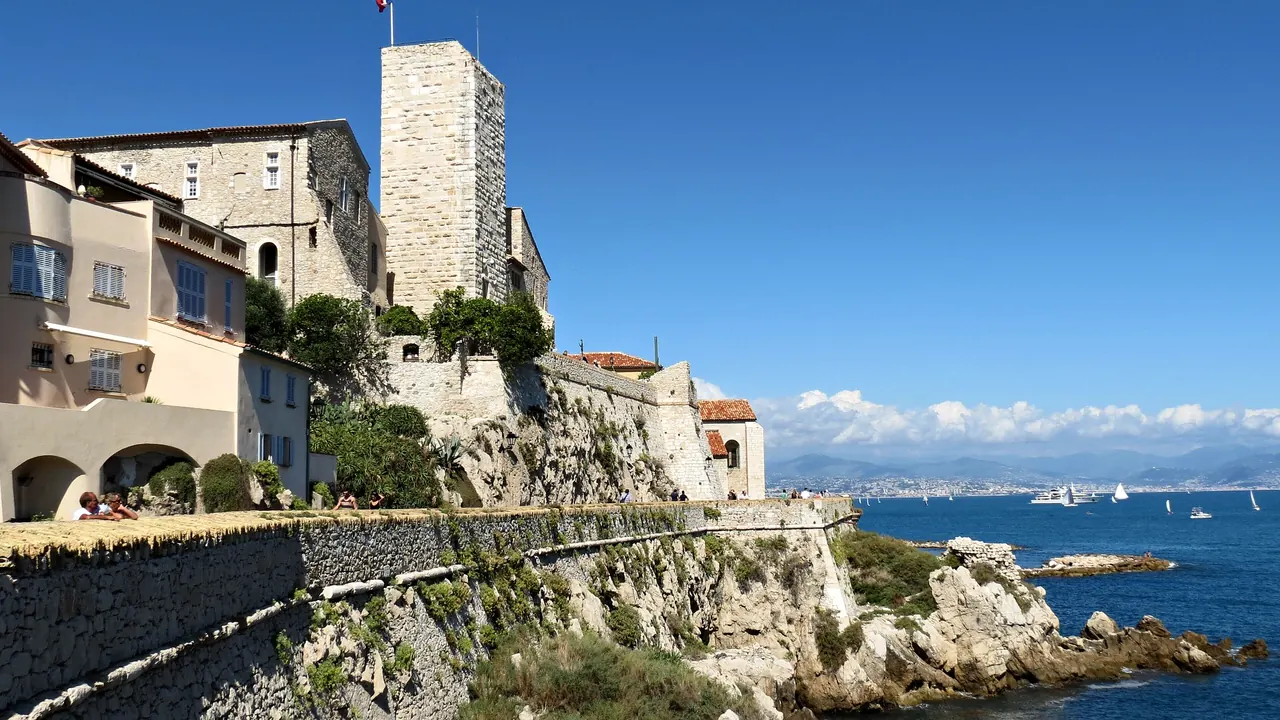
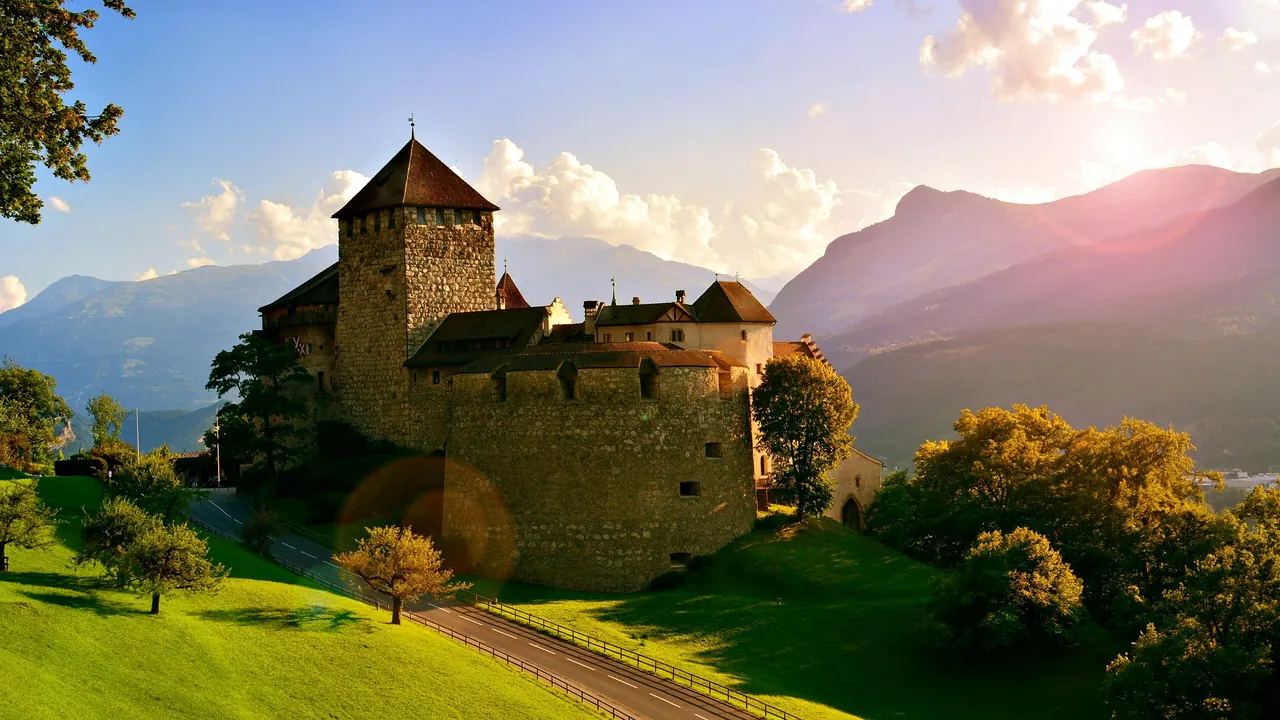
Photos: Antibes by Johan Allard, CC BY-SA 4.0, cropped; Vaduz by Justin LaBerge, CC BY 2.0, cropped.
Antibes or Vaduz?
Our verdict in twelve categories, each scored against the same fixed benchmark cities, and the climate month by month, so you can choose for your trip.
Choose Antibes for
- beaches
- nightlife
- food and drink
Antibes is the choice for a summer by the sea. It has real sand at Juan-les-Pins and La Salis, clear coves around the cape and an old town with Picasso on the ramparts. The whole Riviera is a short train ride away, so a week never runs short of things to do. It also suits families, and anyone who wants an evening out, at least in July and August.
Choose Vaduz for
- nature and the outdoors
- wellness
Vaduz is for walkers and people who want quiet. The mountains start at the edge of town. Malbun and the Rätikon peaks are half an hour up the road, with skiing in winter, and the town itself takes only a day to see. It costs even more than Antibes and has little to eat, buy or do after dark, so go for the hills rather than the town.
Scoreboard
Twelve categories on one fixed scale from 0 to 100. The shaded stretch is the gap between the two.
Your match
Pick a travel style or drag the sliders, and both match scores follow your weighting.
Wins on beaches and nightlife with your weighting.
Wins on nature and the outdoors and wellness with your weighting.
What matters to you?
Category by category
What the scores mean for a trip.
Beaches & swimming
On beaches the two could hardly be further apart. Antibes has some of the few sandy beaches on this coast, gently shelving at Juan-les-Pins and La Salis, plus rocky coves around Cap d'Antibes for swimming in very clear water. The sea stays warm enough to swim from June into early October.
Vaduz has no beach at all, and the Rhine is not for swimming. In summer you swim in the municipal pools or drive to the Walensee or Lake Constance, where the water is cooler and the season short. It makes a nice afternoon but is never a reason to go.
Food & drink
Neither town is a food destination, but Antibes gives you more to enjoy: the morning market on Cours Masséna, socca and pissaladière, grilled fish and rosé outdoors, and a few serious tables on the cape. The streets near the port, though, lean on tourist menus.
Vaduz has a handful of hotel dining rooms and hill inns serving Käsknöpfle, rösti and game in autumn. The cooking is solid but the choice is narrow, and the real pleasure is the Pinot Noir from the prince's vineyards below the castle.
Culture & sights
Both are short on sights and each can be seen in a day or two, but Antibes has a little more to fill the time. It has the Picasso Museum in the Château Grimaldi on the sea wall, the ramparts and lanes of the old town, Fort Carré above the harbour and Villa Eilenroc on the cape.
Vaduz is strongest on modern art, with the Kunstmuseum and the Hilti Art Foundation side by side, and the National Museum and the stamp museum nearby. The castle can only be admired from outside, and everything else is a short walk along the Städtle.
Nightlife
Antibes has a proper night out in summer, with beach bars and a few clubs in Juan-les-Pins open until the early hours and yacht-crew pubs and wine bars by Port Vauban. Out of season much of it closes, and Nice is the bigger draw. Vaduz has a few wine bars and hotel lounges on the Städtle and nothing late, so its young people go out in Feldkirch or Zurich.
Nature & outdoors
Vaduz wins here because the mountains are on its doorstep. Trails climb through vineyards and beech woods from the centre, and Malbun and the Rätikon peaks are half an hour up the road, with the exposed Fürstensteig path for a ridge walk. In winter there is skiing at Malbun, with larger Swiss resorts within an hour.
In Antibes the outdoors is mostly the sea: the coastal path around the cape, and snorkelling, diving and paddleboarding in clear water. For serious hiking you have to drive to the Esterel or the pre-Alps above Grasse, because the land around the town is flat and built up.
Day trips
Antibes sits in the middle of the Riviera. The coastal railway links it to Nice, Cannes, Monaco and Menton, boats cross to the Lérins Islands, and hill villages such as Saint-Paul-de-Vence and Eze lie inland, so even a long stay barely runs out of places to visit.
Vaduz also has a good range: medieval Feldkirch, the abbey library at St Gallen, Lindau on Lake Constance and Zurich, across three countries. Connections often need a change at Buchs or Sargans, though, so a car matters more here.
Good for families
Antibes suits children better, mainly because of its sandy, gently shelving shore, with the ramparts, harbour boats and Fort Carré filling the time between swims. August heat and crowds are the catch. Vaduz is calm and very safe but has nothing built for children, so it works best for older ones who enjoy hiking, summer pools or the beginner slopes at Malbun in winter.
Getting around
Both have small centres you can walk, and both get harder to explore further out. The difference is the railway. Antibes and Juan-les-Pins sit on the coastal line, so you can reach the Riviera towns without a car, though summer traffic and parking are hard work. Vaduz has no station of its own, but a tidy bus network reaches every village in the country and runs up to Malbun, connecting with trains across the border.
Shopping & style
Antibes has more to browse. There is the covered Provençal market for olive oil, herbs and soap, independent boutiques with linens and ceramics, and Biot glass and Vallauris pottery close by, with Cannes and Nice for fashion. Vaduz has a handful of shops on the Städtle selling watches, jewellery and collectable stamps. A bottle of local wine is the best buy there, and serious shoppers go to Zurich.
Affordability
Neither is cheap, but Antibes is easier on the wallet. Summer rooms near the beaches cost as much as a luxury resort, yet rates fall sharply in spring and autumn, the coastal trains are good value, and buying food at the market for self-catering saves a lot.
In Vaduz everything costs as much as in Switzerland, there are few hotels and almost nothing at the budget end, so even a short stay is costly. Many visitors save by sleeping across the border in Austria.
Live music & performing arts
Antibes has one event with real history: Jazz à Juan, held each July since 1960 under the pines by the sea, with the Anthéa theatre covering the rest of the year. Vaduz does well for its size, with a short orchestral season, a summer classical festival and the theatre in neighbouring Schaan, but nothing worth planning a trip around.
Wellness & relaxation
Neither has a bathing tradition of its own, and they offer different kinds of rest. Antibes has thalassotherapy and hotel spas on the cape, and is restful in May, June and September rather than in crowded high summer. Vaduz is quiet all year, with mountain walks and early evenings, and the thermal bath at Bad Ragaz, fed by warm spring water from the Tamina gorge, is about twenty-five minutes away.
When should you go?
Pick your month. The climate figures are measured averages, not a forecast.
Antibes in July
Vaduz in July
Daytime high, °C
Rainfall in the month, mm
Where the figures come from
Vaduz's temperatures are measured 51 km from the centre, at Sigmarszell-Zeisertsweiler.
Vaduz has no rain gauge within 25 km of the centre, so its rainfall comes from a gridded climate dataset read at the destination rather than from a gauge further away.
Temperature and rainfall are climate normals, averaged over the years shown. Antibes: 1991-2020 normals, Nice (9.9 km from centre). Vaduz: 1991-2020 normals, Sigmarszell-Zeisertsweiler (51.3 km from centre).
Antibes is at its best from late spring to early autumn. June, July and August are the dry heart of the year, with daytime highs between 25°C and 28°C and very little rain. The sea is warm enough to swim from June into early October and is warmest in August, at about 25°C. Midday in July and August is hot for long walks, so May, June and September suit sightseeing better, although September starts to turn wetter. October and November are the rainiest months. Winter is mild and still gets a fair amount of sun.
Vaduz is the other way round, with most of its rain in summer: about 120mm a month in July and August. Those months are still the warmest and the best for the mountains, with highs in the low twenties. Winter is cold, with highs near 4°C and short, grey days in the valley, so it is mainly a time for skiing on the slopes above. Late spring and September are pleasant for walking, and the town gets much less sunshine than the Riviera all year.
Which traveller are you?
For a beach and sun trip, Antibes is the clear choice. Its gently shelving sand at Juan-les-Pins and La Salis, the rocky coves of the cape and a sea warm from June to early October are things a landlocked Alpine town cannot offer.
On an outdoors trip, Vaduz comes out ahead. Trails climb from the town centre, and Malbun, the Rätikon ridges and the Fürstensteig path are half an hour away. Winter brings skiing too, while the hiking around Antibes needs a drive inland.
For a food and nightlife trip, Antibes gives far more. The Provençal market, socca and rosé on outdoor terraces lead on to summer beach bars and clubs in Juan-les-Pins. Vaduz has hearty Alpine dinners, a glass of the prince's wine and then an early night.
Before you go
| Measure | Antibes | Vaduz |
|---|---|---|
| Official language | French | German |
| Currency | Euro (EUR) | Swiss Franc (CHF) |
| Sockets | CE230 V, 50 Hz | CJ230 V, 50 Hz |
| Driving side | Right | Right |
| Time zone | UTC+1, UTC+2 in summer | UTC+1, UTC+2 in summer |
| Emergency number | 112 | 112 |
| Elevation | 0 m | 455 m |
| Main airport | Nice-Côte d'Azur Airport (NCE)11 km from centre130 non-stop destinations | Zürich Airport (ZRH)81 km from centre226 non-stop destinations |
| Public holidays this year | 11 days | 21 days |
By the numbers
| Measure | Antibes | Vaduz |
|---|---|---|
| Population | 77,637 | 5,668 |
| People per km² | 2,930 | 328 |
| Museums within 10 km | 14 | 7 |
| UNESCO World Heritage sites within 50 km | 2 | 3 |
| Swim season, months above 21 °C | 4 months | - |
Where else could you go?
Every comparison below shares a destination with this one, so you can follow Antibes or Vaduz somewhere new.