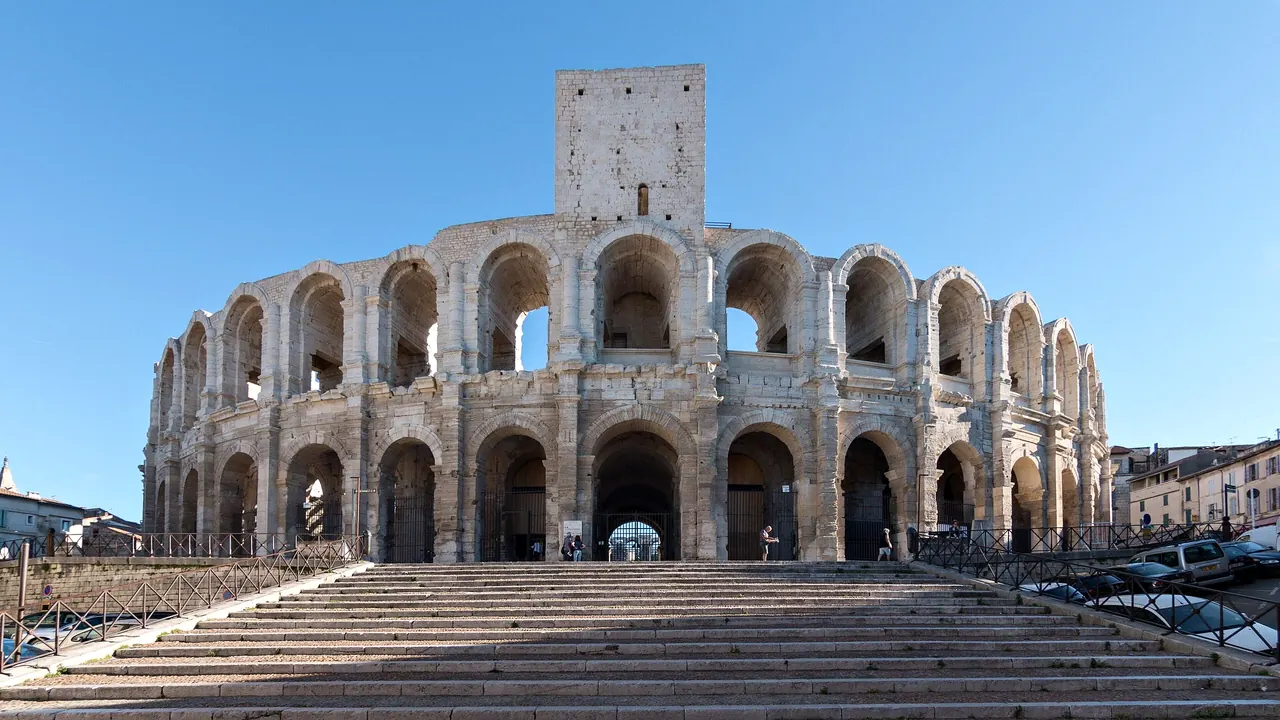
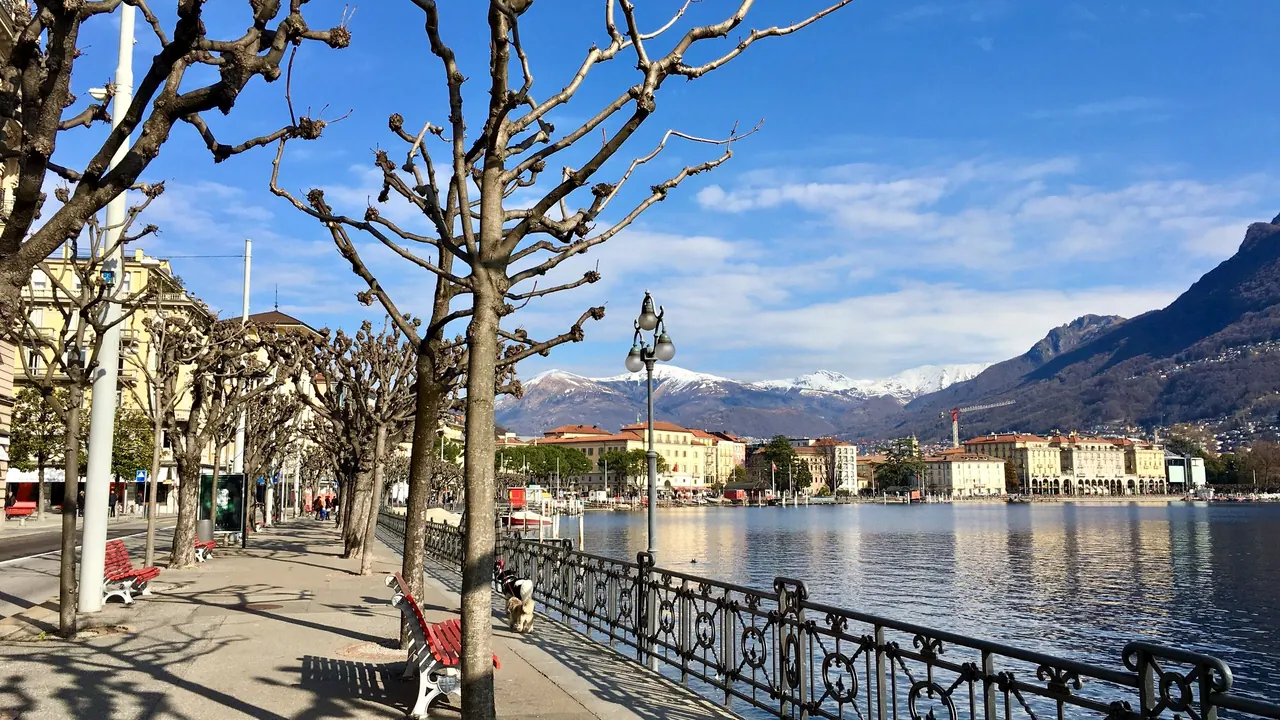
Photos: Arles by Martin Kraft, CC BY-SA 3.0, cropped; Lugano by Thomas Woodtli from Zürich, Switzerland, CC BY-SA 2.0, cropped.
Arles or Lugano?
Our verdict in twelve categories, each scored against the same fixed benchmark cities, and the climate month by month, so you can choose for your trip.
Choose Arles for
- prices
- culture and sights
- beaches
Arles is the choice for travellers who want history in depth and Provence without the prices of the smarter villages. Its Roman arena, theatre and Alyscamps, the carving at Saint-Trophime and the Van Gogh connections fill two full days. The Camargue starts at the edge of town, and Avignon, Nîmes and the Pont du Gard are all close. Expect quiet evenings, and plan on hiring a car for the villages and the wild beaches.
Choose Lugano for
- getting around
- wellness
- families
Lugano suits people who come for the landscape and want an easy time getting around. The lake, the funiculars and the mountain paths are right on the doorstep, and Swiss trains and lake boats make it simple to travel without a car, which also makes it the gentler choice for families with young children. Its own sights take only a day, and almost everything costs a good deal more than it does in Provence.
Scoreboard
Twelve categories on one fixed scale from 0 to 100. The shaded stretch is the gap between the two.
Your match
Pick a travel style or drag the sliders, and both match scores follow your weighting.
Too close to call, 1 point apart
Wins on prices and culture and sights with your weighting.
Wins on getting around and wellness with your weighting.
What matters to you?
Category by category
What the scores mean for a trip.
Beaches & swimming
Arles has real sea beaches, but they are out in the Camargue. Around Saintes-Maries-de-la-Mer there is sand with dunes, and further on lie the vast, open strands of Piémanson and Beauduc. They are wild and roomy, with little shade, and you need a car to reach them. The mistral and the mosquitoes come with them.
Lugano has no sea and no sand, but you can swim right in town. The lidos at the mouth of the Cassarate and along the shore offer lawns, decks and ladders into the lake, and boats run to small village baths. One city offers a wild day out at the sea, the other an easy afternoon swim.
Food & drink
The two are broadly level, but they eat in different ways. Arles is about the market. The long Saturday market on the Boulevard des Lices sells Camargue rice, tellines and saucisson d'Arles, and gardiane stew is served at long terrace lunches with rosé. Many restaurants close in winter.
Lugano's signature is the grotto, a rustic tavern in the hills where polenta, braised meats and local Merlot are served under chestnut trees. Eating out costs far more in Lugano, and serious diners often cross into Italy.
Culture & sights
Arles is in a different league here. Its arena is still in use. Add the antique theatre, the cryptoporticus galleries, the Alyscamps and the Saint-Trophime cloister, plus the museum's Roman barge, the Fondation Vincent van Gogh and Gehry's tower at Luma, and two full days go quickly.
Lugano's sights are pleasant rather than weighty. There is the Lombard-style old town around Piazza della Riforma, the cathedral with its lake views, Luini's Passion fresco and the collection shown at LAC. Most visitors have seen it all in a day and look to Milan for more.
Nightlife
Neither town goes out late, and the evenings look much alike. In Arles you have dinner on a square and a drink at the Place du Forum. The streets only stay up during the Easter and September ferias, when bodegas set up outdoors. In Lugano it is an aperitivo by the lake or under the arcades among a well-dressed crowd, with a club or two. Anyone after a real night out drives to Marseille or Montpellier from Arles, or takes the train to Milan from Lugano.
Nature & outdoors
Lugano has the more dramatic setting. Funiculars climb Monte Brè and San Salvatore from the edge of town, the path to Gandria follows the shore, and the ridge from Monte Lema to Monte Tamaro makes a full mountain day. The green rivers of the Verzasca and Maggia valleys are about an hour away.
Arles offers something entirely different: flat wetland and wildlife. The Camargue's lagoons and salt flats hold flamingos, white horses and black bulls, and you explore them on horseback, by bike along the dykes or on foot in the bird reserve. For proper hills you head to the Alpilles.
Day trips
Both are excellent bases, so the choice comes down to which region you want to see. From Arles it is Roman and Provençal: Avignon and Nîmes are short train rides, and the Pont du Gard, Les Baux, Saint-Rémy and Aigues-Mortes are best reached by car. From Lugano trips cross a border, with Milan's Last Supper, Lake Como, the castles of Bellinzona and Lake Maggiore. Most of them are easy by train or lake boat.
Good for families
Lugano works better with children, especially young ones. Boat trips, lido slides, funicular rides and the rack railway up Monte Generoso make easy outdoor days, there are playgrounds in Parco Ciani, and the miniature Switzerland at Melide is close by. The steep streets are hard going with a pushchair.
Arles appeals more to older children who like history and animals. They can climb the arena towers, explore the dark cryptoporticus, ride ponies on Camargue ranches and watch the flamingos. But heat, mosquitoes, cobbles and the need for a car make it more demanding.
Getting around
Inside town both are walkable, but Lugano is much easier beyond the edge of town. A funicular links the station to the old town, buses climb the hillsides, boats serve the lake villages, and the Swiss railways reach Bellinzona, Como and Milan without fuss.
Central Arles is even more compact, with a free shuttle and good trains to the big cities. But the Camargue, the wild beaches and the hill villages need a car, because the regional buses run only now and then.
Shopping & style
Lugano has more for the shopper with money to spend. Via Nassa's arcades are lined with Swiss watchmakers, jewellers and Italian fashion houses, and there is a large designer outlet near Mendrisio. Arles has no fashion to speak of, but its Saturday market, Provençal cottons, santons, gardian shirts and good bookshops full of photography titles make better souvenirs than anything on Via Nassa.
Affordability
The difference in cost is stark. Arles costs what a French provincial town costs, it is cheaper than the Luberon or Alpilles villages, and one combined pass covers the sights. The main extras are a hire car and higher room rates during the summer festivals and ferias.
In Lugano, rooms, meals, wine, boats and mountain railways all carry Swiss prices. Grotti, set lunches and the free regional transport that comes with most hotel stays help a little, but staying here is never cheap.
Live music & performing arts
Lugano has more going on through the year, almost all of it at LAC. Its concert hall is home to the Orchestra della Svizzera italiana and hosts visiting soloists, and its theatre stages drama and dance. In summer the Estival Jazz festival puts on free concerts in Piazza della Riforma.
Arles is seasonal and outdoors. There are concerts in the Roman theatre and the arena, world music at Les Suds in July, and ferias and the bloodless course camarguaise in the warm months. Outside summer there is little beyond a modest theatre season.
Wellness & relaxation
Neither has a bathing tradition, but Lugano makes rest easier. You can spend afternoons on a lido or under the palms of Parco Ciani, book a spa in one of the big lakeside hotels, or use the indoor pool and sauna complex near Rivera. In Arles, rest means siestas, shaded squares and a converted mas in the Camargue or the Alpilles with a pool, and the summer heat can make even that tiring.
When should you go?
Pick your month. The climate figures are measured averages, not a forecast.
Arles in July
Lugano in July
Daytime high, °C
Rainfall in the month, mm
Where the figures come from
Arles's temperatures are measured 28 km from the centre, at Nimes / Courbessac.
Arles has no rain gauge within 25 km of the centre, so its rainfall comes from a gridded climate dataset read at the city rather than from a gauge further away.
Temperature and rainfall are climate normals, averaged over the years shown. Arles: 1991-2020 (sunshine 1981-2010) normals, Nimes / Courbessac (28 km from centre). Lugano: 1991-2020 normals, Lugano (1.2 km from centre).
Arles has the hot, dry Provençal summer. July and August reach about 31°C with almost no rain and long hours of sun. The sea off the Camargue warms to about 22°C by August, so July to September is the time for the beach. Midsummer afternoons are too hot for comfortable sightseeing, which makes May, June and September the best months for walking the Roman sites. Autumn turns wet, with October the rainiest month at around 105mm, and winters are cool but rarely cold.
Lugano is milder in summer, at about 27°C in July and August. That is pleasant for walking and warm enough for lake swimming from June to early September. It is far wetter, though. From April to November it rains heavily every month, most of all in May at around 178mm, and from April to October it gets clearly fewer hours of sun than Arles. Its winters are also colder, so late spring and early autumn are its most comfortable months for walking.
Which traveller are you?
For a culture and arts trip, Arles is clearly the better choice. A UNESCO-listed group of Roman monuments and Romanesque carving all lies within a short walk, along with Van Gogh's landscapes and the summer photography festival. Lugano's arcaded old town and Luini fresco take a single day.
On a trip with a tight budget, Arles is far easier on the wallet. Lunch menus, market food and hotels cost what they do anywhere in provincial France. In Lugano, Swiss prices apply to rooms, meals, boats and mountain railways, and there is no cheap way to stay.
On a family trip with young children, Lugano is the easier base. Lidos with slides, boat rides, funiculars and a rack railway keep children busy without a car. In Arles the summer heat, the mosquitoes and the need to drive everywhere make family days harder work.
Before you go
| Measure | Arles | Lugano |
|---|---|---|
| Official language | French | French, German, Italian, Romansh |
| Currency | Euro (EUR) | Swiss Franc (CHF) |
| Sockets | CE230 V, 50 Hz | CJ230 V, 50 Hz |
| Driving side | Right | Right |
| Time zone | UTC+1, UTC+2 in summer | UTC+1, UTC+2 in summer |
| Emergency number | 112 | 112 |
| Elevation | 0 m | 283 m |
| Main airport | Marseille Provence Airport (MRS)54 km from centre126 non-stop destinations | Milan Malpensa International Airport (MXP)46 km from centre208 non-stop destinations |
| Public holidays this year | 11 days | 15 days |
By the numbers
| Measure | Arles | Lugano |
|---|---|---|
| City population | 51,811 | 63,495 |
| People per km² | 68 | 837 |
| Museums within 10 km | 3 | 17 |
| UNESCO World Heritage sites within 50 km | 5 | 5 |
| Swim season, months above 21 °C | 2 months | - |
Where else could you go?
Every comparison below shares a destination with this one, so you can follow Arles or Lugano somewhere new.
- Comovs Lugano
- Avignonvs Arles
- Montpelliervs Arles
- Milanvs Lugano
- Bergamovs Lugano
- Aix-en-Provencevs Arles