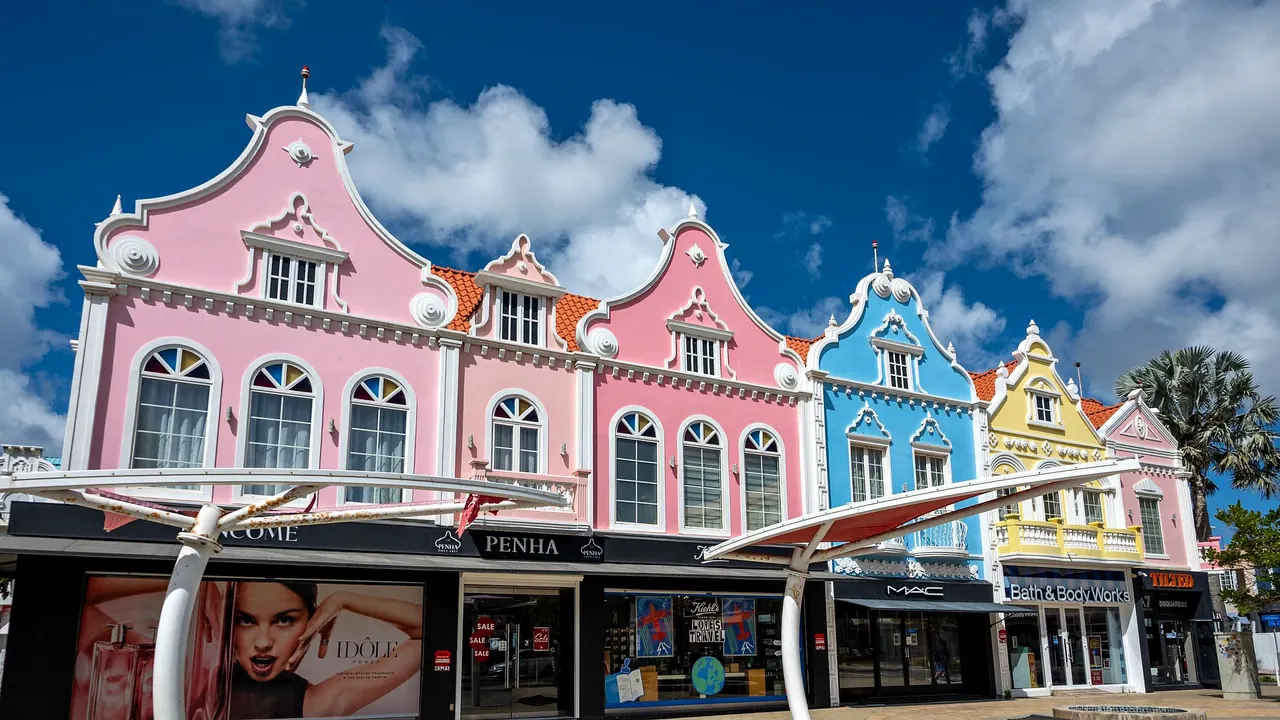
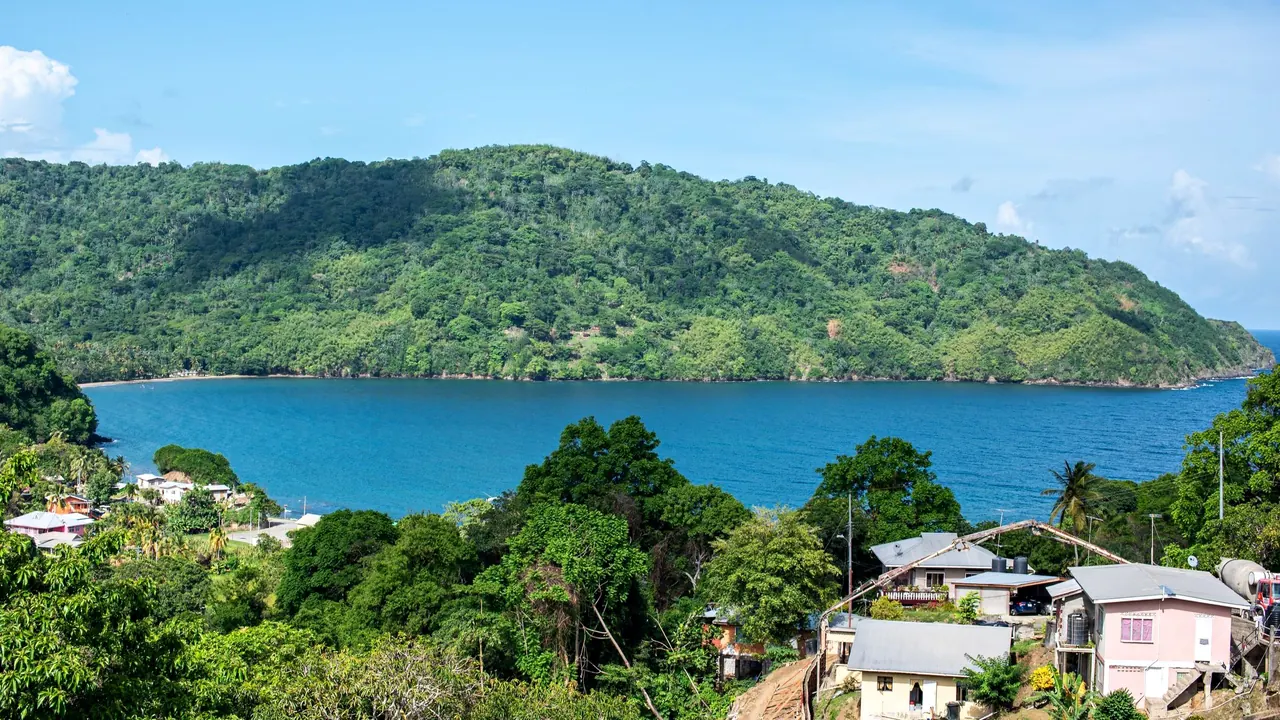
Photos: Aruba by xiquinhosilva, CC BY 4.0, cropped; Tobago by Dominik Gryzbon, Pexels License.
Aruba or Tobago?
Our verdict in twelve categories, each scored against the same fixed benchmark cities, and the climate month by month, so you can choose for your trip.
Choose Aruba for
- shopping
- getting around
- families
Aruba is the island for a carefree beach vacation where everything works smoothly. Its sheltered west coast has some of the calmest, whitest sand in the Caribbean, it barely rains for most of the year, buses link the resort strips with Oranjestad, and families find big resorts with pools and kids' clubs. The trade-off is cost, and a landscape and culture you will have seen within a couple of days.
Choose Tobago for
- prices
- nature and the outdoors
- live music and the arts
Tobago suits travellers who want more than a sunlounger. The rainforest of the Main Ridge, the birdlife and the reefs off Speyside give it a far richer outdoors, and the fishing villages along the Caribbean coast feel lived-in rather than built for visitors. It is noticeably cheaper too, as long as you accept wetter months, slow winding roads and very little to do after dark beyond a rum punch.
Scoreboard
Twelve categories on one fixed scale from 0 to 100. The shaded stretch is the gap between the two.
Your match
Pick a travel style or drag the sliders, and both match scores follow your weighting.
Too close to call, 2 points apart
Wins on shopping and getting around with your weighting.
Wins on prices and nature and the outdoors with your weighting.
What matters to you?
Category by category
What the scores mean for a trip.
Beaches & swimming
Aruba has the edge for pure beach time. Eagle Beach gives you a long, wide stretch of soft white sand with room to spare, Palm Beach adds piers and water sports, and the sheltered coast sits outside the usual hurricane track, so the sea is calm almost every day.
Tobago's best sand is just as warm but more varied in mood: easy, shallow swimming at Pigeon Point and Store Bay, then quieter coves such as Castara and Englishman's Bay further up the coast. It has more character and fewer people, but the water is less dependably calm, and the wet months bring more grey days.
Food & drink
Neither island is a food destination, and they are much the same in quality. What differs is where the food is good. On Aruba most meals are in the Palm Beach and Eagle Beach strips, competent steak, seafood and international cooking, and you have to go to Savaneta or San Nicolas for keshi yena and pastechi.
On Tobago the local food is easier to find: curry crab and dumpling, roti and doubles at the Store Bay huts, and the day's catch in Castara and Charlotteville, with less polish at the resort tables.
Culture & sights
Aruba's past is Dutch and Indigenous, while Tobago's is a story of forts and sugar estates. On Aruba the pastel colonial frontages of Oranjestad, Fort Zoutman with its small museum, the Caquetío finds at the National Archaeological Museum and the gold mill ruins at Bushiribana fill a day or two, and the large murals in San Nicolas are the most rewarding stop.
Tobago changed colonial hands many times, and its sights show it. There is Fort King George above Scarborough with its cannons and wide views, Fort James at Plymouth and the old water wheel at Arnos Vale. Half a day covers them, and much of what makes the island distinctive lives in its village churches and everyday life rather than in museums.
Nightlife
Aruba offers more after dark. The Palm Beach strip has beach bars, lounges, hotel casinos and a few clubs open into the early hours, and the party buses are fun for groups. It is still a relaxed resort scene rather than serious clubbing.
Tobago goes quiet early on most nights. Its one big night out is Sunday School in Buccoo, steel pan turning into soca and dancing, which is more of a local party than anything on Aruba, but it happens once a week.
Nature & outdoors
Tobago is much stronger here. The Main Ridge Forest Reserve, protected since 1776, has rainforest trails with tree ferns and waterfalls, the birdlife draws serious watchers, and Speyside and Charlotteville have some of the best diving in the southern Caribbean, with manta rays and a giant brain coral.
Aruba's landscape is dry and stark instead: cactus, wind-bent divi-divi trees, the boulders at Ayo and Casibari, and Arikok's caves and Natural Pool. Its outdoor appeal is mostly the water, with steady wind for kitesurfing near Palm Beach and the Antilla wreck for divers.
Day trips
Neither island is a base for exploring further afield, but Tobago has one real change of scene. Trinidad is a fast ferry or short flight away, with Port of Spain's city life and bigger food scene.
On Aruba, San Nicolas and Savaneta are part of the island tour rather than separate outings, and Curaçao or Bonaire need a flight that turns them into another trip.
Good for families
Aruba makes family life easier. Baby Beach is a nearly enclosed lagoon, the resorts have pools and kids' clubs, distances are short, English is spoken everywhere, and the small attractions, a butterfly farm and a donkey sanctuary, fill gaps between beach days.
Tobago has memorable moments of its own, the glass-bottom boat to the waist-deep Nylon Pool and turtles nesting at night. But there is less laid on for children, and the steep, winding roads north-east can wear out small passengers.
Getting around
Aruba is simpler to move around. Buses link Oranjestad, Eagle Beach, Palm Beach and Arashi often enough to go without a car, and a day or two of car hire covers the rest, with nothing more than about forty minutes away.
On Tobago you can walk around Crown Point, but beyond it you will want a car or taxis, since buses and route taxis are slow and irregular. The coast road to Castara and Speyside is narrow and full of bends, and driving is on the left.
Shopping & style
Aruba has more to buy, mostly duty-free jewellery, watches and perfume in Oranjestad's harbour malls, plus aloe products and Dutch cheese. It is aimed at cruise passengers, not browsers.
Tobago has almost nothing beyond craft stalls near Store Bay and the Scarborough market, which is good for hot pepper sauce and cocoa. Anything serious means a trip to Port of Spain.
Affordability
Tobago is the cheaper choice by a clear margin. It is not a bargain, but guesthouses in Crown Point or Castara, food huts and village fish keep a stay within reach.
Aruba is expensive almost everywhere, because nearly everything is imported and prices are set for a well-off North American market. Apartments with kitchens and food trucks help, but costs stay high.
Live music & performing arts
Tobago has a little more live culture, though still mostly seasonal. The Tobago Jazz Experience in spring and the Heritage Festival's village folk dances and drumming in summer are worth planning around, and steel pan opens the party at Buccoo every Sunday.
On Aruba, live music is mostly resort bands and steel pan over dinner, with folk evenings at Fort Zoutman. Carnival before Lent is the one real exception.
Wellness & relaxation
Aruba is better set up for pampering. Big resorts on Palm Beach and Eagle Beach have full spas, there are adults-only hotels, and aloe treatments, beach massage and yoga are easy to book.
Tobago's spa offer is thin, but its villages give a different kind of rest: an unhurried evening in Castara or Charlotteville, watching the fishing boats come in from a guesthouse veranda.
When should you go?
Pick your month. The climate figures are measured averages, not a forecast.
Aruba in July
Tobago in July
Daytime high, °C
Rainfall in the month, mm
Where the figures come from
Aruba has no rain gauge within 25 km of the centre, so its rainfall comes from a gridded climate dataset read at the destination rather than from a gauge further away.
Tobago's sunshine is measured 84 km from the centre, at Piarco International Airport, Trinidad.
Temperature and rainfall are climate normals, averaged over the years shown. Aruba: 2005-2025 (rainfall 1991-2020) normals, Queen Beatrix Airport (8.5 km from centre). Tobago: 1991-2020 (rainfall 1981-2010) normals, Crown Point Airport, Tobago (2.8 km from centre).
Both islands are hot all year, with daytime highs in the low 30s and sea water warm enough for swimming in every month, so the real difference is rain. Aruba is arid. From February to August there is barely any rain, and even the wettest stretch, October to December, peaks at about 76mm in November. Midday is hot for walking, up to 33°C in August and September, though the trade wind takes the edge off.
Tobago has a proper wet season. The drier months run from January to May, with February the driest at about 50mm, and this is also when the sunshine lasts longest, especially in March and January. From June the rain sets in, reaching about 227mm in August and staying heavy into December, and the sunny hours drop. For a dry trip, Tobago is best between January and May, while Aruba works in almost any month.
Which traveller are you?
On a family trip with young children, Aruba is easier. Baby Beach and the sheltered coast give calm, shallow water, resorts have kids' clubs, buses and short drives keep days simple, and the reliably dry weather means fewer ruined beach days.
For an outdoors trip, Tobago wins clearly. Gilpin Trace through the Main Ridge rainforest, hummingbirds and tropicbirds on Little Tobago, drift dives off Speyside and nesting leatherbacks give you far more than Aruba's arid park and windsurfing spots.
On a trip on a tight budget, Tobago goes further. Family-run guesthouses in Crown Point or Castara and meals at the Store Bay food huts keep costs down, while Aruba stays expensive across the board even when you eat from the food trucks.
Before you go
| Measure | Aruba | Tobago |
|---|---|---|
| Official language | Dutch, Papiamento | English |
| Currency | Aruban Florin (AWG) | Trinidad and Tobago Dollar (TTD) |
| Sockets | ABF127 V, 60 Hz | AB115 V, 60 Hz |
| Driving side | Right | Left |
| Time zone | UTC-4 | UTC-4 |
| Emergency number | 911 | Police 911/999, ambulance 811, fire 990 |
| Main airport | Queen Beatrix International Airport (AUA)35 non-stop destinations | A.N.R. Robinson International Airport (TAB)5 non-stop destinations |
| Public holidays this year | 12 days | 12 days |
By the numbers
| Measure | Aruba | Tobago |
|---|---|---|
| Population | 106,739 | 60,874 |
| People per km² | 553 | 203 |
| Swim season, months above 21 °C | 12 months | 12 months |
Where else could you go?
Every comparison below shares a destination with this one, so you can follow Aruba or Tobago somewhere new.
- Curaçaovs Aruba
- Bonairevs Aruba
- Martiniquevs Tobago
- Punta Canavs Aruba
- Puerto Ricovs Aruba
- Bonairevs Tobago