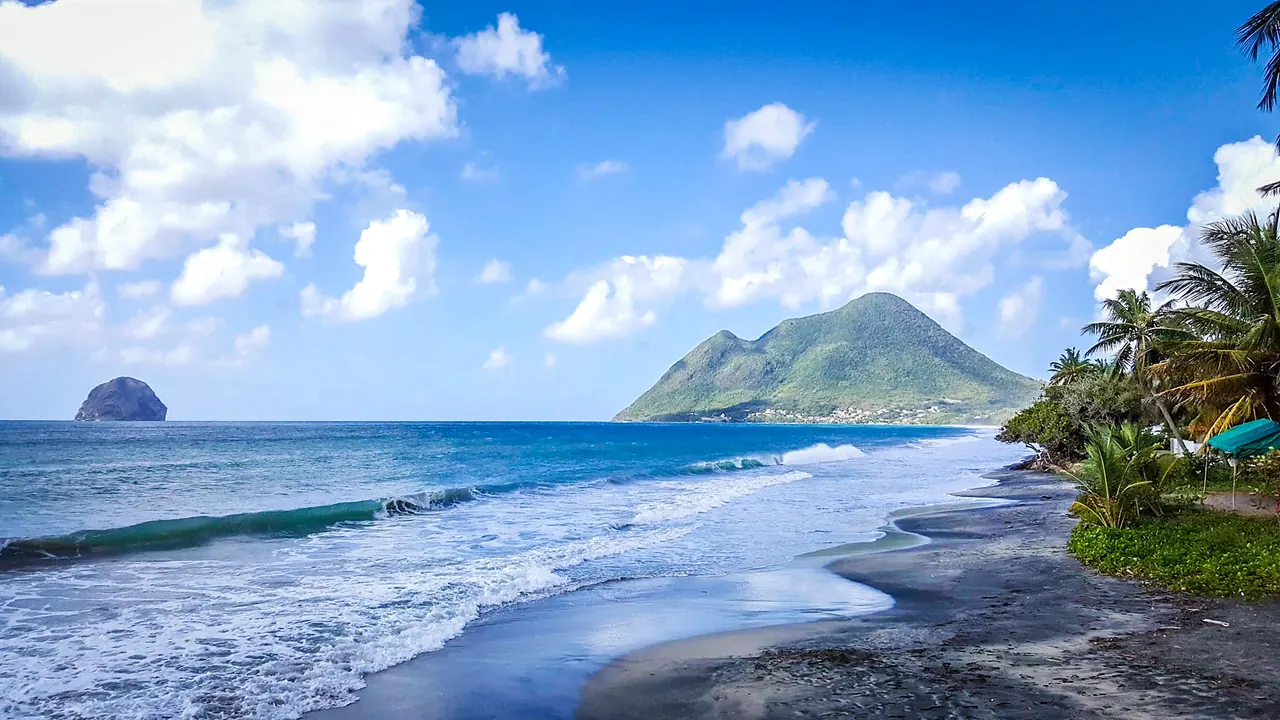
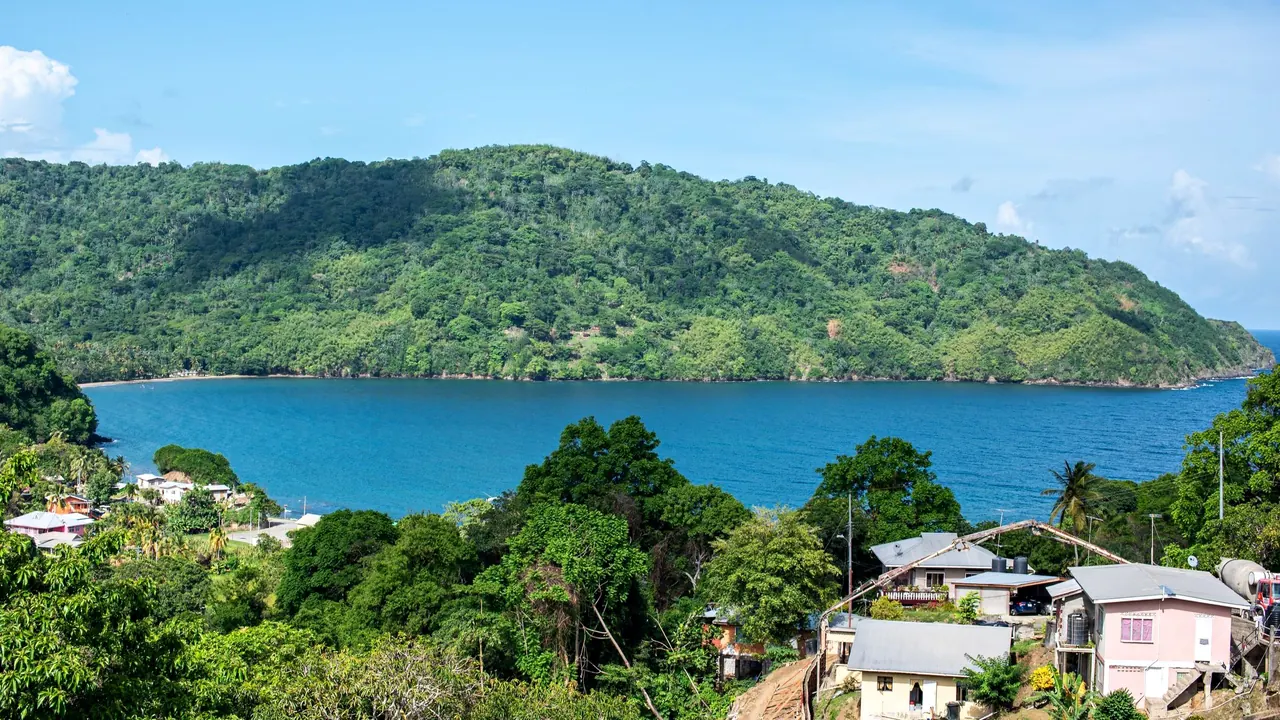
Photos: Martinique by G21designz, CC BY-SA 4.0, cropped; Tobago by Dominik Gryzbon, Pexels License.
Martinique or Tobago?
Our verdict in twelve categories, each scored against the same fixed benchmark cities, and the climate month by month, so you can choose for your trip.
Choose Martinique for
- day trips
- culture and sights
- food and drink
Martinique suits travellers who want an island with more going on beyond the sand. You can climb Mount Pelée, walk through the ruins of Saint-Pierre, spend a day tasting rhum agricole on the old cane estates, and take a ferry to Dominica or St Lucia. Creole cooking with French bakeries behind it makes meals more interesting. The cost is higher prices and a lot of driving on busy, winding roads.
Choose Tobago for
- prices
Tobago is for a simpler, slower and cheaper beach vacation. Pigeon Point and the quiet coves up the Caribbean coast match Martinique's beaches, and the Main Ridge rainforest and the reefs off Speyside give birdwatchers and divers plenty to do. What it lacks is variety. There is little history, food or excursion to fill the days, so it suits people who want to switch off rather than keep busy.
Scoreboard
Twelve categories on one fixed scale from 0 to 100. The shaded stretch is the gap between the two.
Your match
Pick a travel style or drag the sliders, and both match scores follow your weighting.
Wins on day trips and culture and sights with your weighting.
Wins on prices with your weighting.
What matters to you?
Category by category
What the scores mean for a trip.
Beaches & swimming
These two are as good as each other for the beach, and on both only the sheltered Caribbean side is for swimming. The difference is in the beaches themselves. Martinique has a run of separate coves down its west coast and around the southern tip: the palm-lined curve of Grande Anse des Salines, and Anse Noire and Anse Dufour side by side, one black sand and one gold. Turtles graze off Les Anses-d'Arlet.
Tobago puts its easiest beaches together at the south-west tip. Pigeon Point and Store Bay are within walking distance of each other and of the airport. Further north-east are emptier bays such as Englishman's Bay and Castara. If you want to wake up and walk onto the sand, Tobago makes that easier. If you want to try a different cove each day, Martinique has more of them.
Food & drink
Martinique is the better island to eat on. Its Creole cooking has a French side, so accras, goat colombo and fish blaff come with proper baguettes and pastries, and the covered market in Fort-de-France is full of spices, fruit and hot sauces. Rhum agricole, made from fresh cane juice and tasted at the old estates, is worth the trip on its own. Outside the small fine-dining tier, though, menus change little from one town to the next.
Tobago does a few things well. The food huts at Store Bay are the place for curry crab and dumpling, callaloo, roti and doubles. For fresh fish, go to the fishing villages of Castara and Charlotteville, which cook whatever the boats brought in that day. Beyond that, most of what is on offer is resort dining, and a keen eater will run out of new things to try within a week.
Culture & sights
Martinique has much more history to visit. Saint-Pierre, the old capital destroyed by Mount Pelée in 1902, is the most powerful sight on either island. Fort-de-France adds the Schoelcher Library and its cast-iron cathedral, and the Anse Cafard memorial and Joséphine's birthplace at Les Trois-Îlets make good stops on a drive.
Tobago's past shows mainly in its fortifications and plantation ruins: Fort King George above Scarborough, Fort James and the water wheel at Arnos Vale. Half a day covers them. Its culture is mostly something you notice in village life rather than something you go out to see.
Nightlife
Neither island is a place for late nights, but Martinique has slightly more. Zouk and kompa clubs around Fort-de-France fill up at weekends, though mostly with locals and only if you drive there. Carnival, which ends with the burning of King Vaval, turns the towns into street parties.
Tobago's evenings are quieter still, with a rum punch near Crown Point and bed before midnight. The one night that stands out is Sunday in Buccoo, when steel pan gives way to soca dancing in the street. For a proper fete, people cross to Trinidad.
Nature & outdoors
Both islands are good for the outdoors, and Martinique has a little more range. Mount Pelée, at about 1,400m, is a proper volcano climb. The Route de la Trace and the gorges add rainforest walks and canyoning, and Le Marin is a major sailing harbour. Divers can visit the wrecks off Saint-Pierre.
Tobago's landscape is gentler: green hills rather than peaks. Its strength is wildlife. The Main Ridge reserve, protected since 1776, draws birdwatchers, Little Tobago has tropicbird colonies, and the drift dives off Speyside bring manta rays. Choose Martinique for hiking and sailing, and Tobago for birds and big-fish diving.
Day trips
Martinique gives you far more days out. The rum estates around Sainte-Marie and Le Robert can be visited one after another, like a wine route. Fast ferries from Fort-de-France reach Dominica or St Lucia in about an hour and a half, so you can add a second country to the trip.
Tobago is mostly a single coast. A drive to Speyside and Charlotteville is pleasant but shows you more of the same scenery. The only real change of scene is Trinidad, a ferry ride of about two and a half hours or a very short flight away, for Port of Spain's food and city life.
Good for families
Both islands work for children in much the same way: a calm, shallow beach and short outings, with little built specially for them. In Martinique children can snorkel with turtles off Grande Anse d'Arlet, French healthcare and supermarkets make daily life easy, and there is a small zoo at Le Carbet.
Tobago's advantage is that everything is close together. Around Pigeon Point and Store Bay, little time is lost in the car. The glass-bottom boat to the Nylon Pool and a night watching leatherbacks nest are the kind of outings children remember.
Getting around
On both islands you will want a hire car, because buses serve locals rather than visitors. What differs is where the driving gets hard. In Martinique, traffic around Fort-de-France and Le Lamentin is the problem. A ferry across the bay to Les Trois-Îlets and Anse Mitan avoids it.
Tobago's traffic is light, but you drive on the left, and the narrow, twisting road north-east to Castara and Charlotteville takes longer than the map suggests. On the plus side, around Crown Point you can do without a car altogether.
Shopping & style
Shopping is a minor part of a trip to either island, but Martinique has more to bring home. Aged rum bought at the estates, bright madras cotton, and spices and vanilla from the covered market in Fort-de-France make good souvenirs. French chain stores are there if you need them.
In Tobago, shopping means a few craft stalls by Store Bay selling batik and calabashes, plus hot sauce and cocoa from Scarborough market. For anything more, you go to Port of Spain.
Affordability
Tobago is the easier island on the wallet, though neither is cheap. Martinique charges French prices with an island premium on top, peak-season villas and hotels are expensive, and a hire car adds to the cost of every day. Renting a gîte and buying at the markets helps.
Tobago's resort hotels cost what they do elsewhere in the Caribbean. The family-run guesthouses in Castara and around Crown Point and the food huts at Store Bay keep daily spending noticeably lower if you live as locals do.
Live music & performing arts
Martinique has more live performance worth looking for. Bèlè evenings in northern villages welcome visitors into the dance circle. Fort-de-France has a national arts centre with a programme all year and a long-running festival every July, though most of it is in French.
Tobago's live music clusters around a few events. The Tobago Jazz Experience in spring and the Heritage Festival's village folk performances in July and August are the highlights. Between them, the steel pan that opens Sunday night in Buccoo is the music you are most likely to hear.
Wellness & relaxation
Neither island has a spa or bathing tradition, so on both relaxing means slowing down rather than being pampered. Martinique has a bit more on offer: resort spas and beach yoga around Les Trois-Îlets and Sainte-Anne, and warm volcanic springs in the northern forest for a dip.
In Tobago the treatments are simpler, mostly massages from beach therapists near Crown Point. Its quietest places are the fishing villages of Castara and Charlotteville, where an evening on a guesthouse veranda over the bay is about as calm as the Caribbean gets.
When should you go?
Pick your month. The climate figures are measured averages, not a forecast.
Martinique in July
Tobago in July
Daytime high, °C
Rainfall in the month, mm
Where the figures come from
Tobago's sunshine is measured 84 km from the centre, at Piarco International Airport, Trinidad.
Temperature and rainfall are climate normals, averaged over the years shown. Martinique: 1991-2020 normals, Le Lamentin (7.7 km from centre). Tobago: 1991-2020 (rainfall 1981-2010) normals, Crown Point Airport, Tobago (2.8 km from centre).
Neither island ever gets cool. Daytime highs stay between about 29°C and 32°C all year and the sea is always warm, so the beach is open in every month. Street walking is sticky in any season, so plan it for early morning. The real difference is rain. Both islands have a drier first half of the year and a wet season from about June to November. Martinique is driest in February and March, at around 75mm a month, then gets steadily wetter until October, which reaches 266mm.
Tobago's dry season is drier and sunnier. February brings only about 50mm, and from January to May the island gets noticeably more hours of sunshine than Martinique. Its wet season peaks in August at 227mm, and September is a little kinder there. For guaranteed sun, Tobago between January and May is the safer choice. Late in the year Martinique is the wetter of the two.
Which traveller are you?
For a culture and arts trip, Martinique is the clear choice. It has the volcanic ruins of Saint-Pierre, the Schoelcher Library and the Anse Cafard memorial, and you can join bèlè drum evenings in the villages. That fills several days, while Tobago's forts are done in half a day.
On a food and nightlife trip, Martinique again gives you more. There is rhum agricole from its own estates, curried colombo, French bakeries, zouk clubs around Fort-de-France and a big pre-Lent Carnival. Tobago has good curry crab and one great Sunday party in Buccoo, and not much more.
On a trip on a tight budget, Tobago goes further. Family-run guesthouses in Castara or around Crown Point and the food huts at Store Bay keep daily costs down. Martinique adds an island premium to French prices, and a hire car is hard to avoid there.
Before you go
| Measure | Martinique | Tobago |
|---|---|---|
| Official language | - | English |
| Currency | Euro (EUR) | Trinidad and Tobago Dollar (TTD) |
| Sockets | CE220 V, 50 Hz | AB115 V, 60 Hz |
| Driving side | Right | Left |
| Time zone | UTC-4 | UTC-4 |
| Emergency number | 112 | Police 911/999, ambulance 811, fire 990 |
| Main airport | Martinique Aimé Césaire International Airport (FDF)17 non-stop destinations | A.N.R. Robinson International Airport (TAB)5 non-stop destinations |
| Public holidays this year | 13 days | 12 days |
By the numbers
| Measure | Martinique | Tobago |
|---|---|---|
| Population | 360,630 | 60,874 |
| People per km² | 320 | 203 |
| Swim season, months above 21 °C | 12 months | 12 months |
Where else could you go?
Every comparison below shares a destination with this one, so you can follow Martinique or Tobago somewhere new.
- Guadeloupevs Martinique
- St Bartsvs Martinique
- Sint Maartenvs Martinique
- Saint-Martinvs Martinique
- Anguillavs Martinique
- Bonairevs Tobago