
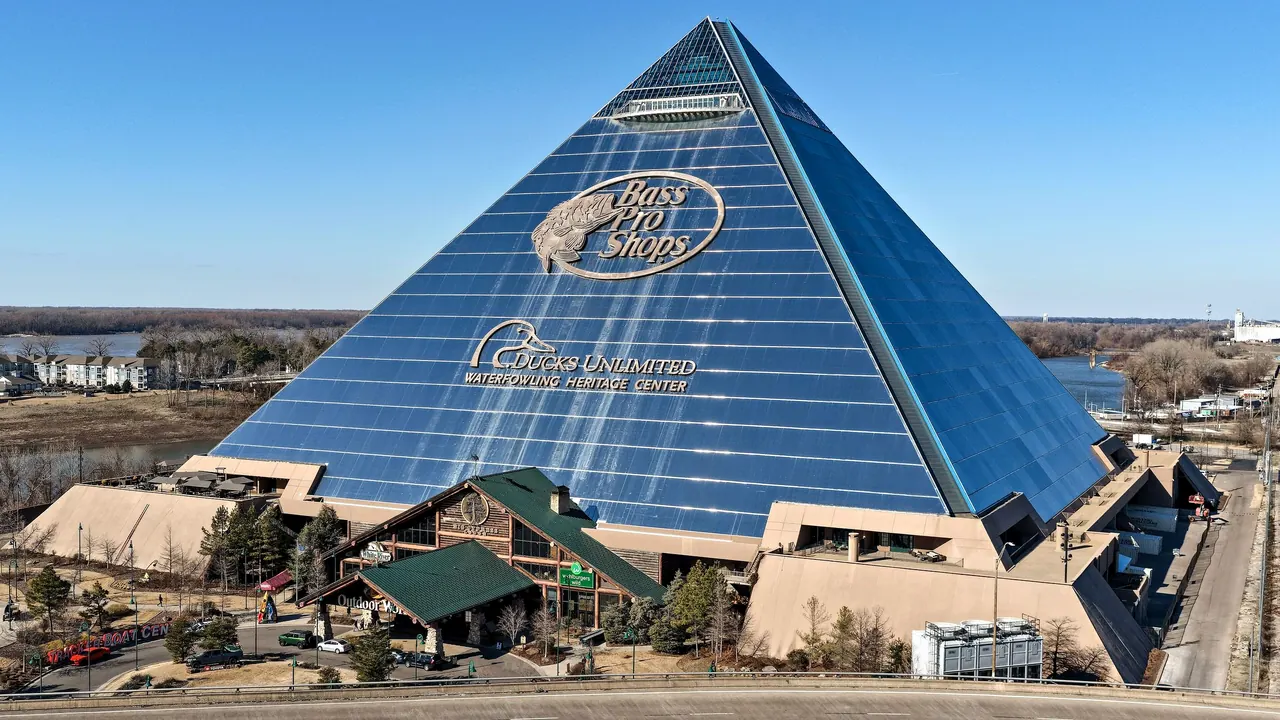
Photos: Asheville by Warren LeMay, CC0; Memphis by Quintin Soloviev, CC BY 4.0, cropped.
Asheville or Memphis?
Our verdict in twelve categories, each scored against the same fixed benchmark cities, and the climate month by month, so you can choose for your trip.
Choose Asheville for
- nature and the outdoors
- wellness
- shopping
Asheville is the choice for travellers who want the mountains on the doorstep. Pick it for a trip built around hiking, waterfalls, rafting and autumn colour on the Blue Ridge Parkway, with evenings spent in brewery taprooms and on quiet inn porches. It also suits couples looking to slow down and families with active children, and anyone happy to bring home a piece of handmade pottery instead of a souvenir.
Choose Memphis for
- prices
- live music and the arts
- nightlife
Memphis rewards a different traveller: someone who comes for music and history and wants to eat ribs between them. Sun Studio, Stax, Graceland and the National Civil Rights Museum carry a weight that few American cities match, Beale Street has blues every night, and it costs less than its mountain rival. The landscape is flat and the summers are punishing, so it suits people who want a city with a story more than people who want fresh air.
Scoreboard
Twelve categories on one fixed scale from 0 to 100. The shaded stretch is the gap between the two.
Your match
Pick a travel style or drag the sliders, and both match scores follow your weighting.
Wins on nature and the outdoors and wellness with your weighting.
Wins on prices and live music and the arts with your weighting.
What matters to you?
Category by category
What the scores mean for a trip.
Beaches & swimming
Neither city is a place for sand and sea, since both lie hundreds of kilometres inland. The difference is in what replaces the beach.
Asheville at least has mountain water: plunge pools under Pisgah waterfalls, the rock slide at Sliding Rock, summer tubing on the French Broad and a small lake beach at Lake Lure, all cold even in July. In Memphis the Mississippi is a working river where nobody swims, so cooling off means a hotel pool or a drive to a country lake.
Food & drink
Both cities eat seriously and both are rooted in Southern cooking, but the experience differs. Asheville is about drinking as much as eating: dozens of taprooms across the South Slope and West Asheville, plus cider and mead, alongside chef-led cooking built on Appalachian trout, heirloom corn, ramps and farmers' market produce.
Memphis is a pilgrimage for pork. Dry-rubbed ribs, pulled shoulder, barbecue spaghetti and Delta tamales come from neighbourhood pits and big downtown smokehouses, with fried catfish and soul plates alongside. Asheville has more refined dining rooms, while Memphis has heavier, cheaper and more distinctive local dishes. Both have little international cooking.
Culture & sights
Memphis has the sights with more historical weight. The National Civil Rights Museum at the Lorraine Motel, Sun Studio, Stax and Graceland tell stories that shaped the whole country, and each one deserves real time.
Asheville's culture is architectural and handsome rather than momentous. The Biltmore Estate fills a whole day, and downtown's Art Deco streets around City Hall and the Grove Arcade are better for wandering than the patchier historic centre of Memphis. Once those are seen, though, the list runs short sooner.
Nightlife
Memphis is the better city for a late night. Beale Street is a party street where you can carry a drink between bars and the crowds stay out late, and Overton Square and Cooper-Young offer a calmer local alternative.
Asheville's evenings are friendlier and earlier: craft beer in South Slope taprooms, cocktail bars downtown, dive bars on Haywood Road and the Friday drum circle in Pritchard Park in summer, with most places closing around midnight. Neither city has a real club scene.
Nature & outdoors
This is the widest gap between the two cities. Asheville is surrounded by the Southern Appalachians, with the Blue Ridge Parkway at its edge, Pisgah National Forest to the south and the Smokies an hour west. It offers ridge hikes over Max Patch, serious mountain biking, whitewater on the Nantahala and rhododendron blooms in spring.
Memphis has the Mississippi and not much relief. Sunsets from the bluffs, a walk over the Big River Crossing into Arkansas and the lakes and bison of Shelby Farms Park are pleasant, but there are no hills, and the summer heat cuts the outdoor season short.
Day trips
Both cities have a modest list of excursions, and in each case they need a car, but the themes are completely different. From Asheville the outings lead mostly into the landscape: the waterfall country around Brevard, Carl Sandburg's farm at Flat Rock, Cherokee's museum of the region's first people, and orchards and vineyards in autumn.
From Memphis the road runs south into the Delta along Highway 61 to Clarksdale's juke joints and the Blues Trail markers, with Faulkner's Oxford, Elvis's birthplace in Tupelo and the Shiloh battlefield as other choices. These are for music and history lovers rather than scenery seekers.
Good for families
Asheville works better with children, as long as they are active. Tubing, Sliding Rock, short waterfall hikes, zip lines and the bears and red wolves at the Nature Center fill days in the mild mountain summer.
Memphis has the stronger single attraction for small children in its large zoo in Overton Park, plus the Pink Palace planetarium and the Peabody ducks. Its headline museums suit teenagers more than young children, though, and the sticky summer heat makes long days out harder work.
Getting around
In both cities you will want a car. Each has a walkable core and weak buses, and the main sights lie beyond it. Asheville's downtown is hilly but links on foot to the South Slope and the River Arts District, and the hard part is the slow, winding mountain roads, which fill with traffic on October weekends.
Memphis is flat, and heritage trolleys run along Main Street. The sights are more scattered across the city, though, with Graceland far to the south and Shelby Farms at the eastern edge, so ride-hails and a hire car come into play even before you leave town.
Shopping & style
Asheville is the better place to shop, as long as you are looking for handmade things. Galleries downtown, working studios in the River Arts District and the Folk Art Center sell Appalachian pottery, glass, weaving and woodwork, and the Grove Arcade and Lexington Avenue add bookshops and vintage clothing.
In Memphis shopping is a sideline. Its best finds are vintage records and music memorabilia, with a few boutiques in Cooper-Young and on Broad Avenue. Mainstream shopping happens in suburban malls that you have to drive to.
Affordability
Memphis is easier on the wallet. Its hotels are reasonably priced outside festival weekends, and a barbecue lunch or a soul-food plate is filling and cheap. Graceland and the car are the main extra costs.
Asheville is a popular weekend escape and charges like one. Inns near downtown and Biltmore are expensive and rise further in leaf season, and the Biltmore ticket is steep. What saves the budget is that the trails, waterfalls and Parkway are free, and midweek or winter stays cost noticeably less.
Live music & performing arts
Memphis is the stronger music city. House bands play blues and soul on Beale Street from the afternoon every day of the year, Midtown venues add rock and hip-hop, and summer brings free concerts at the Levitt Shell. Its formal arts also go further, with an opera company, a respected ballet and touring Broadway shows at the Orpheum.
Asheville's music is more about the mountains: bluegrass and old-time jams, fiddle and clogging at Shindig on the Green, and a folk festival dating from 1928. It is charming and authentic, but the overall range is smaller.
Wellness & relaxation
Asheville was built partly as a place to recover, and that heritage still shows. It has spas at the grand hillside resorts, yoga and retreat culture, and outdoor mineral tubs beside the river at Hot Springs, while the cool evenings make rest easy.
Memphis offers little beyond hotel and suburban day spas. Its quiet moments come from an early walk in Overton Park or an evening watching the river from the bluffs before the heat and the music take over.
When should you go?
Pick your month. The climate figures are measured averages, not a forecast.
Asheville in July
Memphis in July
Daytime high, °C
Rainfall in the month, mm
Where the figures come from
Asheville's temperatures are measured 50 km from the centre, at Asheville Regional Airport.
Asheville has no rain gauge within 25 km of the centre, so its rainfall comes from a gridded climate dataset read at the city rather than from a gauge further away.
Temperature and rainfall are climate normals, averaged over the years shown. Asheville: 1991-2020 (sunshine 1981-2010) normals, Asheville Regional Airport (50.3 km from centre). Memphis: 1991-2020 (sunshine 1971-2000) normals, Memphis International Airport (14 km from centre).
Asheville's height keeps it mild. Summer highs stop at around 29°C, which makes June to August comfortable for hiking and good for cold river floats and waterfall pools, though afternoon storms are common. Rain is spread fairly evenly through the year, and October is the driest month as well as the month of the leaf colour. Winters are cool but rarely harsh, and fine for walking downtown.
Memphis is hotter and sunnier. From June to August the days reach about 33°C in sticky heat, too much for long walks between sights, so most outdoor time shifts to early mornings. March and April are the wettest months, with close to 150mm each, but they bring warmth back after winter. Late September and October give the best balance of dry, sunny weather and comfortable temperatures. Both cities are at their best in spring and autumn, but in high summer Asheville is the cooler place to be.
Which traveller are you?
On an outdoors trip, Asheville wins easily. Pisgah National Forest, the Great Smoky Mountains, Mount Mitchell and rafting on the French Broad are all within an hour or so, while Memphis offers a flat floodplain, a river bridge walk and one large urban park.
For a food and nightlife trip, Memphis has the edge. Its dry-rubbed ribs and soul cooking match Asheville's farm kitchens and breweries, and Beale Street and the Midtown bars keep going well after the mountain taprooms have quietened at midnight.
On a relaxing and wellness trip, Asheville is far better suited. It has a long history as a mountain health retreat, resort spas, yoga studios and the riverside mineral tubs at Hot Springs, whereas Memphis offers little beyond a hotel spa.
Before you go
| Measure | Asheville | Memphis |
|---|---|---|
| Currency | US Dollar (USD) | US Dollar (USD) |
| Sockets | AB120 V, 60 Hz | AB120 V, 60 Hz |
| Driving side | Right | Right |
| Time zone | UTC-5, UTC-4 in summer | UTC-6, UTC-5 in summer |
| Emergency number | 911 | 911 |
| Elevation | 650 m | 103 m |
| Main airport | Asheville Regional Airport (AVL)18 km from centre27 non-stop destinations | Frederick W. Smith International Airport (MEM)13 km from centre35 non-stop destinations |
| Public holidays this year | 14 days | 13 days |
By the numbers
| Measure | Asheville | Memphis |
|---|---|---|
| City population | 94,589 | 633,104 |
| People per km² | 796 | 754 |
| Museums within 10 km | 4 | 16 |
| UNESCO World Heritage sites within 50 km | 0 | 0 |
Where else could you go?
Every comparison below shares a destination with this one, so you can follow Asheville or Memphis somewhere new.
- Gatlinburgvs Asheville
- Pigeon Forgevs Asheville
- Atlantavs Asheville
- Nashvillevs Memphis
- Nashvillevs Asheville
- Charlestonvs Asheville