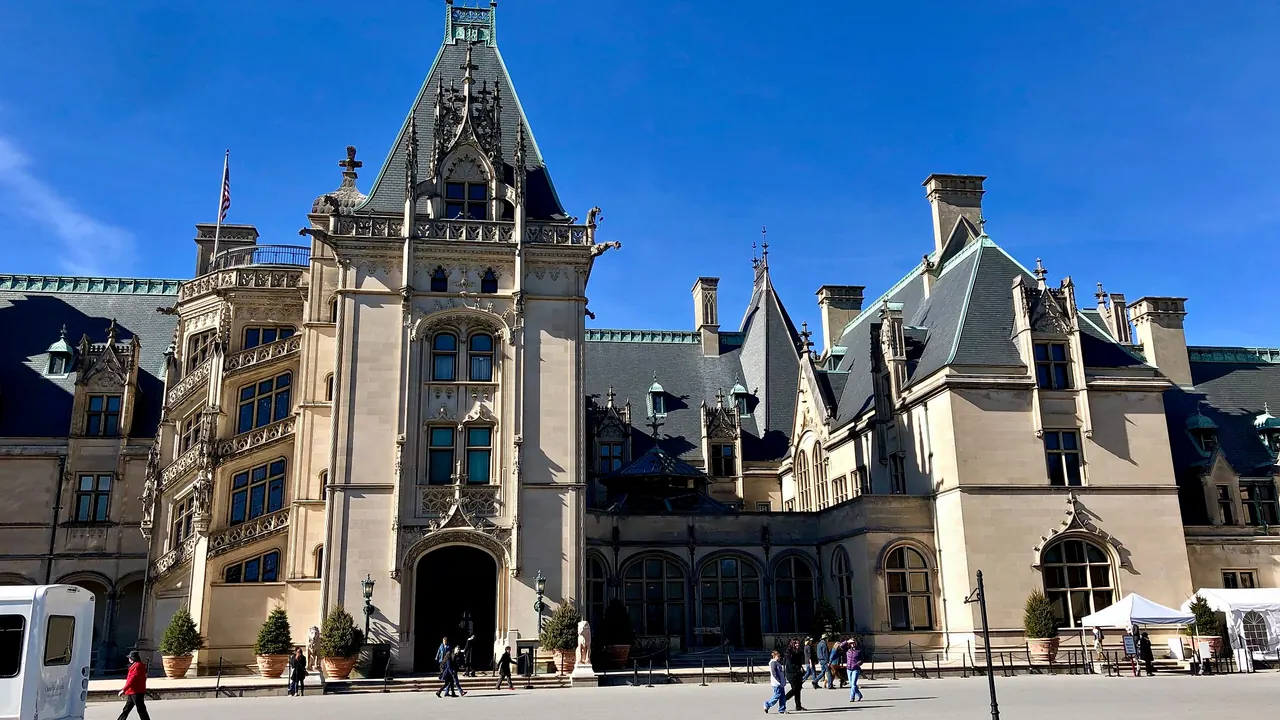
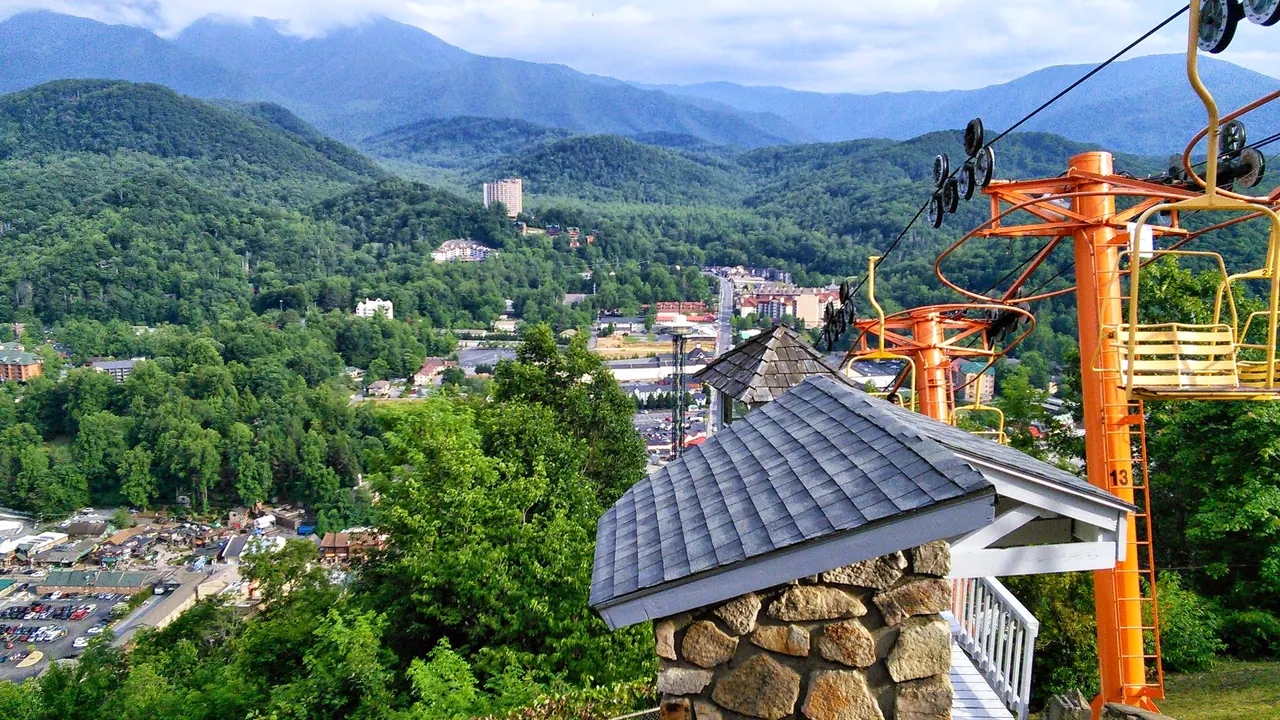
Photos: Asheville by Warren LeMay, CC0; Gatlinburg by Evan Nichols, CC BY 3.0, cropped.
Asheville or Gatlinburg?
Our verdict in twelve categories, each scored against the same fixed benchmark cities, and the climate month by month, so you can choose for your trip.
Choose Asheville for
- culture and sights
- food and drink
- nightlife
Asheville suits adults who want a real small city around their mountain walks: the Biltmore Estate, an Art Deco downtown, brewery taprooms on the South Slope, craft studios in the River Arts District and bluegrass in the evenings. It's the better base for couples and friends who want to eat well and go out at night as well as spend the day on the trails.
Choose Gatlinburg for
- families
- prices
- nature and the outdoors
Gatlinburg is built for families with children. The Smokies begin where the Parkway ends, the aquarium, alpine coasters and Dollywood are close by, and a hillside cabin with a hot tub becomes the evening's entertainment. Choose it when the trip is about the national park and the children rather than dinner bookings or museums.
Scoreboard
Twelve categories on one fixed scale from 0 to 100. The shaded stretch is the gap between the two.
Your match
Pick a travel style or drag the sliders, and both match scores follow your weighting.
Wins on culture and sights and food and drink with your weighting.
Wins on families and prices with your weighting.
What matters to you?
Category by category
What the scores mean for a trip.
Beaches & swimming
Neither town has a beach worth the name, and both send anyone who wants sand and sea elsewhere. What differs is the kind of cold water. Around Asheville you get the natural rock slide at Sliding Rock, lazy floats on the French Broad and a small sandy shore on Lake Lure.
Near Gatlinburg it's wading and tubing on the Little River near Townsend, or lakeshore swimming at Douglas Lake, and many visitors settle for the cabin hot tub instead.
Food & drink
Asheville is the place to eat. Breweries are spread across downtown, the South Slope and West Asheville, and the kitchens cook from Appalachian farms: trout, heirloom beans, ramps, barbecue and biscuits, with farmers' markets that show where it all comes from.
Gatlinburg feeds crowds rather than food lovers. Pancake houses, fudge shops and moonshine tasting rooms line the Parkway, and good country ham or stack cake only turns up here and there. Many people staying in Gatlinburg drive to Asheville or Knoxville for a serious dinner.
Culture & sights
Asheville has real sightseeing. The Biltmore Estate fills a whole day, and downtown keeps an unusually intact run of Art Deco and Beaux-Arts buildings, from the domed City Hall to the Grove Arcade, along with the Thomas Wolfe Memorial and the Folk Art Center.
Gatlinburg's own landmarks are an observation tower and mountaintop amusement areas. Its history lies out in the park, in the log cabins and mills of Cades Cove and the Roaring Fork, and in the working studios of the arts and crafts loop. Culture there means a drive, not a stroll.
Nightlife
Neither is a late-night town, but Asheville at least gives you a night out. Taprooms, cocktail bars and dive bars sit within walking distance of each other downtown and on the South Slope, Haywood Road in West Asheville draws a local crowd, and there's a small LGBTQ bar scene.
In Gatlinburg the evening is a stroll along the lit Parkway and a moonshine tasting, then back to the cabin. The strip has emptied by late night.
Nature & outdoors
Both are serious mountain bases with summits of almost the same height nearby, and the difference is one of focus. Gatlinburg has the Great Smoky Mountains on its doorstep: Laurel Falls, the Alum Cave climb to Mount LeConte, bears by the road and elk in the eastern valleys, all minutes from town. The popular roads do jam in leaf season.
Asheville's outdoors are spread wider. The Blue Ridge Parkway, the mountain-bike trails of Pisgah, the grassy bald of Max Patch and Mount Mitchell are all within reach, and the Smokies are an hour west, but each of them needs a drive.
Day trips
Cherokee, with its museum and the Oconaluftee village, is within reach of both towns, but otherwise their outings differ in kind. From Asheville they lead to small mountain towns: Hendersonville and the Carl Sandburg Home at Flat Rock, Black Mountain to the east, and Brevard on the edge of the waterfall country. Greenville's riverside downtown is about an hour away, and the orchards and Yadkin Valley vineyards make good autumn drives.
Gatlinburg's best outing is a proper city. Asheville and the Biltmore Estate are about an hour and a half across the mountains, which makes it easy to combine the two on one trip. Closer in are the dinner shows of Pigeon Forge, quiet Townsend, the heritage railway at Bryson City and Knoxville's old market square.
Good for families
Gatlinburg is made for children. An aquarium, mirror mazes, alpine coasters, chairlift rides and Dollywood are all close by. Big cabins with games rooms suit several families at once, and the park adds easy waterfall walks and junior ranger badges. Expect queues and slow traffic in high season.
Asheville works for active families, with the bears and red wolves at the Nature Center, Sliding Rock, river tubing and the Biltmore farmyard. But there are no rides or shows in town, and Dollywood is two hours away.
Getting around
In both towns a car is close to essential for the park, the trails and the day trips, and October traffic slows everything. The difference is in town. Asheville's downtown is walkable but hilly, with the South Slope and the River Arts District close by, and the buses are limited.
Gatlinburg's Parkway strip is compact, and a trolley runs from it out to Pigeon Forge, so a downtown hotel lets you leave the car for a day or two. Most cabins, though, sit up steep, winding roads.
Shopping & style
Both towns are places to buy something handmade rather than brands, but Asheville does it with more depth. The galleries downtown, the working studios of the River Arts District, the Folk Art Center, and the independent boutiques and bookshops around the Grove Arcade and Lexington Avenue fill a full day of browsing.
Gatlinburg's Parkway is mostly souvenirs, taffy and T-shirts. Its worthwhile shopping is the quilts, brooms and pottery of the arts and crafts loop, and the Pigeon Forge outlets cover brands.
Affordability
Gatlinburg is easier on the wallet. Older motels and big shared cabins keep the cost of a bed reasonable, meals are casual, and the national park costs little to enjoy. The money goes on the paid attractions and Dollywood.
In Asheville, the inns and downtown hotels are expensive by American standards, a day at Biltmore is a big ticket, and a hire car is hard to avoid. In both towns, October weekends are the most expensive time and midweek winter stays the cheapest.
Live music & performing arts
Asheville has the deeper music life. Touring rock and Americana acts play its downtown venues most nights, and bluegrass and old-time jams fill the pubs. Shindig on the Green and the Mountain Dance and Folk Festival, which has run since 1928, carry on the Appalachian tradition, and a regional symphony covers formal evenings.
Around Gatlinburg the stage belongs to the dinner shows, gospel revues and magic acts of Pigeon Forge, plus bluegrass in the moonshine tasting rooms. It's entertainment for families, with no orchestra or serious theatre.
Wellness & relaxation
People have come to Asheville to recover their health since the nineteenth century. That shows today in its retreats, yoga studios, large spas at the hillside resort hotels, and the riverside mineral-water tubs at Hot Springs, forty minutes away.
Gatlinburg has a few day spas and little else in the way of treatments. Its rest comes from the cabin: a hot tub on the deck, a rocking chair and mist on the ridges, as long as you stay well above the noise of the Parkway.
When should you go?
Pick your month. The climate figures are measured averages, not a forecast.
Asheville in July
Gatlinburg in July
Daytime high, °C
Rainfall in the month, mm
Where the figures come from
Asheville's temperatures are measured 50 km from the centre, at Asheville Regional Airport.
Asheville has no rain gauge within 25 km of the centre, so its rainfall comes from a gridded climate dataset read at the city rather than from a gauge further away.
Gatlinburg's temperatures are measured 45 km from the centre, at McGhee Tyson Airport.
Gatlinburg has no rain gauge within 25 km of the centre, so its rainfall comes from a gridded climate dataset read at the city rather than from a gauge further away.
Temperature and rainfall are climate normals, averaged over the years shown. Asheville: 1991-2020 (sunshine 1981-2010) normals, Asheville Regional Airport (50.3 km from centre). Gatlinburg: 1991-2020 (sunshine 1981-2010) normals, McGhee Tyson Airport (44.9 km from centre).
The two towns have almost the same winter. January highs are around 9°C, so walking the streets is only pleasant on sunny days. Both are at their driest and freshest in October. The real difference comes in summer. Asheville stays a little milder, while Gatlinburg reaches about 31°C in July and August. Gatlinburg gets more sunshine in those months, but July is also its wettest month, with around 145mm falling mostly in afternoon storms. Neither town has a beach season, and summer is for cold rivers and waterfall pools.
Late spring and early autumn are the best walking months in both. Gatlinburg warms up faster, reaching 26°C in May against Asheville's gentler 24°C, so Asheville stays comfortable on the trails further into early summer.
Which traveller are you?
For a culture and arts trip, Asheville is the clear choice. The Biltmore Estate, the Art Deco downtown, the craft galleries of the River Arts District and nightly bluegrass give both days and evenings substance. Gatlinburg's history lies mostly out in the park.
For a food and nightlife trip, Asheville wins easily again. Its breweries, cooking built on Appalachian farm produce and walkable South Slope taprooms make for good evenings. Gatlinburg offers pancake houses, fudge and moonshine tastings, and its strip is empty by late night.
On a family trip with children, Gatlinburg is the one built for it. The aquarium, alpine coasters, mountaintop parks and nearby Dollywood fill the days, and big cabins can house several families. Asheville suits only active children who are happy with hikes and rivers.
Before you go
| Measure | Asheville | Gatlinburg |
|---|---|---|
| Currency | US Dollar (USD) | US Dollar (USD) |
| Sockets | AB120 V, 60 Hz | AB120 V, 60 Hz |
| Driving side | Right | Right |
| Time zone | UTC-5, UTC-4 in summer | UTC-5, UTC-4 in summer |
| Emergency number | 911 | 911 |
| Elevation | 650 m | 393 m |
| Main airport | Asheville Regional Airport (AVL)18 km from centre27 non-stop destinations | McGhee Tyson Airport (TYS)46 km from centre34 non-stop destinations |
| Public holidays this year | 14 days | 13 days |
By the numbers
| Measure | Asheville | Gatlinburg |
|---|---|---|
| City population | 94,589 | 3,577 |
| People per km² | 796 | 133 |
| Museums within 10 km | 4 | 4 |
| UNESCO World Heritage sites within 50 km | 0 | 1 |
Where else could you go?
Every comparison below shares a destination with this one, so you can follow Asheville or Gatlinburg somewhere new.
- Pigeon Forgevs Gatlinburg
- Pigeon Forgevs Asheville
- Atlantavs Gatlinburg
- Atlantavs Asheville
- Nashvillevs Gatlinburg
- Nashvillevs Asheville