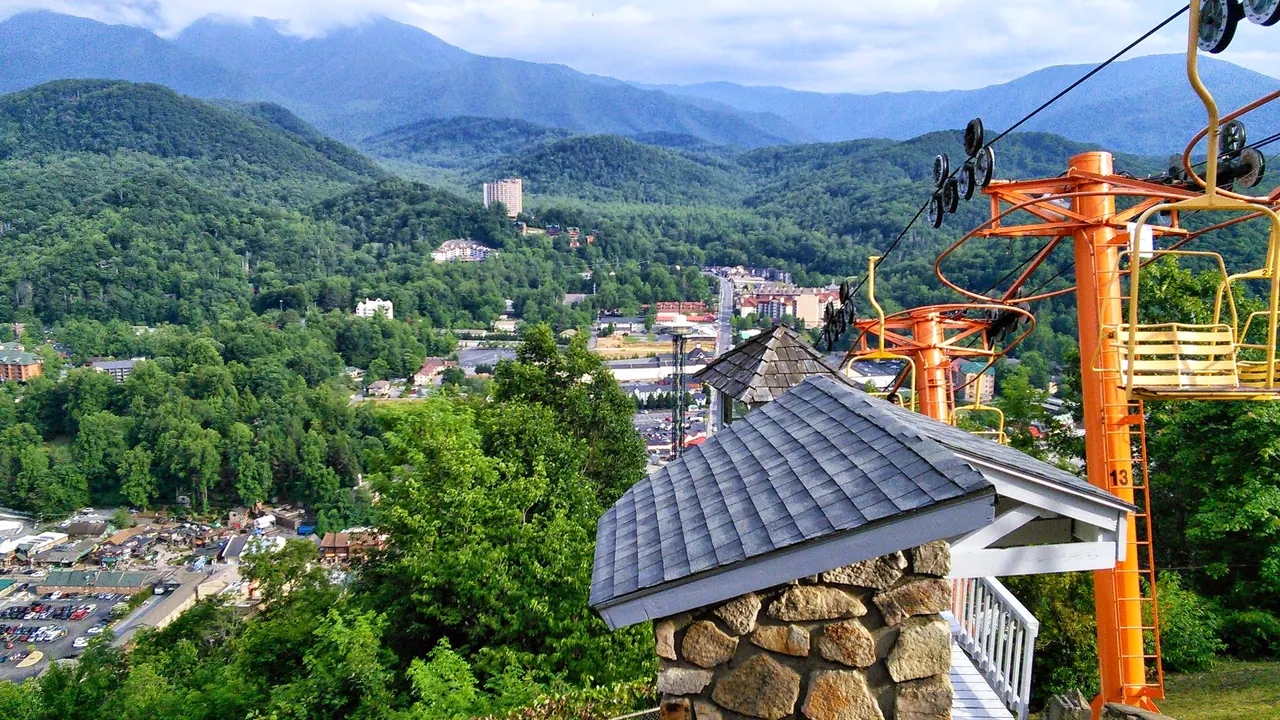
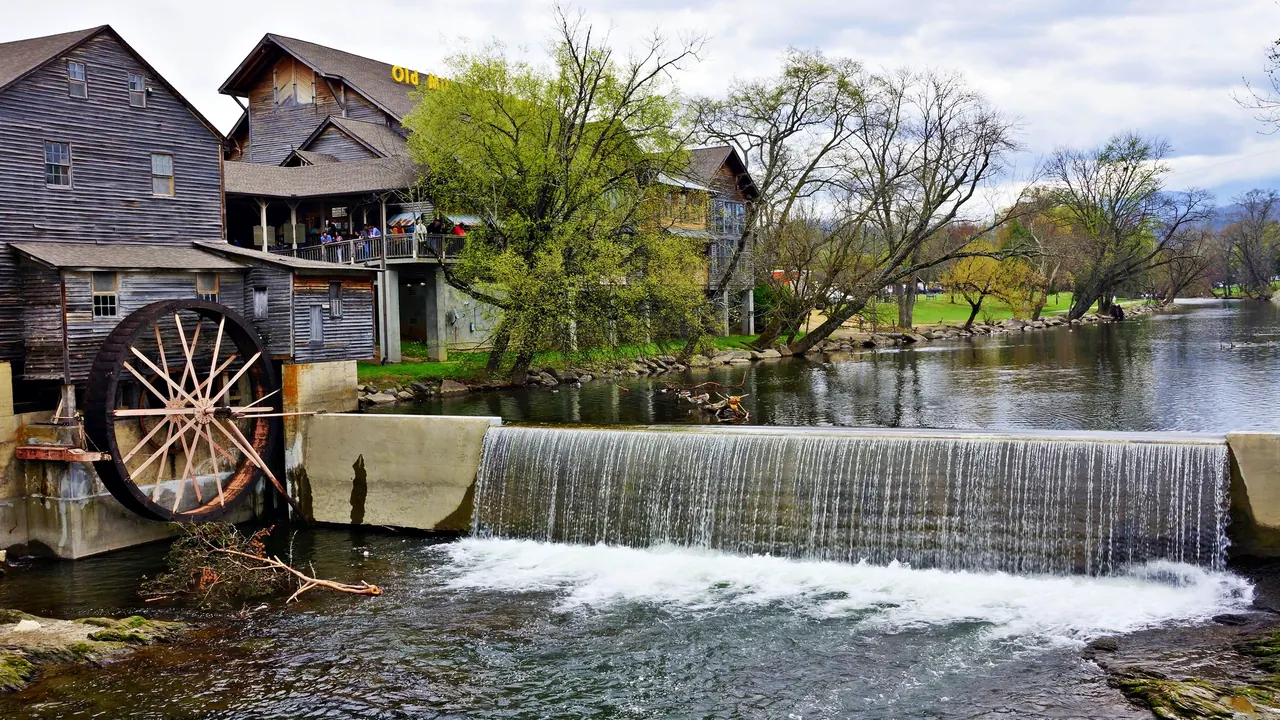
Photos: Gatlinburg by Evan Nichols, CC BY 3.0, cropped; Pigeon Forge by NealVickers, CC BY-SA 4.0, cropped.
Gatlinburg or Pigeon Forge?
Our verdict in twelve categories, each scored against the same fixed benchmark cities, and the climate month by month, so you can choose for your trip.
Choose Gatlinburg for
- getting around
- day trips
- nature and the outdoors
Gatlinburg is the better base if the Smokies are the point of the trip. The national park starts where its main street ends, so waterfall trails, Cades Cove and the drive over Newfound Gap are close at hand. The downtown strip is small enough to walk, and the hillside cabins above town are the quieter place to unwind. Its working craft studios and the drives to Cherokee and Asheville give a few days more variety.
Choose Pigeon Forge for
- live music and the arts
- culture and sights
- food and drink
Pigeon Forge suits a family that wants the entertainment rather than the forest. Dollywood and its water park are on its doorstep, and dozens of Parkway theatres put on dinner shows and country revues every night. You will drive everywhere, including half an hour to the park, but for a vacation built around theme park days, outlet malls and an evening show, it puts all of that in one valley.
Scoreboard
Twelve categories on one fixed scale from 0 to 100. The shaded stretch is the gap between the two.
Your match
Pick a travel style or drag the sliders, and both match scores follow your weighting.
Wins on getting around and day trips with your weighting.
Wins on live music and the arts and culture and sights with your weighting.
What matters to you?
Category by category
What the scores mean for a trip.
Beaches & swimming
Neither town has a beach, and swimming works differently in each. In Gatlinburg it means wading in the cold, clear rivers of the national park, close to town, or tubing the Little River near Townsend. Pigeon Forge's families mostly use the water park beside Dollywood and hotel pools. Both are a short drive from the lakeshore at Douglas Lake.
Food & drink
Breakfast is the same story in either town: pancake houses along the Parkway, followed by barbecue, Southern comfort cooking, fudge and moonshine tastings. The differences are small. Gatlinburg also has saltwater taffy kitchens, a few wineries alongside its craft breweries, and the odd restaurant serving trout, country ham and stack cake.
Pigeon Forge leans more on all-you-can-eat Southern buffets and national chains, with stone-ground cornmeal treats around the Old Mill. For a serious meal, people from both towns drive to Knoxville or Asheville.
Culture & sights
Both are resort strips with little conventional sightseeing, and their best heritage is of different kinds. Gatlinburg's is the Great Smoky Arts and Crafts Community, a loop of studios where weavers, potters and broom-makers work. It also sits nearest to the old cabins and mills along the Roaring Fork and at Elkmont.
Pigeon Forge has one genuine historic building, the Old Mill of 1830, still grinding flour on the Little Pigeon River. Its other attractions are built for fun, such as the half-scale Titanic and the car collections, along with the crafts demonstrations at Dollywood.
Nightlife
Gatlinburg is where adults go for a drink after dark. A handful of bars, rooftop and brewery terraces and tasting rooms stay busy while people stroll the lit Parkway, though the strip empties by late night.
Pigeon Forge's evenings belong to children. Go-kart tracks and lit-up attraction complexes run until about ten, and a few sports bars and brewpubs serve the grown-ups. Many adults staying there drive up the valley to Gatlinburg's bars instead.
Nature & outdoors
Gatlinburg is the front door of the Great Smoky Mountains National Park. The forest begins where its Parkway ends, so the Roaring Fork, Grotto Falls and Laurel Falls are a short drive away. The Alum Cave climb to Mount LeConte starts on the road towards Newfound Gap, and in winter there is a small ski slope above town.
From Pigeon Forge it takes about half an hour just to reach the park entrance past Gatlinburg. Cades Cove, and the crest at Newfound Gap where the Appalachian Trail crosses, are nearer an hour away. The town sits on a valley floor with no scenery of its own, so every outdoor day starts with a drive.
Day trips
Gatlinburg has the better spread of outings. Newfound Gap road leads straight over the mountains to Cherokee and on to Bryson City's heritage railway. Asheville and the Biltmore Estate are a little closer, and Pigeon Forge's theme park, outlets and dinner shows are right down the road.
Pigeon Forge's nearest outing is Gatlinburg itself, and Knoxville's Market Square and theatre district are closer, about forty minutes away. Cherokee and Asheville take longer from here. Small towns such as Dandridge and quiet Townsend complete a list that runs out sooner.
Good for families
Both towns are made for family vacations, and the difference is in what sits on the doorstep. Gatlinburg has the aquarium, mirror mazes and chairlift or gondola rides up to treetop bridges, all along a strip you can walk. The park, with its creek wading and junior ranger badges, starts at the edge of town.
Pigeon Forge has Dollywood, with its rides, water park and seasonal festivals, plus go-karts, zip lines and hotels with indoor water parks. It is spread along a long road, though, so with children you spend more time in the car between stops.
Getting around
Gatlinburg is much easier to get around. Its downtown is a compact, walkable strip, and from a central hotel you can leave the car for a day or two and use the trolley.
Pigeon Forge is a busy multi-lane road where you can walk only within individual attraction complexes. Its trolley is slow and does not reach the cabins. In both towns, hillside cabins and park trailheads need a car, and traffic stalls in October.
Shopping & style
Shopping is much the same in both, with no fashion or luxury, but each has its own speciality. Gatlinburg has the arts and crafts loop in its own hills, where quilts, baskets and woodwork are sold from the studios that make them, plus a few covered malls of small shops. Pigeon Forge has the outlet centres on its Parkway for mid-market brands, and pottery, quilts and stone-ground cornmeal around the Old Mill.
Affordability
Costs are much the same in the two towns, and they follow the same pattern. A big cabin shared between families is cheap per person, the park costs little, and paid attractions and tips quickly add up. Gatlinburg's savings come from its older motels and from midweek and winter stays. Pigeon Forge has thousands of rooms and cheap breakfast houses and buffets. Both are dearest in October and over Christmas, and Pigeon Forge also in summer.
Live music & performing arts
Pigeon Forge is the place for an evening show. Dozens of theatres on its Parkway run country and gospel revues, magic, comedy and big dinner spectacles every night, and Dollywood has bluegrass and Appalachian music on several stages.
Gatlinburg's live music is more casual: acoustic bluegrass and country players in the moonshine tasting rooms and on the street. Its visitors drive down the road for a proper show. Neither town has opera or serious theatre, which means a trip to Knoxville.
Wellness & relaxation
Neither town has a bathing tradition or much beyond a few day spas, so rest comes from a hillside cabin with a hot tub. Gatlinburg does this better. Its cabins look over the forested ridges at the park's edge, and once you are above the Parkway the nights are quiet. Pigeon Forge's cabins offer the same porches and fireplaces, but the neon strip below is louder and busier, so you need to book well up the hills to get the same calm.
When should you go?
Pick your month. The climate figures are measured averages, not a forecast.
Gatlinburg in July
Pigeon Forge in July
Daytime high, °C
Rainfall in the month, mm
Where the figures come from
Gatlinburg's temperatures are measured 45 km from the centre, at McGhee Tyson Airport.
Gatlinburg has no rain gauge within 25 km of the centre, so its rainfall comes from a gridded climate dataset read at the city rather than from a gauge further away.
Pigeon Forge's temperatures are measured 38 km from the centre, at McGhee Tyson Airport.
Pigeon Forge has no rain gauge within 25 km of the centre, so its rainfall comes from a gridded climate dataset read at the city rather than from a gauge further away.
Temperature and rainfall are climate normals, averaged over the years shown. Gatlinburg: 1991-2020 normals, McGhee Tyson Airport (44.9 km from centre). Pigeon Forge: 1991-2020 normals, McGhee Tyson Airport (37.9 km from centre).
The two towns share one valley climate, so the choice between them makes no difference to the weather. April and May are the most comfortable months for walking, with mild days and the park in wildflower. June to August are hot and humid at about 31°C, which is the time for tubing and wading in the cold mountain rivers. July is also the wettest month, with up to 145mm. October drops back to about 22°C and is the driest month, with around 64mm in Pigeon Forge and a little more in Gatlinburg, which helps make leaf season the high point of the year.
Winter is chilly, with highs around 9°C in January and the odd snowfall in the mountains. That suits cabin evenings more than long hikes. Pigeon Forge gets slightly less rain than Gatlinburg in every month, but the gap is too small to notice on a trip.
Which traveller are you?
For an outdoors trip, Gatlinburg wins clearly. The park boundary is at the edge of town, so you can reach the Laurel Falls or Alum Cave trailheads before the traffic builds. From Pigeon Forge every hike begins with at least half an hour on the road.
On a short city break, Gatlinburg is the easier choice. Its downtown strip is compact, so from a central hotel you can leave the car parked and walk to restaurants, bars and the trolley. Pigeon Forge is a multi-lane road where nearly everything needs a car.
On a family trip with children, Pigeon Forge makes sense when Dollywood takes up several days. Staying beside it saves the crawl along the Parkway every morning. Its indoor water-park hotels also help on a cold winter break or in a wet July.
Before you go
| Measure | Gatlinburg | Pigeon Forge |
|---|---|---|
| Currency | US Dollar (USD) | US Dollar (USD) |
| Sockets | AB120 V, 60 Hz | AB120 V, 60 Hz |
| Driving side | Right | Right |
| Time zone | UTC-5, UTC-4 in summer | UTC-5, UTC-4 in summer |
| Emergency number | 911 | 911 |
| Elevation | 393 m | 305 m |
| Main airport | McGhee Tyson Airport (TYS)46 km from centre34 non-stop destinations | McGhee Tyson Airport (TYS)39 km from centre34 non-stop destinations |
| Public holidays this year | 13 days | 13 days |
By the numbers
| Measure | Gatlinburg | Pigeon Forge |
|---|---|---|
| City population | 3,577 | 6,343 |
| People per km² | 133 | 185 |
| Museums within 10 km | 4 | 7 |
| UNESCO World Heritage sites within 50 km | 1 | 1 |
Where else could you go?
Every comparison below shares a destination with this one, so you can follow Gatlinburg or Pigeon Forge somewhere new.