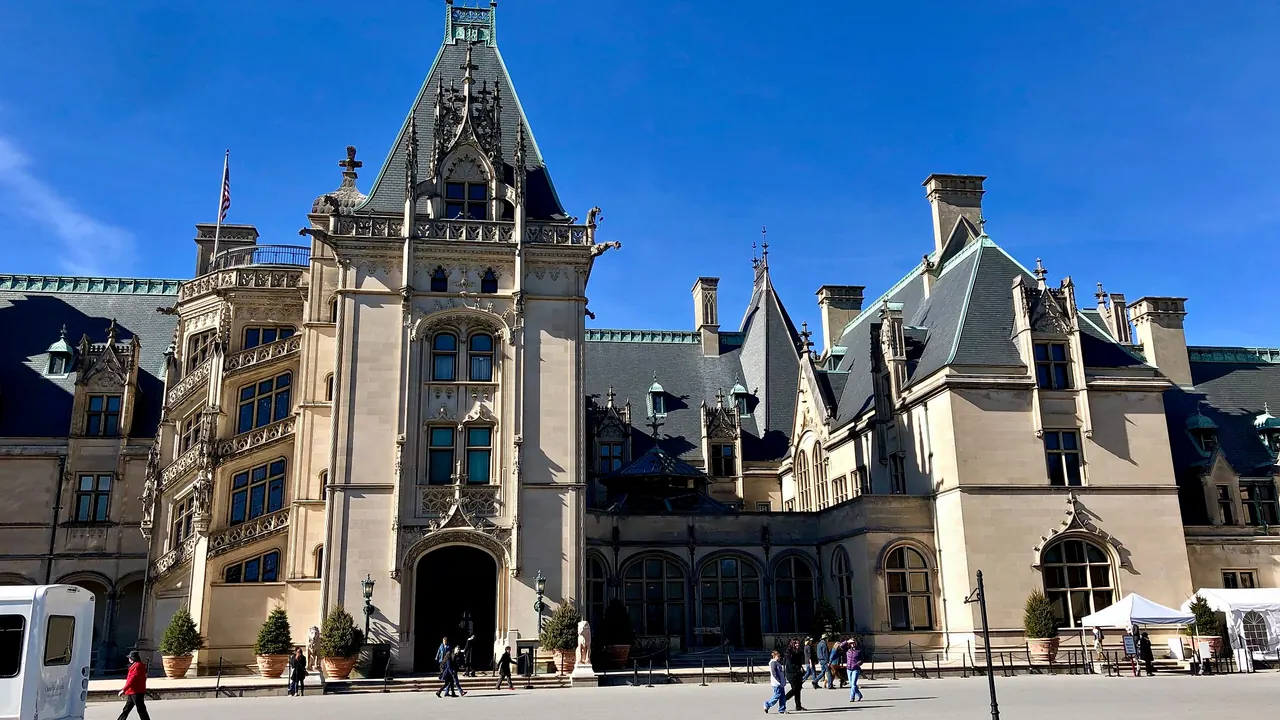
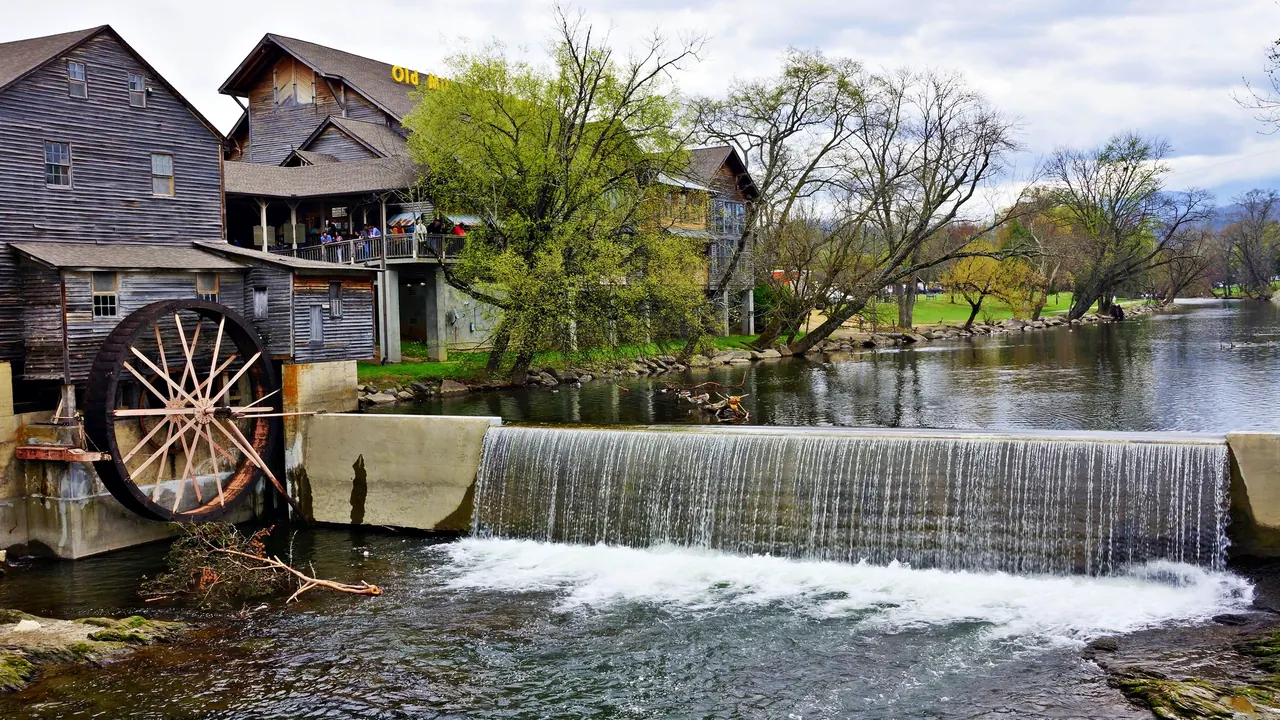
Photos: Asheville by Warren LeMay, CC0; Pigeon Forge by NealVickers, CC BY-SA 4.0, cropped.
Asheville or Pigeon Forge?
Our verdict in twelve categories, each scored against the same fixed benchmark cities, and the climate month by month, so you can choose for your trip.
Choose Asheville for
- culture and sights
- food and drink
- nightlife
Asheville is the better choice for adults who want a real small city around their mountain trip. It has a walkable Art Deco downtown, the Biltmore Estate, breweries and serious Appalachian cooking, bluegrass in the pubs and craft studios to browse. It suits couples and groups of friends, anyone who wants a slower pace with some spa time, and travellers who want evenings as good as their days on the trail.
Choose Pigeon Forge for
- families
- prices
Families with children should look hard at Pigeon Forge. Dollywood, its water park, the go-kart tracks and the dinner shows are all built for children, the cabins sleep whole groups, and the Great Smoky Mountains National Park begins half an hour up the road. Adults on their own will find the eating, drinking and sightseeing thin. For a loud, easy family week, though, it does the job better and for less money.
Scoreboard
Twelve categories on one fixed scale from 0 to 100. The shaded stretch is the gap between the two.
Your match
Pick a travel style or drag the sliders, and both match scores follow your weighting.
Wins on culture and sights and food and drink with your weighting.
Wins on families and prices with your weighting.
What matters to you?
Category by category
What the scores mean for a trip.
Beaches & swimming
Neither town has a sea beach, so in both places swimming is a summer half-day out rather than the point of the trip. Asheville has more natural water: cold pools under waterfalls in Pisgah, the rock slide at Sliding Rock, floats on the French Broad and a small sandy beach at Lake Lure. Pigeon Forge relies more on built water, with the water park beside Dollywood and hotel pools, plus Douglas Lake and the boulder pools in the Smokies streams.
Food & drink
The difference here is between cooking with a sense of place and cooking for volume. Asheville's kitchens build on what the surrounding mountains produce, from trout and ramps to heirloom beans and sorghum, and its breweries, cider makers and distillers give an evening far more range than a town its size would suggest. Its weak spot is variety, with little beyond Southern and modern American food, and the best tables need booking at weekends.
Pigeon Forge feeds crowds. Pancake houses, Southern buffets and family steakhouses fill the gaps between the chains on the Parkway, and the selling point is big portions rather than ambition. Its own flavour comes down to moonshine tastings at the strip's distilleries and fudge and cornmeal treats around the Old Mill.
Culture & sights
Asheville has real sights. The Biltmore Estate fills a day on its own. The downtown of Art Deco and Beaux-Arts buildings, with the domed City Hall and the tiled Basilica of St Lawrence, rewards a slow walk, and the art museum and Thomas Wolfe's boarding house can follow.
Pigeon Forge is a resort strip built for entertainment, with a half-scale Titanic and illusion museums. Its one genuinely historic building is the Old Mill of 1830. Visitors there who want history head into the national park for its log cabins and churches.
Nightlife
Neither is a late town, but Asheville gives adults a proper evening out. Its taprooms, cocktail bars and dive bars sit within walking distance of each other downtown and on the South Slope, Haywood Road in West Asheville has a more local set of bars, and there is a small, long-standing LGBTQ scene.
Evenings in Pigeon Forge are for families, with go-karts and lit-up attractions that wind down around ten. Grown-ups who want a drink usually drive to Gatlinburg or settle into the cabin hot tub.
Nature & outdoors
Both towns sit at the edge of the Southern Appalachians, and the difference is which side. Pigeon Forge is the closer base for the Great Smoky Mountains National Park, about half an hour away. From there it is easy to reach Cades Cove for bears and deer, Laurel Falls, and the climb up Alum Cave to Mount LeConte.
Asheville is about an hour from the Smokies but has more variety close by: the Blue Ridge Parkway, Pisgah National Forest for mountain biking and waterfalls, Mount Mitchell, and rafting on the French Broad and Nantahala. It suits hikers and riders who want variety, while Pigeon Forge suits those who want to concentrate on the national park.
Day trips
Both lists are short, and both include Cherokee, with its museum and the Oconaluftee village. From Asheville the outings are mostly to small mountain towns such as Hendersonville, Black Mountain and Brevard, the gateway to the waterfall country. Greenville's riverside downtown and the autumn orchards add variety.
Pigeon Forge has the better city outing in Knoxville, about forty minutes away, and Gatlinburg's craft studios are next door. Its strongest day out is Asheville itself, close to two hours away.
Good for families
Pigeon Forge is the clear choice for families. Dollywood and its water park, the mini-golf, mountain coasters and go-karts are all along one road, and the aquarium is twenty minutes away in Gatlinburg. Large cabins and indoor water-park hotels are built for groups.
Asheville works for active children, who will enjoy the Western North Carolina Nature Center, Sliding Rock, river tubing and the farmyard at Biltmore. It has no theme park, though, and families staying there face a two-hour drive to Dollywood.
Getting around
You need a car in both, but Asheville at least has a centre you can walk, with downtown, the South Slope and the River Arts District within reach on foot or by a short ride. Pigeon Forge is a multi-lane strip where you can only walk inside each attraction complex, and its trolley is slow and does not reach the hillside cabins. October weekends clog the scenic roads in both, and Pigeon Forge also has heavy traffic on the Parkway in summer and over Christmas.
Shopping & style
Asheville is the better choice for anyone who wants to take home something handmade. Pottery, glass, weaving and woodwork fill the downtown galleries and the River Arts District studios, the Folk Art Center on the Parkway shows the region's crafts, and there are independent shops around the Grove Arcade and Lexington Avenue.
Pigeon Forge is about outlet malls full of American mid-market brands. Quilts and cornmeal around the Old Mill and the craft studios above Gatlinburg are the better finds among the T-shirts and fudge.
Affordability
Pigeon Forge is the cheaper base. Thousands of motel rooms and cabins keep lodging reasonable outside the busy weeks, a shared cabin splits well between families, and breakfasts and buffets cost little. The big costs are tickets for Dollywood and the dinner shows.
Asheville's inns and downtown hotels are expensive and rise sharply on autumn weekends, and Biltmore is a costly day out. Both need a hire car, and in both the trails cost almost nothing.
Live music & performing arts
Asheville has the more rewarding music. Its downtown venues bring in touring rock, indie and Americana acts, bluegrass and old-time jams fill the pubs, and Shindig on the Green holds free summer evenings of fiddle music and clogging. The Mountain Dance and Folk Festival has run there since 1928.
Pigeon Forge has dozens of theatres, but nearly everything they stage is the same kind of show: broad family revues, comedy, magic and dinner spectacles along the Parkway, with gospel and bluegrass on Dollywood's stages by day. Neither town is worth travelling to for orchestral music or serious theatre.
Wellness & relaxation
Asheville has a long tradition of rest, dating back to the nineteenth-century visitors who came to recover their health in its mountain air. You can see it in the yoga studios and retreats, the large spas of the hillside resort hotels, and the riverside mineral-water tubs at Hot Springs.
Pigeon Forge has only a few day spas and resort spas. Its quiet comes from the cabins with porches and private hot tubs high above the noise of the strip, so couples should book well away from the Parkway.
When should you go?
Pick your month. The climate figures are measured averages, not a forecast.
Asheville in July
Pigeon Forge in July
Daytime high, °C
Rainfall in the month, mm
Where the figures come from
Asheville's temperatures are measured 50 km from the centre, at Asheville Regional Airport.
Asheville has no rain gauge within 25 km of the centre, so its rainfall comes from a gridded climate dataset read at the city rather than from a gauge further away.
Pigeon Forge's temperatures are measured 38 km from the centre, at McGhee Tyson Airport.
Pigeon Forge has no rain gauge within 25 km of the centre, so its rainfall comes from a gridded climate dataset read at the city rather than from a gauge further away.
Temperature and rainfall are climate normals, averaged over the years shown. Asheville: 1991-2020 (sunshine 1981-2010) normals, Asheville Regional Airport (50.3 km from centre). Pigeon Forge: 1991-2020 (sunshine 1981-2010) normals, McGhee Tyson Airport (37.9 km from centre).
The two towns share the same mountain climate, with cool winters, warm and humid summers, and rain spread fairly evenly through the year. From June to August Asheville peaks at around 29°C, while Pigeon Forge, lower down in its valley, reaches about 31°C. That is warm enough for river tubing and swimming holes in both places, but it makes the Pigeon Forge strip sticky. Pigeon Forge has the sunnier summer, though July is also its wettest month, with 133mm, much of it falling in afternoon storms. Winter days of around 10°C in both are fine for walking in a coat.
Spring and autumn are the best seasons in both places, with April, May, September and October warm but not hot. October is the driest month in each, and it is also when the leaves turn on the ridges.
Which traveller are you?
On a culture and arts trip, Asheville is the clear choice. The Biltmore Estate, the Art Deco downtown, the Folk Art Center and bluegrass in the pubs fill several days, while Pigeon Forge offers replicas, novelty museums and family revues.
For a food and nightlife trip, Asheville wins easily. Mountain trout, ramps and barbecue, followed by a stroll between the South Slope taprooms, make an easy sociable evening. Pigeon Forge offers buffets and pancake houses, and its strip goes quiet around ten.
On a family trip with children, Pigeon Forge suits school-age children who want rides and shows. Go in spring or September, when the strip is cooler and the Parkway less clogged. Asheville suits older children happier on trails and rivers.
Before you go
| Measure | Asheville | Pigeon Forge |
|---|---|---|
| Currency | US Dollar (USD) | US Dollar (USD) |
| Sockets | AB120 V, 60 Hz | AB120 V, 60 Hz |
| Driving side | Right | Right |
| Time zone | UTC-5, UTC-4 in summer | UTC-5, UTC-4 in summer |
| Emergency number | 911 | 911 |
| Elevation | 650 m | 305 m |
| Main airport | Asheville Regional Airport (AVL)18 km from centre27 non-stop destinations | McGhee Tyson Airport (TYS)39 km from centre34 non-stop destinations |
| Public holidays this year | 14 days | 13 days |
By the numbers
| Measure | Asheville | Pigeon Forge |
|---|---|---|
| City population | 94,589 | 6,343 |
| People per km² | 796 | 185 |
| Museums within 10 km | 4 | 7 |
| UNESCO World Heritage sites within 50 km | 0 | 1 |
Where else could you go?
Every comparison below shares a destination with this one, so you can follow Asheville or Pigeon Forge somewhere new.
- Gatlinburgvs Pigeon Forge
- Gatlinburgvs Asheville
- Atlantavs Pigeon Forge
- Atlantavs Asheville
- Nashvillevs Pigeon Forge
- Nashvillevs Asheville