
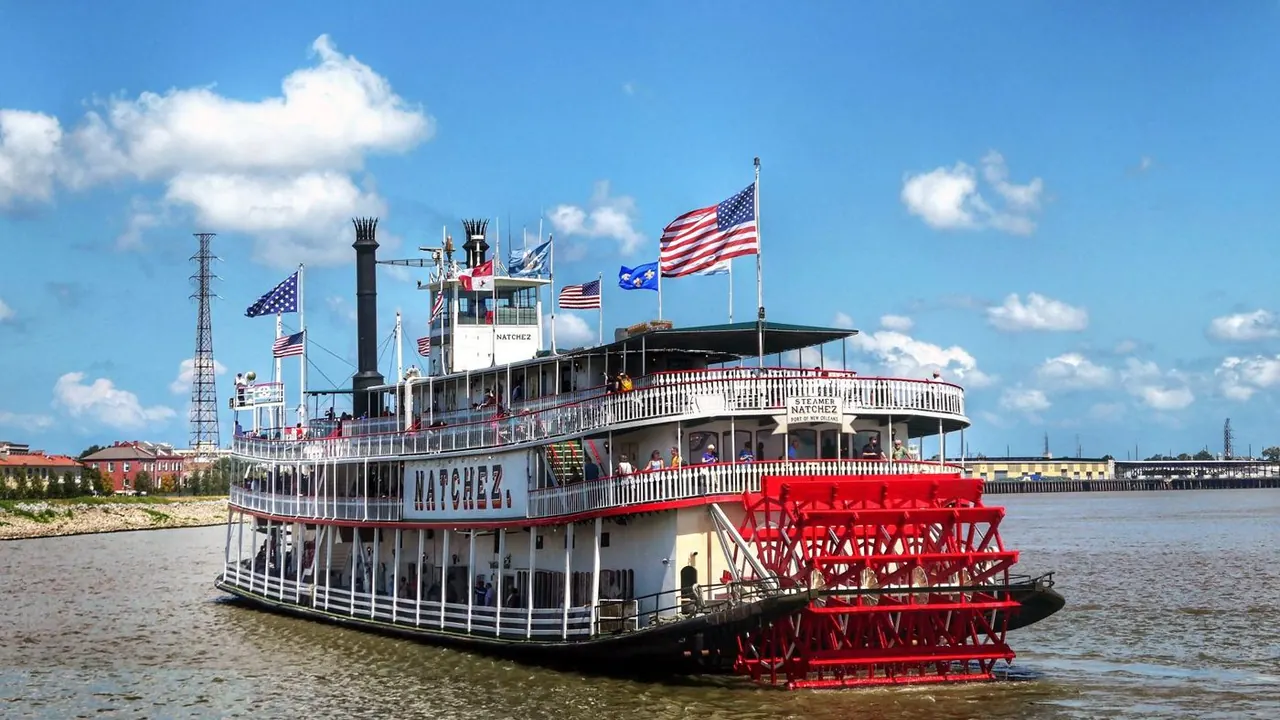
Photos: Asheville by Warren LeMay, CC0; New Orleans by Bernard Spragg, CC0.
Asheville or New Orleans?
Our verdict in twelve categories, each scored against the same fixed benchmark cities, and the climate month by month, so you can choose for your trip.
Choose Asheville for
- nature and the outdoors
- wellness
Asheville is for travellers who want their days spent outside: ridge walks off the Blue Ridge Parkway, waterfalls and mountain-bike trails in Pisgah, a raft trip on the French Broad, then a taproom and an early night. It also suits a slower, restorative stay, with mountain inns, resort spas and the riverside tubs at Hot Springs. Bring or hire a car, because almost none of this is in town.
Choose New Orleans for
- nightlife
- live music and the arts
- getting around
New Orleans rewards people who travel for their evenings and their appetite. Creole and Cajun cooking, jazz and brass bands on Frenchmen Street and bars with no closing time make it much the stronger city for food, music and nights out, and the French Quarter and Garden District give it more history to see on foot. The trade-off is scant countryside beyond the swamps and very little sense of rest.
Scoreboard
Twelve categories on one fixed scale from 0 to 100. The shaded stretch is the gap between the two.
Your match
Pick a travel style or drag the sliders, and both match scores follow your weighting.
Wins on nature and the outdoors and wellness with your weighting.
Wins on nightlife and live music and the arts with your weighting.
What matters to you?
Category by category
What the scores mean for a trip.
Beaches & swimming
Neither is a beach destination, and the swimming they offer is very different. Asheville's is cold mountain water: plunge pools under waterfalls, the rock slide at Sliding Rock, tubing on the French Broad and a small sandy beach at Lake Lure.
From New Orleans, the warm but murky Gulf at Bay St. Louis is over an hour's drive, and in the city itself a hotel pool is what most people end up using.
Food & drink
New Orleans has one of the few truly local cuisines in the country, with Creole and Cajun dishes, century-old French Quarter dining rooms, beignets by Jackson Square and cocktails that were invented there. Asheville eats very well for its size, but its strengths are craft beer and Appalachian farm cooking, such as trout, ramps and barbecue.
So Asheville offers good meals and better beer, and New Orleans offers food you would travel for. Neither has much range beyond its own tradition, and New Orleans cooking is the heavier of the two.
Culture & sights
Asheville's sights come down to the Biltmore Estate, a full day of Gilded Age house and Olmsted gardens, and a downtown of Art Deco buildings around City Hall and the Grove Arcade. Beyond them there are a few small museums, and two or three days is enough.
New Orleans has more to walk through. There is the colonial grid of the French Quarter around the Cabildo and St. Louis Cathedral, the mansions of the Garden District, above-ground tombs and the large National WWII Museum. It is history you find in the streets rather than in galleries, and there is far more of it.
Nightlife
This is where the two cities are furthest apart. An Asheville evening means a taproom or cocktail bar on the South Slope or Haywood Road, a friendly crowd and bed soon after midnight.
New Orleans has no closing time and lets you carry drinks along the street, so a night drifts from Bourbon Street's neon to the bars on Frenchmen Street and in the Bywater until dawn. The rowdier end comes with pickpockets and the need for a taxi home.
Nature & outdoors
Asheville wins this easily, and the outdoors is its main reason to visit. It sits among the Southern Appalachians, with the Parkway, Pisgah, Max Patch, the Appalachian Trail and the Great Smoky Mountains all close by, and offers mountain biking, rafting, spring rhododendrons and famous October colour.
The New Orleans landscape is flat and wet. Its outdoors means cypress swamps with alligators, the boardwalks of the Barataria Preserve, the oaks of City Park and the river levee, and the summer heat cuts most of that short.
Day trips
The choice of outings is roughly the same size from each city, but they lead to different things. From Asheville you go mostly into the landscape, to the waterfall country around Brevard and small towns such as Hendersonville and Black Mountain. Cherokee and its museum give the deepest look at the region's past.
From New Orleans you go into history. The River Road plantations, with the Whitney the most moving of them, are the classic outing, followed by Gulf towns such as Ocean Springs and the Cajun dance halls around Lafayette.
Good for families
Both work for children, but for different kinds of family. Asheville suits active children, with bears and red wolves at the nature centre, waterfall walks, river tubing, zip lines and the Biltmore farmyard, although a lot of the day goes on driving.
New Orleans has the attractions that Asheville lacks, such as a zoo, an aquarium and City Park's carousel and children's museum, plus streetcars and parade beads. The drawbacks are the summer heat and the care needed about where you walk after dark.
Getting around
In New Orleans the French Quarter, the Marigny and the Warehouse District sit in a flat, walkable strip along the river, and the slow green streetcars on St. Charles Avenue are a pleasure in themselves. You only need a car for day trips.
Asheville is walkable only downtown and on the South Slope. Biltmore, the Parkway and every trailhead mean winding mountain roads, so a hire car is close to essential.
Shopping & style
Both cities favour independent shops over designer labels, and New Orleans has slightly more of them. Asheville is the place for handmade Appalachian craft, such as pottery, glass and weaving from the River Arts District studios and the Folk Art Center.
New Orleans has a broader mix. There are antiques and estate jewellery on Royal Street, miles of boutiques and vintage shops along Magazine Street, and Carnival masks that you will not find anywhere else.
Affordability
Neither is cheap, and the two cost roughly the same, but the money goes in different places. In Asheville, it goes on hire cars, Biltmore tickets and inns that cost more on autumn weekends, while the trails and waterfalls are free.
In New Orleans, the hotel room is the big expense, especially around Mardi Gras and Jazz Fest. Po'boys, the streetcar and the street music keep the rest of the day affordable, and you won't need a car.
Live music & performing arts
New Orleans, where jazz was born, has live music every night of the year, with brass bands, funk, zydeco and blues on Frenchmen Street, Sunday second lines and the Jazz & Heritage Festival. Asheville has a real music culture of its own in bluegrass and old-time jams, Shindig on the Green and a folk festival running since 1928, along with touring Americana acts.
Neither city offers much in the way of formal arts, so in both cases the reason to go is the music in clubs and on the streets, and New Orleans has a great deal more of it.
Wellness & relaxation
Asheville has been a place to rest since nineteenth-century visitors came for its mountain air. Today it has retreats, yoga studios, large spas in the hillside resort hotels and riverside mineral tubs at Hot Springs.
New Orleans has no bathing tradition and only a few hotel day spas. Rest there means a quiet courtyard guesthouse or a slow afternoon in City Park.
When should you go?
Pick your month. The climate figures are measured averages, not a forecast.
Asheville in July
New Orleans in July
Daytime high, °C
Rainfall in the month, mm
Where the figures come from
Asheville's temperatures are measured 50 km from the centre, at Asheville Regional Airport.
Asheville has no rain gauge within 25 km of the centre, so its rainfall comes from a gridded climate dataset read at the city rather than from a gauge further away.
Temperature and rainfall are climate normals, averaged over the years shown. Asheville: 1991-2020 (sunshine 1981-2010) normals, Asheville Regional Airport (50.3 km from centre). New Orleans: 1991-2020 (sunshine 1981-2010) normals, New Orleans Airport (2.7 km from centre).
Asheville's altitude keeps it temperate. Spring and autumn are its best seasons, and April, May, September and October are mild and bright enough for long days of walking and hiking. Summer peaks at around 29°C with humid afternoons and thunderstorms, and winter is cool and grey rather than harsh. Rain falls fairly evenly through the year, but October is the driest and most settled month.
New Orleans is far hotter. Its winters are mild enough to stroll the Quarter in comfort, but from May to September daytime highs reach 30°C or more with heavy humidity. June is the wettest month, with close to 194mm of rain. The Gulf warms to about 30°C in high summer, so the coast east of the city is good for swimming from May to September. For walking the streets, choose March, April, October or November. Both cities are at their best in spring and autumn, but Asheville's good weather starts a few weeks later in spring and ends a few weeks earlier in autumn.
Which traveller are you?
For a food and nightlife trip, New Orleans is the clear pick. Gumbo, po'boys, crawfish boils and the Sazerac lead into nights on Frenchmen Street and in Bywater corner bars that never shut, while Asheville's breweries mostly wind down around midnight.
On an outdoors trip, choose Asheville. The Blue Ridge Parkway, Pisgah National Forest, Mount Mitchell and the Smokies are all within an hour, with ridge hikes, mountain biking and whitewater rafting. New Orleans has swamp boat tours and City Park, but no hills.
For a relaxing and wellness trip, Asheville fits better. It grew up as a mountain health resort and still has retreats, yoga, large hotel spas and the mineral tubs at Hot Springs. New Orleans has only hotel day spas, and its late nights are anything but restful.
Before you go
| Measure | Asheville | New Orleans |
|---|---|---|
| Currency | US Dollar (USD) | US Dollar (USD) |
| Sockets | AB120 V, 60 Hz | AB120 V, 60 Hz |
| Driving side | Right | Right |
| Time zone | UTC-5, UTC-4 in summer | UTC-6, UTC-5 in summer |
| Emergency number | 911 | 911 |
| Elevation | 650 m | -2 m |
| Main airport | Asheville Regional Airport (AVL)18 km from centre27 non-stop destinations | Louis Armstrong New Orleans International Airport (MSY)18 km from centre51 non-stop destinations |
| Public holidays this year | 14 days | 14 days |
By the numbers
| Measure | Asheville | New Orleans |
|---|---|---|
| City population | 94,589 | 383,997 |
| People per km² | 796 | 423 |
| Museums within 10 km | 4 | 16 |
| UNESCO World Heritage sites within 50 km | 0 | 0 |
| Swim season, months above 21 °C | - | 7 months |
Where else could you go?
Every comparison below shares a destination with this one, so you can follow Asheville or New Orleans somewhere new.
- Gatlinburgvs Asheville
- Pigeon Forgevs Asheville
- Gulf Shoresvs New Orleans
- Orange Beachvs New Orleans
- Atlantavs Asheville
- Pensacolavs New Orleans