
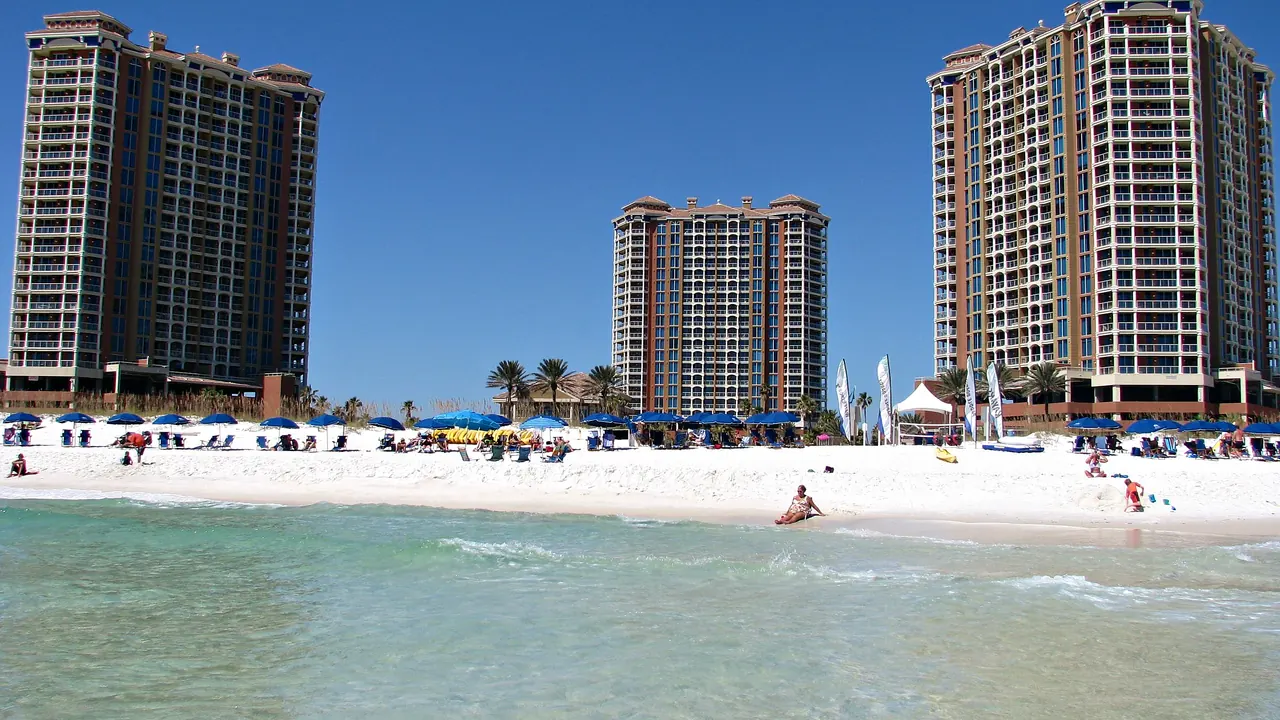
Photos: Asheville by Warren LeMay, CC0; Pensacola by Jason Meredith, CC BY 2.0, cropped.
Asheville or Pensacola?
Our verdict in twelve categories, each scored against the same fixed benchmark cities, and the climate month by month, so you can choose for your trip.
Choose Asheville for
- wellness
- nature and the outdoors
- shopping
Asheville is for travellers who want mountains. Days go on Blue Ridge trails, Pisgah's bike routes and white-water rivers, and evenings on taprooms and bluegrass jams. Add the Biltmore Estate, a strong craft scene and a long tradition of retreats and spas, and it works as well for a slow, restorative trip as for an active one, provided you are happy to drive.
Choose Pensacola for
- beaches
- prices
- families
Pensacola makes sense when the sea is the point. Santa Rosa Island's white sand and the warm, gentle Gulf in summer are something Asheville cannot offer at all, and the calm sound side makes it the easier choice with small children. It is a little kinder on the budget too, but food, shopping and the stage are all thinner than in the mountains.
Scoreboard
Twelve categories on one fixed scale from 0 to 100. The shaded stretch is the gap between the two.
Your match
Pick a travel style or drag the sliders, and both match scores follow your weighting.
Wins on wellness and nature and the outdoors with your weighting.
Wins on beaches and prices with your weighting.
What matters to you?
Category by category
What the scores mean for a trip.
Beaches & swimming
This is the widest gap between the two. Asheville has no coast at all. Its swimming means chilly waterfall pools in Pisgah, the rock slide at Sliding Rock, tubing on the French Broad and a small sandy strip on Lake Lure, all of them pleasant summer half-days.
Pensacola is a proper beach destination. Pensacola Beach and the Gulf Islands National Seashore stretch for miles along Santa Rosa Island, with white sand, low dunes, clear green water and gentle surf in summer. Perdido Key is quieter, and the sound side has calm shallows for toddlers. Do watch the rip current flags on rough days.
Food & drink
Asheville eats and drinks better. Its breweries across downtown, the South Slope and West Asheville are a draw in their own right, and its chef-driven kitchens cook from Appalachian farms: trout, heirloom beans, ramps, barbecue and biscuits, with cider, mead and local spirits alongside.
Pensacola is simpler and centred on the Gulf. Oysters, grouper sandwiches and royal red shrimp taste best at casual waterfront tables, and Palafox Street has some decent modern Southern cooking. The beach strip leans on chains. Neither city offers much international food.
Culture & sights
Asheville has the bigger sights. The Biltmore Estate, the Vanderbilt château with its Olmsted gardens, fills a whole day on its own, and the downtown has a remarkably intact collection of Art Deco and Beaux-Arts buildings, from the domed City Hall to the Grove Arcade.
Pensacola's appeal is its layered history and military heritage. The Seville district and Plaza Ferdinand hold colonial and Victorian houses from its Five Flags past, Fort Pickens guards the island's tip and the National Naval Aviation Museum has a vast collection of aircraft. The museum sits on an active base, so expect ID checks.
Nightlife
Neither is a late-night city, and both centre their evenings on taprooms and bars that quieten fairly early. The difference is the setting. Asheville's nights are walkable and laid-back across downtown, the South Slope and Haywood Road in West Asheville, with a long-standing LGBTQ bar scene and the summer drum circle in Pritchard Park.
Pensacola is split between Palafox Street and Seville Quarter, where young Navy personnel fill the bars, and the sand-floored beach bars on the island. The rowdy roadhouse on the Alabama line at Perdido Key is an institution. It is lively in summer and at weekends but noticeably quieter off season.
Nature & outdoors
Asheville is the stronger outdoor base by a distance. The Blue Ridge Parkway, Pisgah National Forest and Mount Mitchell, the highest peak in the eastern United States at 2,037m, all lie close by, and the Smokies are an hour west. There are ridge hikes over grassy balds, world-class mountain biking and rafting on three rivers, plus spring rhododendrons and the famous October colour.
Pensacola's nature is flat and coastal. You get dunes, salt marsh, herons, ospreys and dolphins in the bay, kayaking on the sound and canoeing on the clear Blackwater River. Its one standout is the sunken aircraft carrier offshore, a major reef for experienced divers.
Day trips
The two are fairly evenly matched, and both need a car. Asheville's outings are mostly into the mountains, with small towns such as Brevard, Black Mountain and Hendersonville along the way. Cherokee stands out for its museum and the Oconaluftee village, and Greenville offers a riverside downtown.
Pensacola has the single best city outing in Mobile, with its antebellum streets, Mardi Gras heritage and battleship. Beyond Mobile, Fairhope and Fort Morgan are short trips, and the resort towns to the east are really more beaches.
Good for families
Pensacola is the easier family vacation, mainly because of the sea. Children get warm, gentle water, shallow spots on the sound side and condos with pools and kitchens. The aviation museum and the Blue Angels thrill plane-mad children, and the Gulf Breeze Zoo, the lighthouse climb and Fort Pickens' tunnels fill the other days.
Asheville suits active older children better. They can watch bears and red wolves at the Nature Center, go tubing, ride Sliding Rock or try the zip lines. Expect a lot of driving between sights, though. Neither city has a theme park, although Dollywood is about two hours from Asheville.
Getting around
You need a car in both, but Asheville makes slightly more possible on foot. Its compact, hilly downtown links easily to the South Slope and the River Arts District, so a downtown stay can go a day or two without driving, even though Biltmore, the Parkway and the trailheads all need one. Pensacola is more spread out. The beach, the naval air station and Perdido Key sit apart across bridges and highways, buses are infrequent and the beach trolley runs only in season.
Shopping & style
Asheville is the better place to shop, as long as you want handmade things rather than brands. Studio pottery, glass, weaving and woodwork fill the River Arts District and the downtown galleries, and the Folk Art Center and the Grove Arcade add a strong regional character. Pensacola has a handful of boutiques and antique shops on Palafox Street, a Saturday market, a standard mall and beach souvenir shops, which is fine for odds and ends but not worth planning a day around.
Affordability
Neither is cheap, but Pensacola is somewhat easier on the wallet. Rooms in town and inland cost noticeably less than beachfront ones, prices across the island fall sharply out of season, and both the naval aviation museum and the seashore cost little or nothing.
Asheville's inns and hotels are expensive and climb steeply on autumn weekends, and a Biltmore ticket is a sizeable outlay. The trails and the Parkway are free, though, and midweek or winter stays cost less. Budget for a hire car in either.
Live music & performing arts
Asheville has more to offer, and most of it is roots music. There are bluegrass and old-time jams in pubs, buskers downtown and free summer evenings of fiddle music and clogging at Shindig on the Green. The Mountain Dance and Folk Festival has run since 1928, and several venues bring touring Americana and indie acts most nights.
Pensacola's strength is the formal side. Its restored 1925 Saenger Theatre hosts the symphony, opera, ballet and touring shows, so it suits a dressed-up evening better, but there is less live music on an ordinary night.
Wellness & relaxation
Asheville has a real tradition of rest and recovery, dating from the nineteenth-century health seekers drawn by its mountain air. Today that means retreats, yoga studios, large resort spas on the hillsides and the riverside mineral tubs at Hot Springs, under an hour away. Pensacola has no comparable culture, only hotel day spas and massage studios. What it offers instead is the slow pace of the island and Perdido Key once the summer crowds have gone.
When should you go?
Pick your month. The climate figures are measured averages, not a forecast.
Asheville in July
Pensacola in July
Daytime high, °C
Rainfall in the month, mm
Where the figures come from
Asheville's temperatures are measured 50 km from the centre, at Asheville Regional Airport.
Asheville has no rain gauge within 25 km of the centre, so its rainfall comes from a gridded climate dataset read at the city rather than from a gauge further away.
Temperature and rainfall are climate normals, averaged over the years shown. Asheville: 1991-2020 (sunshine 1981-2010) normals, Asheville Regional Airport (50.3 km from centre). Pensacola: 1991-2020 normals, Pensacola / Pleasant Grove (12.3 km from centre).
Asheville sits high enough to escape the worst of the Southern heat. Summer days are warm rather than oppressive, peaking around 29°C, so June to September stays comfortable for hiking, river floats and walking downtown, although afternoon storms are common. Spring and October are the gentlest seasons, and October is also the driest month, at about 72mm. Winter is cold, with January highs near 9°C, and rain falls fairly evenly through the rest of the year.
Pensacola is much hotter and wetter in summer. July reaches about 33°C, and from June to September rain rises to as much as 200mm a month, mostly in heavy thunderstorms. The reward is a Gulf that is warm enough for swimming from late May to October. Winters are mild enough for beach walks and comfortable sightseeing but too cool for swimming. That makes Pensacola the better choice for a winter break, while Asheville is the cooler escape in high summer.
Which traveller are you?
On a beach and sun trip, Pensacola is the only real choice. It has miles of white quartz sand on Santa Rosa Island and a Gulf that is warm and usually calm through summer. Asheville's swimming is limited to cold rivers and a small lake beach.
For an outdoors trip, Asheville wins clearly. The Blue Ridge Parkway, Pisgah and the Great Smokies give you ridge hikes, mountain biking and rafting in genuine high country. Pensacola's flat, watery outdoors suits kayaking and birdwatching but has no hills.
On a relaxing and wellness trip, Asheville is the better place to slow down. It has a long tradition of retreats, yoga and resort spas, plus the riverside mineral tubs at Hot Springs. Pensacola offers hotel day spas and quiet beaches outside the summer peak.
Before you go
| Measure | Asheville | Pensacola |
|---|---|---|
| Currency | US Dollar (USD) | US Dollar (USD) |
| Sockets | AB120 V, 60 Hz | AB120 V, 60 Hz |
| Driving side | Right | Right |
| Time zone | UTC-5, UTC-4 in summer | UTC-6, UTC-5 in summer |
| Emergency number | 911 | 911 |
| Elevation | 650 m | 31 m |
| Main airport | Asheville Regional Airport (AVL)18 km from centre27 non-stop destinations | Pensacola International Airport (PNS)6 km from centre27 non-stop destinations |
| Public holidays this year | 14 days | 11 days |
By the numbers
| Measure | Asheville | Pensacola |
|---|---|---|
| City population | 94,589 | 54,312 |
| People per km² | 796 | 515 |
| Museums within 10 km | 4 | 5 |
| UNESCO World Heritage sites within 50 km | 0 | 0 |
| Swim season, months above 21 °C | - | 7 months |
Where else could you go?
Every comparison below shares a destination with this one, so you can follow Asheville or Pensacola somewhere new.
- Orange Beachvs Pensacola
- Gulf Shoresvs Pensacola
- Destinvs Pensacola
- Gatlinburgvs Asheville
- Pigeon Forgevs Asheville
- Atlantavs Asheville