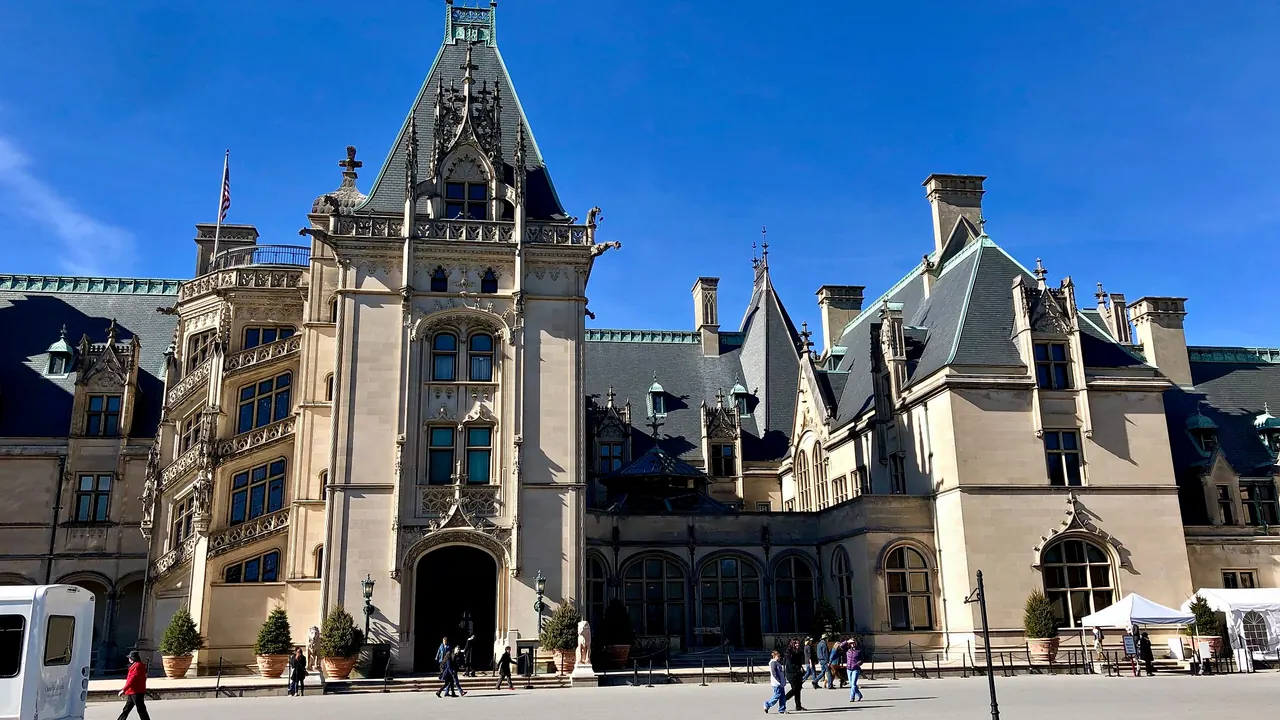
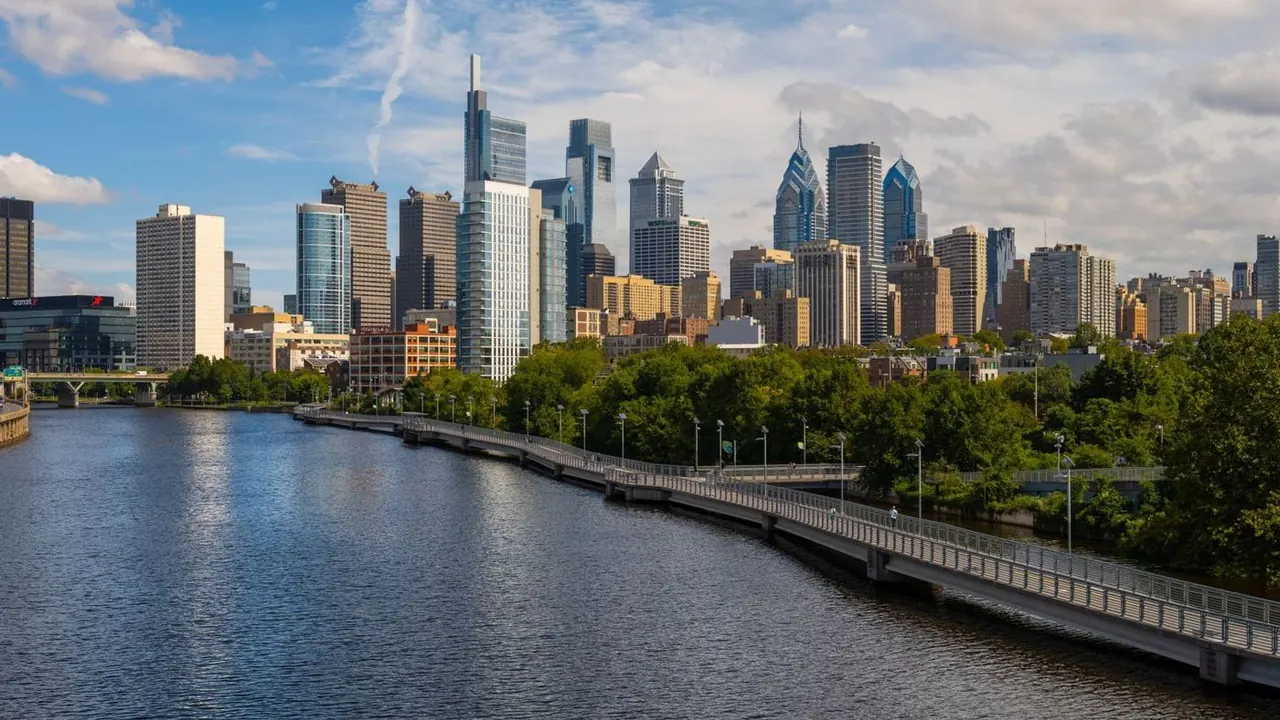
Photos: Asheville by Warren LeMay, CC0; Philadelphia by Trev W. Adams, Pexels License.
Asheville or Philadelphia?
Our verdict in twelve categories, each scored against the same fixed benchmark cities, and the climate month by month, so you can choose for your trip.
Choose Asheville for
- nature and the outdoors
- wellness
- food and drink
Asheville is the choice for a trip built around the mountains. The Blue Ridge Parkway, Pisgah National Forest and the Smokies are all on its doorstep, so days go on ridge hikes, waterfall walks, mountain biking and river trips, and evenings on brewery taprooms and porch-side bluegrass. It also suits anyone who wants to slow down, with mountain inns, resort spas and the riverside tubs at Hot Springs. Bring or hire a car, because almost everything worth seeing lies outside the small downtown.
Choose Philadelphia for
- getting around
- day trips
- beaches
Philadelphia rewards travellers who want a full city stay without a car. The founding sights of Old City, the Barnes Foundation and the Art Museum fill several days, the Philadelphia Orchestra and the Academy of Music give the evenings real weight, and the flat Center City grid is easy on foot. Families do well with its science museums and zoo, and fast trains put New York, Baltimore and Washington within a day out.
Scoreboard
Twelve categories on one fixed scale from 0 to 100. The shaded stretch is the gap between the two.
Your match
Pick a travel style or drag the sliders, and both match scores follow your weighting.
Wins on nature and the outdoors and wellness with your weighting.
Wins on getting around and day trips with your weighting.
What matters to you?
Category by category
What the scores mean for a trip.
Beaches & swimming
Neither city is a beach destination, but Philadelphia at least has the real thing within reach. The Jersey Shore towns of Ocean City, Wildwood and Cape May lie a drive of an hour or two away, with wide Atlantic sand and properly swimmable water in high summer.
Asheville is hours from any sea. Its swimming is mountain water: cold pools under Pisgah's waterfalls, the natural chute at Sliding Rock, tubing on the French Broad and a small sandy beach at Lake Lure. Refreshing summer half-days, not beach days.
Food & drink
The two eat about equally well, in quite different ways. Asheville's table is Appalachian: trout, heirloom beans, ramps and barbecue from the surrounding farms, with beer as the real headline, poured in dozens of taprooms across downtown, the South Slope and West Asheville.
Philadelphia is a sandwich city first, with cheesesteaks, roast pork and hoagies from corner delis, then Reading Terminal Market and the Italian Market. It also has the wider range, with Mexican and Vietnamese cooking in East Passyunk and Fishtown and a bring-your-own-wine tradition that Asheville's smaller, mostly Southern scene lacks.
Culture & sights
Philadelphia carries far more weight here. Independence Hall, the Liberty Bell and the Georgian streets of Society Hill tell the founding of the country, and the Barnes Foundation, the Philadelphia Museum of Art, the Penn Museum and Eastern State Penitentiary stretch sightseeing to four or five days.
Asheville has one great set piece, the Biltmore Estate, which fills a day by itself, plus a remarkably intact Art Deco downtown around City Hall and the Grove Arcade. Beyond those and the Folk Art Center, the list runs short.
Nightlife
Both cities run on bars rather than clubs, but Philadelphia's nights are livelier and later. Fishtown's warehouse bars, Rittenhouse cocktail lounges, East Passyunk taverns and the long-established Gayborhood give real variety, and pubs stay open until 2am with a big student crowd at weekends.
Asheville's evenings are gentler: brewery taprooms on the South Slope, dives along Haywood Road in West Asheville and, on summer Fridays, the drum circle in Pritchard Park. Most places wind down around midnight.
Nature & outdoors
This is Asheville's great strength. The Blue Ridge Parkway runs along the city's edge, Pisgah National Forest starts just south of town, and Mount Mitchell, the highest peak in the eastern United States, and the Great Smokies are both about an hour away. Hikes over the grassy bald of Max Patch, serious mountain biking, whitewater on the Nantahala and the October colour make it a proper outdoor base.
Philadelphia's green spaces are pleasant but tame by comparison. The Wissahickon gorge in Fairmount Park and the Schuylkill River Trail out to Valley Forge are fine for a run, walk or bike ride, and the Pine Barrens and Poconos are gentle country rather than mountains.
Day trips
Philadelphia is by far the better base for excursions. The Northeast rail corridor puts New York, Baltimore and Washington within easy reach by fast train, and Amish Lancaster County, Princeton, Longwood Gardens, Valley Forge and Gettysburg add history and countryside.
From Asheville the outings are mostly into the landscape, plus small mountain towns: Hendersonville, Black Mountain, Brevard for waterfalls, and Cherokee for its museum of the region's original people. Greenville is the one sizeable town within an hour.
Good for families
Philadelphia gives children more to do, especially on rainy days. The Franklin Institute's giant walk-through heart, the Please Touch Museum for under-eights, the dinosaurs at the Academy of Natural Sciences, the country's oldest zoo and an aquarium across the river make a full programme, and the Liberty Bell brings history alive for older children.
Asheville suits active families instead, with bears and red wolves at the Nature Center, river tubing, Sliding Rock and zip lines. There is no zoo or theme park nearby, and days involve plenty of driving.
Getting around
Philadelphia is much easier without a car. Center City's flat grid links Old City, Society Hill, Rittenhouse Square and the Parkway museums on foot, and SEPTA's subway, trolleys and regional rail, including a train to the airport, cover the rest, if plainly.
Asheville's walkable downtown is small and hilly, and buses are thin. Biltmore, the Parkway and every trailhead need a car, and October weekends bring slow traffic on winding mountain roads.
Shopping & style
Philadelphia has the broader shopping, from national brands and boutiques on Walnut Street to Jewelers' Row and the huge King of Prussia mall half an hour out, with no sales tax on clothing.
Asheville is narrower but distinctive: it is the place to buy something handmade. Pottery, glass, weaving and woodwork fill the River Arts District studios and the Folk Art Center, with independent shops in the Grove Arcade and on Lexington Avenue.
Affordability
Neither is a bargain, and the overall cost of a stay is much the same, but the savings come from different places. In Philadelphia, the founding sights are free, a hoagie makes a cheap lunch, bringing your own wine cuts dinner bills, and there is no need to hire a car.
In Asheville, the mountains themselves cost nothing, but the car hire, Biltmore admission and inn rates that jump on autumn weekends add up. Midweek and winter stays ease the bill.
Live music & performing arts
Philadelphia has the stronger formal stage by a long way. The Philadelphia Orchestra, Opera Philadelphia and the ballet at the 1857 Academy of Music, Curtis Institute recitals and the Walnut Street Theatre, the oldest working theatre in the country, give a programme worth planning a trip around.
Asheville's appeal is folk rather than formal: bluegrass and old-time jams, street buskers, free fiddle and clogging evenings at Shindig on the Green and the long-running Mountain Dance and Folk Festival. Its orchestra and theatres are modest.
Wellness & relaxation
Asheville is much the better place to slow down. Invalids came to its mountain air in the nineteenth century, and that legacy lives on in retreat centres, yoga and massage, the large spas of the resort hotels on the hillsides and, forty minutes away, outdoor tubs of natural mineral water beside the French Broad at Hot Springs. Cool evenings and unhurried inn porches do the rest.
Philadelphia moves faster and a little more gruffly, and has no bathing culture of its own. Unwinding there means a hotel or day spa near Rittenhouse Square or a drive to a Korean-style bathhouse in the suburbs. Otherwise it means a quiet hour on a bench in one of Penn's leafy squares or on the creekside path through the Wissahickon gorge.
When should you go?
Pick your month. The climate figures are measured averages, not a forecast.
Asheville in July
Philadelphia in July
Daytime high, °C
Rainfall in the month, mm
Where the figures come from
Asheville's temperatures are measured 50 km from the centre, at Asheville Regional Airport.
Asheville has no rain gauge within 25 km of the centre, so its rainfall comes from a gridded climate dataset read at the city rather than from a gauge further away.
Temperature and rainfall are climate normals, averaged over the years shown. Asheville: 1991-2020 (sunshine 1981-2010) normals, Asheville Regional Airport (50.3 km from centre). Philadelphia: 1991-2020 normals, Philadelphia International Airport (11.3 km from centre).
Both cities share a similar pattern of hot, humid summers and cold winters, but Philadelphia swings further either way. Its July afternoons reach about 31°C, sticky for long days on the pavement, while January highs near 5°C make sightseeing a matter of museum-hopping. Asheville's height takes the edge off both: summer stays a touch milder, though humid with afternoon storms, and winter is a little less raw. Rain falls steadily all year in both, with Philadelphia's wettest stretch running from June to September and Asheville's driest month being October at around 72mm.
For walking and hiking, late April to early June and mid-September to October are the best of the year in each, with comfortable warmth and plenty of sun. Philadelphia gets its sunniest weather in high summer, around 286 hours in August, which suits a day down to the Jersey Shore. Asheville's October, dry and mild at about 20°C, is its standout month for the hills.
Which traveller are you?
On an outdoors trip, Asheville is the clear pick. Mount Mitchell, the Great Smoky Mountains and Pisgah's trails, bike routes and rafting rivers are all within an hour, while Philadelphia offers gentle parkland and riverside cycling rather than real mountains.
For a culture and arts trip, Philadelphia wins easily. Independence Hall and the Liberty Bell, the Barnes Foundation's Impressionists and the Philadelphia Museum of Art fill days, and the Philadelphia Orchestra and opera fill evenings. Asheville's Biltmore and Art Deco downtown take two days.
On a relaxing and wellness trip, Asheville suits far better. It has a long history as a mountain health retreat, with yoga studios, resort spas, quiet inns and the mineral tubs of Hot Springs, while Philadelphia is brisk and offers mainly hotel spas.
Before you go
| Measure | Asheville | Philadelphia |
|---|---|---|
| Currency | US Dollar (USD) | US Dollar (USD) |
| Sockets | AB120 V, 60 Hz | AB120 V, 60 Hz |
| Driving side | Right | Right |
| Time zone | UTC-5, UTC-4 in summer | UTC-5, UTC-4 in summer |
| Emergency number | 911 | 911 |
| Elevation | 650 m | 12 m |
| Main airport | Asheville Regional Airport (AVL)18 km from centre27 non-stop destinations | Philadelphia International Airport (PHL)11 km from centre129 non-stop destinations |
| Public holidays this year | 14 days | 12 days |
By the numbers
| Measure | Asheville | Philadelphia |
|---|---|---|
| City population | 94,589 | 1,603,797 |
| People per km² | 796 | 4,339 |
| Museums within 10 km | 4 | 55 |
| UNESCO World Heritage sites within 50 km | 0 | 1 |
Where else could you go?
Every comparison below shares a destination with this one, so you can follow Asheville or Philadelphia somewhere new.
- Gatlinburgvs Asheville
- Pigeon Forgevs Asheville
- New Yorkvs Philadelphia
- Rehoboth Beachvs Philadelphia
- Bethany Beachvs Philadelphia
- Ocean City, Marylandvs Philadelphia