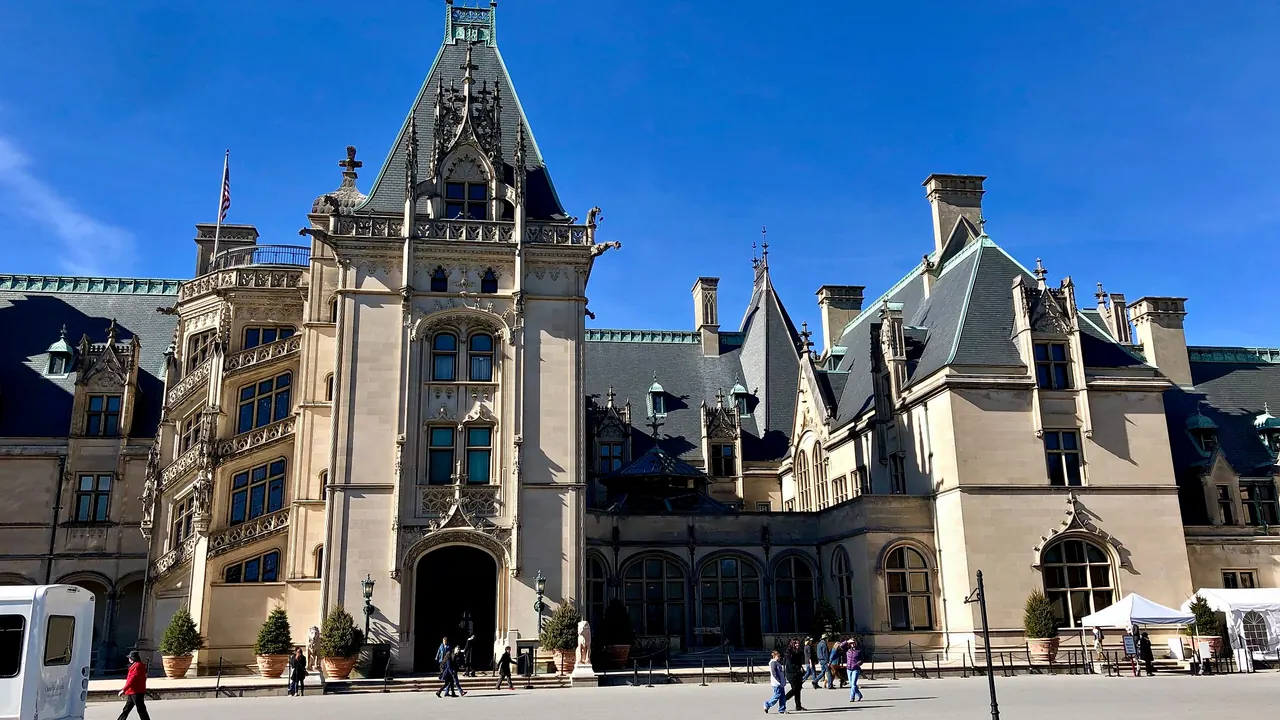
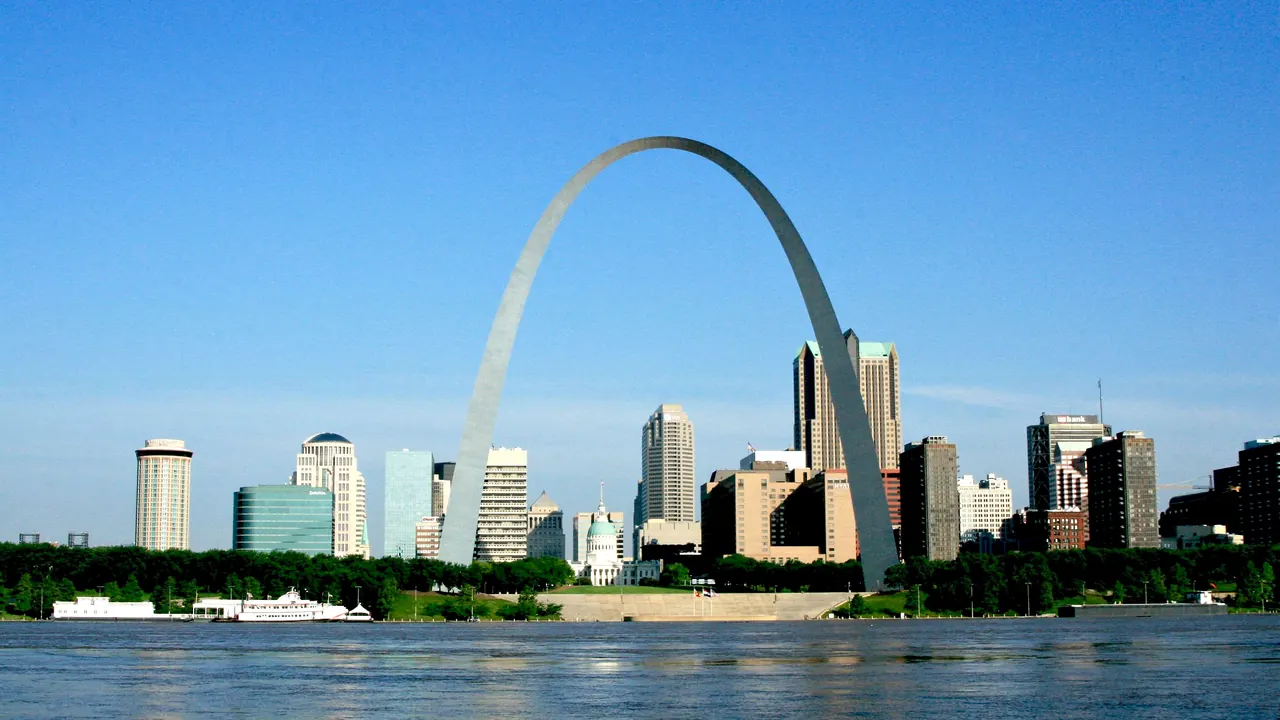
Photos: Asheville by Warren LeMay, CC0; St. Louis by Holly Cheng, CC BY 2.0, cropped.
Asheville or St. Louis?
Our verdict in twelve categories, each scored against the same fixed benchmark cities, and the climate month by month, so you can choose for your trip.
Choose Asheville for
- nature and the outdoors
- wellness
- shopping
Asheville is for travellers who want the mountains on the doorstep and a slower pace once the day's walking is done. The Blue Ridge Parkway, Pisgah National Forest and the Smokies are all close, so the trip is built around trails, waterfalls and rivers. Evenings are for craft beer, Appalachian food and bluegrass. Pick it for a restorative or active few days, and accept that you will drive, and that leaf season costs more.
Choose St. Louis for
- families
- prices
- live music and the arts
St. Louis makes more sense for a city trip with children or with a love of the stage. The free zoo, the free museums in Forest Park, the City Museum and the Gateway Arch keep a family busy for less. The symphony, the Muny and the blues bars give evenings more depth than Asheville's. The landscape around it is gentle rather than a reason to come, and the sights are spread across a car-shaped city.
Scoreboard
Twelve categories on one fixed scale from 0 to 100. The shaded stretch is the gap between the two.
Your match
Pick a travel style or drag the sliders, and both match scores follow your weighting.
Wins on nature and the outdoors and wellness with your weighting.
Wins on families and prices with your weighting.
What matters to you?
Category by category
What the scores mean for a trip.
Beaches & swimming
Neither city is a beach destination, and you should not choose either for sand and sea. Asheville at least has somewhere to get wet in summer: cold pools under waterfalls, the natural rock slide at Sliding Rock, tubing on the French Broad and a small sandy shore on Lake Lure. In St. Louis the rivers are working waterways with strong currents, so swimming means a pool or a long drive to an Ozark lake.
Food & drink
Asheville is the more rewarding place to eat and drink, and its beer is the bigger draw. Taprooms fill downtown, the South Slope and West Asheville, and chef-driven kitchens cook with Appalachian trout, ramps, heirloom beans and sorghum. Its weakness is a thin international range and weekend tables that book out.
St. Louis eats more cheaply and has its own local habits: toasted ravioli, Provel-topped cracker-crust pizza, gooey butter cake and rib barbecue. The Hill's trattorias and the Bosnian grills along South Grand give it more variety than Asheville, and the Soulard Market and the red-brick Anheuser-Busch brewery add history. It feels more like local comfort food than a reason to visit.
Culture & sights
The sightseeing is about even in weight, but the two cities offer different kinds of sights. Asheville's centrepiece is a single great house: the Biltmore Estate, with its Olmsted gardens, takes a full day. After that comes a compact Art Deco downtown with the domed City Hall and the Grove Arcade.
St. Louis spreads its interest more widely and adds more museums. The Gateway Arch and its museum of westward expansion, the Old Courthouse of the Dred Scott case, and the free art and history museums in Forest Park sit alongside the mosaics of the Cathedral Basilica and the Wainwright Building, an early skyscraper.
Nightlife
Neither is a late-night city, and both suit a sociable evening rather than clubbing until dawn. Asheville keeps its taprooms, cocktail bars and dives within walking distance downtown and on the South Slope, and most places close around midnight. St. Louis has more variety but scatters it, with blues taverns in Soulard, dance bars on Washington Avenue, the LGBTQ+ strip on the Grove and casinos open late, so expect taxis between them.
Nature & outdoors
Here the gap is widest, and it is Asheville's main reason to visit. The Blue Ridge Parkway runs past the city, Pisgah National Forest starts just south, Mount Mitchell and the Great Smoky Mountains are each about an hour away, and the Appalachian Trail passes close by. Add mountain biking, whitewater rivers, spring rhododendron and the October colour.
St. Louis has Forest Park within the city and gentle Ozark country beyond it, with river bluffs and caves at Castlewood and Meramec, rocky pools at Johnson's Shut-Ins and bald eagles near Alton in winter. It makes for good outings, but the countryside is rolling rather than mountainous.
Day trips
The two are fairly even, but St. Louis has more history within reach. Cahokia Mounds, the UNESCO-listed remains of a great pre-Columbian city, is only twenty minutes away. Further out are French colonial Ste. Genevieve, the German wine towns of Hermann and Augusta, Twain's Hannibal and Lincoln's Springfield.
From Asheville, most outings are into the landscape itself, with small stops along the way: Brevard's waterfall country, Carl Sandburg's home at Flat Rock, and Cherokee with its museum and Oconaluftee village. Greenville is the only sizeable town nearby.
Good for families
St. Louis is the easier choice with children. The City Museum's tunnels and rooftop climbs are unlike anything in Asheville, and the zoo and Science Center in Forest Park cost nothing. The Magic House, a theme park forty minutes away and a ballgame at Busch Stadium round out the week.
Asheville rewards outdoor families instead, with bears and red wolves at the Nature Center, Sliding Rock, zip lines and the Biltmore farmyard. With no zoo or theme park in town, and Dollywood two hours away, children who want rides will be happier in St. Louis.
Getting around
You will want a car in both. Asheville's compact, hilly downtown and the River Arts District are fine on foot, but Biltmore, the Parkway and the trailheads mean slow mountain driving, which is heavy on October weekends. St. Louis at least has the MetroLink line linking the airport, Forest Park and downtown, and its roads are flat and uncongested, though the Hill, Soulard and South Grand still need a car or taxi.
Shopping & style
Asheville is the better place to shop, as long as you want something handmade. Its galleries and River Arts District studios sell Appalachian pottery, glass, weaving and woodwork, the Folk Art Center showcases the regional craft guild, and the Grove Arcade holds independent boutiques.
St. Louis offers an afternoon of browsing rather than a craft tradition: antiques and vintage on Cherokee Street, student shops on the Delmar Loop and boutiques in the Central West End, with the big brands out in suburban malls.
Affordability
St. Louis is the cheaper of the two. Its hotels cost less than those of a popular mountain weekend escape, and the zoo, art museum, history museum and science centre are all free. Eating barbecue or at the South Grand grills is easy on the wallet.
Asheville's inns charge more, especially on autumn leaf weekends, and Biltmore is an expensive day out. Its saving grace is that trails, waterfalls and the Parkway cost nothing, and a midweek or winter stay brings prices down.
Live music & performing arts
St. Louis has the stronger stage, with a long-admired symphony in the ornate Powell Hall and Broadway tours at the Fabulous Fox. In summer there are open-air musicals at the Muny and an early-summer opera festival. The city's ties to Chuck Berry and W.C. Handy, and its blues bars, keep live music going through the week.
Asheville's strength is folk music. It has bluegrass and old-time jams, buskers downtown, Shindig on the Green and the Mountain Dance and Folk Festival, held since 1928. Its formal concerts and theatre are modest by comparison.
Wellness & relaxation
Asheville is far better suited to a restful trip. Its past as a mountain health retreat lives on in yoga studios, retreats and large resort spas, and Hot Springs, forty minutes away, has riverside tubs filled with mineral water. Cool evenings and quiet inn porches help too.
St. Louis has only ordinary day spas in Clayton and the Central West End. For calm, the best it offers is a slow morning in the Missouri Botanical Garden's Japanese garden.
When should you go?
Pick your month. The climate figures are measured averages, not a forecast.
Asheville in July
St. Louis in July
Daytime high, °C
Rainfall in the month, mm
Where the figures come from
Asheville's temperatures are measured 50 km from the centre, at Asheville Regional Airport.
Asheville has no rain gauge within 25 km of the centre, so its rainfall comes from a gridded climate dataset read at the city rather than from a gauge further away.
Temperature and rainfall are climate normals, averaged over the years shown. Asheville: 1991-2020 (sunshine 1981-2010) normals, Asheville Regional Airport (50.3 km from centre). St. Louis: 2006-2020 (sunshine 1981-2010, rainfall 1991-2020) normals, Cahokia / Maplewood Park (7.2 km from centre).
The two share an inland climate with hot, humid summers, but Asheville's altitude takes the edge off. Its July high is around 29°C against 32°C in St. Louis, which makes Asheville the better summer choice for hiking and for river floats and waterfall pools. In winter the order flips, and St. Louis is noticeably colder, with January highs near 5°C. For walking either city, late April to early June and late September to October are the most comfortable, and in Asheville October also brings the autumn colour.
Rain falls quite evenly through Asheville's year, at around 100mm most months, so no season is truly dry. St. Louis is wettest in April and May, then turns drier and very sunny in high summer, when the heat makes long afternoons in its open parks tiring. Its winters bring less rain but also the dullest skies of the pair.
Which traveller are you?
On an outdoors trip, Asheville lets the whole stay happen outside: a different trailhead, ridge or river each morning, and back into town for a beer by evening. From St. Louis the countryside fills a pleasant day or two, not a week.
For a relaxing and wellness trip, Asheville sets a slow pace for you, with unhurried days, cool mountain evenings and a spa or a soak never far away. In St. Louis, rest is something you fit around the sightseeing, and few people travel there for it.
On a culture and arts trip, St. Louis gives fuller days and much fuller evenings: free museums by day, then the orchestra, a touring show or a blues set at night. Asheville's sights fill two days, and its evenings belong to fiddle music rather than the concert hall.
Before you go
| Measure | Asheville | St. Louis |
|---|---|---|
| Currency | US Dollar (USD) | US Dollar (USD) |
| Sockets | AB120 V, 60 Hz | AB120 V, 60 Hz |
| Driving side | Right | Right |
| Time zone | UTC-5, UTC-4 in summer | UTC-6, UTC-5 in summer |
| Emergency number | 911 | 911 |
| Elevation | 650 m | 149 m |
| Main airport | Asheville Regional Airport (AVL)18 km from centre27 non-stop destinations | St. Louis Lambert International Airport (STL)20 km from centre64 non-stop destinations |
| Public holidays this year | 14 days | 14 days |
By the numbers
| Measure | Asheville | St. Louis |
|---|---|---|
| City population | 94,589 | 301,578 |
| People per km² | 796 | 1,764 |
| Museums within 10 km | 4 | 18 |
| UNESCO World Heritage sites within 50 km | 0 | 1 |
Where else could you go?
Every comparison below shares a destination with this one, so you can follow Asheville or St. Louis somewhere new.
- Gatlinburgvs Asheville
- Pigeon Forgevs Asheville
- Chattanoogavs Asheville
- Atlantavs Asheville
- Bransonvs St. Louis
- Kansas Cityvs St. Louis