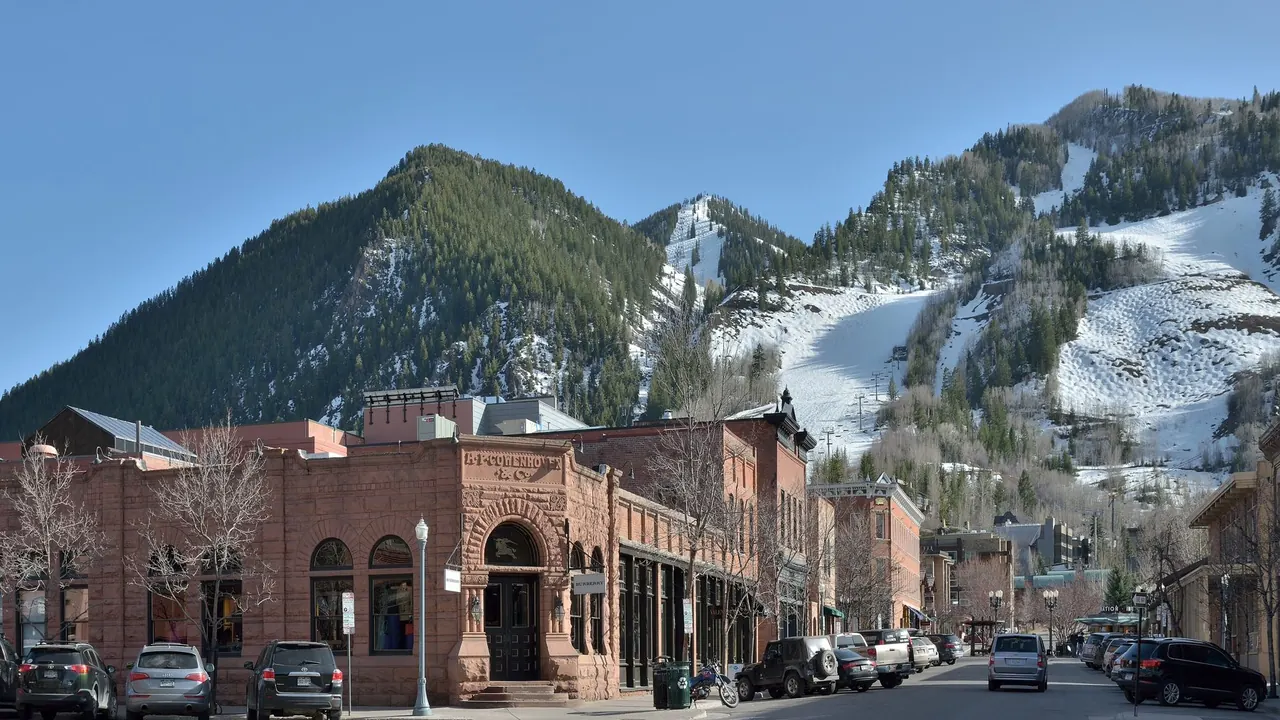
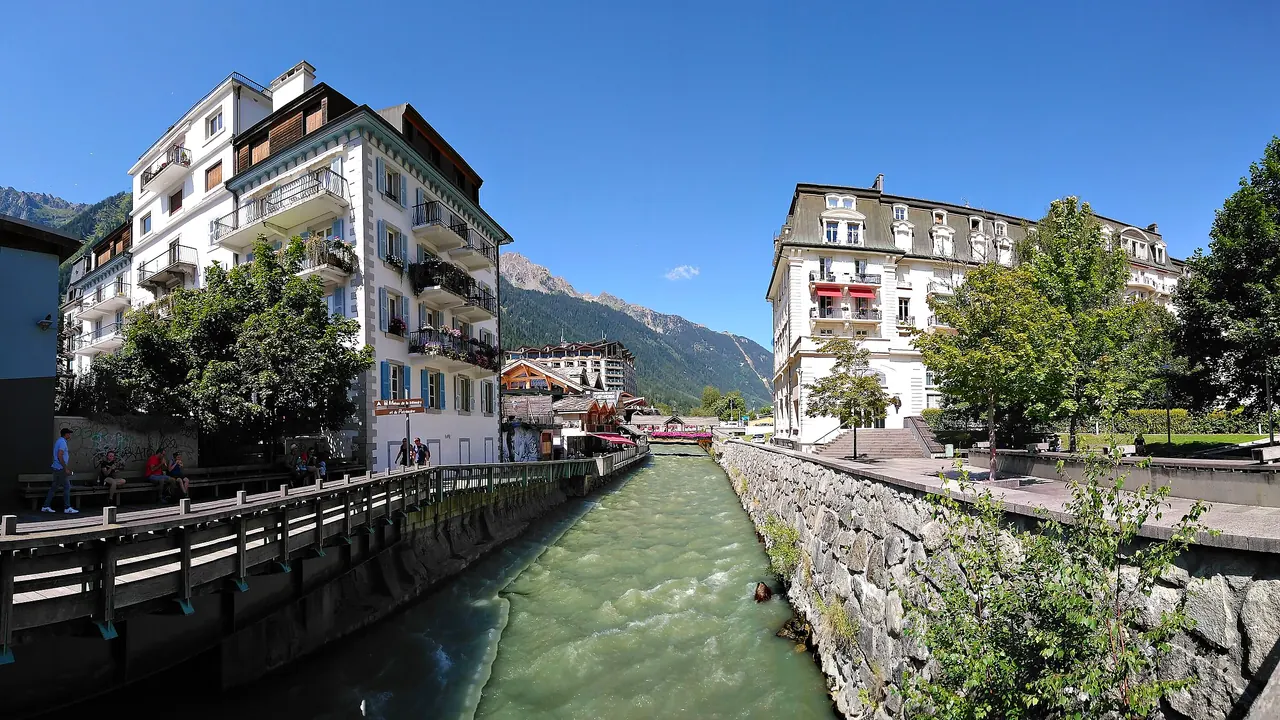
Photos: Aspen by Moroder, CC BY-SA 3.0, cropped; Chamonix by Tiia Monto, CC BY-SA 3.0, cropped.
Aspen or Chamonix?
Our verdict in twelve categories, each scored against the same fixed benchmark cities, and the climate month by month, so you can choose for your trip.
Choose Aspen for
- live music and the arts
- shopping
- food and drink
Aspen suits travellers who want their mountains with some polish. It has designer boutiques, chef-led dining rooms and, in summer, a serious classical music festival with picnics on the lawn outside the Benedict Music Tent. Four ski mountains linked by free buses and a dry climate make for a smooth, self-contained stay. You will need a generous budget, though, because few vacations anywhere cost more.
Choose Chamonix for
- day trips
- prices
- beaches
Chamonix is the better choice if you judge a trip by altitude and terrain rather than by evenings out. Cable cars lift you into glacier country within minutes, the guiding tradition goes back to the birth of alpinism, and Italy, Switzerland, Annecy and Geneva are all within a day's reach. It is expensive too, but free valley transport and easy self-catering soften the bill, as long as you accept a lot more rain.
Scoreboard
Twelve categories on one fixed scale from 0 to 100. The shaded stretch is the gap between the two.
Your match
Pick a travel style or drag the sliders, and both match scores follow your weighting.
Too close to call, 1 point apart
Wins on live music and the arts and shopping with your weighting.
Wins on day trips and prices with your weighting.
What matters to you?
Category by category
What the scores mean for a trip.
Beaches & swimming
Neither town is a swimming destination, but Chamonix has a little more to offer. Lac de Passy, lower down the valley, has a sandy strip facing Mont Blanc and warms up in high summer. Lake Annecy, clear and among the warmest lakes in the Alps, makes a full day out.
In Aspen the water stays cold in the reservoirs and alpine lakes even in July. Rafting the Roaring Fork is the more natural way to get wet, and a hotel pool is the realistic place for a swim.
Food & drink
The two eat about equally well, in very different styles. Aspen's downtown grid serves an imported menu of steak, sushi, Italian and long wine lists, with a June food and wine festival on top, but it has no local dishes and little at the cheaper end.
Chamonix has a cuisine of its own: fondue, raclette and tartiflette made with cheeses from the surrounding pastures, served in refuges on the trails as well as in town. Its cheese shops and bakeries suit picnic lunches. In both towns, a fair number of kitchens close between seasons.
Culture & sights
Both give you about half a day of history, and the stories differ. Aspen's is silver mining: red-brick Victorian blocks around the Wheeler Opera House, painted miners' cottages in the West End and the ghost town of Ashcroft. It adds a contemporary art museum and Herbert Bayer's modernist Aspen Institute campus.
Chamonix tells the story of mountaineering, from the first ascent of Mont Blanc in 1786 to the first Winter Olympics in 1924. That history is told in the Musée Alpin, the old guides' quarter and the climbers' cemetery.
Nightlife
Both are small, seasonal scenes that come alive in ski season, but the crowds differ. Aspen goes out in style, from slopeside decks to hotel bars and a few small clubs, and the money and dress code peak around Christmas and the X Games.
Chamonix is louder and more casual. Its evenings centre on a run of pubs along one narrow lane in the old town, where young, mostly English-speaking seasonal workers, guides and visitors drink together until late.
Nature & outdoors
Here the choice is between sheer scale and ease of access. Aspen sits at about 2,400m among the drier Elk Mountains. It has four ski areas of very different character linked by free shuttles, the Maroon Bells a short bus ride away and wilderness routes up to high summits. It suits hikers, mountain bikers and fly-fishers as well as skiers.
Chamonix's valley floor is far lower, yet the Mont Blanc massif rises almost 4km above it to the highest ground in Western Europe. Cable cars reach glaciers and granite needles in minutes, and this is the valley for real alpinism: the Vallée Blanche, guided climbs, via ferrata and paragliding. The weather up high is less predictable.
Day trips
Chamonix has much better day trips because it sits where three countries meet. Courmayeur and the Roman town of Aosta lie through the Mont Blanc Tunnel, Annecy and Geneva are about an hour away, and the Mont Blanc Express climbs into Switzerland to Martigny.
Aspen's choices are smaller mountain towns: Glenwood Springs, Carbondale, Redstone and Marble. In summer you can add Leadville over Independence Pass. Once that pass closes in winter, the list gets noticeably shorter.
Good for families
Altitude is what really separates the two for parents. Aspen itself sits at about 2,400m, so young children may be tired or headachy for the first day or two. Once they have adjusted, the gentle slopes at Buttermilk and Snowmass, good ski schools and the summer coasters and ropes courses keep them busy.
Chamonix's valley floor is much lower, and altitude only matters on the top cable cars, which are best skipped with small children. Summer is its stronger season for families, with the ibex and marmots at the Merlet animal park and the little red train to the Mer de Glace. In either town, a wet day leaves little to do.
Getting around
You can manage both without a car. Each has a flat, walkable centre with lifts leaving from town and free public transport. Aspen's free buses link its four ski areas, and a small airport sits a few minutes away. Beyond the valley, though, mountain passes make a car close to essential.
Chamonix has a valley train as well as buses, free with the guest card, and most visitors arrive by shuttle from Geneva. The trade-off is crowded ski buses in winter, because its ski areas are strung out along the valley.
Shopping & style
Aspen is far better for shopping, at least if you like luxury. Its pedestrian malls hold international designer boutiques, jewellers, high-end ski wear, Western leather and a cluster of art galleries, and window-shopping is part of an evening out.
Chamonix is a specialist's town. Its long-established climbing and ski shops carry technical gear and expertise that serious mountaineers plan purchases around. Beyond that, it is mostly cheese, génépi, crystals and souvenirs.
Affordability
Neither is cheap, but Aspen is in a class of its own. Lodging, lift tickets, ski school and meals are all priced for the very wealthy, and many visitors on a budget stay down the valley in Glenwood Springs and travel in.
Chamonix is expensive in peak weeks, and guides and paragliding flights cost a lot, but it is easier to economise. You can self-cater in apartments, picnic in the hills, use free transport with the guest card and walk trails that start without any lift.
Live music & performing arts
Aspen is clearly the stronger choice for live music. For about eight weeks each summer, its music festival fills the Benedict Music Tent with orchestral, chamber and opera performances, and you can listen free from the lawn. Ballet, jazz and the year-round programme at the Wheeler Opera House add to that.
Chamonix offers a summer jazz festival with some sets played high in the mountains, then church concerts and mountain film evenings. For opera or a symphony orchestra, you have to go to Geneva.
Wellness & relaxation
Aspen offers quiet, while Chamonix has hot water on the doorstep. In Aspen, summer and the quiet seasons bring clear air, an unhurried pace, yoga in the parks and hotel spas. For mineral pools, though, you face an hour's drive to Glenwood Springs or a long hike to Conundrum Hot Springs.
Chamonix has a large day spa in town built on the Italian thermal model, with outdoor pools looking up at the glaciers, and the old springs of Saint-Gervais are less than half an hour away. The town itself is less restful, with early starts and streets full of climbers.
When should you go?
Pick your month. The climate figures are measured averages, not a forecast.
Aspen in July
Chamonix in July
Daytime high, °C
Rainfall in the month, mm
Where the figures come from
Aspen has no rain gauge within 25 km of the centre, so its rainfall comes from a gridded climate dataset read at the city rather than from a gauge further away.
Chamonix's temperatures are measured 35 km from the centre, at Bourg-St-Maurice.
Chamonix has no rain gauge within 25 km of the centre, so its rainfall comes from a gridded climate dataset read at the city rather than from a gauge further away.
Temperature and rainfall are climate normals, averaged over the years shown. Aspen: 2006-2020 (rainfall 1991-2020) normals, Aspen / Woody Creek (5.2 km from centre). Chamonix: 1999-2020 (rainfall 1991-2020) normals, Bourg-St-Maurice (34.9 km from centre).
Aspen has real winters, with daytime highs around 0°C in December and January, which is good for snow and hard on anyone who just wants to walk the streets. Summer is short and pleasant, peaking near 27°C in July. It stays dry all year, with no month much above 40mm of rain, so June to September is reliable for trails, and late September brings the gold aspen groves.
Chamonix's valley floor is lower and milder in winter, around 5°C in January. It is far wetter, though, with several times Aspen's rainfall in every month, peaking at 169mm in December, with May and November not far behind. July and August match Aspen for warmth and are Chamonix's driest stretch, which makes them the best months for high walks and the only time the mountain lakes are warm enough to swim.
Which traveller are you?
On a culture and arts trip, go to Aspen in summer. For several weeks the music festival turns the whole town into a concert hall, and a contemporary art museum and a modernist campus fill the days in between. Chamonix offers half a day of mountaineering history and very little on stage.
On a tight budget, neither town is easy, but Chamonix gives you more room to cut costs. If you come outside the peak weeks, cook for yourself and spend your days on foot rather than on lifts, the mountains themselves cost almost nothing. Aspen stays expensive even if you sleep elsewhere.
For a shopping trip, choose Aspen, as long as your idea of browsing means designer names and art rather than markets. Chamonix suits only one kind of shopper: the climber or skier replacing serious kit, who may find better gear and advice there than anywhere else.
Before you go
| Measure | Aspen | Chamonix |
|---|---|---|
| Official language | - | French |
| Currency | US Dollar (USD) | Euro (EUR) |
| Sockets | AB120 V, 60 Hz | CE230 V, 50 Hz |
| Driving side | Right | Right |
| Time zone | UTC-7, UTC-6 in summer | UTC+1, UTC+2 in summer |
| Emergency number | 911 | 112 |
| Elevation | 2,405 m | 995 m |
| Main airport | Aspen-Pitkin County Airport (Sardy Field) (ASE)5 km from centre11 non-stop destinations | Geneva International Airport (GVA)68 km from centre150 non-stop destinations |
| Public holidays this year | 12 days | 11 days |
By the numbers
| Measure | Aspen | Chamonix |
|---|---|---|
| City population | 7,004 | 8,705 |
| People per km² | 700 | 75 |
| Museums within 10 km | 2 | 3 |
| UNESCO World Heritage sites within 50 km | 0 | 0 |
Where else could you go?
Every comparison below shares a destination with this one, so you can follow Aspen or Chamonix somewhere new.
- Beaver Creekvs Aspen
- Annecyvs Chamonix
- Vailvs Aspen
- Genevavs Chamonix
- Copper Mountainvs Aspen
- Lausannevs Chamonix