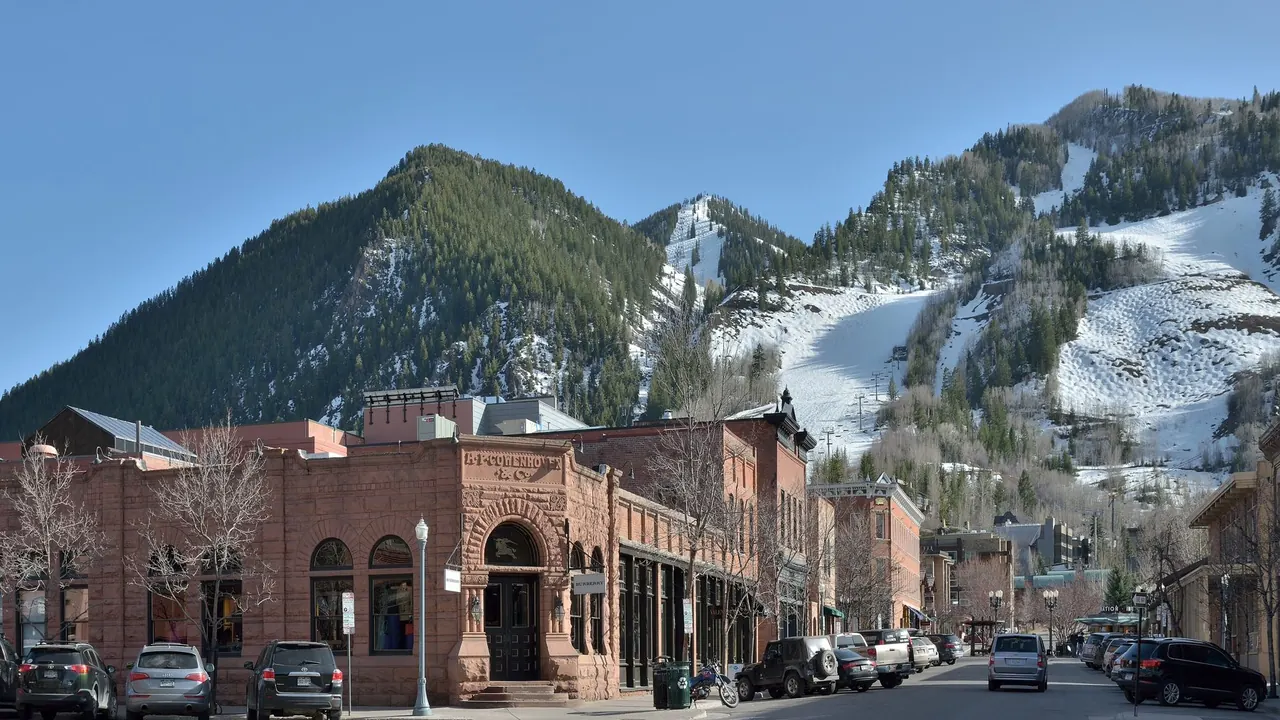
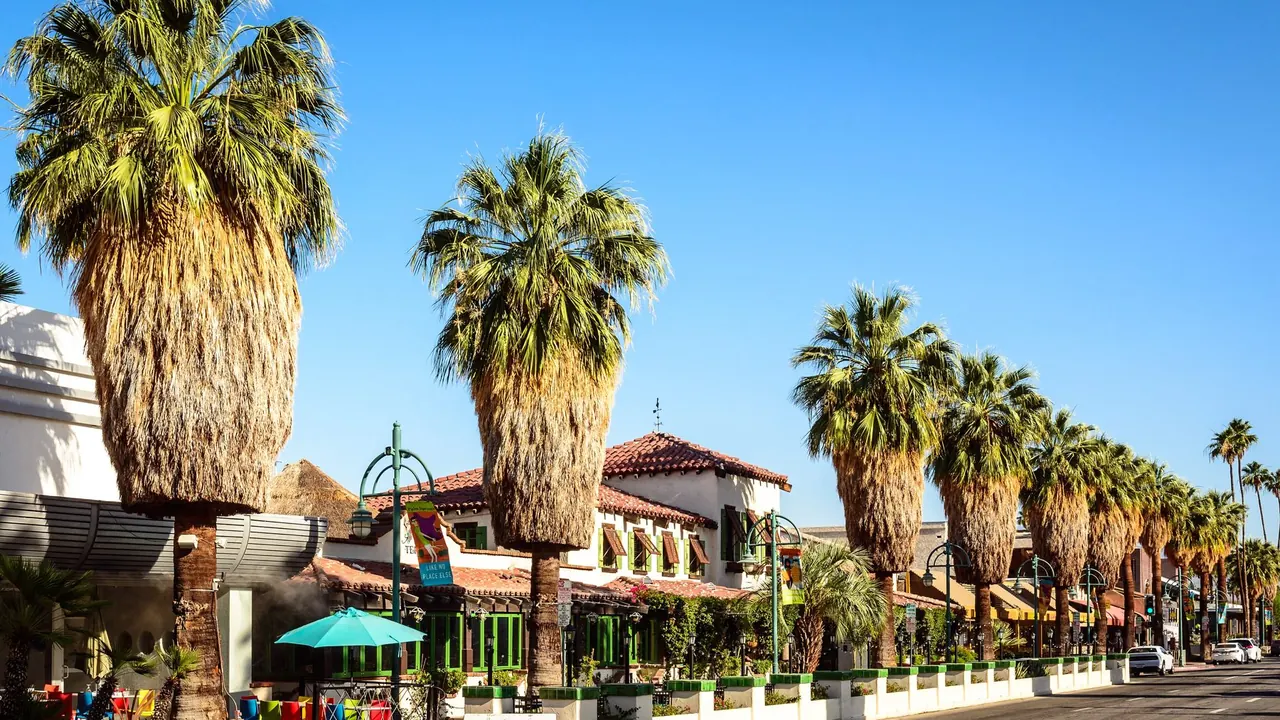
Photos: Aspen by Moroder, CC BY-SA 3.0, cropped; Palm Springs by Domenico Convertini, CC BY-SA 2.0, cropped.
Aspen or Palm Springs?
Our verdict in twelve categories, each scored against the same fixed benchmark cities, and the climate month by month, so you can choose for your trip.
Choose Aspen for
- getting around
- nature and the outdoors
- families
Pick Aspen if the mountains themselves are the point: four ski areas in winter, and high trails, rafting and the Maroon Bells in summer, all reached by free buses from a town you can walk. It also suits families on a ski vacation and anyone who wants summer evenings of classical music on the lawn by the Benedict Music Tent. The budget has to stretch a long way, though.
Choose Palm Springs for
- wellness
- prices
- culture and sights
Palm Springs is the better choice for slowing down. Days there are spent by the pool, in mineral water and in warm winter sun, with mid-century modern neighbourhoods to tour by bike and Joshua Tree within easy reach. It costs noticeably less than Aspen, especially outside the high season, but you will need a car for almost everything beyond downtown.
Scoreboard
Twelve categories on one fixed scale from 0 to 100. The shaded stretch is the gap between the two.
Your match
Pick a travel style or drag the sliders, and both match scores follow your weighting.
Too close to call, 1 point apart
Wins on getting around and nature and the outdoors with your weighting.
Wins on wellness and prices with your weighting.
What matters to you?
Category by category
What the scores mean for a trip.
Beaches & swimming
Neither town has a beach, so this does not help you choose. What differs is what you get instead: in Aspen, cold alpine lakes, reservoirs and rafting on the Roaring Fork, and in Palm Springs, the pool that nearly every place to stay is built around and that is warm enough to use for much of the year.
Food & drink
Aspen eats more ambitiously, with chef-led dining rooms, steak and sushi counters, serious wine lists, après-ski terraces at the foot of Aspen Mountain and the Food & Wine Classic each June. Palm Springs is more casual, with long patio brunches, poolside cocktails and mid-range American places along Palm Canyon Drive.
What Palm Springs has that Aspen lacks is cheaper and more local food down the valley: date shakes from the Indio groves, and Mexican taquerias and panaderias. Both have a narrow range, and both see kitchens close or cut back in the off season, which is spring and autumn in Aspen and high summer in the desert.
Culture & sights
Palm Springs has more to see, and most of it is buildings rather than museums. Frey's angular houses, Neutra's Kaufmann House and the folded roofs of Twin Palms and Vista Las Palmas fill a full day by bike or car. The Agua Caliente Cultural Museum adds the story of the Cahuilla people.
Aspen's heritage is red brick from the silver-mining years, with the Wheeler Opera House and the West End's miners' cottages. The Aspen Art Museum and Bayer's Aspen Institute campus show its modern side. Together they fill an afternoon rather than a day.
Nightlife
Both scenes are small, and they differ mostly in style. Aspen's nightlife belongs to ski season: après-ski on the slopeside decks, then hotel bars and a few clubs with a well-dressed, high-spending crowd around Christmas and the X Games. Palm Springs centres on the LGBTQ bars of Arenas Road, with drag nights, retro cocktail lounges and hotel pool parties on spring weekends.
Each goes quiet in its off season: Aspen in spring and autumn, Palm Springs in the summer heat.
Nature & outdoors
Both sit below big mountains, but Aspen is the true outdoor destination. In winter there are four ski mountains plus hut-to-hut backcountry touring. In summer there are the Maroon Bells, wilderness routes to passes and summits above 4,000m, mountain biking, rafting and fly-fishing, all starting close to town.
Palm Springs has real landscape too: the tramway up to the pine forest on Mount San Jacinto, the palm oases of the Indian Canyons, and the boulders and night skies of Joshua Tree. Heat limits its outdoor season, though, and from June to September hiking is confined to dawn or the cool upper mountain.
Day trips
Palm Springs has the more varied list, though neither is strong here. By car you can reach the pine village of Idyllwild, the old Western film set at Pioneertown, Salvation Mountain by the Salton Sea and the wineries of Temecula.
From Aspen the outings are small mountain towns: Glenwood Springs, Carbondale, Redstone and Marble, plus Leadville over Independence Pass. The pass closes in winter, so the choice gets shorter in the busiest season.
Good for families
Aspen is the easier choice with children, especially for skiing. Buttermilk and Snowmass have gentle slopes, good ski schools and areas just for kids, and in summer the mountains have alpine coasters and ropes courses. The altitude can tire young children for the first day or two.
Palm Springs has The Living Desert, the tramway and the Air Museum, but many of its boutique hotels are adults-only, and from late spring the midday heat rules out outdoor plans. Families there do better in the large resorts further down the valley.
Getting around
Aspen is far easier without a car. Its flat downtown grid is quick to walk, the gondola leaves from its southern edge, and free buses run to all four ski areas and, in summer, to the Maroon Bells.
In Palm Springs only the downtown strip works on foot. The tramway, the canyons, Joshua Tree and the rest of the valley all need a hire car, because the buses are slow and infrequent. Both towns have an airport a few minutes away, though winter storms can close Aspen's roads in and out.
Shopping & style
Aspen has a little more polish in a smaller space. Its few downtown blocks hold international luxury labels, high-end ski wear, jewellers and commercial art galleries, which suits buyers of designer goods.
Palm Springs suits a different kind of shopper: someone hunting mid-century furniture, lighting and vintage clothes in the Uptown Design District, or browsing the Village Fest street fair. El Paseo and the Cabazon outlets are a short drive away for mainstream shopping.
Affordability
Neither town is cheap, but Aspen is far more expensive. Lodging, lift tickets, ski school and meals are priced for a very wealthy clientele, and staying in Glenwood Springs only softens the cost.
Palm Springs is expensive from winter into spring, but rates drop sharply in summer and simple motels exist all year, so a careful traveller can make it work. Allow for a hire car there, which in Aspen you can mostly do without.
Live music & performing arts
Aspen has the stronger programme. It centres on the Aspen Music Festival's eight summer weeks of orchestral, chamber and opera performances in the Benedict Music Tent, where you can listen for free from the lawn. The Aspen Santa Fe Ballet and the Wheeler Opera House add more.
Palm Springs offers drag cabaret and piano bars in town, touring shows at the McCallum Theatre and concerts at the tribal casinos. Its biggest musical events, Coachella and Stagecoach, are festivals out in Indio each April rather than evening concerts in town.
Wellness & relaxation
Palm Springs is built for switching off. The Agua Caliente bathhouse sits over the spring the town grew up around, the motels of Desert Hot Springs fill their pools with hot mineral water, and the whole day moves at the pace of the pool.
Aspen offers clear air, riverside paths, yoga in the parks and hotel spas. Its hot springs are farther away, though: an hour's drive to Glenwood Springs or a long hike up to Conundrum. In peak ski season the busy streets also make it less restful.
When should you go?
Pick your month. The climate figures are measured averages, not a forecast.
Aspen in July
Palm Springs in July
Daytime high, °C
Rainfall in the month, mm
Where the figures come from
Aspen has no rain gauge within 25 km of the centre, so its rainfall comes from a gridded climate dataset read at the city rather than from a gauge further away.
Palm Springs has no rain gauge within 25 km of the centre, so its rainfall comes from a gridded climate dataset read at the city rather than from a gauge further away.
Temperature and rainfall are climate normals, averaged over the years shown. Aspen: 2006-2020 (rainfall 1991-2020) normals, Aspen / Woody Creek (5.2 km from centre). Palm Springs: 2006-2020 (rainfall 1991-2020) normals, Palm Springs (2.3 km from centre).
Aspen has two seasons worth planning around. From December to March, daytime highs stay around 0°C and it is a ski town. From June to September the days warm up to about 27°C in July, which is ideal for hiking but never beach weather. Spring and autumn are quiet seasons in between, and late September brings the gold aspen groves. Rain is light and spread evenly through the year, at no more than about 40mm in any month.
Palm Springs works the other way round. Its best months are November to April, with winter highs near 21°C, dry air and very little rain, which is perfect for walking the streets and the canyons. From June to September it reaches 42°C, which keeps you in the pool and indoors at midday. That makes the two a natural pair: the desert in winter, the mountains in summer.
Which traveller are you?
On an outdoors trip, Aspen wins clearly. Trails start at the edge of town, and the Maroon Bells and summits above 4,000m are close by. In winter there are four ski mountains linked by free shuttles, while in Palm Springs summer heat cuts hiking back to early mornings.
For a relaxing and wellness trip, Palm Springs is the stronger choice. The town grew up around the Agua Caliente spring, the spa motels of Desert Hot Springs fill their pools straight from the ground, and slow pool days under San Jacinto set the pace of a stay.
On a tight budget, Palm Springs is the only realistic option of the two. Simple motels, supermarket picnics and much lower summer rates keep costs down. Aspen stays expensive even in the quiet seasons, and even if you sleep down the valley.
Before you go
| Measure | Aspen | Palm Springs |
|---|---|---|
| Currency | US Dollar (USD) | US Dollar (USD) |
| Sockets | AB120 V, 60 Hz | AB120 V, 60 Hz |
| Driving side | Right | Right |
| Time zone | UTC-7, UTC-6 in summer | UTC-8, UTC-7 in summer |
| Emergency number | 911 | 911 |
| Elevation | 2,405 m | 146 m |
| Main airport | Aspen-Pitkin County Airport (Sardy Field) (ASE)5 km from centre11 non-stop destinations | Palm Springs International Airport (PSP)2 km from centre29 non-stop destinations |
| Public holidays this year | 12 days | 13 days |
By the numbers
| Measure | Aspen | Palm Springs |
|---|---|---|
| City population | 7,004 | 44,575 |
| People per km² | 700 | 181 |
| Museums within 10 km | 2 | 3 |
| UNESCO World Heritage sites within 50 km | 0 | 0 |
Where else could you go?
Every comparison below shares a destination with this one, so you can follow Aspen or Palm Springs somewhere new.