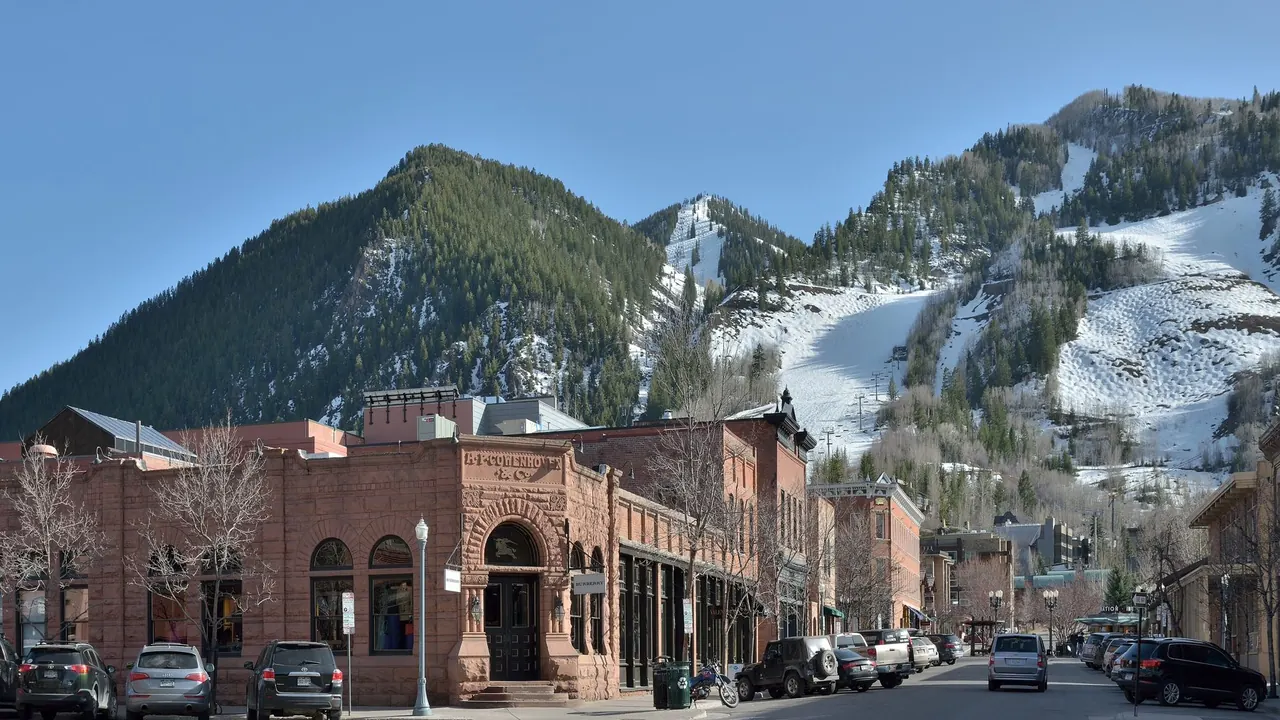
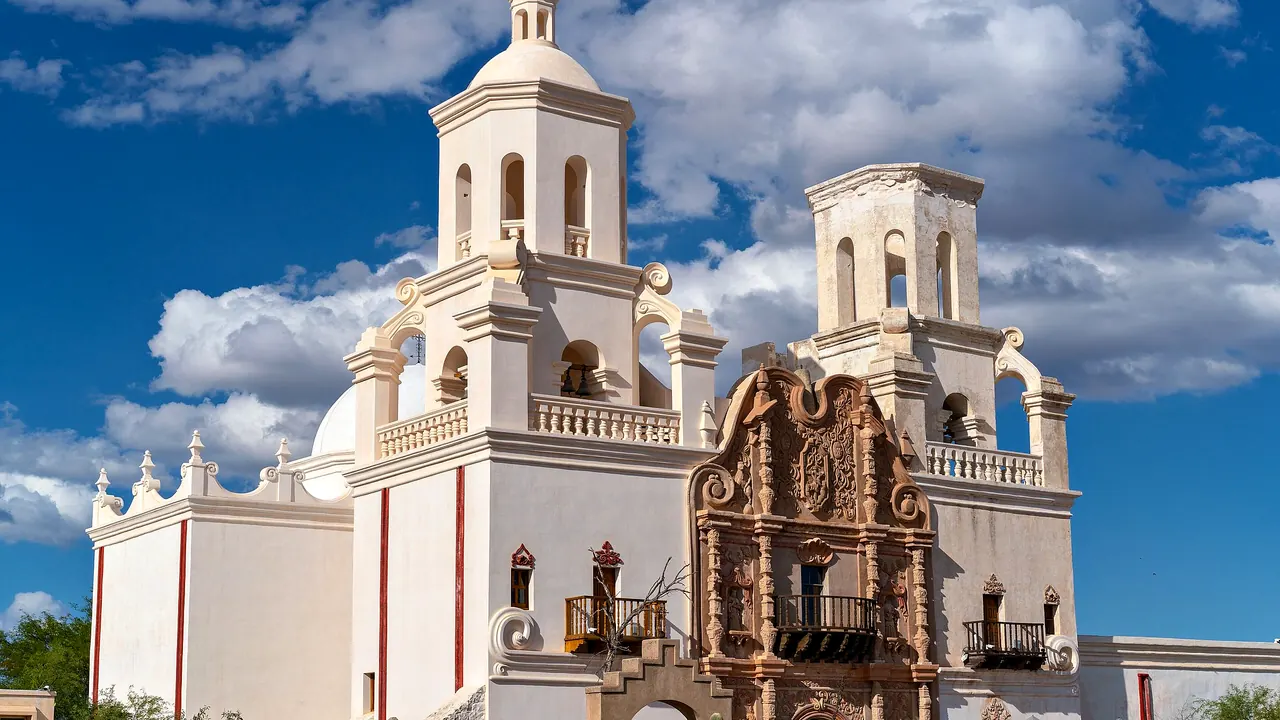
Photos: Aspen by Moroder, CC BY-SA 3.0, cropped; Tucson by Steve and Kimberly Rader, CC BY-SA 4.0, cropped.
Aspen or Tucson?
Our verdict in twelve categories, each scored against the same fixed benchmark cities, and the climate month by month, so you can choose for your trip.
Choose Aspen for
- getting around
- nature and the outdoors
- shopping
Aspen is for travellers who come for the mountains themselves. In winter that means four linked ski mountains with a gondola rising from the edge of downtown. In summer it means trails from town, the Maroon Bells and high passes, followed by an evening concert on the lawn. The compact town lets you leave the car behind, but the trip only makes sense on a generous budget.
Choose Tucson for
- prices
- day trips
- culture and sights
Pick Tucson for a sunny winter escape that costs far less and has more to see between outdoor days. You get Sonoran Mexican cooking at family-run counters, the painted mission church of San Xavier del Bac, desert spa resorts, and drives out to Bisbee and Tombstone. Allow for a hire car, because almost everything sits on the city's edges or beyond.
Scoreboard
Twelve categories on one fixed scale from 0 to 100. The shaded stretch is the gap between the two.
Your match
Pick a travel style or drag the sliders, and both match scores follow your weighting.
Wins on getting around and nature and the outdoors with your weighting.
Wins on prices and day trips with your weighting.
What matters to you?
Category by category
What the scores mean for a trip.
Beaches & swimming
Neither city has a beach, and the swimming differs in kind. Aspen offers cold alpine lakes and rafting on the Roaring Fork in summer. In Tucson the resort pool is where you escape the heat, Sabino Canyon has only short-lived creek pools, and the sea in Mexico is four hours away.
Food & drink
Tucson has what Aspen lacks: a cuisine of its own. Sonoran Mexican cooking means mesquite-grilled carne asada, paper-thin flour tortillas and the bacon-wrapped Sonoran hot dog. You find it at family kitchens along South 12th Avenue and in the old barrios, and much of it is cheap.
Aspen eats well for a small town, with chef-led dining rooms, sushi and steak counters, deep wine lists and the slopeside après-ski ritual. Everything sits at the polished end, though, and there is little cheap middle ground. In the quiet spring and autumn weeks many kitchens close.
Culture & sights
Tucson gives you more to see. Mission San Xavier del Bac, with its gilded painted interior, is a sight of national standing. Add the adobe streets of Barrio Viejo, the Native American collections of the Arizona State Museum and the hundreds of aircraft at the Pima Air & Space Museum, and you have two or three full days.
Aspen's history is a silver-boom town of red-brick Victorian blocks, the Wheeler Opera House and the West End's painted miners' cottages. Herbert Bayer's modernist Aspen Institute campus and the Aspen Art Museum round it out, but together they make a pleasant afternoon rather than a programme.
Nightlife
The two are about level, but the crowds could hardly be more different. Aspen's nights are glossy and seasonal: slopeside après-ski, then hotel bars and a few small clubs full of well-dressed spenders around Christmas and the X Games. Tucson is casual and student-driven, with dive bars and patios on Fourth Avenue and cocktail rooftops on Congress Street. It goes quiet in summer, while Aspen goes quiet in spring and autumn.
Nature & outdoors
Aspen is the stronger outdoor destination, and it works all year. Winter brings four ski mountains and backcountry touring. Summer brings trails from the edge of town, the Maroon Bells reflected in Maroon Lake, wilderness routes to summits above 4,000m, fly-fishing and mountain biking.
Tucson's desert is just as striking in a different way. There are saguaro forests on both sides of the city, canyon hikes in Sabino and Catalina, and a drive up Mount Lemmon from cactus to pine. Serious road cycling and world-class birding add to it. The catch is summer, when outings shrink to dawn or the mountaintop.
Day trips
Tucson has the broader choice of outings. Bisbee's steep copper-mining streets, Tombstone's frontier history, the Tubac artists' village with the Tumacácori mission ruins, the Sonoita wineries and Biosphere 2 are all within a couple of hours. Phoenix is there too if you want a bigger city.
Aspen's list is shorter and more modest: Glenwood Springs, Carbondale, the quarry village of Marble and the Ashcroft ghost town. Leadville's Victorian main street is reachable only in summer, because Independence Pass closes in winter.
Good for families
Both work for families, in different seasons and different ways. Aspen is a ski-school vacation, with gentle slopes and kids' areas at Buttermilk and Snowmass, a small safe town and free buses, though the altitude can tire young children at first. Tucson suits a winter sightseeing trip, with mountain lions and hummingbirds at the Arizona-Sonora Desert Museum, the zoo and the giant aircraft. You will spend much of it in the car, and summer heat rules out most outdoor sights.
Getting around
Aspen is far easier without a car. The flat downtown grid takes minutes to cross, the gondola leaves from its edge, free buses run to all four ski mountains, and a shuttle serves the Maroon Bells. You need a car only to leave the valley.
Tucson works the other way round. The streetcar's single line covers only downtown, Fourth Avenue and the university. The national park, Desert Museum, mission and Mount Lemmon all lie on the fringes or beyond, so a hire car is essential, although driving and parking are easy.
Shopping & style
Aspen has the stronger shopping for those after labels: international luxury boutiques, high-end ski wear, jewellers and commercial galleries packed into a few pedestrian blocks. Tucson's appeal is regional, with Native American jewellery, Tohono O'odham baskets, Mexican folk art, vintage shops on Fourth Avenue and the winter gem and mineral show. It suits the browser and collector rather than the designer shopper.
Affordability
On cost the two are far apart. Aspen is priced for a very wealthy clientele at every step, from the condo and the lift ticket to ski school and the après-ski drink, and ski season is the dearest time of all. Summer, the shoulder weeks and the free valley buses ease the bill a little, but staying down the valley in Glenwood Springs or Carbondale only softens it.
Tucson is moderate by American standards, and a week there costs far less than a few days in Aspen. Family Mexican restaurants make everyday eating easy on the wallet. The extras to plan for are the hire car, tipping at sit-down restaurants and the expensive desert golf and spa resorts. Winter is the high season, and rates peak during the gem show.
Live music & performing arts
Aspen has the more notable programme, concentrated in summer. The Aspen Music Festival brings leading soloists and orchestras to the Benedict Music Tent for about eight weeks, and you can listen free from the lawn. Ballet, jazz and the Wheeler Opera House fill out the calendar.
Tucson's season runs the opposite way, from autumn to spring. It has a symphony, Arizona Opera, touring shows at Centennial Hall and small rock rooms on Congress Street, along with a deep mariachi tradition you will not find in the mountains.
Wellness & relaxation
Tucson is the more restful choice overall, but Aspen has the one thing it lacks, which is hot mineral water. You can soak in the big pools and cave vapour baths of Glenwood Springs an hour down the valley, or reach Conundrum Hot Springs at the end of a long wilderness hike. In town, the calm belongs to summer and the quiet seasons, with clear air, riverside paths and yoga in the parks, while ski season fills the streets.
Tucson has no thermal baths or bathhouses at all, and rest here is not part of the city's daily life. It means checking into a resort and staying put, with pools facing the mountains and fitness and meditation programmes. In winter the evenings are cool and quiet. For a week of sun and very little else, that is hard to beat.
When should you go?
Pick your month. The climate figures are measured averages, not a forecast.
Aspen in July
Tucson in July
Daytime high, °C
Rainfall in the month, mm
Where the figures come from
Aspen has no rain gauge within 25 km of the centre, so its rainfall comes from a gridded climate dataset read at the city rather than from a gauge further away.
Temperature and rainfall are climate normals, averaged over the years shown. Aspen: 2006-2020 (rainfall 1991-2020) normals, Aspen / Woody Creek (5.2 km from centre). Tucson: 1991-2020 normals, Tucson International Airport (10.1 km from centre).
These two cities peak in opposite halves of the year. Aspen's winter is snow country, with daytime highs around 0°C in December and January, which is ideal for skiing but not for wandering the streets. From June to September it becomes a mild mountain town, reaching about 27°C in July, and late September brings the golden aspen groves. Rain is light and spread evenly through the year, so no month is truly wet.
Tucson is at its best from October to April, when highs of around 19°C in January make whole days outdoors comfortable. From June the desert heat takes over, reaching about 39°C, which makes walking or hiking hard after mid-morning. July and August bring the monsoon storms, the wettest stretch at about 56mm in July. Spring and autumn are pleasant in both, but the simplest rule is Tucson in winter and Aspen in summer.
Which traveller are you?
On a ski trip, Aspen is in a different league. Four mountains share free shuttles, from gentle Buttermilk to steep Highlands and vast Snowmass, and there are backcountry huts too. Tucson's small ski area on Mount Lemmon is a curiosity rather than a reason to travel.
For a trip on a tight budget, Tucson is the realistic choice. Mid-range hotels are reasonable, taquerías and hot dog stands keep meals cheap, and summer brings bargains. Aspen is priced for the very wealthy, even if you stay down the valley.
On a relaxing and wellness trip, Tucson's long-established destination spas in the Catalina foothills offer desert walks, massage and quiet winter sun. Aspen has hotel spas and Glenwood's hot springs an hour away, but peak ski season is far from restful.
Before you go
| Measure | Aspen | Tucson |
|---|---|---|
| Currency | US Dollar (USD) | US Dollar (USD) |
| Sockets | AB120 V, 60 Hz | AB120 V, 60 Hz |
| Driving side | Right | Right |
| Time zone | UTC-7, UTC-6 in summer | UTC-7 |
| Emergency number | 911 | 911 |
| Elevation | 2,405 m | 728 m |
| Main airport | Aspen-Pitkin County Airport (Sardy Field) (ASE)5 km from centre11 non-stop destinations | Tucson International Airport (TUS)12 km from centre18 non-stop destinations |
| Public holidays this year | 12 days | 12 days |
By the numbers
| Measure | Aspen | Tucson |
|---|---|---|
| City population | 7,004 | 542,629 |
| People per km² | 700 | 923 |
| Museums within 10 km | 2 | 10 |
| UNESCO World Heritage sites within 50 km | 0 | 0 |
Where else could you go?
Every comparison below shares a destination with this one, so you can follow Aspen or Tucson somewhere new.