United States
Tucson
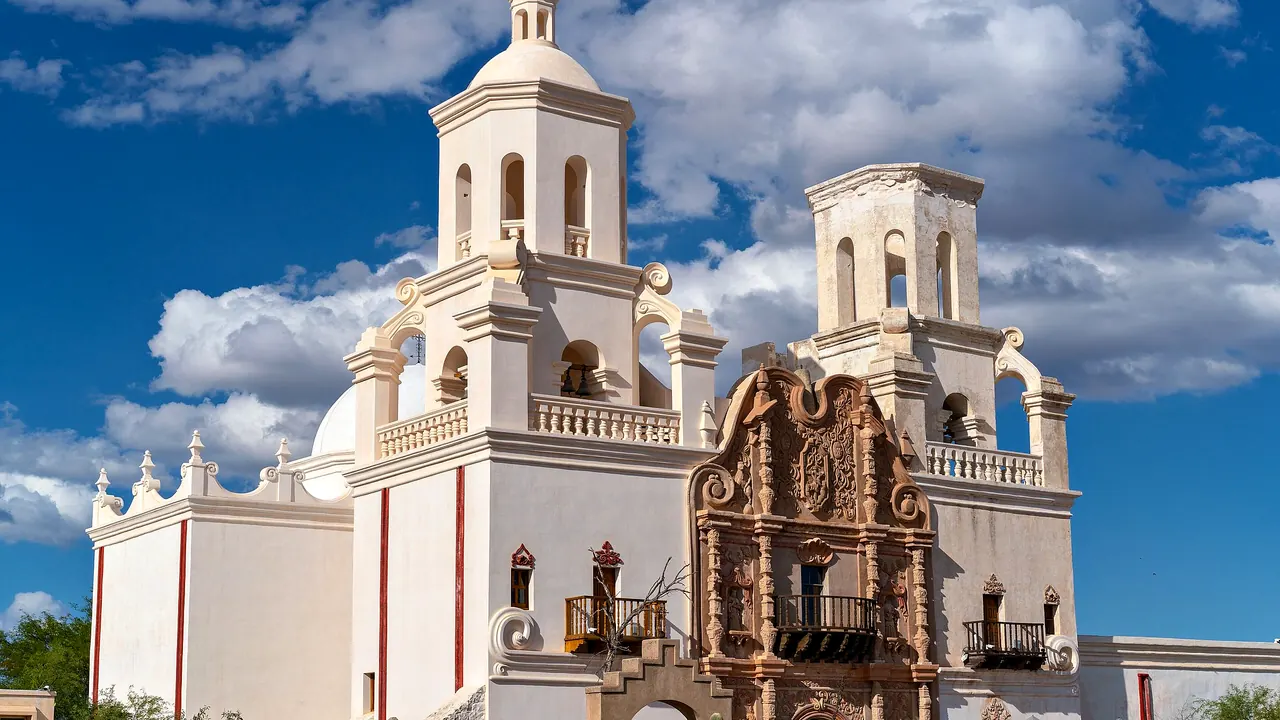
Mission San Xavier del Bac, south of the city
- Nature & outdoors78
- Wellness & relaxation62
- Food & drink60
Photo: Steve and Kimberly Rader, CC BY-SA 4.0, cropped
Match
47
Every category weighted equally
- Beach & sun45
- Culture & arts46
- Food & nightlife44
- Family trip47
- Outdoors52
- Relax & unwind49
- Shopping & style45
- On a budget47
Tucson in twelve categories
Our verdict on each, scored 0 to 100 against the same fixed benchmark cities, so a score means the same thing on every page.
Beaches & swimming. Scores 5 out of 100.
Food & drink. Scores 60 out of 100.
Culture & sights. Scores 44 out of 100.
Nightlife. Scores 38 out of 100.
Nature & outdoors. Scores 78 out of 100.
Day trips. Scores 60 out of 100.
Good for families. Scores 58 out of 100.
Getting around. Scores 25 out of 100.
Shopping & style. Scores 40 out of 100.
Affordability. Scores 50 out of 100.
Live music & performing arts. Scores 42 out of 100.
Wellness & relaxation. Scores 62 out of 100.
Tucson category by category
Beaches & swimming
5Tucson is a Sonoran Desert city with no coast anywhere near it. The nearest sea is the Gulf of California at Puerto Peñasco in Mexico, about four hours' drive away, which is a weekend trip, not a day at the beach. Swimming here means the hotel or resort pool, and in the long hot season those pools are where most visitors cool off. After winter rains or the summer monsoon, shallow pools form along the creek in Sabino Canyon, but they come and go and are no substitute for a beach.
Food & drink
60Tucson eats like a border city. Its own cuisine is Sonoran Mexican: carne asada grilled over mesquite, flour tortillas so thin they are nearly translucent, chimichangas, cheese crisps, menudo and the bacon-wrapped Sonoran hot dog sold from carts and small stands on the south side. The stretch of South 12th Avenue and the older barrios south and west of downtown hold the most traditional kitchens, many of them family-run for decades. Heritage desert ingredients, such as tepary beans, cholla buds, prickly pear and mesquite flour, turn up on menus and at farmers' markets.
Beyond that, the range narrows. Downtown and the Fourth Avenue area have good brewpubs, coffee roasters and a handful of ambitious modern restaurants, and the Sonoita and Willcox wine regions supply local bottles. Fine dining is limited, though, and this is a place to come for regional Mexican cooking done properly rather than for breadth.
Culture & sights
44The finest sight is Mission San Xavier del Bac on the Tohono O'odham reservation south of the city, a white Spanish colonial church from the late 18th century with a painted, gilded interior that is one of the best of its kind in the country. In town, the adobe row houses of Barrio Viejo and the El Presidio district recall the Mexican and earlier Spanish settlement, and the Tucson Museum of Art and the Arizona State Museum, with its strong Native American collections, are worth an afternoon.
The most distinctive draw is aviation: the Pima Air & Space Museum holds hundreds of aircraft, next to the vast field of retired military planes at Davis-Monthan. Otherwise the city is low and spread out, and two or three days covers the sights.
Nightlife
38Going out in Tucson centres on two areas within walking distance of each other: Fourth Avenue, a strip of dive bars, patios and cheap drinks fed by the university crowd, and Congress Street downtown, with cocktail bars, rooftops and a few dance floors. Weekend nights during term are lively in a casual, student-and-locals way, and patio drinking under warm night skies is a large part of the appeal. It is a modest scene, though, with few clubs of note, and away from these streets the city goes quiet early. Summer, when the students leave, is noticeably calmer.
Nature & outdoors
78Tucson sits in a basin ringed by four mountain ranges, and the Sonoran Desert reaches right to the suburbs. Saguaro National Park flanks the city on both sides, with forests of giant cactus, and Sabino Canyon and Catalina State Park offer trails that climb from desert washes into rocky canyons. The Catalina Highway winds up Mount Lemmon to about 2,800m, passing from cactus to pine forest within an hour, with cooler hiking, rock climbing and a small ski area at the top. Road cycling is serious here, and the bird life of the nearby sky island ranges draws watchers from around the world.
The season matters. From autumn to spring the climate is ideal for being outside all day. In summer, daytime heat often passes 40°C and outings move to dawn or to the mountains, while the July and August monsoon brings dramatic storms.
Day trips
60The best outings head south-east into old mining and frontier country. Tombstone, about an hour and a quarter away, trades on its Wild West history, and Bisbee, about an hour and a half out, is a steep copper-mining town of Victorian houses, galleries and mine tours. Closer in, Tubac is an artists' village and the adobe ruins of the Tumacácori mission sit just beyond it, while the Sonoita and Elgin wineries make a relaxed afternoon in rolling grassland.
North of the city, the Biosphere 2 research dome is under an hour away, and Phoenix and its museums are about two hours up the interstate. Every one of these needs a car, and the list, while varied, has no single place of the first rank.
Good for families
58Families do well here between October and April. The Arizona-Sonora Desert Museum, part zoo and part botanical garden, lets children see mountain lions, javelinas and hummingbirds in desert settings, and Reid Park Zoo, the Children's Museum and the Flandrau science centre and planetarium fill out the city. The giant aircraft at the air and space museum are a reliable hit, as is a former western film set on the west side with stunt shows and old-town streets.
The drawbacks are practical. Attractions are spread across a wide city and almost all need a car, and summer heat makes outdoor sights hard going for small children. Resort pools and the cool air on Mount Lemmon are the usual summer escapes.
Getting around
25Tucson is a low, wide city built around the car. The Sun Link streetcar runs a single line linking downtown, Fourth Avenue and the university, and that small core is pleasant to walk outside the summer heat. Buses cover the wider city, but slowly. The places most visitors come for, the national park, Sabino Canyon, the Desert Museum, the mission and Mount Lemmon, sit on the edges or well outside, so in practice a hire car is essential. Traffic is mild by big-city standards and parking is easy.
Shopping & style
40Shopping here is about the region, not fashion. Native American jewellery, Tohono O'odham baskets, pottery and Mexican folk art are the things to look for, in galleries around the old town and in Tubac to the south. Fourth Avenue has vintage and independent shops, and the foothills malls cover the everyday. The standout is the gem and mineral show each winter, when dealers fill hotels and tents across the city and collectors come from around the world. For the rest of the year the offer is pleasant but small, with no luxury streets or major department stores.
Affordability
50For an American city, Tucson is reasonable. Mid-range hotels cost less than in the larger Southwest cities, and the taquerías, hot dog stands and family Mexican restaurants make eating cheaply easy. The extras add up, though: a hire car is close to essential, sit-down restaurants come with American prices and tipping, and the desert golf and spa resorts are expensive. Rates are highest in the winter high season, above all during the gem show, and fall sharply in the summer heat, when bargains are easy to find.
Live music & performing arts
42Tucson has a small but real season. The Tucson Symphony Orchestra, Arizona Opera, which divides its productions between Tucson and Phoenix, and the Arizona Theatre Company all perform here, and touring Broadway shows play Centennial Hall on the university campus. Downtown, the restored Fox Theatre and the Rialto host concerts and films, and Congress Street has a handful of small live-music rooms with a strong local rock and desert folk streak. Mariachi runs deep in the city's culture, and the annual mariachi conference is a highlight. Most of the programme runs from autumn to spring, and visitors would not choose the city for it.
Wellness & relaxation
62Tucson is one of the original homes of the American destination spa. In the Catalina foothills and out towards Oracle, long-established wellness resorts offer fitness, desert walks, massage and meditation programmes, and many large resorts have full spas with pools facing the mountains. The desert itself sets a slow pace, with clear light, wide skies and cool, quiet evenings in winter.
What is missing is any public bathing culture: there are no thermal baths or bathhouses, and wellness here means a resort stay rather than something woven into the life of the city. It suits travellers looking for a quiet, sunny winter break.
When should you go?
Pick a month to see what it is like. The climate figures are measured averages, not a forecast.
Tucson in July
Daytime high, °C
Rainfall in the month, mm
The whole year
Shaded against this city’s own year: the deepest cell is its best month for that figure and the palest its weakest.
Temperature and rainfall are climate normals, averaged over the years shown. Tucson: 1991-2020 normals, Tucson International Airport (10.1 km from centre).
Before you go
| Measure | Tucson |
|---|---|
| Currency | US Dollar (USD) |
| Sockets | AB120 V, 60 Hz |
| Driving side | Right |
| Time zone | UTC-7 |
| Emergency number | 911 |
| Elevation | 728 m |
| Main airport | Tucson International Airport (TUS)12 km from centre18 non-stop destinations |
| Public holidays this year | 12 days |
By the numbers
| Measure | Tucson |
|---|---|
| City population | 542,629 |
| People per km² | 923 |
| Museums within 10 km | 10 |
| UNESCO World Heritage sites within 50 km | 0 |
Compare Tucson with
Every comparison with a written verdict behind it.
- Alta, Utah
- Aspen
- Beaver Creek
- Boulder
- Breckenridge
- Colorado Springs
- Copper Mountain
- Deer Valley
- Denver
- Flagstaff
- Huntington Beach
- Keystone
- Laguna Beach
- Las Vegas
- Los Angeles
- Newport Beach
- Palm Desert
- Palm Springs
- Park City
- Phoenix
- Salt Lake City
- San Diego
- San Jose
- Santa Barbara
- Santa Fe
- Santa Monica
- Scottsdale
- Sedona
- Snowbird
- Steamboat Springs
- Telluride
- Vail
- Winter Park, Colorado