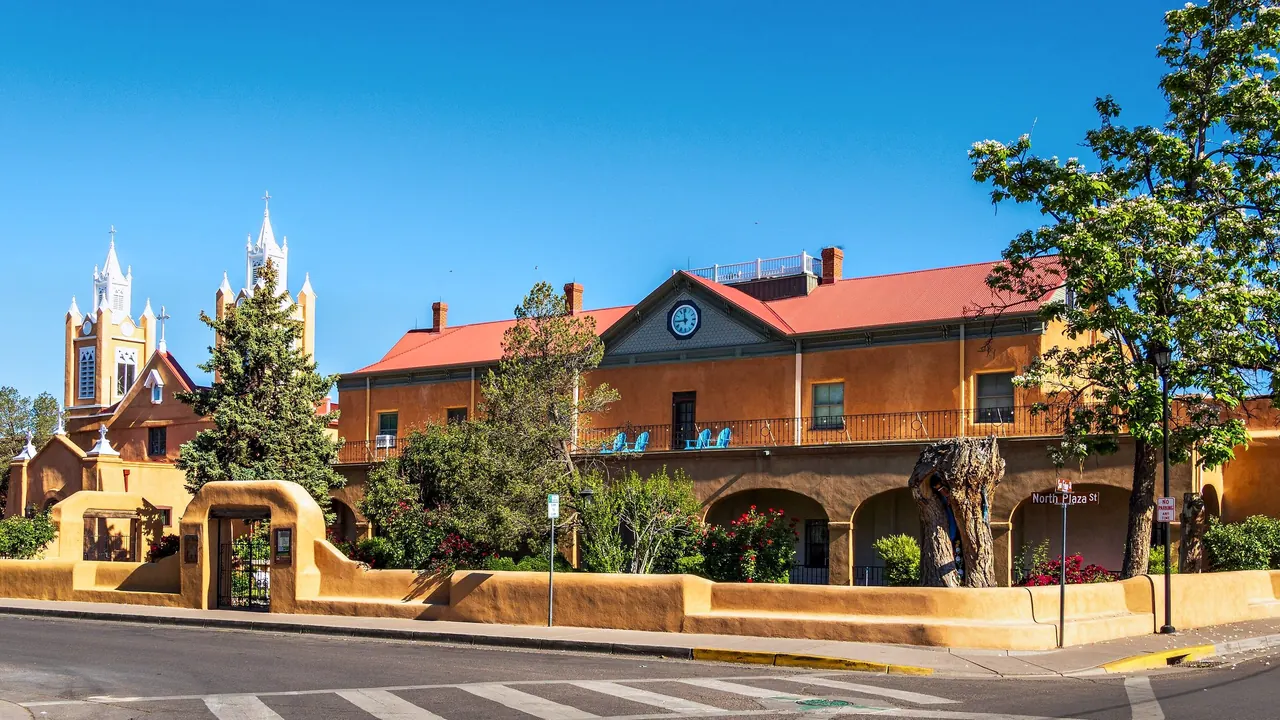
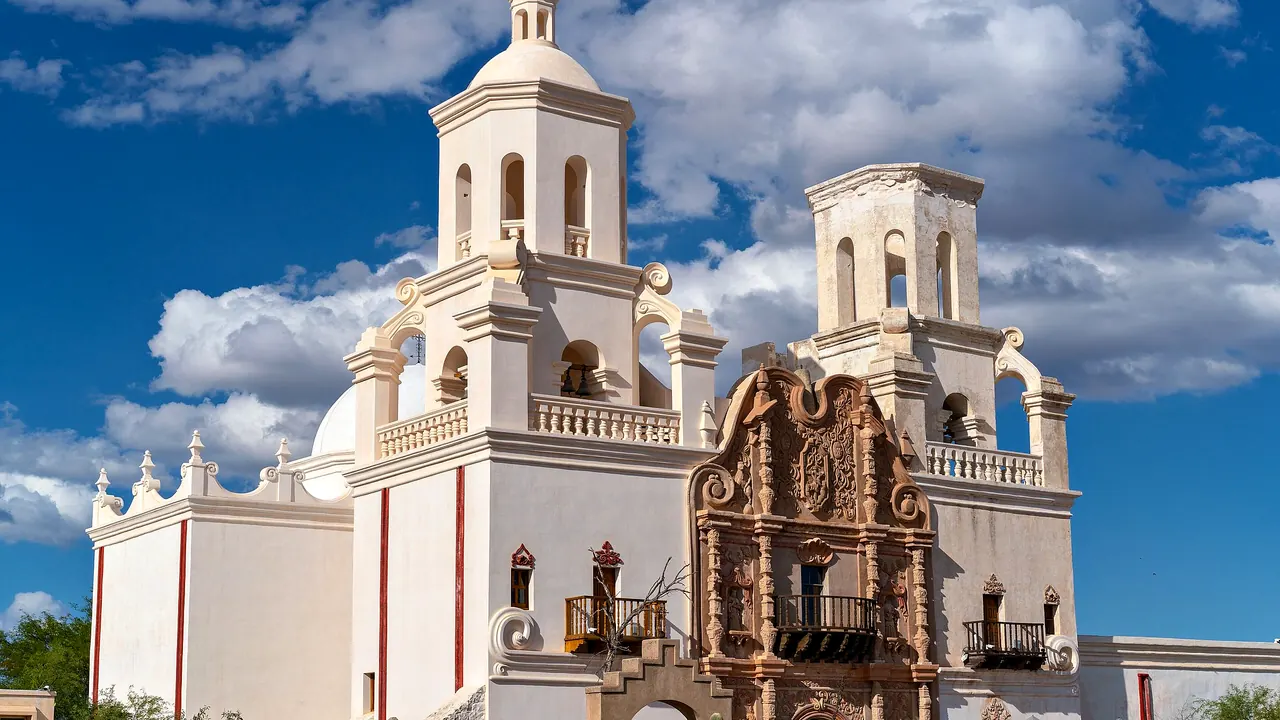
Photos: Albuquerque by dconvertini, CC BY-SA 2.0, cropped; Tucson by Steve and Kimberly Rader, CC BY-SA 4.0, cropped.
Albuquerque or Tucson?
Our verdict in twelve categories, each scored against the same fixed benchmark cities, and the climate month by month, so you can choose for your trip.
Choose Albuquerque for
- families
- shopping
- beaches
Albuquerque suits a traveller who wants the Southwest's Native and Hispanic history alongside its landscape, and who would rather go in spring, summer or autumn than in winter. The Pueblo-run cultural centre, the chile kitchens of the valleys and the dawn balloons of October are its own, and Santa Fe sits close enough for a full day out, even by train. At altitude, its summer is hard but bearable, while Tucson's is not.
Choose Tucson for
- wellness
- nature and the outdoors
- prices
Tucson is the better choice for a sunny winter escape built around being outdoors and slowing down. Giant cactus forests start at the city's edge, Mount Lemmon climbs from desert to pine in an hour, and the foothills hold some of the country's longest-established destination spas. It is also the somewhat cheaper base of the two, though it is best avoided in high summer.
Scoreboard
Twelve categories on one fixed scale from 0 to 100. The shaded stretch is the gap between the two.
Your match
Pick a travel style or drag the sliders, and both match scores follow your weighting.
Wins on families and shopping with your weighting.
Wins on wellness and nature and the outdoors with your weighting.
What matters to you?
Category by category
What the scores mean for a trip.
Beaches & swimming
Neither city offers a beach, and both leave you cooling off in a hotel pool. The differences are small: from Albuquerque you can drive out to a reservoir such as Cochiti Lake for an afternoon on the water. Tucson has the seasonal pools in Sabino Canyon after the rains, and the Gulf of California is close enough for a weekend away.
Food & drink
Both cities eat well, and both are regional rather than broad. Albuquerque's draw is New Mexican cooking, built on locally grown chile: carne adovada, blue corn enchiladas and the red-or-green question at every table, with the smell of roasting chile filling the city in late summer.
Tucson cooks Sonoran Mexican instead, with mesquite-grilled carne asada, paper-thin flour tortillas and the bacon-wrapped hot dog from south-side carts, plus desert ingredients such as tepary beans and prickly pear and wine from nearby Sonoita. In both, the best meals come from family kitchens in the older neighbourhoods rather than from formal dining rooms.
Culture & sights
Each city fills two or three days, but with different stories. Albuquerque is stronger on living Native culture, through the Indian Pueblo Cultural Center and the carvings of Petroglyph National Monument. It adds Old Town's adobe plaza, the Hispanic cultural campus in Barelas and the neon of Route 66.
Tucson has the single finest building of the pair: the gilded interior of Mission San Xavier del Bac. The adobe streets of Barrio Viejo and the Native collections of the Arizona State Museum fill out the city, and the air and space museum, with its acres of retired aircraft, gives it an aviation side that Albuquerque matches only with its nuclear history.
Nightlife
Going out is modest in both cities, though Tucson is a little easier. Its two areas, Fourth Avenue's dive bars and Congress Street's rooftops and cocktail bars, sit within walking distance, and the student crowd keeps term-time weekends lively. Albuquerque splits between a downtown strip that can get rowdy late and calmer Nob Hill. More of its evenings are spent in brewery taprooms. Both go quiet midweek.
Nature & outdoors
Tucson has the more striking outdoors on its doorstep. Saguaro forests flank the city, canyon trails start in Sabino and Catalina, and a single drive up Mount Lemmon goes from cactus to pine, with climbing, birding in the sky islands and serious road cycling besides.
Albuquerque has plenty of its own: the tramway to the Sandia crest above 3,000m, the La Luz Trail, the cottonwood bosque along the Rio Grande with its wintering cranes, and lava escarpments to the west. Its advantage is the calendar, since its summer heat still allows hiking where Tucson's drives people indoors or up the mountain.
Day trips
The two cities offer about as much for days out, but in different shapes. Albuquerque has one outstanding destination, Santa Fe, with its plaza, Canyon Road galleries and museums. Acoma's mesa-top Sky City, the cliff dwellings of Bandelier and the Turquoise Trail mining villages follow behind it.
Tucson's list is broader but flatter: Wild West Tombstone, hillside Bisbee, artists' Tubac with the Tumacácori mission, and the wineries of Sonoita and Elgin. None of them stands out like Santa Fe, and every one needs a car.
Good for families
Children are equally well looked after in both cities. Albuquerque groups its zoo, aquarium and botanic garden in the riverside BioPark and adds Explora and dinosaur halls. Its October Balloon Fiesta is a family event that Tucson cannot match.
Tucson's best is the Arizona-Sonora Desert Museum, with mountain lions and hummingbirds in desert settings, plus the giant aircraft and a western film set with stunt shows. Its family season really runs from October to April. Both need a car to get between sights.
Getting around
Plan on a hire car in either city, as both are low, spread out and built for driving, with easy parking. Tucson's Sun Link streetcar ties downtown, Fourth Avenue and the university into a small, walkable core. Albuquerque's Central Avenue bus does the same for Old Town and Nob Hill, and its commuter train to Santa Fe is the only way in either city to reach a major day trip without driving.
Shopping & style
Both are places to buy Native and regional craft rather than fashion, and neither has a luxury street. Albuquerque leans towards Pueblo pottery, Navajo weaving, turquoise silverwork and chile ristras, sold around Old Town and the Pueblo cultural centre.
Tucson adds Tohono O'odham baskets and Mexican folk art, with Tubac's galleries to the south. Its winter gem and mineral show fills the city with dealers and collectors from around the world.
Affordability
Tucson is the gentler on the wallet. Mid-range rooms cost less, taquerías and hot dog stands make cheap eating easy, and the summer heat brings real hotel bargains, although winter and the gem show push rates up.
Albuquerque is fairly priced but has fewer ways to save. A comfortable room costs about the same as in a European capital, and tax and tips swell every bill. In both cities the hire car is the largest extra, and Balloon Fiesta week sends Albuquerque's rates soaring.
Live music & performing arts
Neither city is worth choosing for its stages, but each has its own character. Albuquerque's distinction is flamenco, with a long-established institute and festival, along with weekend Pueblo dances and the Pueblo Deco KiMo Theatre. The open-air opera above Santa Fe is within reach on summer evenings.
Tucson has the fuller formal season, with a symphony, opera shared with Phoenix and a resident theatre company. It also has deep mariachi roots and its annual conference, though most of it runs from autumn to spring.
Wellness & relaxation
This is where the two differ most. Tucson is one of the birthplaces of the American destination spa, with long-established foothills resorts built around fitness, massage, meditation and quiet desert walks. The winter light and calm evenings make it a natural place to rest.
Albuquerque offers hotel spas, some on Pueblo lands with mountain views. What it has that Tucson lacks is natural hot water: the mineral pools at Jemez Springs and the bathhouses around Santa Fe are within a drive.
When should you go?
Pick your month. The climate figures are measured averages, not a forecast.
Albuquerque in July
Tucson in July
Daytime high, °C
Rainfall in the month, mm
Temperature and rainfall are climate normals, averaged over the years shown. Albuquerque: 1991-2020 normals, Albuquerque International Airport (7.3 km from centre). Tucson: 1991-2020 (sunshine 1981-2010) normals, Tucson International Airport (10.1 km from centre).
These two desert cities are at their best in different seasons. Albuquerque has a real winter, with daytime highs around 9°C in December and January. That is fine for museums and brisk walks but not for long hours outdoors. April and May are the city's sweet spot, warm and the driest part of the year. From June to August it reaches 33°C, hot but eased by the altitude, and July and August bring the afternoon storms of the monsoon. Those storms tail off through September, so late September and October make a second good season.
Tucson is the winter city. In January it still reaches about 19°C under steady sun, with only light showers, and from November to April the weather is ideal for hiking and sitting outside. From May the heat turns fierce, peaking near 39°C in June, and the July monsoon brings the wettest weeks of the year, at 56mm. Both cities are sunny in every month, and neither is a beach destination in any season.
Which traveller are you?
On a relaxing and wellness trip, Tucson lets you check in, stay put and let a week of winter sun do the work. In Albuquerque, rest comes between sightseeing, a soak at the end of a day's drive rather than the point of the trip.
For an outdoors trip in the cooler months, Tucson gives the fuller days, with dawn walks among the saguaros and a long ride or climb on Mount Lemmon. In midsummer, though, Albuquerque is the more comfortable base for days on the trail.
On a trip on a tight budget, Tucson is the easier city to make work, especially if you travel outside winter and eat at counters and carts. Free sights such as Old Town and the petroglyphs help in Albuquerque, but the same comfort costs more there.
Before you go
| Measure | Albuquerque | Tucson |
|---|---|---|
| Currency | US Dollar (USD) | US Dollar (USD) |
| Sockets | AB120 V, 60 Hz | AB120 V, 60 Hz |
| Driving side | Right | Right |
| Time zone | UTC-7, UTC-6 in summer | UTC-7 |
| Emergency number | 911 | 911 |
| Elevation | 1,619 m | 728 m |
| Main airport | Albuquerque International Sunport (ABQ)6 km from centre27 non-stop destinations | Tucson International Airport (TUS)12 km from centre18 non-stop destinations |
| Public holidays this year | 13 days | 12 days |
By the numbers
| Measure | Albuquerque | Tucson |
|---|---|---|
| City population | 564,559 | 542,629 |
| People per km² | 1,150 | 923 |
| Museums within 10 km | 10 | 10 |
| UNESCO World Heritage sites within 50 km | 0 | 0 |
Where else could you go?
Every comparison below shares a destination with this one, so you can follow Albuquerque or Tucson somewhere new.
- Santa Fevs Albuquerque
- Scottsdalevs Tucson
- Phoenixvs Tucson
- Taosvs Albuquerque
- Durango, Coloradovs Albuquerque
- Sedonavs Tucson