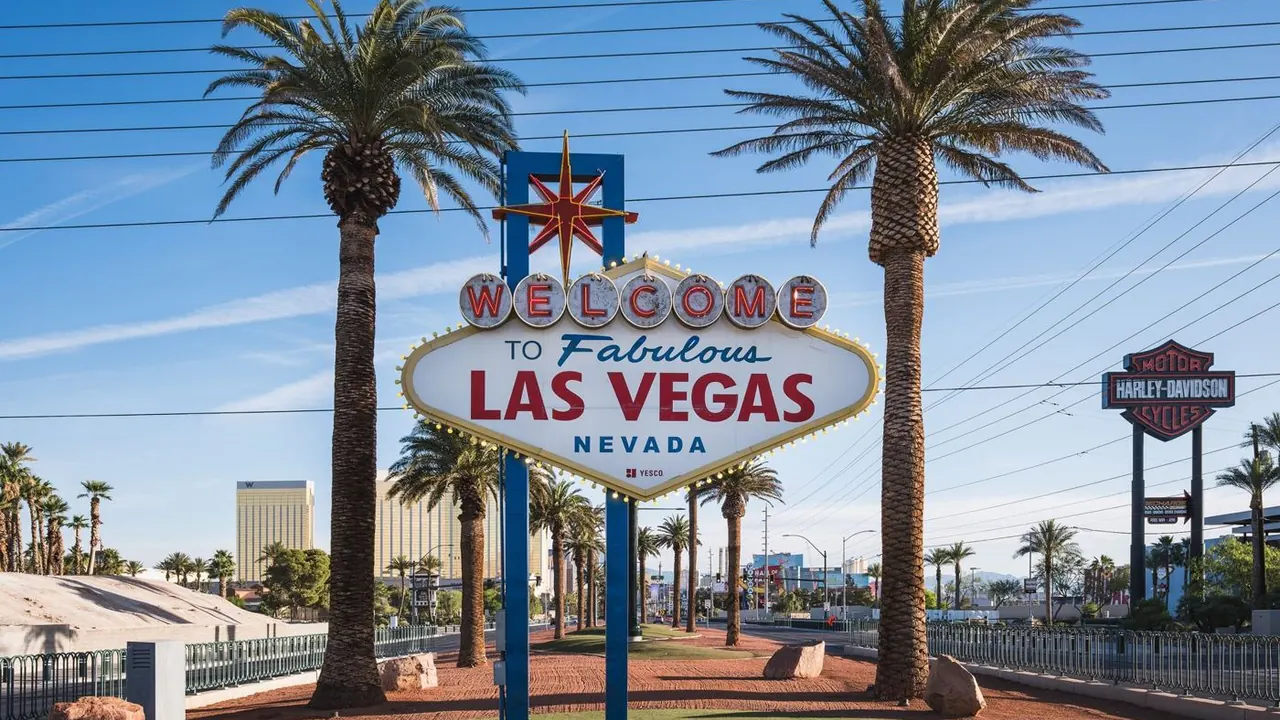
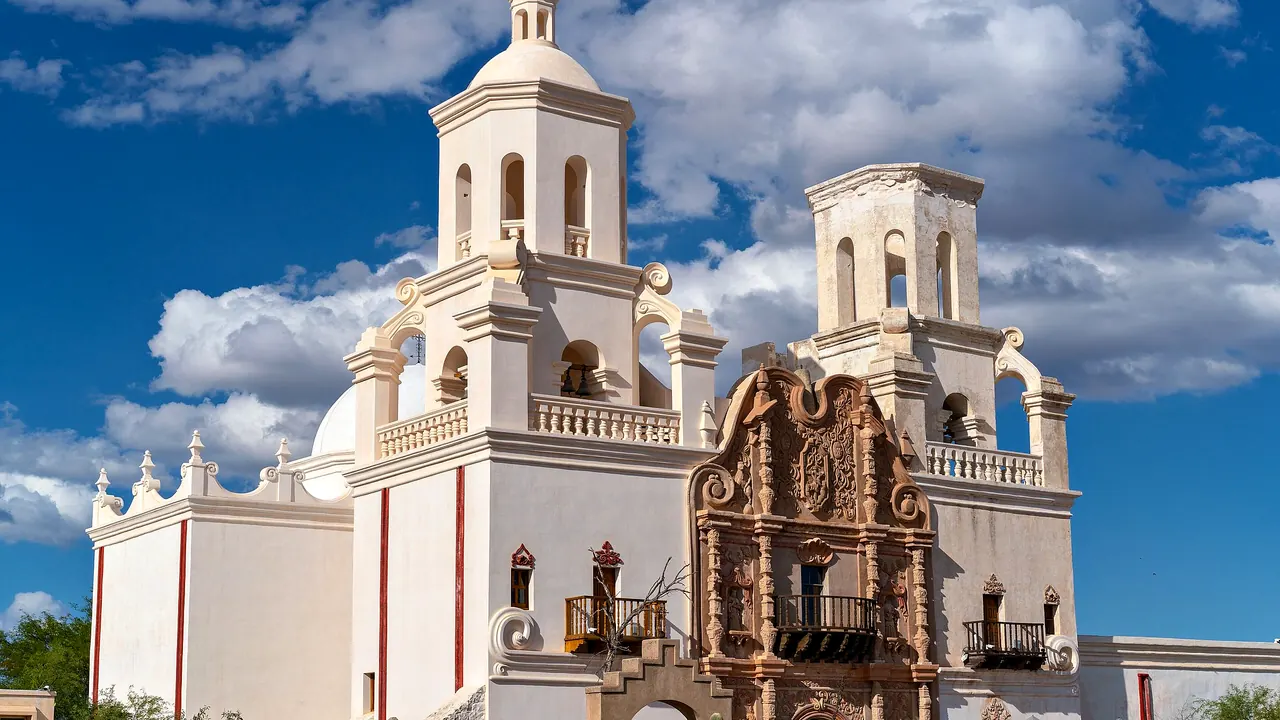
Photos: Las Vegas by Christian David, CC BY-SA 4.0, cropped; Tucson by Steve and Kimberly Rader, CC BY-SA 4.0, cropped.
Las Vegas or Tucson?
Our verdict in twelve categories, each scored against the same fixed benchmark cities, and the climate month by month, so you can choose for your trip.
Choose Las Vegas for
- nightlife
- live music and the arts
- shopping
Las Vegas is the pick for a group celebration or a few nights of shows and late dinners. Its nightlife runs around the clock, star residencies and big productions fill the resort theatres, and the eating stretches from chef-led dining rooms to the late-opening Asian kitchens of Spring Mountain Road. Red Rock and Valley of Fire are close enough for a morning out, but the city suits adults who want to stay up late, not families or sightseers.
Choose Tucson for
- day trips
- families
- wellness
Travellers who want the desert itself, at a slower pace, will be happier in Tucson. Saguaro forests and Sabino Canyon begin at the edge of the suburbs, Mount Lemmon offers a cool escape, and there is more history to see, from San Xavier del Bac to the old barrios, with Bisbee and Tombstone for days out. It is easier with children, kinder to the budget and home to long-established destination spas, though the evenings are quiet and you will need a car.
Scoreboard
Twelve categories on one fixed scale from 0 to 100. The shaded stretch is the gap between the two.
Your match
Pick a travel style or drag the sliders, and both match scores follow your weighting.
Too close to call, level with your weighting
Wins on nightlife and live music and the arts with your weighting.
Wins on day trips and families with your weighting.
What matters to you?
Category by category
What the scores mean for a trip.
Beaches & swimming
Neither city has a beach, and neither is worth choosing for swimming. What differs is the fallback. Las Vegas has Lake Mead about 40 minutes away, a bare gravel reservoir shore with warm summer water, and its Strip resorts have sand-edged wave pools and lazy rivers built for an afternoon in the heat.
In Tucson, swimming means the hotel pool, plus shallow creek pools in Sabino Canyon that appear only after rain. The nearest sea, at Puerto Peñasco, is a weekend trip.
Food & drink
Las Vegas has more range. The Strip has famous chefs' dining rooms, steakhouses and tasting menus, and Spring Mountain Road has kilometres of late-opening Chinese, Japanese, Korean and Vietnamese kitchens. What it lacks is a cooking tradition of its own.
Tucson has exactly that: Sonoran Mexican food grilled over mesquite, paper-thin flour tortillas and Sonoran hot dogs from south-side carts, plus desert ingredients such as tepary beans and prickly pear. The choice is narrower and fine dining is scarce, so it rewards someone who wants one regional cuisine done well more than variety.
Culture & sights
Tucson has the more substantial sights. The gilded, painted interior of Mission San Xavier del Bac is real Spanish colonial heritage, and the adobe streets of Barrio Viejo and El Presidio show the older settlement. The Arizona State Museum and the huge aircraft collection at Pima Air & Space fill more afternoons.
Las Vegas offers spectacle instead: the themed resorts, the fountains and the light canopy over Fremont Street. Its real history fits into two good museums, the Neon Museum's sign yard and the Mob Museum, and after those a sightseer has little left to do.
Nightlife
This is where Las Vegas is strongest. Bars never close, you can carry drinks along the Strip, superstar DJs hold weekend residencies and pool dayclubs fill the afternoons, all with dress codes, queues and table service. Fremont Street and the arts district offer a cheaper, looser alternative.
In Tucson, going out means two streets: student bars and patios on Fourth Avenue, and cocktail bars and rooftops on Congress Street. It is relaxed and enjoyable on a weekend during term, but the rest of the city goes quiet early, and summer is calmer still.
Nature & outdoors
Both cities are surrounded by striking desert, but Tucson sits inside it. Saguaro National Park lies on both sides of the city, Sabino Canyon and Catalina State Park start at the suburbs, and the drive up Mount Lemmon climbs from cactus to pine forest in an hour. Serious road cycling and birdwatching in the sky island ranges add to it.
The Las Vegas landscapes are excellent but need a drive: the sandstone cliffs and climbing of Red Rock Canyon, the flame-coloured rock of Valley of Fire and the cooler forest of Mount Charleston. In both cities, summer outings move to dawn or to the mountains.
Day trips
Tucson has a fuller choice of outings. Bisbee's steep Victorian mining streets, Tombstone's Wild West history, the artists' village of Tubac with the Tumacácori mission ruins, and the wineries around Sonoita all lie within about an hour and a half. Biosphere 2 is to the north.
From Las Vegas the one easy outing is Hoover Dam combined with Boulder City. The Grand Canyon, Zion and Death Valley tours are long days spent mostly getting to the scenery, which is where the city's isolation shows.
Good for families
Tucson is much easier with children, at least from October to April. The Arizona-Sonora Desert Museum shows mountain lions and hummingbirds in real desert settings, and the zoo, the planetarium, the giant aircraft and a western film set with stunt shows can fill several days, though all of them need a car.
Las Vegas has a day or two of fun, from the indoor amusement park and shark aquarium to the thrill rides on the observation tower. But families have to cross casino floors, and the adult atmosphere of the Strip is hard to avoid. Many families treat it as one stop on a road trip to the national parks.
Getting around
Neither city is easy without a car, but Las Vegas is a little more manageable. Most of a visit happens along one 6km stretch, served by a monorail, buses that run day and night and plenty of taxis. Walking between the huge resorts still takes longer than it looks.
Tucson's streetcar covers only downtown, Fourth Avenue and the university. Almost everything worth seeing lies on the edges of the city or well outside it, so a hire car is essential from the first day. At least the traffic is light and parking is easy.
Shopping & style
For brands, Las Vegas is the clear winner. The resort malls on the Strip hold most of the big fashion and jewellery houses, the Fashion Show mall adds department stores, and two large outlet centres draw bargain hunters, all open late. There is very little that is local.
Tucson is the opposite: small but tied to the region. Look for Native American jewellery, Tohono O'odham baskets and Mexican folk art in the galleries of the old town and Tubac, and vintage shops on Fourth Avenue. Each winter its gem and mineral show draws collectors from around the world.
Affordability
Tucson is the cheaper of the two. Mid-range hotels cost less, Sonoran food from taquerías and hot dog stands keeps meals inexpensive, and summer brings real bargains. A hire car and the winter gem show push costs up.
A midweek room in Las Vegas can look cheap, but weekend and convention rates, resort fees, cocktails, club entry and shows add up quickly. Eating in Chinatown helps, but it seldom ends up as a budget trip.
Live music & performing arts
Las Vegas is a destination for live entertainment in its own right. It has purpose-built theatres for acrobatic and water shows, magicians and comedians every night, and pop and country stars on long residencies. Its formal arts, centred on the Smith Center, are a smaller part of the picture.
Tucson has a modest but real season instead: the symphony, Arizona Opera, the Arizona Theatre Company, concerts at the restored Fox Theatre and a deep mariachi tradition. Most of it runs from autumn to spring.
Wellness & relaxation
Tucson suits a restful trip far better. It was one of the first homes of the American destination spa, with foothills resorts built around fitness, desert walks and meditation, and the quiet desert evenings help.
Las Vegas has enormous resort spas with thermal circuits and salt rooms, but they sit inside a city designed to keep visitors stimulated around the clock. The way to make it work is a non-gaming hotel and spa time booked in the morning.
When should you go?
Pick your month. The climate figures are measured averages, not a forecast.
Las Vegas in July
Tucson in July
Daytime high, °C
Rainfall in the month, mm
Temperature and rainfall are climate normals, averaged over the years shown. Las Vegas: 1991-2020 normals, McCarran International Airport (8.5 km from centre). Tucson: 1991-2020 normals, Tucson International Airport (10.1 km from centre).
Both are desert cities at their best outside summer, but they differ at each end of the year. Las Vegas has the cooler winter, with highs around 14°C in December and January. That is fine for walking the Strip but too cool for lounging by the pool, so spring and October are its best months. It stays almost completely dry all year. From June to September highs near 40°C make daytime walking and desert hiking punishing, and life moves to the pools.
Tucson is a few degrees warmer through winter, with highs around 19°C, so November to April is ideal for hiking, cycling and spa stays. Its summer is just as hot, but unlike Las Vegas it has a real wet season: the monsoon brings storms in July and August, with about 56mm in July.
Which traveller are you?
On a food and nightlife trip, Las Vegas is the obvious choice. Clubs, casino bars and DJ residencies run all night, and dinner can be anything from a famous chef's tasting menu to late Sichuan on Spring Mountain Road. Tucson's evenings are casual and end early.
On a family trip with children, Tucson is the easier base between autumn and spring. The Desert Museum, the zoo, the planetarium and the giant aircraft all suit young visitors. In Las Vegas, families have to walk through casino floors in an adult atmosphere.
For a relaxing and wellness trip, choose Tucson. Its foothills resorts were among the first destination spas, with desert walks, massage and meditation under wide winter skies. Las Vegas has bigger spas, but the noise and lights of the casinos work against unwinding.
Before you go
| Measure | Las Vegas | Tucson |
|---|---|---|
| Currency | US Dollar (USD) | US Dollar (USD) |
| Sockets | AB120 V, 60 Hz | AB120 V, 60 Hz |
| Driving side | Right | Right |
| Time zone | UTC-8, UTC-7 in summer | UTC-7 |
| Emergency number | 911 | 911 |
| Elevation | 610 m | 728 m |
| Main airport | Harry Reid International Airport (LAS)4 km from centre159 non-stop destinations | Tucson International Airport (TUS)12 km from centre18 non-stop destinations |
| Public holidays this year | 11 days | 12 days |
By the numbers
| Measure | Las Vegas | Tucson |
|---|---|---|
| City population | 641,903 | 542,629 |
| People per km² | 1,843 | 923 |
| Museums within 10 km | 21 | 10 |
| UNESCO World Heritage sites within 50 km | 0 | 0 |
Where else could you go?
Every comparison below shares a destination with this one, so you can follow Las Vegas or Tucson somewhere new.