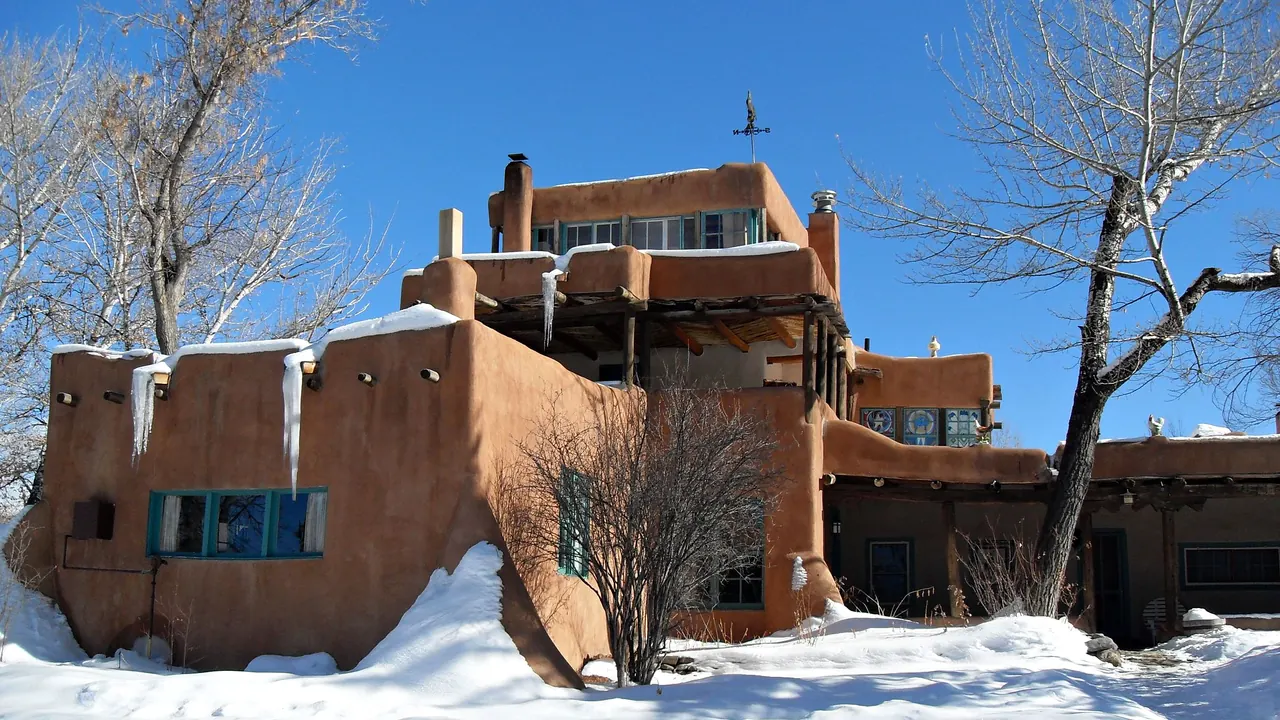
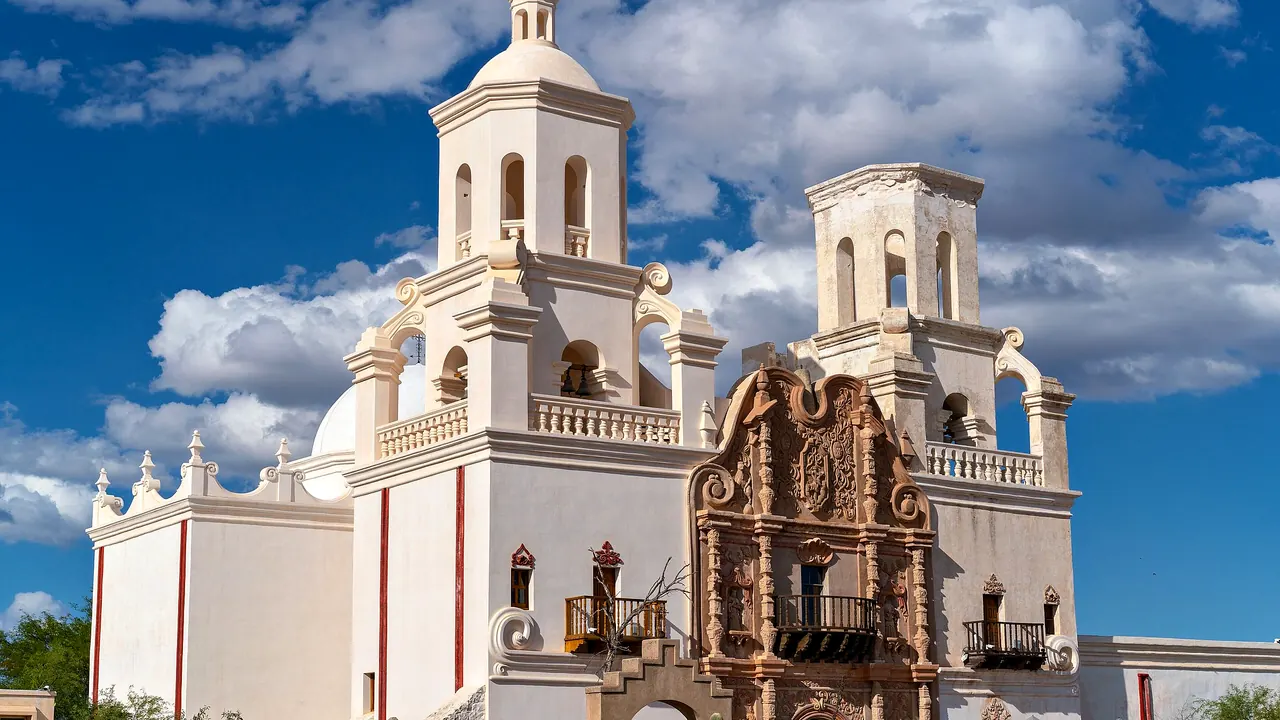
Photos: Taos by PhictureGal, CC BY-SA 3.0, cropped; Tucson by Steve and Kimberly Rader, CC BY-SA 4.0, cropped.
Taos or Tucson?
Our verdict in twelve categories, each scored against the same fixed benchmark cities, and the climate month by month, so you can choose for your trip.
Choose Taos for
- culture and sights
- nature and the outdoors
- day trips
Taos is for travellers who come for the land and its history. The pueblo, the adobe church at Ranchos and the art-colony houses give it the deeper sights, and the mountains above town offer serious skiing in winter and alpine trails in summer. Evenings are short and the dining is a small regional affair, so it suits people who want quiet nights after big days outdoors.
Choose Tucson for
- nightlife
- food and drink
- families
Tucson makes more sense if you want a sunny winter escape with more to do once the hiking is over. It eats better, with proper Sonoran Mexican cooking, has two lively streets to go out on and keeps an orchestra and a theatre season. It is also the easier choice with children, and generally the cheaper one.
Scoreboard
Twelve categories on one fixed scale from 0 to 100. The shaded stretch is the gap between the two.
Your match
Pick a travel style or drag the sliders, and both match scores follow your weighting.
Wins on culture and sights and nature and the outdoors with your weighting.
Wins on nightlife and food and drink with your weighting.
What matters to you?
Category by category
What the scores mean for a trip.
Beaches & swimming
Neither city has a beach. Both are inland desert places, and water here means pools and springs, not the sea.
What differs is the alternative. In Taos it is a soak in a hot spring or a raft trip on the Rio Grande. Tucson relies on resort pools through its long hot season, plus the Gulf of California about four hours south for anyone ready to make a weekend of it.
Food & drink
Both cities are worth visiting for their regional Mexican cooking, but Tucson offers more of it and more variety. Its Sonoran tradition of mesquite-grilled carne asada, paper-thin flour tortillas and bacon-wrapped hot dogs runs through decades-old family kitchens on South 12th Avenue. Desert ingredients such as tepary beans and cholla buds, and wines from Sonoita and Willcox, add further interest.
Taos cooks northern New Mexican food around red and green chile, with posole, carne adovada and horno bread from the pueblo. It is good and full of character, but this is a small town, and a week will take you through most of it.
Culture & sights
Taos has the stronger sights. Taos Pueblo, a UNESCO site still lived in by a Tiwa-speaking community, is a rarer thing than anything in Tucson. The church at Ranchos de Taos and the museums of the old art colony, from the Harwood to the Millicent Rogers, make for two or three slow, rewarding days.
Tucson's high point is Mission San Xavier del Bac, whose gilded interior holds its own against anything in the Southwest. Around it you get the adobe streets of Barrio Viejo, a fine Native American collection at the Arizona State Museum and a surprising aviation strand, with hundreds of aircraft at Pima.
Nightlife
Tucson has the livelier evenings, though that is not saying a great deal. Fourth Avenue offers student dive bars and cheap patio drinks, and Congress Street, a short walk away, adds cocktail bars, rooftops and a few dance floors, busiest on term-time weekends.
Taos offers a margarita in an adobe hotel bar, a brewery taproom or a saloon band, plus après-ski in winter. Most nights there finish soon after dinner.
Nature & outdoors
Both are excellent outdoor bases, and Taos has a slight edge. It offers real mountain terrain: steep skiing at Taos Ski Valley, the climb up Wheeler Peak to 4,013m, alpine lakes, and spring rafting through the Taos Box in the Rio Grande gorge.
Tucson's landscape is the Sonoran Desert, with saguaro forests on both sides of the city, canyon trails at Sabino and the drive up Mount Lemmon from cactus to pine. It is also a serious place for road cycling and birdwatching, but summer heat limits outings for months, while Taos's mountain summers stay comfortable.
Day trips
The two are evenly matched, but the outings are different in kind. From Taos, Santa Fe is the obvious day out, best reached along the High Road through Truchas, Las Trampas and Chimayó, and Abiquiu and Ghost Ranch lead into O'Keeffe country.
Tucson has no destination quite like Santa Fe. Its strength is variety: frontier Tombstone, the hillside mining town of Bisbee, the artists' village of Tubac with the Tumacácori ruins nearby, and Biosphere 2. Either way you will need a car.
Good for families
Tucson is much the easier choice with children. The Arizona-Sonora Desert Museum combines animals and gardens, and Reid Park Zoo, the children's museum, the planetarium, the aircraft at Pima and a western film set with stunt shows mean there is always a plan B. The catch is the summer heat, when small children are better off in a pool or up the mountain.
Taos works for active families, with a good ski school, gentle river floats and horse riding, but it has nothing built specifically for children. The altitude can also tire young ones for the first few days.
Getting around
You will need a car in both, and Tucson is only slightly kinder to anyone without one. Its Sun Link streetcar connects downtown, Fourth Avenue and the university, buses reach further afield, and parking is easy. Still, the national park, the mission and Mount Lemmon all need wheels.
Taos has a walkable centre around the plaza and Kit Carson Road, plus a basic bus. The pueblo, the gorge and the ski valley are spread across the valley, and most visitors start with a drive of about two and a half hours from Albuquerque airport.
Shopping & style
Both are places to buy regional craft, not fashion, but the focus differs. Taos is a gallery town, with painting in the art-colony tradition, Rio Grande weaving, carved santos and micaceous pottery bought straight from potters at the pueblo.
Tucson casts a wider net: Tohono O'odham baskets, Mexican folk art, vintage shops on Fourth Avenue and malls for everyday needs. Its winter gem and mineral show, which fills the city with dealers, has no equivalent in Taos.
Affordability
Tucson is easier on the budget. Its mid-range hotels are reasonably priced and taquerías and hot dog stands make cheap meals easy, while Taos charges resort rates at its historic inns and ski lodges. Both add the cost of a hire car and tips on top.
Their cheap seasons fall at opposite times. In Tucson, bargains appear in the summer heat. In Taos they come in spring and late autumn, between the ski and summer seasons.
Live music & performing arts
Tucson has a real, if modest, cultural calendar: a symphony orchestra, opera shared with Phoenix, the Arizona Theatre Company, Broadway tours at Centennial Hall and concerts at the restored Fox Theatre. Mariachi also runs deep in the city's culture.
Taos has less on stage but one unforgettable experience: the feast-day dances at the pueblo, open to quiet, respectful visitors who take no photos. Beyond that there is a summer chamber music festival and local bands.
Wellness & relaxation
Taos relaxes you with hot water. Ojo Caliente, under an hour away, has outdoor pools fed by several different mineral springs beneath the cliffs. Rough springs at the bottom of the Rio Grande gorge reward the walk down, especially in the cooler months. In town, yoga studios and retreat centres draw on the valley's spiritual reputation.
Tucson has no springs or bathhouses. Its version is the destination spa, a form of resort it helped to invent. Long-established resorts in the Catalina foothills and out towards Oracle run programmes of fitness, desert walks, massage and meditation, with pools facing the mountains, and in winter it is the warmer of the two places to unwind.
When should you go?
Pick your month. The climate figures are measured averages, not a forecast.
Taos in July
Tucson in July
Daytime high, °C
Rainfall in the month, mm
Where the figures come from
Taos has no rain gauge within 25 km of the centre, so its rainfall comes from a gridded climate dataset read at the city rather than from a gauge further away.
Temperature and rainfall are climate normals, averaged over the years shown. Taos: 2006-2020 (rainfall 1991-2020) normals, Taos / Los Cordovas (10.5 km from centre). Tucson: 1991-2020 (sunshine 1981-2010) normals, Tucson International Airport (10.1 km from centre).
The two cities peak at opposite times of year. Taos sits high, and in December and January days barely reach 4°C. That suits the ski slopes but makes the plaza cold for wandering. Spring warms slowly. June is the pick of early summer, warm at around 29°C and still dry. July and August stay as warm but are the wettest months of the year, with afternoon thunderstorms building over the mountains. September and October are drier and cooler, and with the aspens turning gold they are the best months for walking.
Tucson is at its best while Taos is frozen. From November to March days are mild, around 19°C in midwinter and warmer either side, with sunshine you can count on, which is ideal for hiking and sightseeing. By June the heat reaches 39°C, and outdoor plans move to dawn or up Mount Lemmon. The July and August monsoon brings the year's heaviest rain, about 56mm in July, mostly as short, dramatic storms.
Which traveller are you?
On a culture and arts trip, Taos is the better base. A thousand-year-old pueblo that people still live in, the buttressed church painted by O'Keeffe and a cluster of art-colony museums and houses give it more depth than Tucson's single great mission.
On a family trip with children, choose Tucson, ideally between October and April. The Desert Museum, the zoo, the children's museum, the planetarium and the huge aircraft collection keep young ones busy, while Taos offers outdoor activities but nothing actually built for children.
On a food and nightlife trip, Tucson is clearly ahead. Sonoran cooking from the barrios and street carts has more range than Taos's chile kitchens, and patio bars on Fourth Avenue and Congress Street stay open long after Taos has gone to bed.
Before you go
| Measure | Taos | Tucson |
|---|---|---|
| Currency | US Dollar (USD) | US Dollar (USD) |
| Sockets | AB120 V, 60 Hz | AB120 V, 60 Hz |
| Driving side | Right | Right |
| Time zone | UTC-7, UTC-6 in summer | UTC-7 |
| Emergency number | 911 | 911 |
| Elevation | 2,124 m | 728 m |
| Main airport | Santa Fe Municipal Airport (SAF)99 km from centre5 non-stop destinations | Tucson International Airport (TUS)12 km from centre18 non-stop destinations |
| Public holidays this year | 13 days | 12 days |
By the numbers
| Measure | Taos | Tucson |
|---|---|---|
| City population | 6,474 | 542,629 |
| People per km² | 415 | 923 |
| Museums within 10 km | 4 | 10 |
| UNESCO World Heritage sites within 50 km | 1 | 0 |
Where else could you go?
Every comparison below shares a destination with this one, so you can follow Taos or Tucson somewhere new.
- Santa Fevs Taos
- Scottsdalevs Tucson
- Phoenixvs Tucson
- Telluridevs Taos
- Colorado Springsvs Taos
- Sedonavs Tucson