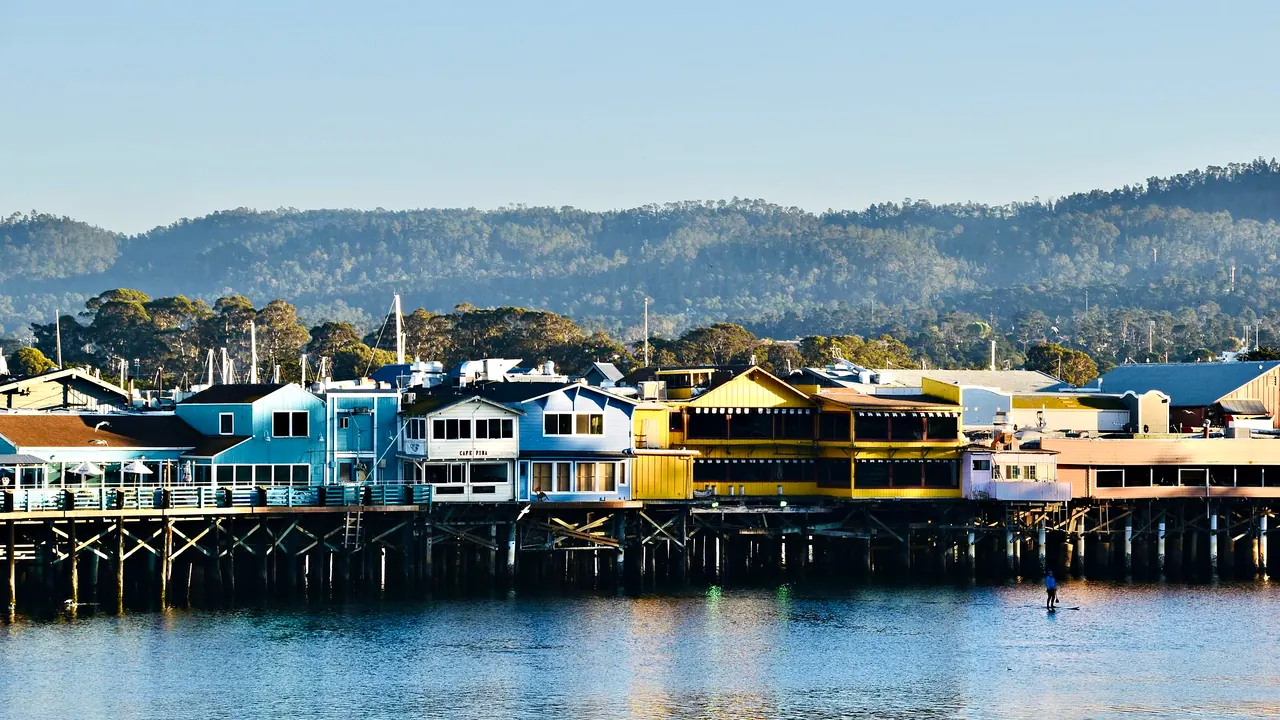
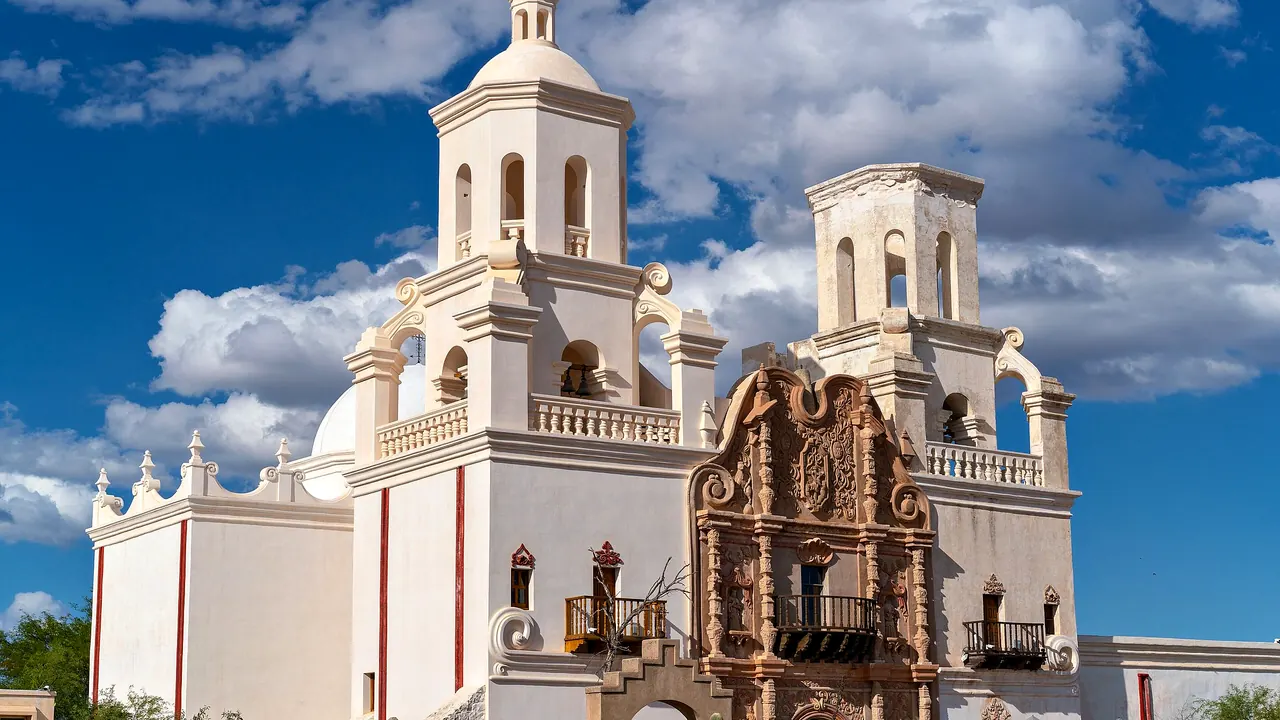
Photos: Monterey by Lesli Whitecotton, Pexels License; Tucson by Steve and Kimberly Rader, CC BY-SA 4.0, cropped.
Monterey or Tucson?
Our verdict in twelve categories, each scored against the same fixed benchmark cities, and the climate month by month, so you can choose for your trip.
Choose Monterey for
- beaches
- getting around
- families
Monterey suits travellers who want the ocean and its wildlife close at hand. Whales pass within reach of boats from the harbour, sea otters float beside the waterfront path, and the aquarium makes it one of the easiest coastal trips for families. The compact old town and the shoreline walk to Pacific Grove can be done without a car. Summers stay mild, but you pay Californian resort prices for all of it.
Choose Tucson for
- prices
- food and drink
- wellness
Tucson is the better choice for winter sun, desert hiking and a trip that costs less. It has real Sonoran Mexican cooking, livelier evenings on Fourth Avenue and Congress Street, and a long tradition of destination spas in the Catalina foothills. Plan on hiring a car, and avoid the hottest months, when the desert is hard going.
Scoreboard
Twelve categories on one fixed scale from 0 to 100. The shaded stretch is the gap between the two.
Your match
Pick a travel style or drag the sliders, and both match scores follow your weighting.
Wins on beaches and getting around with your weighting.
Wins on prices and food and drink with your weighting.
What matters to you?
Category by category
What the scores mean for a trip.
Beaches & swimming
Monterey at least has a coastline, with the long sand of Del Monte Beach, the white sand and cypresses of Carmel Beach and the dunes at Asilomar. The cold water and rip currents make these beaches for walks and picnics rather than for swimming.
Tucson has no beach at all. The nearest sea is at Puerto Peñasco in Mexico, about four hours' drive away, so in Tucson swimming means the resort pool, plus the occasional seasonal pool in Sabino Canyon.
Food & drink
Tucson has the more distinctive table. Its Sonoran Mexican cooking, with mesquite-grilled carne asada, paper-thin flour tortillas and the bacon-wrapped Sonoran hot dog, is done properly in family kitchens along South 12th Avenue and in the old barrios. Heritage desert ingredients such as tepary beans and cholla buds add something you will not find elsewhere.
Monterey cooks from the bay and the Salinas Valley: squid, Dungeness crab and sand dabs with excellent produce. But the wharf caters to day visitors, and the better meals are in Pacific Grove and Carmel at resort prices. Its real advantage is wine, with serious Pinot Noir from the Santa Lucia Highlands.
Culture & sights
Both cities have Spanish colonial roots, and their sights are on a similar modest scale. Monterey's history is concentrated in a walkable cluster: the adobes of the old Alta California capital, the Custom House, Colton Hall, and the Carmel Mission ten minutes away. Steinbeck's Cannery Row adds a literary layer.
Tucson's single finest building, Mission San Xavier del Bac, may outshine anything on the peninsula. The city adds the Native American collections of the Arizona State Museum and the hundreds of aircraft at Pima. Its sights are spread out, so expect more driving between them.
Nightlife
Tucson offers a proper night out, though a casual one. Fourth Avenue's dive bars and patios and Congress Street's rooftops and cocktail bars are within walking distance of each other, and they fill with students and locals on term-time weekends.
Monterey rarely goes beyond dinner and a drink on Alvarado Street, and the town is quiet well before midnight. Neither city has clubs worth travelling for.
Nature & outdoors
Both are superb for the outdoors in very different ways, and Monterey has a slight edge because its wildlife is so close. Humpbacks and orcas pass over the submarine canyon within boat range, and kelp diving, kayaking among otters, Point Lobos and the cliffs of Big Sur are all near town.
Tucson has desert and mountains: giant saguaro forests on both sides of the city, canyon trails at Sabino, and the drive up Mount Lemmon from cactus to pine. It is also serious road cycling and birding country. Its summer heat limits outings far more than Monterey's fog does.
Day trips
The day trips are about equal in strength but differ in distance. Monterey's are the closer: Carmel-by-the-Sea and Pacific Grove are minutes away, Carmel Valley wineries and Steinbeck's Salinas are a short drive, and Santa Cruz is under an hour.
Tucson's take longer drives but have more character, heading into frontier country to Tombstone, the copper town of Bisbee, the artists' village of Tubac and the Tumacácori ruins, with Biosphere 2 to the north.
Good for families
Monterey is the easier family base. The aquarium's kelp forest and otters are a highlight in themselves, and the tide pools, whale-watching boats and Dennis the Menace Park are close by. The waterfront is safe and walkable.
Tucson has plenty for children too: the Desert Museum's mountain lions and hummingbirds, the giant aircraft at Pima and the old western film set. But it works best from October to April, and nearly every outing involves a drive across the city.
Getting around
On the ground, Monterey is easier to manage. The flat coastal trail links Fisherman's Wharf, downtown, Cannery Row and the aquarium, so the heart of a stay works on foot or by hired bike, even though Big Sur and Carmel Valley need a car.
In Tucson, a hire car is essential almost from the start. The streetcar covers only downtown, Fourth Avenue and the university. Traffic is light and parking easy, which helps.
Shopping & style
Tucson has more worth bringing home. Native American jewellery, Tohono O'odham baskets and Mexican folk art fill the galleries in the old town and in Tubac, and the winter gem and mineral show draws collectors from around the world.
Monterey's own shops sell mostly taffy and sea-otter souvenirs. The better browsing is in Carmel's galleries and boutiques and in Pacific Grove's antique shops.
Affordability
Tucson is clearly the cheaper trip. Hotels cost less than in the bigger Southwest cities, and Sonoran food stands keep meals inexpensive. Summer heat brings real bargains, though the winter gem show pushes rates up.
Monterey is expensive on almost every count, from waterfront and Carmel rooms to dinners on Cannery Row and the aquarium entry for a family. Rates peak on summer weekends and in Pebble Beach's car week. The usual savings are motels in Seaside or Marina and midweek winter stays.
Live music & performing arts
Tucson has the steadier season. From autumn to spring there is the symphony, Arizona Opera, the Arizona Theatre Company and touring shows at Centennial Hall, with concerts at the restored Fox Theatre and a deep mariachi tradition.
Monterey's strengths are its festivals: the Monterey Jazz Festival each September and the Carmel Bach Festival in summer, in the place that hosted the 1967 Pop Festival. Outside those dates there is much less on.
Wellness & relaxation
Tucson takes wellness more seriously. Its long-established destination spas in the Catalina foothills and near Oracle are built around fitness, desert walks and meditation, and the big resorts have spas with mountain views.
Monterey offers calm more than treatment, with fog lifting off the bay, evening walks in Pacific Grove and vineyard resort spas in Carmel Valley. Neither city has public thermal baths.
When should you go?
Pick your month. The climate figures are measured averages, not a forecast.
Monterey in July
Tucson in July
Daytime high, °C
Rainfall in the month, mm
Temperature and rainfall are climate normals, averaged over the years shown. Monterey: 1991-2020 normals, Monterey / Pacific Grove Acres (5 km from centre). Tucson: 1991-2020 (sunshine 1981-2010) normals, Tucson International Airport (10.1 km from centre).
Monterey changes little through the year. Daytime highs stay in the high teens and low twenties, peaking around 23°C from August to October, which is also its sunniest and calmest stretch. From May to October it is almost completely dry, and the rain comes between December and March, with about 86mm in January. The bay never warms beyond about 15°C, so the sea is for wetsuits whatever the month. Early summer can bring fog to the coast.
Tucson swings much more widely. From November to March, days are sunny and pleasant for walking and hiking, and April is warm but still comfortable. By June highs reach about 39°C, and through to September outings shift to dawn or to the mountains. July and August bring the monsoon storms, with about 56mm of rain in July. In summer Monterey is the comfortable one of the two. In winter Tucson has more sun and the drier skies.
Which traveller are you?
On a family trip with young children, Monterey is the easier choice. The aquarium, the otters and sea lions along the flat waterfront path and the tide pools at Pacific Grove are all close together, and they work in any season. Tucson's attractions are spread across the city and need a car.
For a trip on a tight budget, Tucson goes much further. Mid-range hotels are cheaper, taquerías and hot dog stands make eating out inexpensive, and summer rates fall sharply. Monterey is priced for the Californian weekend market, and even casual wharf seafood is dear.
On a relaxing and wellness trip, Tucson has the stronger offer. It is one of the original homes of the American destination spa, with foothill resorts that run fitness, massage and meditation programmes under clear winter skies. Monterey's calm comes mainly from fog and shoreline walks.
Before you go
| Measure | Monterey | Tucson |
|---|---|---|
| Currency | US Dollar (USD) | US Dollar (USD) |
| Sockets | AB120 V, 60 Hz | AB120 V, 60 Hz |
| Driving side | Right | Right |
| Time zone | UTC-8, UTC-7 in summer | UTC-7 |
| Emergency number | 911 | 911 |
| Elevation | 8 m | 728 m |
| Main airport | Mineta San Jose International Airport (SJC)85 km from centre38 non-stop destinations | Tucson International Airport (TUS)12 km from centre18 non-stop destinations |
| Public holidays this year | 13 days | 12 days |
By the numbers
| Measure | Monterey | Tucson |
|---|---|---|
| City population | 30,218 | 542,629 |
| People per km² | 991 | 923 |
| Museums within 10 km | 5 | 10 |
| UNESCO World Heritage sites within 50 km | 0 | 0 |
| Swim season, months above 21 °C | None | - |
Where else could you go?
Every comparison below shares a destination with this one, so you can follow Monterey or Tucson somewhere new.
- San Josevs Monterey
- San Franciscovs Monterey
- Scottsdalevs Tucson
- Phoenixvs Tucson
- Napavs Monterey
- Sedonavs Tucson