Photos: Santa Fe by dconvertini, CC BY-SA 2.0, cropped; Tucson by Steve and Kimberly Rader, CC BY-SA 4.0, cropped.
Santa Fe or Tucson?
Our verdict in twelve categories, each scored against the same fixed benchmark cities, and the climate month by month, so you can choose for your trip.
Choose Santa Fe for
- culture and sights
- shopping
- getting around
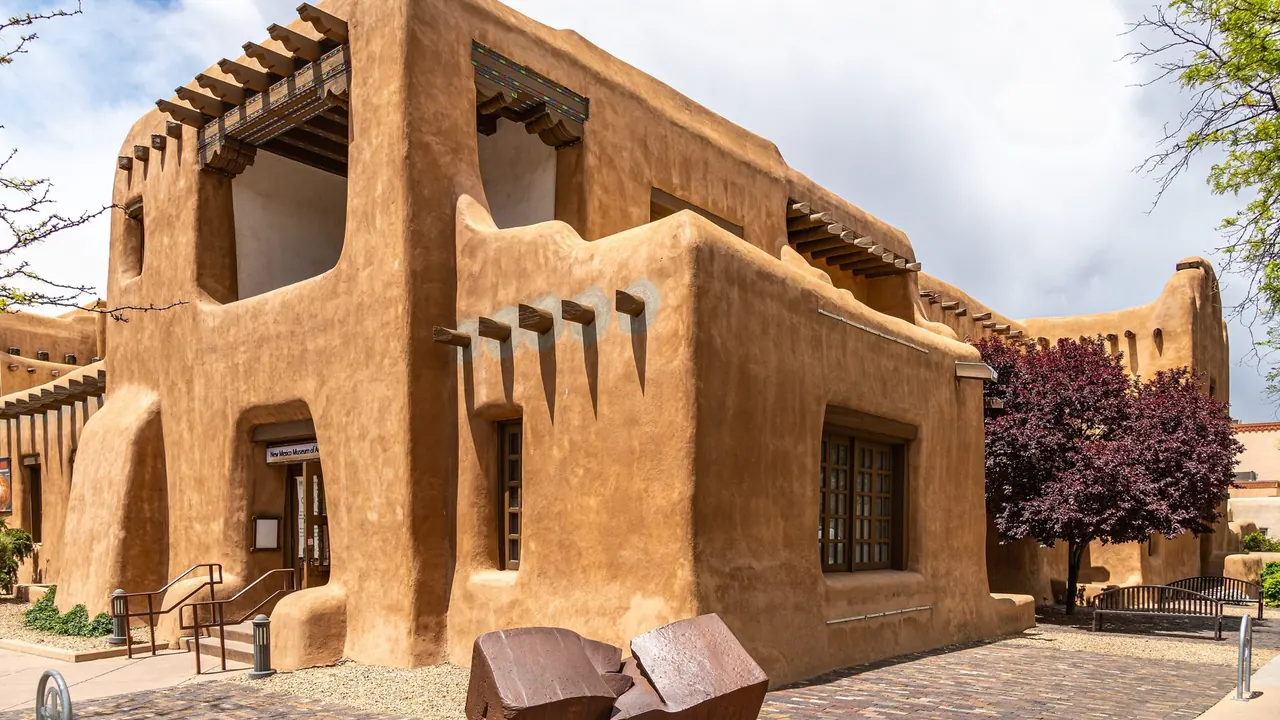
Santa Fe is the better choice for travellers who come for art, history and a strong sense of place. The adobe centre around the Plaza, Museum Hill, the Canyon Road galleries and the summer opera give it a depth that Tucson cannot match. The High Road to Taos, the pueblos and Bandelier make the country around it richer to explore. It costs more, and it suits adults and older children better than young families.
Choose Tucson for
- prices
- nightlife
- families
Tucson is the easier pick for a winter break in the sun, a trip with children or a stay where the budget has to stretch. Its mild months run from autumn to spring, and the Desert Museum and the giant aircraft keep children busy. Mid-range hotels and taquerías cost less, and the foothill spa resorts are made for slowing down. Fourth Avenue and Congress Street also give its evenings more life than Santa Fe's early nights.
Scoreboard
Twelve categories on one fixed scale from 0 to 100. The shaded stretch is the gap between the two.
Your match
Pick a travel style or drag the sliders, and both match scores follow your weighting.
Too close to call, 2 points apart
Wins on culture and sights and shopping with your weighting.
Wins on prices and nightlife with your weighting.
What matters to you?
Category by category
What the scores mean for a trip.
Beaches & swimming
Neither city is a beach destination, and they lack one in different ways. From Santa Fe, summer swimming means a drive of about an hour to Abiquiu Lake or a float down the Rio Grande. Tucson's nearest sea is at Puerto Peñasco in Mexico, a good four hours away, and the pools in Sabino Canyon only appear after the rains. In practice the resort pool matters more in Tucson, where the long hot season makes it the main way to cool off.
Food & drink
Both cities are worth visiting for one regional Mexican-rooted cuisine, and neither offers much variety beyond it. Santa Fe's is New Mexican cooking, built on red or green chile, blue corn, posole and sopaipillas, with chiles roasting outside the markets in autumn. It also has a fine-dining tier that is unusual for a town of its size, and the Railyard farmers' market is worth a morning.
Tucson's cuisine is Sonoran: carne asada over mesquite, paper-thin flour tortillas and the bacon-wrapped hot dog from south-side carts. That gives it more casual street eating than Santa Fe, and old family kitchens line South 12th Avenue. Fine dining is thinner, but the brewpubs are better.
Culture & sights
Santa Fe has much more to see. The whole centre is the sight: low adobe streets around the Plaza, the Palace of the Governors, the cathedral and the Loretto Chapel's spiral staircase. Museum Hill and the O'Keeffe Museum add collections far beyond what a small city would usually have.
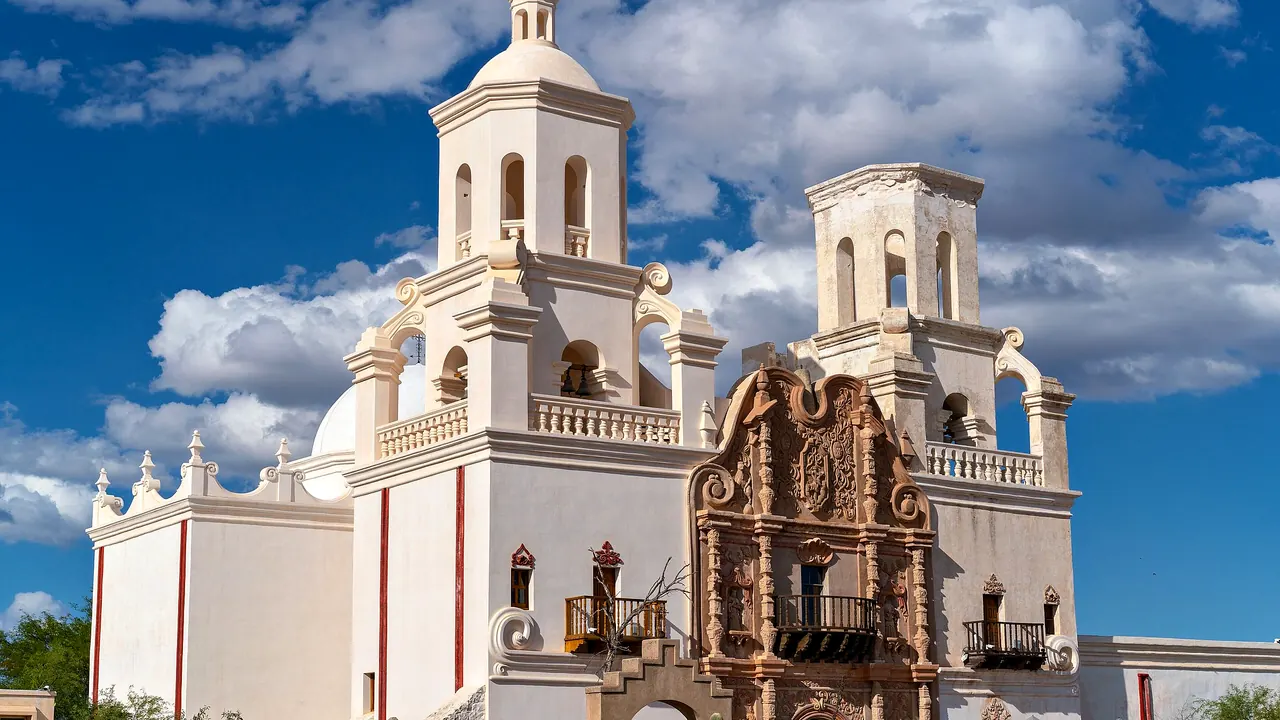
Tucson has one outstanding monument, the painted and gilded Mission San Xavier del Bac. Barrio Viejo, the Arizona State Museum and the aviation collections round out the list. Away from these the city is spread out and has fewer places of real character to walk through.
Nightlife
Tucson gives you more to do after dark. Fourth Avenue's dive bars and patios and Congress Street's cocktail bars and rooftops are within walking distance of each other, and term-time weekends are lively, though quieter in summer. Santa Fe's evenings usually end with a mezcal while the sun sets over the Jemez Mountains, and the streets are quiet well before midnight.
Nature & outdoors
Both cities have outstanding landscapes, but they are different kinds. Santa Fe is mountain country: piñon foothills, aspen and spruce forests that turn gold in autumn, and the Pecos Wilderness, with Valles Caldera, rafting in the Rio Grande Gorge and Abiquiu's red cliffs further out.
Tucson is ringed by Sonoran Desert. Saguaro National Park lies on both sides of the city, Sabino Canyon has good trails, and on Mount Lemmon the road climbs from cactus to pine within an hour. Its road cycling and birdwatching have a wide following. The two cities' outdoor seasons also differ: summer and autumn suit Santa Fe best, while Tucson is at its best from autumn to spring.
Day trips
Santa Fe has the stronger list of day trips. Taos Pueblo is a World Heritage Site that has been lived in for about a thousand years. Bandelier's cliff dwellings, the High Road villages of Chimayo and Truchas, and Ghost Ranch are all within a long morning's drive. The Rail Runner train even reaches Albuquerque without a car.
Tucson's outings are varied and fun: Wild West Tombstone, the Victorian mining town of Bisbee, the artists' village of Tubac and the wineries at Sonoita. None of them, though, is a place of the first rank, and each one needs a car.
Good for families
Tucson is easier with children. The Arizona-Sonora Desert Museum, Reid Park Zoo, the Flandrau planetarium, the air and space museum and the old western film set give younger children plenty to do from October to April. Pools and Mount Lemmon help in summer.
Santa Fe is safe and relaxed but was not built with children in mind. The children's museum and the ladders at Bandelier are highlights. The altitude can tire small children at first, so it suits families with older children who like hiking and history.
Getting around
Santa Fe is easier to get around. The Plaza, the downtown museums, Canyon Road and the Railyard are all within about twenty minutes' walk of each other, so a lot of a stay needs no transport at all. Tucson's walkable core is small and linked by a single streetcar line, and nearly everything visitors come for lies on the edges of the city or beyond. Both need a hire car for anything further out, but Tucson needs one from the first day.
Shopping & style
Santa Fe is the more serious place to shop, and its focus is art. Native American artists sell silver, turquoise and pottery under the portal of the Palace of the Governors. Canyon Road and the Railyard are packed with galleries, and the summer Indian, Spanish and Folk Art markets draw collectors from far away.
Tucson's high point is the winter gem and mineral show. Otherwise there are Tohono O'odham baskets, Mexican folk art, Tubac's galleries and Fourth Avenue's vintage shops, which are pleasant but a smaller selection.
Affordability
Santa Fe is the dearer of the two. It is a small town with resort-town costs, and they peak during the summer markets, the opera season and Christmas, which are exactly when many visitors want to come. Much of what it does best is free, though: the foothill trails, the Plaza and an afternoon browsing the Canyon Road galleries. Rooms out along Cerrillos Road also cost less.
Tucson is reasonable for an American city and cheaper than the larger cities of the Southwest. Its rates climb through the mild winter, above all during the weeks of the gem show, and fall sharply in the summer heat, which is just when Santa Fe's markets and opera push prices up there. The extras are where the money goes, with American prices and tipping at sit-down restaurants and steep rates at the desert golf and spa resorts. In both cities, plan for the cost of a hire car from the start.
Live music & performing arts
Santa Fe has the stronger programme, and it is concentrated in summer. The Santa Fe Opera performs in its open-sided theatre as the sun sets over the desert. A chamber music festival and a long flamenco tradition add to it, while winter brings little more than touring shows at the Lensic.
Tucson's season runs the other way, from autumn to spring. It has the symphony, Arizona Opera productions shared with Phoenix, the restored Fox Theatre and deep mariachi roots. It is a solid local programme, but not something to plan a trip around.
Wellness & relaxation
Tucson is slightly better for a dedicated wellness stay. It is one of the original homes of the American destination spa, and resorts in the Catalina foothills and around Oracle offer full programmes with pools facing the mountains, in mild winter sun.
Santa Fe has what Tucson lacks: water from the ground. There are onsen-style tubs among the pines on the road to the ski area, and the mineral springs at Ojo Caliente are about an hour north. Its yoga studios and healers, and its early, quiet evenings, make it an easy place to unwind as well.
When should you go?
Pick your month. The climate figures are measured averages, not a forecast.
Santa Fe in July
Tucson in July
Daytime high, °C
Rainfall in the month, mm
Where the figures come from
Santa Fe's station stands 199 m below the city centre, so the centre is likely a little cooler than the figures say.
Santa Fe has no rain gauge within 25 km of the centre, so its rainfall comes from a gridded climate dataset read at the city rather than from a gauge further away.
Temperature and rainfall are climate normals, averaged over the years shown. Santa Fe: 1991-2020 normals, Santa Fe / Cieneguilla (12.4 km from centre). Tucson: 1991-2020 normals, Tucson International Airport (10.1 km from centre).
The two cities have almost opposite seasons. Neither has a beach, so the question is simply when the streets and trails are pleasant. Santa Fe sits high on its plateau and has real winters, with January highs around 6°C. That is good for skiing but chilly for walking between museums. Its best stretch runs from May to October. June and July reach about 31°C, and from July the afternoon storms set in, bringing around 60mm in both July and August, so walks and hikes are best done in the morning. September still catches the tail end of those storms. October is the month that is dry and mild, with the aspens turning gold on the mountain.
Tucson is the winter city. January is pleasant at around 19°C, and from November to April it is ideal for whole days outside. By May the heat is building, and June reaches around 39°C, too hot for walking the streets in the afternoon. The heat holds into September, and as in Santa Fe the monsoon storms come in July and August. Choose Tucson for winter or early spring, and Santa Fe for late spring through to autumn.
Which traveller are you?
For a culture and arts trip, Santa Fe is the clear choice. A colonial capital founded in 1610, it has the Palace of the Governors, Museum Hill, the O'Keeffe Museum, the Canyon Road galleries and opera on summer evenings, which outweigh Tucson's mission and aircraft collections.
On a family trip with children, Tucson works better, especially between October and April. The Desert Museum's mountain lions and hummingbirds, a zoo, a planetarium and giant aircraft keep children busy. Santa Fe's galleries, long dinners and high altitude suit older children better than young ones.
On a tight budget, Tucson makes the money go further. Mid-range hotels cost less, and taquerías and Sonoran hot dog stands make eating cheaply easy. Summer brings real bargains. Santa Fe charges resort prices around the Plaza, and both cities need a hire car.
Before you go
| Measure | Santa Fe | Tucson |
|---|---|---|
| Currency | US Dollar (USD) | US Dollar (USD) |
| Sockets | AB120 V, 60 Hz | AB120 V, 60 Hz |
| Driving side | Right | Right |
| Time zone | UTC-7, UTC-6 in summer | UTC-7 |
| Emergency number | 911 | 911 |
| Elevation | 2,134 m | 728 m |
| Main airport | Santa Fe Municipal Airport (SAF)12 km from centre5 non-stop destinations | Tucson International Airport (TUS)12 km from centre18 non-stop destinations |
| Public holidays this year | 13 days | 12 days |
By the numbers
| Measure | Santa Fe | Tucson |
|---|---|---|
| City population | 87,505 | 542,629 |
| People per km² | 645 | 923 |
| Museums within 10 km | 10 | 10 |
| UNESCO World Heritage sites within 50 km | 0 | 0 |
Where else could you go?
Every comparison below shares a destination with this one, so you can follow Santa Fe or Tucson somewhere new.