Photos: Santa Fe by dconvertini, CC BY-SA 2.0, cropped; Telluride by Murray Foubister, CC BY-SA 2.0, cropped.
Santa Fe or Telluride?
Our verdict in twelve categories, each scored against the same fixed benchmark cities, and the climate month by month, so you can choose for your trip.
Choose Santa Fe for
- culture and sights
- day trips
- shopping
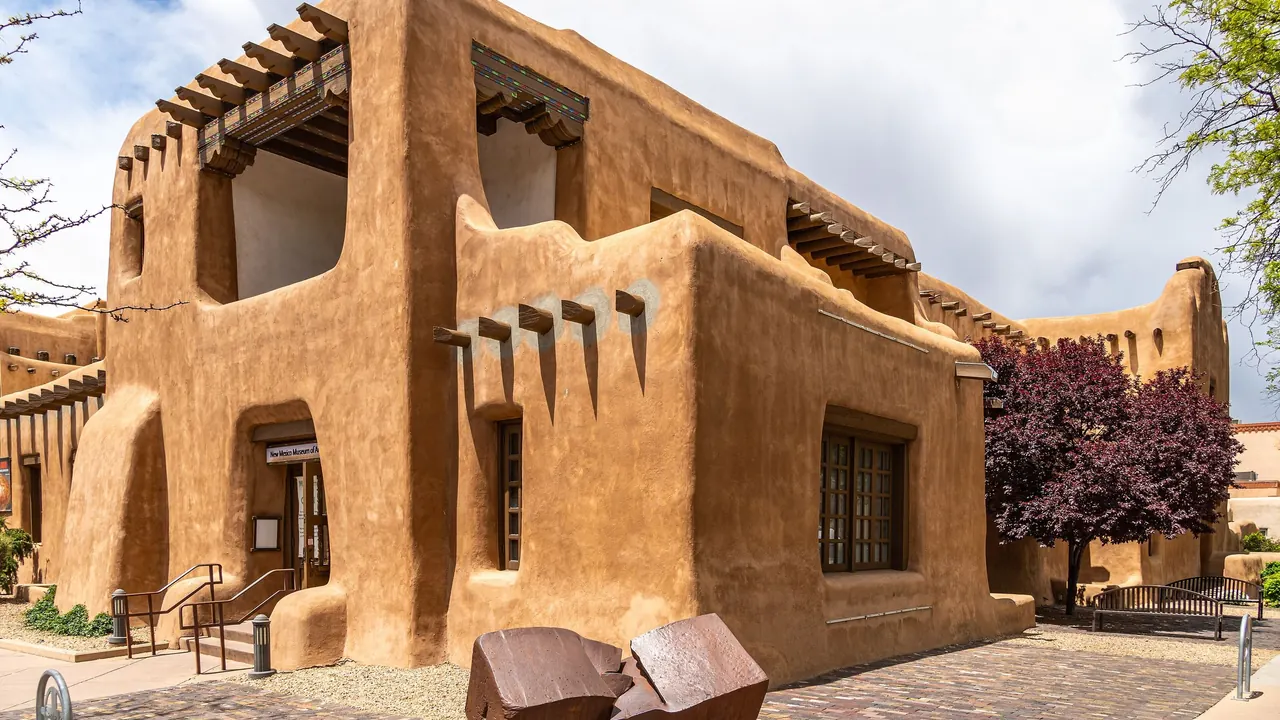
Santa Fe is the better choice if you want a town with real depth. It has four centuries of adobe history around the Plaza, museums far richer than its size would suggest, its own chile-based cuisine, and a whole region of pueblos, cliff dwellings and mountain villages to drive out to. It suits a trip that mixes art, food and road days, with the Sangre de Cristo trails close by for mornings outdoors.
Choose Telluride for
- getting around
- nature and the outdoors
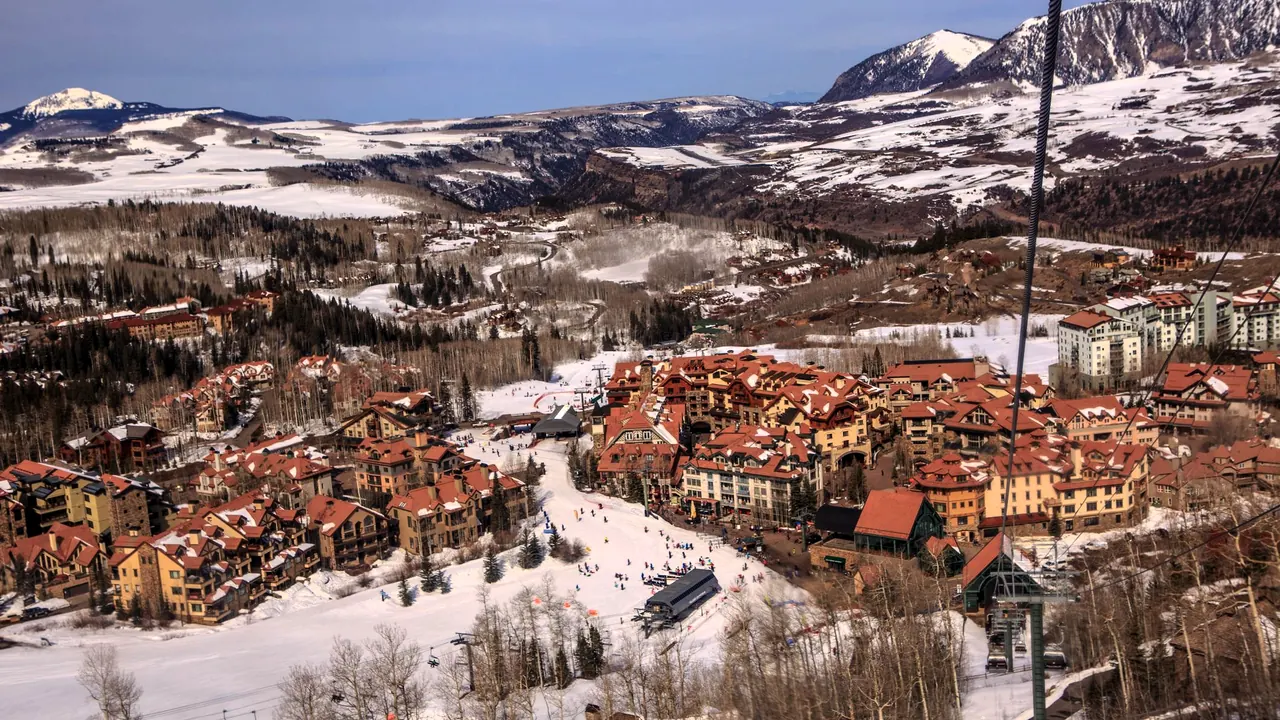
Telluride is for people who come for the mountains themselves. Cliffs, waterfalls and high basins rise from the end of the main street, the skiing is far more serious, and once you arrive the gondola and your own feet take you everywhere. In return you get a quiet former mining town with little to see indoors, a small circle of restaurants and prices that are steep even next to Santa Fe.
Scoreboard
Twelve categories on one fixed scale from 0 to 100. The shaded stretch is the gap between the two.
Your match
Pick a travel style or drag the sliders, and both match scores follow your weighting.
Wins on culture and sights and day trips with your weighting.
Wins on getting around and nature and the outdoors with your weighting.
What matters to you?
Category by category
What the scores mean for a trip.
Beaches & swimming
Both towns sit on high ground far from any coast, so swimming plays little part in either trip, and in Santa Fe it usually means a hotel pool. The summer water outings differ. From Santa Fe, locals head to reservoirs such as Abiquiu Lake or float stretches of the Rio Grande, while Telluride's nearest swim is a small, cool bathing area at the reservoir near Ridgway, and most visitors there raft, paddle or fish instead.
Food & drink
Santa Fe has something Telluride lacks entirely: a regional cuisine of its own. Red and green chile, blue corn, posole and sopaipillas are served in old adobe dining rooms, the Railyard farmers' market is worth a morning, and there are fine-dining kitchens as well.
Telluride eats well for a ski town, with modern American cooking built on Colorado lamb, elk and trout, plus good craft beer and deep wine lists. But it has no local tradition or market to explore, and on a longer stay you keep going back to the same few places. Neither town offers much international choice.
Culture & sights
This is where the two differ most. Santa Fe has been a capital since 1610. It has the Palace of the Governors, the cathedral and the Loretto Chapel, the cluster of museums on Museum Hill and the O'Keeffe collection downtown, which together fill two or three full days.
Telluride's appeal is its intact mining-era main street, which is a National Historic Landmark. There is a small museum in the old miners' hospital, and mill ruins cling to the canyon walls. It makes a good afternoon stroll, but it is not a reason to plan the trip.
Nightlife
Both towns are quiet after dark, and neither has any real clubbing. In Santa Fe a night out is a long dinner and then a margarita or mezcal on a rooftop facing the sunset over the Jemez Mountains, with Albuquerque an hour away for anything bigger.
Telluride's evenings run on après-ski and the old saloons of Colorado Avenue. These can stay busy late in peak ski weeks and on festival weekends, but the town goes to bed early out of season.
Nature & outdoors
Santa Fe has excellent country on its doorstep: trails into the foothills from the edge of town, aspen forest along the ski road and the Pecos Wilderness beyond it. Further out are desert mesas, Valles Caldera and rafting in the Rio Grande Gorge. Its strength is variety, with mountains and desert both within reach.
Telluride is more dramatic and closer at hand. Peaks above 4,000m, Bridal Veil Falls and the high basins rise straight from the end of the street. Summer brings a via ferrata, mountain biking and old mining roads over the passes, and winter brings far more serious skiing. Both towns sit high, Telluride higher still, so allow a day to adjust.
Day trips
Santa Fe is a far better base for exploring. The High Road to Taos, Taos Pueblo, the cliff dwellings at Bandelier, Pecos, Abiquiu and the Turquoise Trail villages all make comfortable day outings, and the Rail Runner reaches Albuquerque without a car.
From Telluride the choice is short: Ridgway, Ouray and Silverton by mountain road, with Mesa Verde at the very limit of a day trip. In winter, snow on the passes can slow or close even those routes.
Good for families
Neither town is built around children. Both suit active families with older children better than those looking for attractions, and the altitude can tire small children in either place for the first few days.
The difference is in what there is to do. Santa Fe has more for indoor days, with a children's museum, the toys and miniatures in the folk art collection and the ladders at Bandelier, though most outings need a car. Telluride is the outdoor version, with the gondola ride, a good ski school, river paths and easy waterfall walks, but little to do when it rains.
Getting around
Once you are there, Telluride is the easier place to get around. You can cross the compact grid on foot in a quarter of an hour, a free gondola climbs to Mountain Village, and free buses fill the gaps, so many visitors leave the car parked. The catch is reaching it: the small local airport is often affected by weather, and the larger ones are one to two hours away by road.
Santa Fe's centre is also walkable, from the Plaza to Canyon Road and the Railyard. Beyond it, though, the buses are infrequent, Museum Hill and the trailheads usually need a taxi or car, and the sights around the region make a hire car close to essential.
Shopping & style
Santa Fe has a genuine specialism in art and craft. Native artists sell turquoise jewellery and Pueblo pottery directly to buyers, Canyon Road and the Railyard are lined with galleries, downtown has rugs and cowboy boots, and the summer markets draw collectors from far away. Fashion and department stores are scarce.
Telluride's few blocks of Colorado Avenue hold galleries, Western clothing, bookshops and plenty of ski and outdoor gear. They are enjoyable to browse, but there is no craft tradition to seek out.
Affordability
Neither town is cheap, but Santa Fe is easier on the wallet. Hotels near the Plaza and the better restaurants cost a lot, but rooms along Cerrillos Road are cheaper and hiking, the Plaza and gallery browsing are free. The main extra cost is a hire car.
Telluride sits at the very top of the market. Its scarce rooms are priced for second-home owners, and lift tickets, guided activities and meals cost just as much. Staying down in Ridgway saves money, but it means a daily drive.
Live music & performing arts
Both towns come alive in summer and go quiet afterwards. Santa Fe's summer centres on its opera, performed at sunset in an open-sided theatre on a hill outside town, along with a chamber music festival and a long flamenco tradition. The historic Lensic theatre keeps something on through the rest of the year.
Telluride's summer is a run of festivals: the Bluegrass Festival in Town Park beneath the canyon walls, jazz and blues weekends and the film festival over Labor Day. Outside the festivals, the Sheridan Opera House puts on the odd show. If you want opera or classical music, choose Santa Fe.
Wellness & relaxation
Santa Fe makes the better place to slow down. Its onsen-style soaking tubs among the pines are just outside town, it has an unusual number of spas, yoga studios and healers for its size, and the mineral springs at Ojo Caliente are an hour north. The quiet adobe courtyards and early evenings help too.
Telluride is also peaceful, especially in the shoulder seasons, and the hotels in Mountain Village have full spas. However, the hot springs at Ouray and near Ridgway are an hour's drive away, and the higher altitude can disturb your sleep for the first few nights.
When should you go?
Pick your month. The climate figures are measured averages, not a forecast.
Santa Fe in July
Telluride in July
Daytime high, °C
Rainfall in the month, mm
Where the figures come from
Santa Fe's station stands 199 m below the city centre, so the centre is likely a little cooler than the figures say.
Santa Fe has no rain gauge within 25 km of the centre, so its rainfall comes from a gridded climate dataset read at the destination rather than from a gauge further away.
Telluride has no rain gauge within 25 km of the centre, so its rainfall comes from a gridded climate dataset read at the destination rather than from a gauge further away.
Temperature and rainfall are climate normals, averaged over the years shown. Santa Fe: 1991-2020 normals, Santa Fe / Cieneguilla (12.4 km from centre). Telluride: 2006-2020 (rainfall 1991-2020) normals, Telluride / Lime (8.2 km from centre).
Santa Fe is the warmer of the two and has the longer good season. March is still cool, but from late April through May the days turn mild and pleasant for walking the centre and the foothill trails, and the same is true again from September into October, when the aspens turn gold. June and July reach about 31°C, so hikes need an early start. July and August are the wettest months, at around 60mm each, while the rest of the year is fairly dry. Winter is cold, with daytime highs only a few degrees above freezing.
Telluride sits much higher and stays cooler all year. Summer is its warm, snow-free season: from June to August days reach about 23°C, comfortable for hiking, and September is only a little cooler. July to September are also its wettest months, peaking at 67mm in August. From December to February highs stay around 2°C and the steady precipitation falls largely as snow, which is what the ski season depends on. Spring and late autumn are chilly in-between months there, colder and longer than in Santa Fe.
Which traveller are you?
For a culture and arts trip, Santa Fe is the clear pick. The Plaza's colonial buildings, Museum Hill, the O'Keeffe museum and the Canyon Road galleries fill several days, and summer adds the opera. Telluride's historic centre is a pleasant hour's wander.
On an outdoors trip, Telluride has the edge. Trails to waterfalls and high basins leave straight from town, summer brings a via ferrata, mountain biking and jeep passes, and winter offers far bigger skiing. Santa Fe's foothills and mesas are good, but less dramatic.
For a shopping trip, Santa Fe wins easily. Native American silver and pottery sold under the Palace of the Governors portal, whole streets of galleries and the big summer markets give it real depth. Telluride has only a few blocks of boutiques and gear shops.
Before you go
| Measure | Santa Fe | Telluride |
|---|---|---|
| Currency | US Dollar (USD) | US Dollar (USD) |
| Sockets | AB120 V, 60 Hz | AB120 V, 60 Hz |
| Driving side | Right | Right |
| Time zone | UTC-7, UTC-6 in summer | UTC-7, UTC-6 in summer |
| Emergency number | 911 | 911 |
| Elevation | 2,134 m | 2,667 m |
| Main airport | Santa Fe Municipal Airport (SAF)12 km from centre5 non-stop destinations | Montrose Regional Airport (MTJ)64 km from centre11 non-stop destinations |
| Public holidays this year | 13 days | 12 days |
By the numbers
| Measure | Santa Fe | Telluride |
|---|---|---|
| Population | 87,505 | 2,607 |
| People per km² | 645 | 1,372 |
| Museums within 10 km | 10 | 0 |
| UNESCO World Heritage sites within 50 km | 0 | 0 |
Where else could you go?
Every comparison below shares a destination with this one, so you can follow Santa Fe or Telluride somewhere new.
- Durango, Coloradovs Telluride
- Taosvs Santa Fe
- Albuquerquevs Santa Fe
- Aspenvs Telluride
- Beaver Creekvs Telluride
- Vailvs Telluride