Photos: Aspen by Moroder, CC BY-SA 3.0, cropped; Zermatt by Roy Egloff, CC BY-SA 4.0, cropped.
Aspen or Zermatt?
Our verdict in twelve categories, each scored against the same fixed benchmark cities, and the climate month by month, so you can choose for your trip.
Choose Aspen for
- live music and the arts
- shopping
- nightlife
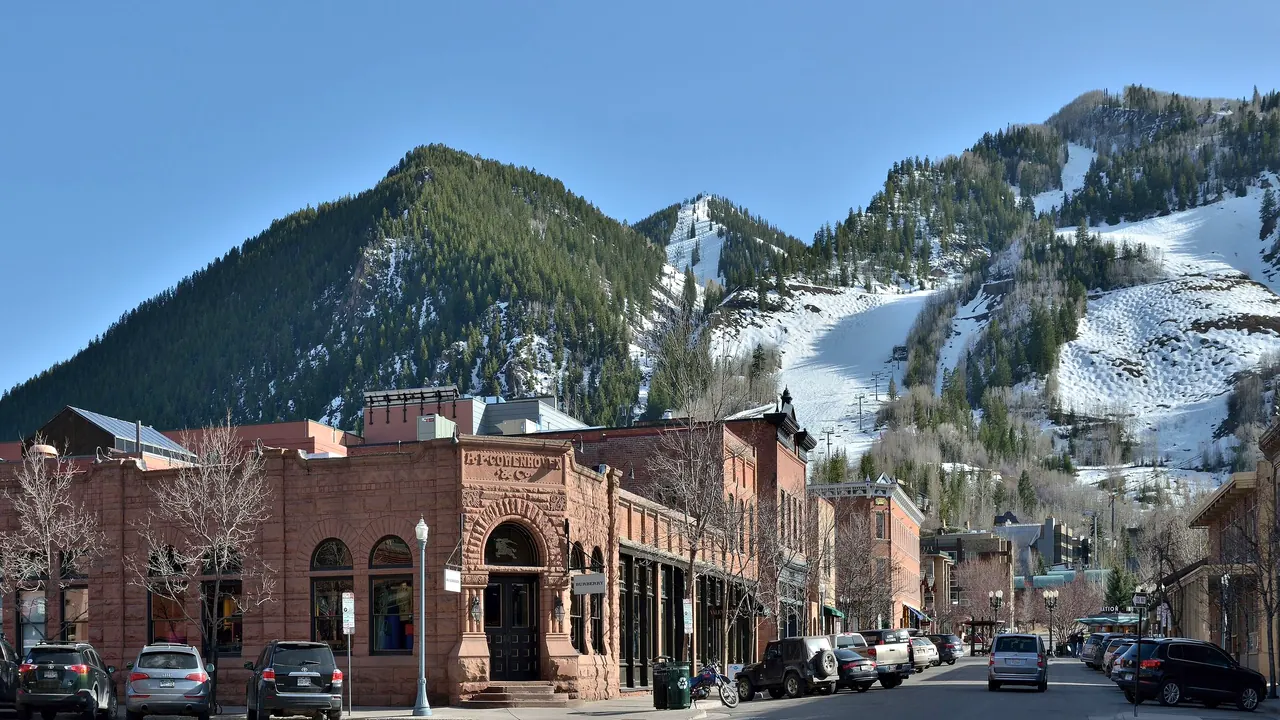
Aspen suits travellers who want big mountains with a proper town attached. Summers are warm and dry enough for long days on the trails, and the Aspen Music Festival fills the evenings. In winter, four separate ski mountains, a livelier après-ski scene and a run of luxury boutiques make it the better pick for skiers who also want to go out and shop.
Choose Zermatt for
- getting around
- day trips
- nature and the outdoors
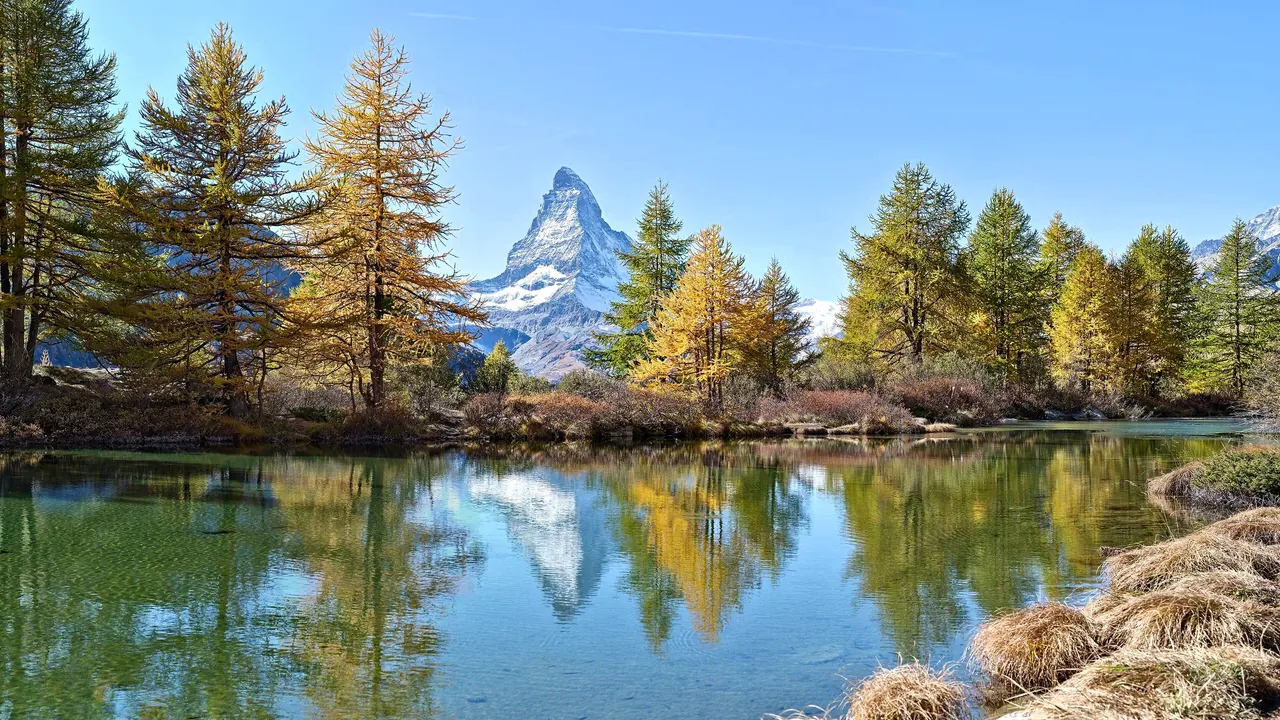
For the high Alps at their most dramatic, choose Zermatt. The Matterhorn stands over a car-free village, the lifts climb onto glaciers, the skiing crosses into Italy, and a long lunch with Valais wine in a chalet hamlet is part of the day. It is cooler and quieter than Aspen, and best for skiers, hikers and climbers who want the mountains and little else.
Scoreboard
Twelve categories on one fixed scale from 0 to 100. The shaded stretch is the gap between the two.
Your match
Pick a travel style or drag the sliders, and both match scores follow your weighting.
Wins on live music and the arts and shopping with your weighting.
Wins on getting around and day trips with your weighting.
What matters to you?
Category by category
What the scores mean for a trip.
Beaches & swimming
Neither town is a place to swim, and in both the realistic option is a hotel pool. What differs is the water outside. Aspen's warmer summers bring locals to reservoir shores and alpine lakes, and rafting the Roaring Fork is the nearest thing to a day on the water. Zermatt's tarns are glacial meltwater, there for photographing the Matterhorn rather than for bathing.
Food & drink
Both eat far above their size for the same reason, a wealthy ski crowd, and both are short of cheap meals and close many kitchens between seasons. The difference is where the best meals happen. In Aspen it is downtown, with chef-led dining rooms, steak, sushi and Italian, après-ski on the terraces at the foot of Aspen Mountain, and the Food & Wine Classic each June.
Zermatt's character is up on the slopes, in the chalet hamlets of Findeln, Furi and Zum See, where a long terrace lunch facing the Matterhorn is the highlight of the day. It also has a regional kitchen that Aspen lacks: raclette, fondue, air-dried beef and Valais wines such as Petite Arvine and Cornalin.
Culture & sights
Neither will fill more than a morning or an afternoon, because both are mountain towns first. Aspen's heritage is silver-mining Victoriana: the red-brick downtown around the Wheeler Opera House and the painted cottages of the West End. Contemporary work at the Aspen Art Museum and Herbert Bayer's modernist Aspen Institute campus add to it.
Zermatt's story is mountaineering. The underground Matterhorn Museum covers the 1865 first ascent and the deaths on the descent, climbers lie buried beside the parish church, and the old larch barns of the Hinterdorf stand on their stone slabs. The Gornergrat cog railway, running since 1898, is a sight in its own right.
Nightlife
Aspen is the better choice for a night out. Its après-ski moves from the slopeside decks into downtown bars, lounges and hotel bars, and over Christmas, New Year and the winter X Games a well-dressed crowd keeps a few small clubs busy late. Summer still brings relaxed evenings with drinks on patios.
Zermatt's après-ski is loud and cheerful in the slope-side bars on the runs into the village, and a few main-street bars and clubs stay open past midnight on busy weekends. In summer, hikers and climbers have early starts, so evenings end after dinner. Both towns go quiet between seasons.
Nature & outdoors
Both are among the finest mountain bases anywhere, so the choice comes down to the kind of mountains you want. Aspen's Elk Mountains give you four separate ski areas, from gentle Buttermilk to steep Highlands and huge Snowmass. In summer there are trails from town, the Maroon Bells, Independence Pass, rafting and fly-fishing on the Roaring Fork, and gold aspen groves in late September.
Zermatt is higher and more glaciated. The Matterhorn rises above the village, surrounded by four-thousanders and the Gorner Glacier, and lifts climb to over 3,800m. The skiing crosses into Italy, glacier pistes stay open in summer, and guides take climbers up the big peaks, which Aspen cannot match.
Day trips
Days out from Aspen are road trips, while Zermatt's begin at the railway station. From Aspen you drive down the valley, past the ranching and arts town of Carbondale, to the railway-era centre of Glenwood Springs. Another road runs up the Crystal River to Redstone's coke ovens and the old quarry village of Marble. In summer, Independence Pass opens the way to Leadville's Victorian main street, but the pass closes in winter and the choice shrinks.
From Zermatt, the narrow-gauge train runs down to the Rhône, so you never need a car. Sion is the best outing, with two castle hills and the Valère basilica set among steep vineyards. Brig, Saas-Fee and, on a long day, Bern are also within reach, though most visitors to either town spend their spare days in the mountains.
Good for families
Both suit families who ski or hike together, and neither has a zoo, aquarium or theme park. Aspen has more organised fun. Buttermilk and Snowmass have dedicated kids' areas, and in summer the lifts lead to alpine coasters and ropes courses, with nature programmes and downtown fountains as well.
Zermatt's strength is calm. Car-free streets mean no traffic between hotel, ski school and lifts, with nursery slopes at Sunnegga and marmots and cog railways in summer. Its viewpoints above 3,000m can be too cold and thin-aired for small children, and rainy days are harder to fill.
Getting around
Neither needs a car in the valley, but Zermatt is the easier of the two to manage without one, because it is built that way. You get around on foot or by small electric taxi, and the cog railway, the Sunnegga funicular and the gondolas all start within walking distance. The train links smoothly into the Swiss rail network, though hotels on the slopes mean a steep walk with luggage.
Aspen's flat downtown grid and free buses to Highlands, Buttermilk and Snowmass work well, and the airport is minutes away. Beyond the valley, though, mountain passes and long drives usually mean hiring a car, and winter storms can close the roads.
Shopping & style
Aspen is clearly the better place to shop. Its pedestrian malls hold international luxury boutiques, designer labels you would not expect in a mountain town, high-end ski wear, Western leather and fur, and a cluster of art galleries. Browsing them is part of an evening out.
Zermatt has one main street of Swiss watches and jewellery, cowbells, chocolate and very good mountaineering outfitters, but little else to browse. Neither offers much in local crafts or affordable independent shops.
Affordability
Saving money works differently in the two resorts, though neither ever becomes cheap. In Aspen, timing helps most. Summer and the spring and autumn shoulder seasons are easier on the budget than the ski months. The free valley buses save on transport, and many visitors sleep in Glenwood Springs or Carbondale and ride in.
In Zermatt, the savings come from how you stay. A self-catering apartment, supermarket picnics and a bed down the valley in Täsch make the biggest difference. Even plain hotels are steep, and so are terrace lunches and the lifts and cog railways that every visitor uses.
Live music & performing arts
In summer, Aspen is in another league. The Aspen Music Festival and School fills about eight weeks with orchestral, chamber and opera performances in the Benedict Music Tent, where people picnic on the lawn and listen for free. Jazz and the Aspen Santa Fe Ballet add to the season, and the Wheeler Opera House keeps concerts, comedy and film going all year.
Zermatt has no theatre or concert hall. Zermatt Unplugged in spring and a late-summer chamber music festival in the church are worth timing a trip around. Outside those weeks, live music means a band in an après-ski bar.
Wellness & relaxation
Both are restful outside the peak ski weeks, both rely on hotel spas, and neither has a bathing tradition of its own. Aspen's advantage is real hot springs within reach. The mineral pools and cave vapour baths of Glenwood Springs are an hour down the valley, and Conundrum Hot Springs waits at the end of a long wilderness hike.
Zermatt makes up for it with a dense cluster of hotel spas, many with mountain views and some open to day visitors. Car-free streets with no traffic noise add to the calm. For thermal baths you have to travel further down the Valais.
When should you go?
Pick your month. The climate figures are measured averages, not a forecast.
Aspen in July
Zermatt in July
Daytime high, °C
Rainfall in the month, mm
Where the figures come from
Aspen has no rain gauge within 25 km of the centre, so its rainfall comes from a gridded climate dataset read at the destination rather than from a gauge further away.
Zermatt has no weather station within reach, so its figures come from a gridded climate model rather than a measured record, and read a broad area rather than one spot.
Temperature and rainfall are climate normals, averaged over the years shown. Aspen: 2006-2020 (rainfall 1991-2020) normals, Aspen / Woody Creek (5.2 km from centre). Zermatt: 1991-2020 normals, TerraClimate 4 km grid at the town, no weather station within 90 km.
The two climates are far apart. Aspen has a real summer: from June to August the days are warm, reaching about 27°C in July, and the air is dry, with June the driest month at about 20mm. That makes summer the time for hiking, rafting and outdoor concerts, and September stays mild for walking while the aspen groves turn gold. December to February sit around freezing during the day, which is ski weather rather than strolling weather.
Zermatt never gets warm. Even July and August reach only about 14°C, so summer is for brisk hiking rather than lazing about, and it is wetter than Aspen all year, with November the wettest month at about 130mm. From December to February daytime highs stay below freezing, around -2°C, which suits skiing. Neither place has a swimming season worth planning around.
Which traveller are you?
On a culture and arts trip, Aspen is the clear choice, especially in summer. The Aspen Music Festival fills the Benedict Music Tent with orchestral, chamber and opera performances, and the Wheeler Opera House runs all year. Zermatt has two festivals and a mountaineering museum.
For a shopping trip, Aspen wins easily. Its pedestrian malls fit international luxury boutiques, designer labels, Western leather and art galleries into a few walkable blocks. Zermatt's single main street mostly sells watches, souvenirs and good climbing gear.
For skiers who want snow in summer, Zermatt has something Aspen lacks. The glacier pistes up at Matterhorn Glacier Paradise, above 3,800m, stay open through the warm months, and in winter the lifts link across the border into Italy. Aspen's four mountains are winter-only.
Before you go
| Measure | Aspen | Zermatt |
|---|---|---|
| Official language | - | French, German, Italian, Romansh |
| Currency | US Dollar (USD) | Swiss Franc (CHF) |
| Sockets | AB120 V, 60 Hz | CJ230 V, 50 Hz |
| Driving side | Right | Right |
| Time zone | UTC-7, UTC-6 in summer | UTC+1, UTC+2 in summer |
| Emergency number | 911 | 112 |
| Elevation | 2,405 m | 1,624 m |
| Main airport | Aspen-Pitkin County Airport (Sardy Field) (ASE)5 km from centre11 non-stop destinations | Geneva International Airport (GVA)128 km from centre150 non-stop destinations |
| Public holidays this year | 12 days | 9 days |
By the numbers
| Measure | Aspen | Zermatt |
|---|---|---|
| Population | 7,004 | 6,023 |
| People per km² | 700 | 25 |
| Museums within 10 km | 2 | 2 |
| UNESCO World Heritage sites within 50 km | 0 | 2 |
Where else could you go?
Every comparison below shares a destination with this one, so you can follow Aspen or Zermatt somewhere new.
- Saas-Feevs Zermatt
- Crans-Montanavs Zermatt
- Verbiervs Zermatt
- Leukerbadvs Zermatt
- Adelbodenvs Zermatt
- Beaver Creekvs Aspen