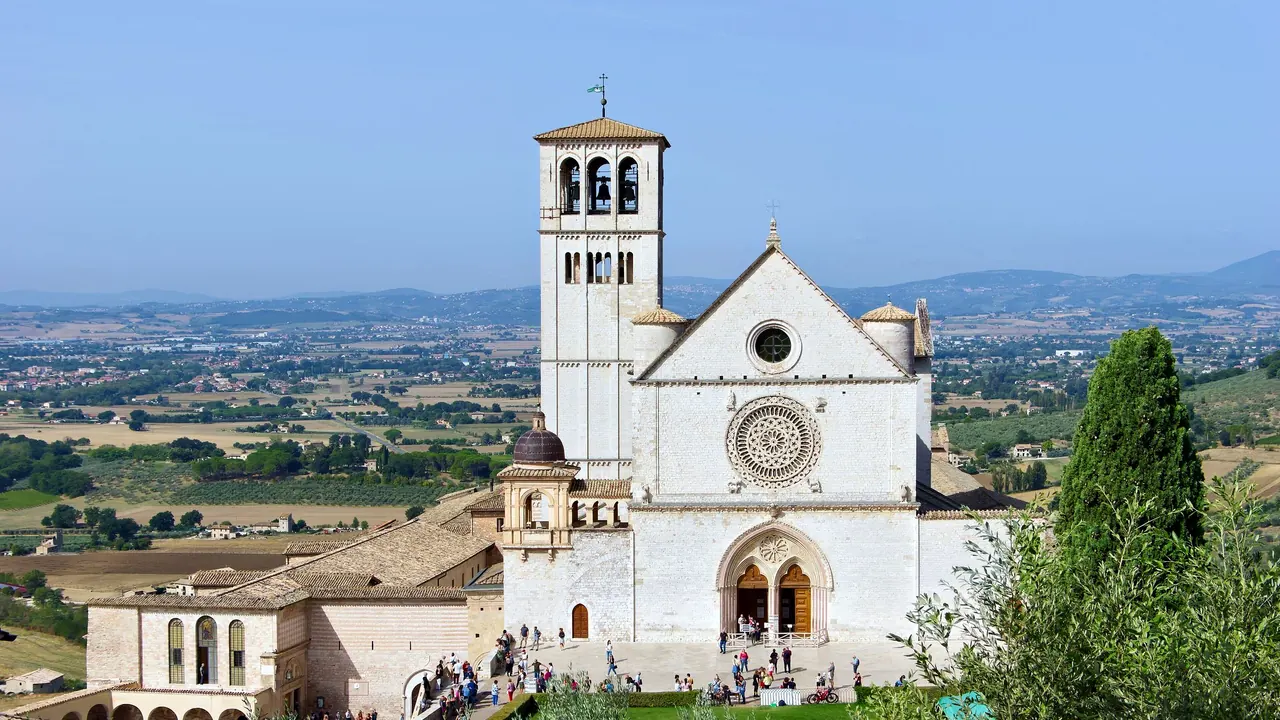
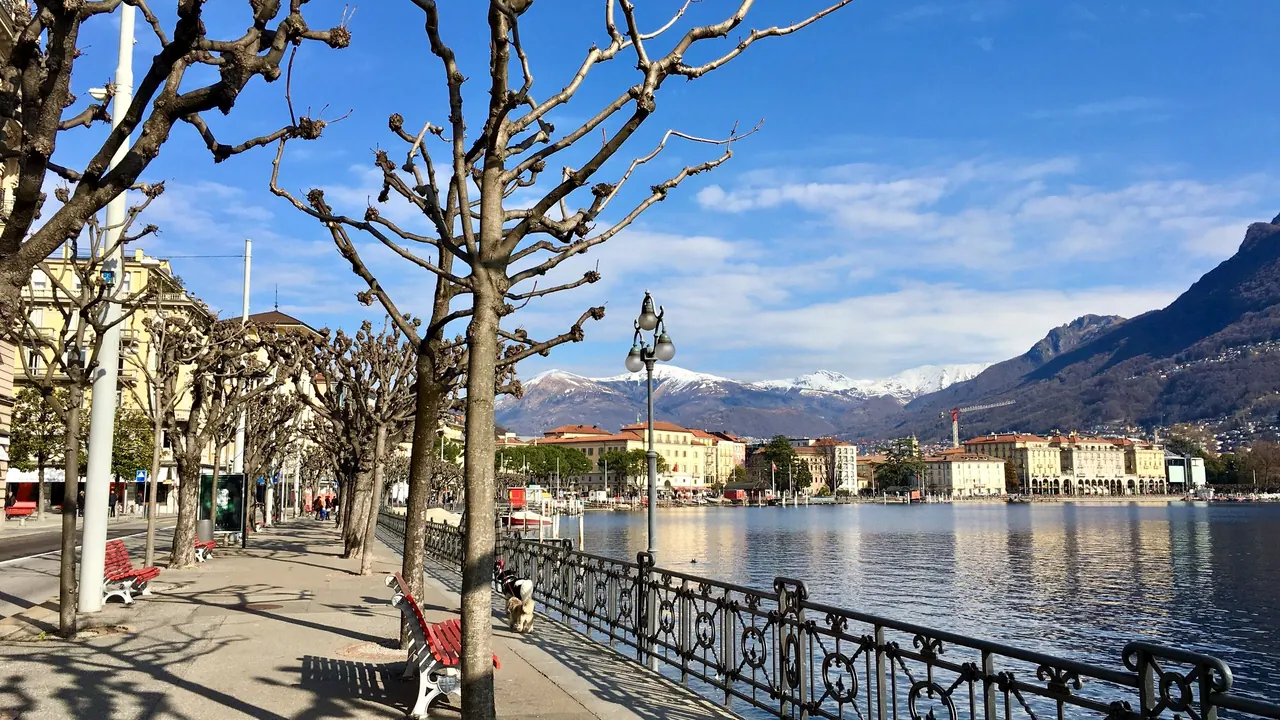
Photos: Assisi by Berthold Werner, CC BY-SA 4.0, cropped; Lugano by Thomas Woodtli from Zürich, Switzerland, CC BY-SA 2.0, cropped.
Assisi or Lugano?
Our verdict in twelve categories, each scored against the same fixed benchmark cities, and the climate month by month, so you can choose for your trip.
Choose Assisi for
- prices
- culture and sights
- day trips
Assisi is the choice for travellers who come for art, faith and history, and for anyone touring central Italy on a sensible budget. Lugano has nothing to match the Basilica of San Francesco and its frescoes. In Assisi, convent guesthouses and valley agriturismi keep costs down, and the hill towns of Umbria lie all around. Expect quiet evenings and steep stone lanes rather than entertainment.
Choose Lugano for
- beaches
- families
- getting around
If you want a lake and mountains at the door and can pay Swiss prices, Lugano fits better. Funiculars, lidos and boat trips make it far easier with children, you don't need a car to get around, and Milan, Como and the Ticino valleys are all close by train. Its sights fill a single day, so it works best as a base for time outdoors rather than for sightseeing.
Scoreboard
Twelve categories on one fixed scale from 0 to 100. The shaded stretch is the gap between the two.
Your match
Pick a travel style or drag the sliders, and both match scores follow your weighting.
Wins on prices and culture and sights with your weighting.
Wins on beaches and families with your weighting.
What matters to you?
Category by category
What the scores mean for a trip.
Beaches & swimming
Neither town has a coast, but only Lugano offers swimming on the spot. Its lidos range from the main one at the mouth of the Cassarate to smaller ones towards Castagnola and Paradiso. They have lawns, pools and ladders straight into a lake that warms to about 23°C in high summer.
From Assisi the nearest swim is at Lake Trasimeno, about 45 minutes' drive away, where the water is shallow and rather cloudy. Most visitors make do with a hotel or agriturismo pool instead.
Food & drink
You eat about equally well in both, but the cooking is different. Assisi serves Umbrian country food: strangozzi with black truffle, Castelluccio lentils, wild boar and torta al testo, with Sagrantino from Montefalco and olive oil from Monte Subasio.
Lugano's speciality is the grotto, a rustic tavern built against cool rock cellars, serving polenta, braised meats and risotto with Ticino Merlot under the chestnut trees. Town adds pastry shops and cafés under the arcades. In both, there is little choice beyond the local style, and in Assisi the restaurants nearest the basilica lean towards set menus for tour groups.
Culture & sights
Assisi is the far stronger choice for sightseeing. The Basilica of San Francesco is one of Europe's great monuments: a Lower and an Upper Church covered in frescoes by Cimabue, Pietro Lorenzetti and the Giotto cycle. Add the Temple of Minerva, Santa Chiara and the tiny Porziuncola chapel inside Santa Maria degli Angeli, and you have two unhurried days.
Lugano has a pleasant arcaded old town, the Cathedral of San Lorenzo, Luini's Passion fresco and an art collection split between LAC and Palazzo Reali. It is enjoyable rather than essential, and a single day covers it.
Nightlife
Neither is a place for late nights, but Lugano at least has an evening scene. It offers aperitivo on the lakefront or under the arcades, a few cocktail and wine bars, lounges by the water and one or two clubs, and the promenade stays busy for a while on summer weekends.
Assisi goes silent once the day-trippers leave, and the evening comes down to a glass of Sagrantino and a stroll through empty, floodlit lanes. For anything livelier you have to travel, to student Perugia from Assisi or to Milan from Lugano.
Nature & outdoors
Lugano's setting is the bigger draw. Funiculars climb from the edge of town to Monte Brè and Monte San Salvatore, and a rack railway goes up Monte Generoso for views to the Alps. The lakeside path to Gandria is an easy classic, and the Verzasca and Maggia valleys are about an hour away. Kayaks and paddleboards are easy to hire on the lake.
Assisi has one fine mountain on its doorstep, Monte Subasio. A path leads past the Eremo delle Carceri to open summit meadows at about 1,290m. Beyond it lies gentle country of olive groves and vineyards, better for cycling than for big hikes unless you drive to the Valnerina or the Sibillini.
Day trips
Both are excellent bases, and the difference is in the kind of outing. From Assisi you work through a chain of Umbrian hill towns: Spello ten minutes away, then Perugia, Spoleto, Gubbio, Todi and Orvieto, with Montefalco's vineyards and Deruta's ceramics in between. A car helps for the smaller places.
From Lugano you cross into another country instead. Milan and The Last Supper are just over an hour by train and Como about half an hour. Bellinzona's castles, Lake Maggiore and the boat to Morcote fill other days, nearly all without a car.
Good for families
Lugano is the easier choice with children, mostly thanks to the lake. Boat trips, lido slides, the funiculars and the Monte Generoso rack railway are outings in themselves, Parco Ciani has playgrounds, and the miniature Swiss landmarks at Melide are a short trip away.
Assisi is safe and welcoming, but it is built for quiet reflection: hushed churches, stepped lanes and hot afternoons. Older children enjoy the Rocca Maggiore and a climb on Monte Subasio. Most families stay at an agriturismo with a pool in the valley and visit the town in short trips.
Getting around
Both centres are walkable but steep. Lugano eases the climb with a funicular from the station down to the old town, city buses to the hillside districts and lake boats to the villages. The Swiss rail network reaches Bellinzona, Locarno, Como and Milan without fuss.
Assisi's station is 4km below the town in Santa Maria degli Angeli, so every arrival starts with a bus or taxi up the hill. Trains along the valley serve Perugia, Spello and Spoleto, but beyond that line buses are few and a hire car becomes almost essential.
Shopping & style
Lugano has the better shopping street. The arcades of Via Nassa hold Swiss watchmakers, jewellers and Italian fashion houses, the old-town lanes add delicatessens and wine shops, and there is a large designer outlet near Mendrisio.
Assisi's lanes are mostly rosaries, Tau crosses and pilgrim souvenirs. Linen with traditional Assisi embroidery, Deruta ceramics, truffle products and Subasio olive oil still make good things to take home, but there is no fashion or design shopping at all.
Affordability
Assisi is much easier on the wallet. The basilicas are free, convent guesthouses offer plain, clean rooms cheaply and agriturismi in the valley are good value. Only Easter, the big feast days and the restaurants beside the basilicas push costs up.
Lugano has Swiss prices for everything from lakeside hotels to boat trips and mountain railways. Grotti, set lunches and the free regional transport that comes with a hotel stay help a little, but there is no cheap way to stay there.
Live music & performing arts
Lugano has a proper concert season. The concert hall at LAC is home to the Orchestra della Svizzera italiana and hosts visiting soloists, its theatre stages drama and dance, and in summer Estival Jazz brings free open-air concerts to Piazza della Riforma.
Assisi's music is mostly sacred: organ recitals and choirs in the basilica around religious feasts. In spring there is also the medieval song and costume of Calendimaggio. For opera or jazz, visitors to Assisi go to Perugia, and Lugano's opera lovers go to La Scala in Milan.
Wellness & relaxation
The calm in these two towns comes from different places. Assisi's is spiritual: retreats in convent guesthouses, silent walks up to the Eremo delle Carceri and lanes that fall still once the tour groups have gone. Its few spas are in country hotels and agriturismi down in the valley.
Lugano's calm is easy lakeside idleness: coffee under the arcades, an afternoon on a lido or a bench in Parco Ciani, and a grotto lunch that runs on into the evening. The large lakeside hotels have spas, and a big indoor complex with pools and saunas near Rivera covers a rainy day. Thermal springs and a bathing tradition are missing in both.
When should you go?
Pick your month. The climate figures are measured averages, not a forecast.
Assisi in July
Lugano in July
Daytime high, °C
Rainfall in the month, mm
Where the figures come from
Assisi's temperatures are measured 51 km from the centre, at Frontone.
Assisi has no rain gauge within 25 km of the centre, so its rainfall comes from a gridded climate dataset read at the city rather than from a gauge further away.
Temperature and rainfall are climate normals, averaged over the years shown. Assisi: 1991-2020 normals, Frontone (50.5 km from centre). Lugano: 1991-2020 normals, Lugano (1.2 km from centre).
The two towns share almost the same winter, with daytime highs around 7°C in January, and both are pleasant for walking from late April. Assisi is the drier of the two for most of the year but the hotter in summer. July reaches about 30°C, which is too hot for the steep lanes in the middle of the day, so May, June and September are the most comfortable months. Rain builds through autumn and peaks in November at 94mm.
Lugano is a little cooler in summer at about 27°C, and June to August is the time for lake swimming. It is much wetter from April to November, though, and May is the rainiest month at 178mm. July and August are still its sunniest months, so high summer is the safest bet. Its winter months are its driest, but even they are damper than Assisi's.
Which traveller are you?
On a culture and arts trip, Assisi is the clear pick. The Basilica of San Francesco holds frescoes by Giotto, Cimabue and Simone Martini, and Spello, Perugia and Orvieto are close by. Lugano's old town, cathedral and Luini fresco are seen in a day.
For a trip on a tight budget, Assisi is far kinder. The basilicas cost nothing to enter, convents rent simple rooms cheaply and agriturismi are good value. In Lugano, hotels, meals, boat trips and mountain railways all come at Swiss prices.
On a family trip with young children, Lugano works better. Lido slides, boat rides to lakeside villages, funiculars up Monte Brè and the miniature Swiss landmarks at Melide keep children busy. Assisi's churches need silence, and its stepped lanes are hard going with a pushchair.
Before you go
| Measure | Assisi | Lugano |
|---|---|---|
| Official language | Italian | French, German, Italian, Romansh |
| Currency | Euro (EUR) | Swiss Franc (CHF) |
| Sockets | CFL230 V, 50 Hz | CJ230 V, 50 Hz |
| Driving side | Right | Right |
| Time zone | UTC+1, UTC+2 in summer | UTC+1, UTC+2 in summer |
| Emergency number | 112 | 112 |
| Elevation | 424 m | 283 m |
| Main airport | Perugia San Francesco d'Assisi – Umbria International Airport (PEG)9 km from centre17 non-stop destinations | Milan Malpensa International Airport (MXP)46 km from centre208 non-stop destinations |
| Public holidays this year | 13 days | 15 days |
By the numbers
| Measure | Assisi | Lugano |
|---|---|---|
| City population | 27,605 | 63,495 |
| People per km² | 147 | 837 |
| Museums within 10 km | 14 | 17 |
| UNESCO World Heritage sites within 50 km | 2 | 5 |
Where else could you go?
Every comparison below shares a destination with this one, so you can follow Assisi or Lugano somewhere new.