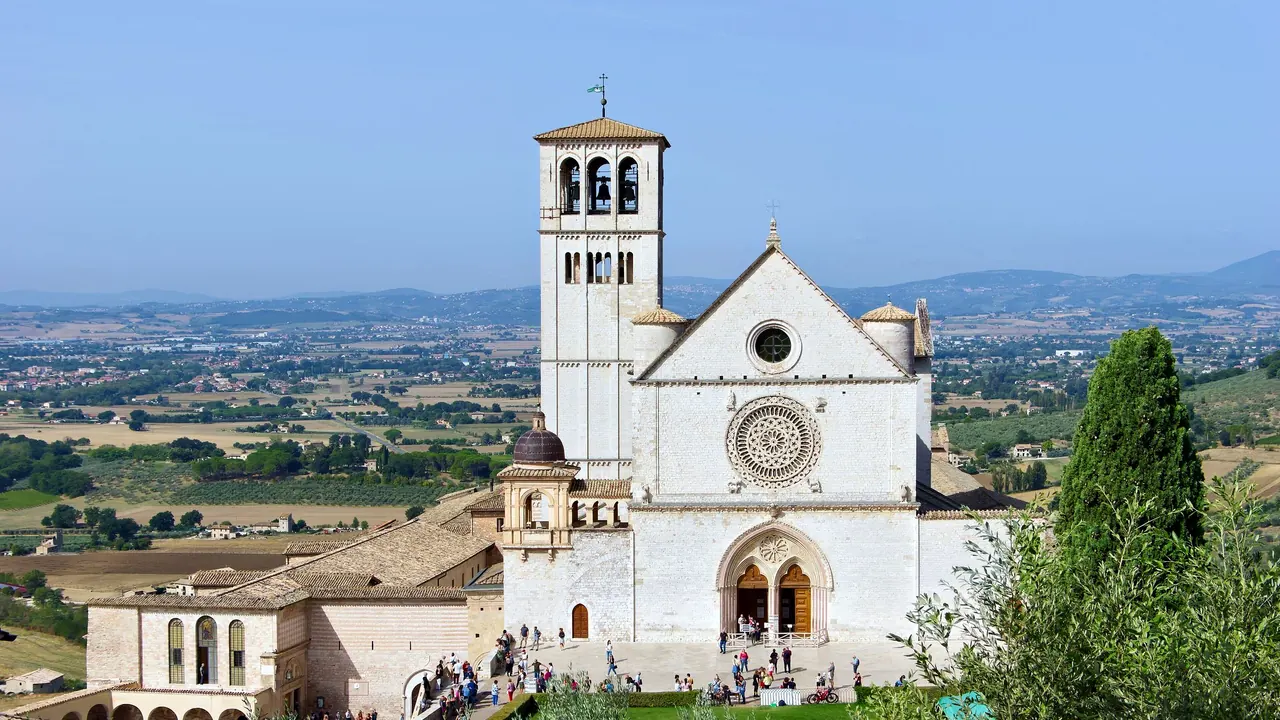
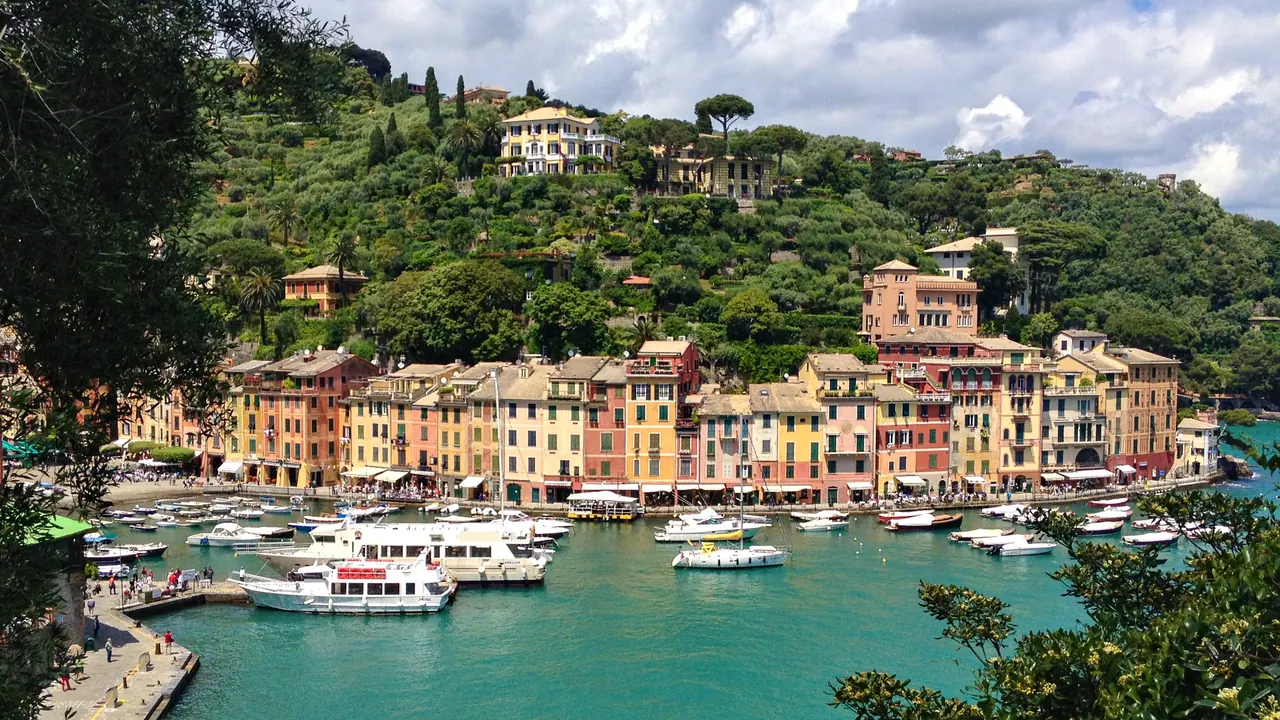
Photos: Assisi by Berthold Werner, CC BY-SA 4.0, cropped; Portofino by Michal Osmenda, CC BY 2.0, cropped.
Assisi or Portofino?
Our verdict in twelve categories, each scored against the same fixed benchmark cities, and the climate month by month, so you can choose for your trip.
Choose Assisi for
- prices
- culture and sights
- live music and the arts
Assisi is the choice for travellers who want substance and a good base. The Basilica of San Francesco and its frescoes are among Europe's great monuments, the hill towns of Umbria from Spello to Orvieto are all within easy reach, and convent guesthouses and valley agriturismi keep costs sensible. It suits a slow inland trip built around art, walking and long country meals, where quiet evenings are part of the deal.
Choose Portofino for
- beaches
- nature and the outdoors
- nightlife
Pick Portofino for the sea and the setting rather than for sights. The clear water off the rocks, the trails of the protected headland and the ferries along the Riviera make a few days here about swimming, hiking and watching the harbour. It is far more expensive, so many visitors sleep along the coast in Santa Margherita or Camogli and come over for the day.
Scoreboard
Twelve categories on one fixed scale from 0 to 100. The shaded stretch is the gap between the two.
Your match
Pick a travel style or drag the sliders, and both match scores follow your weighting.
Wins on prices and culture and sights with your weighting.
Wins on beaches and nature and the outdoors with your weighting.
What matters to you?
Category by category
What the scores mean for a trip.
Beaches & swimming
Assisi is inland, about two hours from either coast, so swimming means the shallow lido beaches of Lake Trasimeno or an agriturismo pool. That is fine for cooling off, but it is no basis for a beach trip.
Portofino has real sea swimming, though no real beach. You swim in clear, deep water off the rock platforms towards the lighthouse, at the small sandy bay of Paraggi, or at the pebble cove of San Fruttuoso, reached by boat or on foot. The spots are small and fill up in summer, but the water is in a different league from a lake.
Food & drink
Neither town is a place to travel for food, and in both the restaurants nearest the famous view are the weakest value. Where they differ is what is on the plate. Assisi serves Umbrian country cooking: strangozzi with black truffle, Castelluccio lentils, wild boar and torta al testo, with Monte Subasio olive oil and Sagrantino from Montefalco.
Portofino's cooking is Ligurian and from the sea: trofie with pesto, pansoti in walnut sauce, fritto misto, anchovies and Recco's cheese focaccia, eaten on terraces facing the yachts. The better meals around Assisi are on the side lanes or at agriturismi in the valley. On the Portofino coast they are in Camogli, Santa Margherita and the trattorie up in the hills.
Culture & sights
Assisi wins this outright. The Basilica of San Francesco has Cimabue and Simone Martini in the Lower Church and the cycle of the life of Saint Francis in the Upper Church. It is a UNESCO-listed monument of European importance, and the Temple of Minerva, Santa Chiara and the Porziuncola fill two calm days.
In Portofino the sight is the village itself: the painted houses around the harbour, San Giorgio, Castello Brown and, round the point, the abbey of San Fruttuoso in its cove with no road. It is a lovely place to take in over a day, but there is no great art and no museum of any size.
Nightlife
Neither place stays up late, but Portofino at least has an evening scene. On summer nights its harbour bars fill with people dressed up for an aperitivo facing the yachts, and Santa Margherita, Rapallo and Genoa are close if you want more.
Assisi goes quiet once the day-trippers leave, and an evening means dinner, a glass of Sagrantino and a walk through floodlit, empty lanes. For bars, go to Perugia, half an hour away.
Nature & outdoors
Portofino has the more striking outdoors because it offers as much under water as on land. In the headland park, cliff trails run from the Semaforo Nuovo viewpoint down to San Fruttuoso and Camogli, some sections with chains. The marine reserve has dives along red coral walls and down to the Christ of the Abyss statue, and kayaking round the point is easy to arrange.
Assisi's landscape is gentler and inland. Its best outing is the walk up Monte Subasio past the Eremo delle Carceri to open summit meadows. The valley below is good for cycling between Spello and Montefalco, and the Valnerina and the Sibillini make bigger days out by car.
Day trips
Both make good bases, but Assisi has more within reach. Spello, Perugia, Spoleto, Gubbio and Todi are each about an hour away or less, every one a hill town with its own cathedral, gallery or palace, and Orvieto makes a full day. Trains run along the valley, though you need a car for the rest.
Portofino's trips all follow one stretch of coast: Camogli, Rapallo and Sestri Levante, Genoa's palaces in under an hour, and the Cinque Terre by ferry in summer or by train. Arriving by boat is a pleasure, but outside the ferry season the train is the main way to get anywhere.
Good for families
Both are safe and small, and neither is made for children, so families do best staying outside and coming in for visits. Assisi's sights are churches that need silence, and its stepped streets defeat a pushchair. Older children do like the Rocca Maggiore and the climb up Subasio, and a valley agriturismo with a pool is the usual base.
Portofino gives children boats to watch, swimming off the rocks and the walk up to the castle, but most of its sand is in paid beach clubs. Families tend to stay in Santa Margherita or Rapallo and spend a day at Genoa's aquarium.
Getting around
Both centres take only minutes to walk across and both are steep. The real difference is getting there. Assisi sits above a railway line: its station is 4km below in Santa Maria degli Angeli, with trains to Perugia and Spoleto, though beyond the valley you need a car.
Portofino lies at the end of one narrow coast road from Santa Margherita, with very little parking and crowded buses in summer. From spring to autumn the ferries are the better way in and out, and a car is more trouble than help.
Shopping & style
Assisi's shops sell devotion first, and the lanes around the basilicas are lined with rosaries, Tau crosses and Franciscan souvenirs. Among them are the things worth taking home: embroidered Umbrian linen, painted Deruta ceramics, Subasio olive oil, truffle products and Sagrantino. Beyond that there is no fashion or market scene.
Portofino gives you more to browse, and of a very different kind. The short lanes behind the piazzetta hold a surprising number of big fashion and jewellery houses and resort-wear shops aimed at people coming off the yachts, with a little Ligurian lace and pesto alongside. It all takes under an hour, so it fits around lunch, and for markets or a longer look round people go to the arcades of Chiavari or into Genoa.
Affordability
Assisi is far easier on a budget. The basilicas are free to enter, convent guesthouses offer simple rooms at low cost, and valley agriturismi are good value. Prices rise mainly at the restaurants beside the basilicas and in hotels around Easter.
Portofino is among the most expensive places to stay in Italy. It has only a few hotels, mostly luxury ones, and charges heavily for terrace tables, loungers, boats and parking. The usual answer is to sleep in Camogli or Rapallo and come in for the day, since walking and the buses cost little.
Live music & performing arts
Assisi has more to hear, though most of it is sacred music. Organ recitals and choral concerts fill the basilicas around religious feasts, and in spring the Calendimaggio festival sets the town's two quarters against each other in medieval costume and song. Nearby Perugia adds opera and its summer jazz festival.
Portofino has little beyond the occasional summer concert in the piazzetta or at the castle. For a proper performance you go to Genoa and the Teatro Carlo Felice.
Wellness & relaxation
Neither has a bathing tradition, and in both the calm comes from the place rather than from treatments. Assisi's quiet is spiritual: convent retreats, silent walks to the Eremo delle Carceri, and evenings once the tour groups have gone.
Portofino's calm comes from the sea. There are hotel spas and pools on the hillside, long lunches by the water and shaded paths. In high summer, though, boat crowds fill the harbour at midday, so the most restful times are early and late in the day and the months either side of summer.
When should you go?
Pick your month. The climate figures are measured averages, not a forecast.
Assisi in July
Portofino in July
Daytime high, °C
Rainfall in the month, mm
Where the figures come from
Assisi's temperatures are measured 51 km from the centre, at Frontone.
Assisi has no rain gauge within 25 km of the centre, so its rainfall comes from a gridded climate dataset read at the city rather than from a gauge further away.
Portofino's temperatures are measured 31 km from the centre, at Genova / Sestri.
Portofino has no rain gauge within 25 km of the centre, so its rainfall comes from a gridded climate dataset read at the city rather than from a gauge further away.
Temperature and rainfall are climate normals, averaged over the years shown. Assisi: 1991-2020 normals, Frontone (50.5 km from centre). Portofino: 1991-2020 normals, Genova / Sestri (31 km from centre).
Assisi has a proper inland climate. Winters are cold, with highs around 7°C in January, and July and August reach about 30°C, which makes the steep lanes hard going in the afternoon. The best months for walking the town and Monte Subasio are April to June and September into October. Rain builds through autumn and is heaviest in November.
Portofino is milder all year, with winter days around 12°C, so the coastal paths stay walkable even in the cooler months. The sea is warm enough for swimming from June to September and is warmest in August at about 25°C. Autumn is the season to avoid. October brings around 225mm of rain, far more than Assisi gets in any month, and November is almost as wet.
Which traveller are you?
On a beach and sun trip, Portofino is the only real option. Clear, deep water off the rocks, the bay at Paraggi and coves reached by boat make swimming part of every day, while Assisi sits two hours from either coast.
For a culture and arts trip, choose Assisi. The Basilica of San Francesco and its frescoes are worth the journey on their own, and Perugia, Spoleto and Orvieto are close enough for a gallery or cathedral each day. Portofino offers setting rather than art.
On a tight budget, Assisi makes money go much further. Free basilicas, convent guesthouses and valley agriturismi keep costs modest. Portofino is among Italy's priciest places to sleep and eat, and even careful spenders there end up staying elsewhere on the coast.
Before you go
| Measure | Assisi | Portofino |
|---|---|---|
| Official language | Italian | Italian |
| Currency | Euro (EUR) | Euro (EUR) |
| Sockets | CFL230 V, 50 Hz | CFL230 V, 50 Hz |
| Driving side | Right | Right |
| Time zone | UTC+1, UTC+2 in summer | UTC+1, UTC+2 in summer |
| Emergency number | 112 | 112 |
| Elevation | 424 m | 20 m |
| Main airport | Perugia San Francesco d'Assisi – Umbria International Airport (PEG)9 km from centre17 non-stop destinations | Genoa Cristoforo Colombo Airport (GOA)32 km from centre25 non-stop destinations |
| Public holidays this year | 13 days | 13 days |
By the numbers
| Measure | Assisi | Portofino |
|---|---|---|
| City population | 27,605 | 355 |
| People per km² | 147 | 142 |
| Museums within 10 km | 14 | 14 |
| UNESCO World Heritage sites within 50 km | 2 | 2 |
| Swim season, months above 21 °C | - | 4 months |
Where else could you go?
Every comparison below shares a destination with this one, so you can follow Assisi or Portofino somewhere new.
- Genoavs Portofino
- La Speziavs Portofino
- San Marinovs Assisi
- Sienavs Assisi
- Pisavs Portofino
- Luccavs Portofino