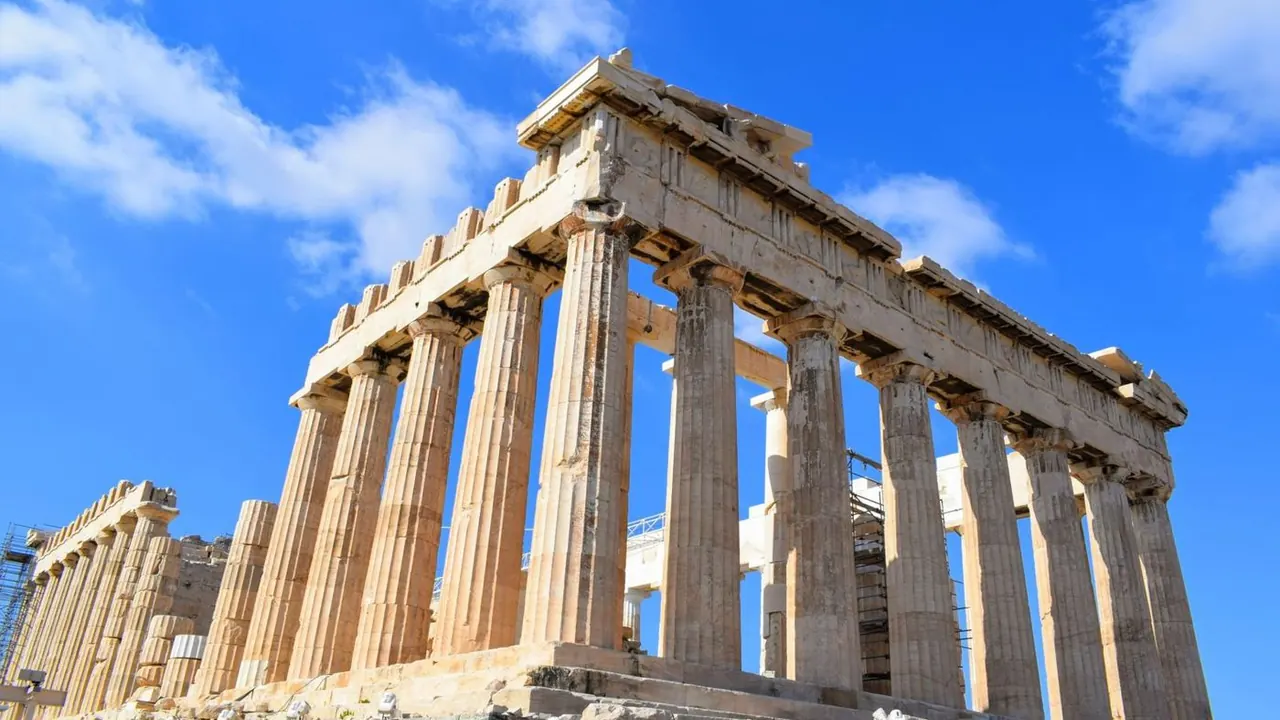
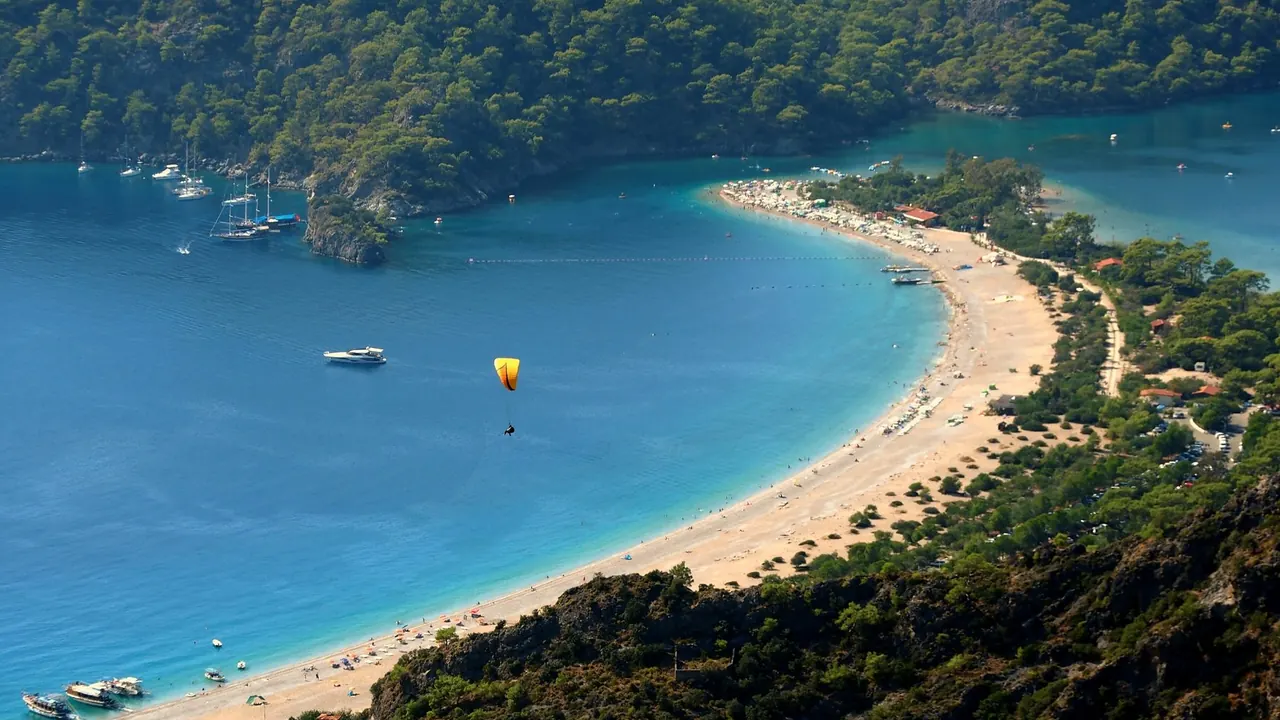
Photos: Athens by Ranjeet Kumar Singh, Pexels License; Fethiye by rheins, CC BY 3.0, cropped.
Athens or Fethiye?
Our verdict in twelve categories, each scored against the same fixed benchmark cities, and the climate month by month, so you can choose for your trip.
Choose Athens for
- culture and sights
- live music and the arts
- nightlife
Athens suits a trip where the city itself is the point. The days go on the Acropolis, the Agora and the great museums, the evenings run late in neighbourhood tavernas and bars, and Delphi, Mycenae or a Saronic island make easy outings without changing base. There are open-air performances in summer too. It is a hot, loud capital rather than a place to rest, and the sea is a side trip to the Riviera rather than the reason for going. Pick it for history, food and nights out.
Choose Fethiye for
- nature and the outdoors
- wellness
- beaches
For sea, sun and landscape, Fethiye is the better fit. It turns the balance round: here the coast is the trip and the history is the side trip. The Oludeniz lagoon, boat days around the bay, the Lycian Way and the paragliding flight off Babadag keep you outdoors, and the Lycian tombs and ruins give you something to look at without filling the itinerary. It is slower, easier for switching off and a little cheaper if you stay in town, but its food, sights and evenings come nowhere near those of Athens.
Scoreboard
Twelve categories on one fixed scale from 0 to 100. The shaded stretch is the gap between the two.
Your match
Pick a travel style or drag the sliders, and both match scores follow your weighting.
Wins on culture and sights and live music and the arts with your weighting.
Wins on nature and the outdoors and wellness with your weighting.
What matters to you?
Category by category
What the scores mean for a trip.
Beaches & swimming
Fethiye is the better place for a beach vacation. Oludeniz's shallow turquoise lagoon, the boat-only cove at Butterfly Valley, sandy Kidrak and the island stops on day cruises give you a different swim every day, and the water is clear wherever you go.
Athens has real sea within reach on the Riviera, from Glyfada down to Vouliagmeni, but much of it is organised lidos and rocky gaps, and the beaches near the city get crowded. There you fit a swim into a city stay, while in Fethiye the beach is the reason for going.
Food & drink
Athens is far stronger. Neighbourhood tavernas and mezedopoleia in Psyrri, Koukaki and Exarchia serve grilled octopus, fava and slow-cooked dishes with Greek wine or tsipouro. The Varvakios market and a serious fine-dining scene add range.
In Fethiye the best meal is picking your fish at the town market and having it cooked at the restaurants around the square, with rakı and meze on the harbour afterwards. Outside the town, menus in Hisaronu and Oludeniz are mostly pizza and English breakfasts, so food lovers have far less to go on.
Culture & sights
The two are hardly comparable. Athens has the Acropolis, a walkable promenade linking the Agora, Kerameikos and the Temple of Olympian Zeus, and museums such as the Acropolis Museum and the Benaki, enough to fill a week.
Fethiye's sights are few but striking: the Lycian rock tombs above the town, sarcophagi among the streets, and the abandoned village of Kayakoy over the ridge. Together they make a rewarding afternoon or two rather than the backbone of a trip.
Nightlife
Athens has a proper nightlife city's late hours, with dinner after nine and bars that fill at midnight. You can choose between rooftop bars facing the Acropolis in Monastiraki, clubs and the gay scene in Gazi, student bars in Exarchia and bouzouki nights, and in summer the clubs move out to the coast.
Fethiye offers a relaxed drink in the lit lanes of Paspatur or a loud package-resort night on the Hisaronu strip. Both are seasonal, and from November to April evenings in town end early.
Nature & outdoors
Fethiye has the more dramatic landscape and more to do in it. Babadag rises almost straight out of the sea, the Lycian Way follows cliff paths through pine forest, and Saklikent Gorge, gulet cruises and diving in clear water are all close by.
Athens has good outdoor options of its own: views from Lycabettus and Filopappou, pine trails on Hymettus, fir forest on Parnitha and sailing on the Saronic Gulf. Most of it is either a short city walk or an hour's drive away, though, and the hills are dry and brown through summer.
Day trips
Athens has the more famous list. Delphi, Mycenae, Epidaurus and Nafplio, the Temple of Poseidon at Sounion and the islands of Hydra and Aegina are all within a day, and several of them are landmarks of the ancient world.
Fethiye's outings are strong too: Lycian Tlos, Xanthos and Patara, the river boats below the tombs at Dalyan, Kas and Kalkan along the coast, and in season a ferry to medieval Rhodes, for which you need a passport. Many of its inland sites are hard to reach without a car, though, and those around Athens are easier to reach by tour.
Good for families
Both work for families, but in different ways. Athens gives you city days out: the zoo, the planetarium, Hellenic Cosmos and the park at the Stavros Niarchos centre, with the myths bringing the ruins alive for older children. Steep steps, broken pavements and midsummer crowds make it tiring with a pushchair.
Fethiye is a pool-and-sea vacation, with the shallow, sheltered lagoon at Oludeniz, hotels built for families and boat trips with swimming stops. It has little else made for children, so Athens offers more variety on rainy or restless days.
Getting around
Athens is easier to get around. The main sights are close together on foot, and a clean metro runs from the airport and Piraeus. A tram goes to the coast and taxis are plentiful, although hills, heat and blocked pavements make walking hard work.
In Fethiye the flat harbour area is easy, and dolmus minibuses and water taxis cover the nearby resorts. There is no rail, and inland sites such as Tlos and Saklikent are awkward to reach without hiring a car.
Shopping & style
Athens gives you more. Ermou Street has the chain stores, Kolonaki the designer and Greek boutiques, and Monastiraki's weekend flea market has antiques, records and odds and ends. Leather sandals, honey and jewellery inspired by ancient designs make the best souvenirs.
Fethiye's shopping is the weekly canal market and the carpet, ceramics and lamp shops of Paspatur. It is good for peshtemal towels and gifts, but there are no fashion streets to make a trip of.
Affordability
Neither is a budget destination, but Fethiye can work out a little cheaper. In town, lokantas, minibus fares and family-run guesthouses cost little, but paragliding, boat cruises and heavily taxed alcohol add up, and a lagoon-side package in peak season costs as much as other Mediterranean resorts.
In Athens, souvlaki, taverna meals and the metro are good value. Central hotels with Acropolis views charge high-summer prices, though, and entry fees build up over several days of sightseeing.
Live music & performing arts
Open-air summer nights are what set Athens apart. Opera, ancient drama and concerts are staged at the Odeon of Herodes Atticus below the Acropolis and at the theatre of Epidaurus, and the Greek National Opera and the Megaron carry on through the rest of the year. Rebetiko played late in small tavernas is the music to look for, though most theatre is in Greek.
Fethiye has no real season. You might hear a saz player in a meyhane, cover bands in Hisaronu or an occasional concert at the cultural centre.
Wellness & relaxation
Fethiye is the easier place to unwind. A working Ottoman hammam in Paspatur offers the full scrub and foam ritual, the yoga retreats above Kabak and Faralya look out over the sea, and the harbour promenade is made for slow evenings, provided you avoid the resort strips.
Athens is loud and hot, and its old bathhouse is now a museum. Its one real draw for rest is Lake Vouliagmeni, where mineral springs keep the water mild all year.
When should you go?
Pick your month. The climate figures are measured averages, not a forecast.
Athens in July
Fethiye in July
Daytime high, °C
Rainfall in the month, mm
Where the figures come from
Fethiye's temperatures are measured 31 km from the centre, at Dalaman.
Fethiye has no rain gauge within 25 km of the centre, so its rainfall comes from a gridded climate dataset read at the city rather than from a gauge further away.
Temperature and rainfall are climate normals, averaged over the years shown. Athens: 1991-2020 normals, Athens / Athenai / Pláka (2.2 km from centre). Fethiye: 2000-2020 (rainfall 1991-2020) normals, Dalaman (30.8 km from centre).
Both cities are dry and hot from June to September, and in each the sea is warm enough to swim from late May into October. Athens has the harsher midsummer, with July and August reaching about 35°C under almost constant sun, which makes sightseeing on foot hard work in the middle of the day. Fethiye peaks closer to 32°C. Its sea is slightly warmer, at about 27°C in August, and stays milder through the autumn.
For walking, spring and autumn suit both, roughly April to early June and late September to October. The two differ most in winter. Athens turns wet from November, with up to about 86mm in December, but it gets far less rain than Fethiye and stays workable for museums and ruins between showers. Fethiye's winter is a little warmer but very wet, with around 187mm in January, and the sea is too cool for most swimmers.
Which traveller are you?
On a culture and arts trip, Athens is the clear pick. The Acropolis, the Ancient Agora and the National Archaeological Museum outclass anything near Fethiye, and in summer you can see drama or opera at the Odeon of Herodes Atticus.
For a food and nightlife trip, Athens again wins easily. Taverna meals with ouzo in Pangrati or Psyrri lead into bars that stay open until dawn, while Fethiye offers a pleasant fish market and harbour drinks, then package-resort clubs in Hisaronu.
For an outdoors trip, Fethiye is the better base. You can walk the Lycian Way past Butterfly Valley, paraglide from Babadag down to the lagoon, wade through Saklikent Gorge and kayak the bay, all much closer than Athens's best hiking on Parnitha.
Before you go
| Measure | Athens | Fethiye |
|---|---|---|
| Official language | Greek | Turkish |
| Currency | Euro (EUR) | Turkish Lira (TRY) |
| Sockets | CF230 V, 50 Hz | CF230 V, 50 Hz |
| Driving side | Right | Right |
| Time zone | UTC+2, UTC+3 in summer | UTC+3 |
| Emergency number | 112 | 112 |
| Elevation | 74 m | 0 m |
| Main airport | Athens Eleftherios Venizelos International Airport (ATH)20 km from centre173 non-stop destinations | Dalaman International Airport (DLM)30 km from centre61 non-stop destinations |
| Public holidays this year | 15 days | 14 days |
By the numbers
| Measure | Athens | Fethiye |
|---|---|---|
| City population | 643,452 | 182,200 |
| People per km² | 16,499 | - |
| Museums within 10 km | 88 | 1 |
| UNESCO World Heritage sites within 50 km | 2 | 1 |
| Swim season, months above 21 °C | 5 months | 6 months |
Where else could you go?
Every comparison below shares a destination with this one, so you can follow Athens or Fethiye somewhere new.